Source Hijama Vacuum Cupping for Arthritis, Muscle Strain, and Sciatica
Compare 30 verified listings for Hijama Vacuum Cupping sets designed for arthritis, muscle strain, and sciatica relief. Buyers can evaluate rubber and glass options with customizable features from Chinese manufacturers.
Key considerations
Products List


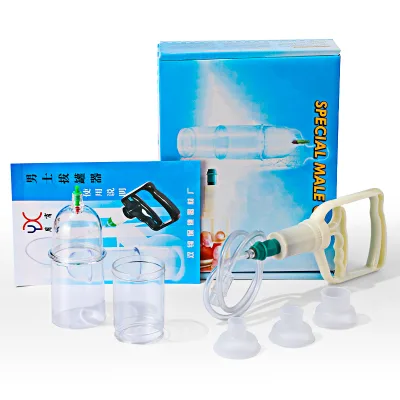
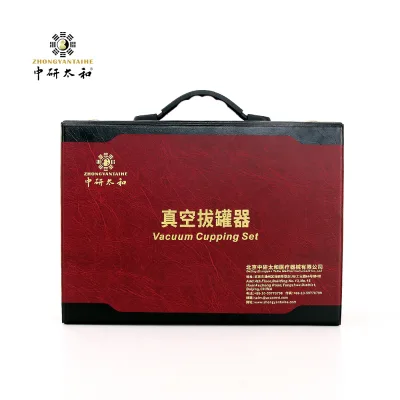
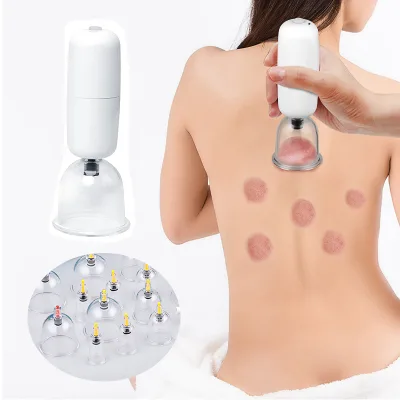
Comprehensive Sourcing Guide
Strategic Sourcing Guide for Hijama Vacuum Cupping Equipment
The global demand for traditional therapeutic devices, specifically Hijama Vacuum Cupping sets, has driven a robust B2B market focused on quality, safety, and regulatory compliance. For procurement professionals, navigating this sector requires a disciplined approach to verifying product attributes against actual supply chain capabilities. The available market data indicates a diverse range of products, from rubber-based therapeutic sets to glass and plastic variants, each serving distinct clinical and wellness applications. This guide synthesizes observed product facts and industry standards to provide a structured framework for sourcing Hijama Vacuum Cupping equipment, ensuring that buyers can make informed decisions based on verified specifications rather than marketing claims.
Technical Specifications and Material Composition
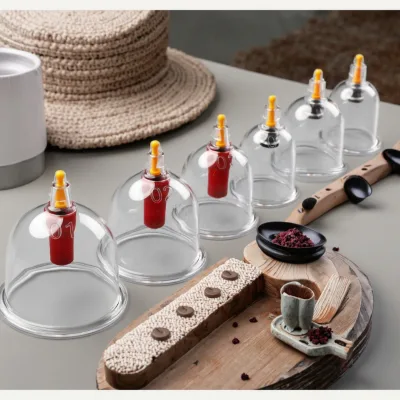
Understanding the physical and functional characteristics of the equipment is the first step in any procurement process. The market data reveals a clear segmentation based on material composition, which directly influences the device's application, durability, and safety profile. Suppliers list materials ranging from rubber to glass and plastic, with specific product models indicating "High Grade" rubber or "Glass" construction. The "Type" attribute frequently identifies the product as a "Rubber Cupping Set" or "Vacuum Cupping Set," while other entries specify "Cupping Cup" as the primary component.
The configuration of the sets varies significantly across listings. Some products are standardized as a "4 pieces/Box" or "4 piece/set," while others offer larger configurations such as "6 Cups" or "12sets/box." The "Standard" attribute often defines the packaging density, such as "12pcs/box" or "12cans/box," which is critical for logistics planning. Additionally, the "State" of the product is noted as "Solid," and specific models like "THR-CUP01" suggest a need for precise model number verification during the ordering phase. Buyers must distinguish between sets designed for external use only and those potentially integrated into broader medical equipment frameworks. The "Properties" attribute frequently cites "Chinese Medicine" or "Chinese Medicine Apparatus," indicating that these devices are often sourced within the context of traditional medicine practices.
| Product Attribute | Observed Variations in Market Data | Procurement Implication |
|---|---|---|
| Material | Rubber, Glass, Plastic | Determines sterilization method and target user demographic (e.g., children vs. adults). |
| Cup Count | 4, 6, 12 sets | Affects the scope of treatment per session and packaging volume. |
| Packaging | Carton, Box, Bag, Set | Influences shipping costs and retail presentation requirements. |
| Model Type | THR-CUP01, cc, Medical equipment | Requires exact model matching to ensure compatibility with specific therapy protocols. |
Compliance, Certification, and Regulatory Standards
In the B2B medical and wellness sector, certification is a non-negotiable factor for supplier qualification. The observed product data highlights a mix of certifications, including ISOCE, QS, GMP, ISO, and CE. The presence of "ISO" and "CE" marks suggests adherence to international quality management and European conformity standards, respectively. However, the variation in listed certifications across different product entries necessitates a rigorous verification process. Buyers should not assume that a single supplier's catalog contains uniformly certified products; instead, each SKU must be cross-referenced with its specific documentation.
The "Standard" attribute also plays a role in compliance, with entries like "12pcs/box" or "1pcs/bag, 50bag/CTN" serving as internal quality control benchmarks for packaging consistency. For medical equipment classified under "Medical equipment" or "Chinese Medicine Apparatus," compliance with Good Manufacturing Practice (GMP) is particularly relevant. The "Certification" field listing "QS" and "GMP" indicates a focus on quality systems and production safety. Procurement teams must verify that the specific batch or model being ordered carries the exact certification claims made in the product description. Relying on general brand claims without verifying the specific product's certification status can lead to regulatory hurdles in the destination market.
Cost Drivers and Pricing Dynamics
The pricing landscape for Hijama Vacuum Cupping sets is characterized by significant variance, with observed listed prices ranging from $0.04 to $26.00 USD. This wide spectrum reflects differences in material quality, manufacturing complexity, certification levels, and packaging configurations. The lower end of the price range likely corresponds to basic plastic or rubber sets with minimal packaging, while the higher end may reflect glass sets, premium "High Grade" materials, or sets with extensive customization and branding.
The Minimum Order Quantity (MOQ) is another critical cost driver, with observed ranges spanning from 1 to 1000 units. This flexibility allows buyers to test the market with small orders or secure bulk pricing for large-scale distribution. However, the "Customization" attribute, which is listed as "Available" or "Customized," introduces variable costs. Options such as "Logo Printing" and "OEM/ODM" services typically incur additional fees and may require higher MOQs to be economically viable. Buyers must balance the unit price against the total landed cost, including tooling fees for custom molds and the logistics of handling different packaging standards like "Carton" versus "Standard Export Packing."
Typical Applications and Functional Attributes
The functional scope of Hijama Vacuum Cupping sets extends beyond simple suction, encompassing a variety of therapeutic claims. The "Function" attribute lists applications such as "Lowering Blood Pressure," "Cosmetology," and "Reduce Weight," indicating that these devices are marketed for both medical and aesthetic purposes. Specific usage modes are detailed in attributes like "Cold Hot Dressing Application," which targets conditions such as "Heat Stroke," "Muscle Strain," "Arthritis," "Cervical Spondylitis," and "Sciatica." This suggests that the equipment is versatile enough to be used in physical therapy clinics, wellness centers, and home care settings.
The "Usage" attribute explicitly states "Massage," and the "Feature" list includes claims like "Clear The Meridians" and "Smooth Blood," which are rooted in traditional medicine concepts. The "Gender" is noted as "Unisex," and the "Age Group" is broadly defined as "Adults," though some listings also include "Children" and "Elderly" as suitable demographics. This inclusivity requires buyers to ensure that the product design, particularly the cup size and suction mechanism, is appropriate for the intended age group. The "Storage Note" of "Mildew Proof" is a practical consideration for inventory management, ensuring that the products remain in good condition during storage and transport.
Supplier Evaluation and Verification Protocols
Evaluating suppliers in this sector requires a focus on transparency and consistency. The "Brand Name" and "Brand" attributes show a mix of entities, including "Kangzhu" and "Shinylink," alongside generic descriptions. While specific brand names are observed, buyers should avoid relying on a single brand as a proxy for quality. Instead, the evaluation should center on the supplier's ability to provide consistent product attributes across their catalog. The "Location" data points to "China" and "Shanghai" as primary origins, which is typical for this manufacturing hub.
Suppliers should be vetted based on their ability to confirm the "Customization" capabilities, including "OEM/ODM" services and "Logo Printing." The "Quality" attribute is frequently described as "High," but this is a subjective claim that must be substantiated through sample testing and third-party audits. Buyers should request evidence of the "High Grade" material claims and verify the "Standard" packaging specifications against actual shipments. The "Usage Mode" of "For External Use" is a critical safety distinction that must be clearly communicated to end-users to prevent misuse.
Quality Control and Long-Term Procurement Considerations
Maintaining quality control throughout the procurement lifecycle is essential for ensuring customer satisfaction and regulatory compliance. The "Feature" list includes attributes like "Decaffeinated," "Low-Salt," "Low-Fat," and "Sugar-Free," which, while seemingly unrelated to cupping, may indicate a broader product line or a data inconsistency that requires clarification. Buyers must verify that the physical product matches the intended therapeutic function and does not contain unintended contaminants. The "Material" consistency, whether "Rubber," "Glass," or "Plastic," must be maintained across batches to ensure uniform suction performance and safety.
Long-term procurement strategies should account for the "Storage Note" of "Mildew Proof" and the "Standard" packaging requirements. Ensuring that the "prod_packing" (e.g., "Carton," "Box," "Set") is robust enough to protect the equipment during international shipping is vital. Furthermore, the "Standard" of "12pcs/box" or "4 piece/set" should be strictly adhered to to avoid inventory discrepancies. Buyers should establish clear communication channels with suppliers to confirm that the "prod_model" and "prod_origin" remain consistent over time, especially when dealing with "Customized" orders. By focusing on these operational details, procurement teams can build a resilient supply chain that delivers high-quality Hijama Vacuum Cupping equipment reliably.
FAQs
What certifications are available for Hijama Vacuum Cupping sets?
Available certifications include ISO, CE, QS, and GMP depending on the specific product model. Buyers must verify the exact certification listed for each SKU, as not all products in a catalog share the same compliance status.
Which materials are used to manufacture these cupping sets?
Manufacturers use rubber, glass, and plastic to construct the cups. The material choice affects durability and sterilization methods, with options ranging from high-grade rubber to standard plastic variants.
Can buyers request logo printing and custom branding on the sets?
Yes, customization including logo printing and OEM/ODM services is available for many products. These custom options often require specific minimum order quantities and may involve additional tooling fees.
What is the typical packaging configuration for these medical equipment sets?
Packaging varies by model, with common configurations including 4 pieces per box, 6 cups, or 12 sets per carton. The standard export packing ensures protection during international shipping and storage.
How do the minimum order quantities vary for these products?
Minimum order quantities range from 1 unit to 1000 units depending on the supplier and customization level. Lower MOQs allow for market testing, while higher volumes typically secure better pricing tiers.
What are the primary applications for these vacuum cupping devices?
Devices are used for massage, lowering blood pressure, cosmetology, and reducing weight. They also treat conditions like muscle strain, arthritis, and sciatica through external application and traditional medicine practices.
Where are these Hijama Vacuum Cupping sets primarily manufactured?
The products originate from China, with specific manufacturing hubs noted in Shanghai. Buyers should confirm the origin for each batch to ensure consistency with regulatory requirements in their destination market.