Source hypoallergenic non-woven eyelash extension tape for lashes, brows, and eyes
Compare 30 listings for hypoallergenic non-woven eyelash extension tape from verified suppliers. Review specifications, pricing, and customization options for eyelash extension tools and related beauty applications.
Key considerations
Products List


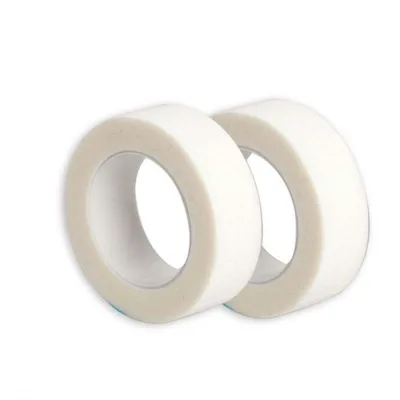
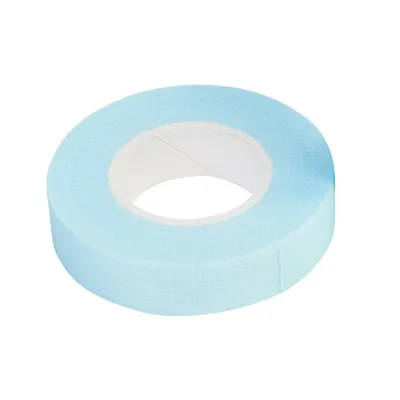
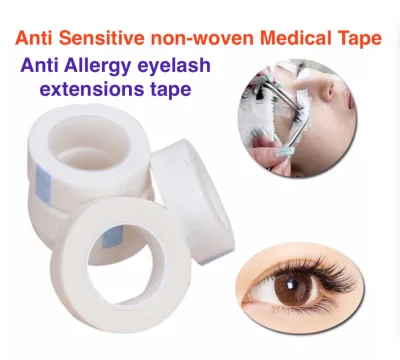


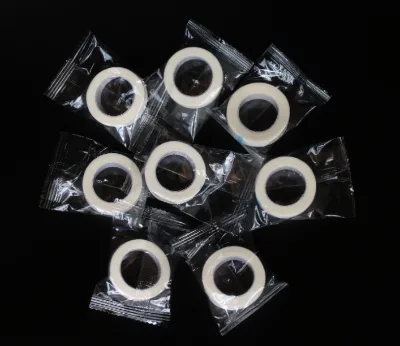
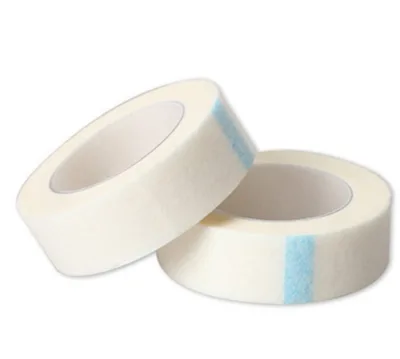

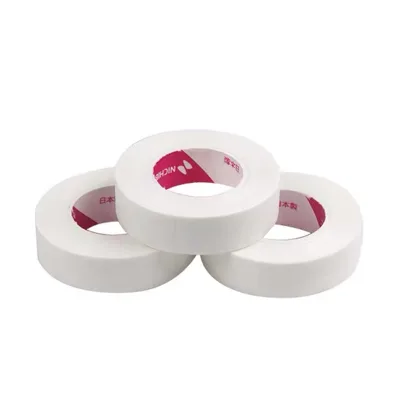
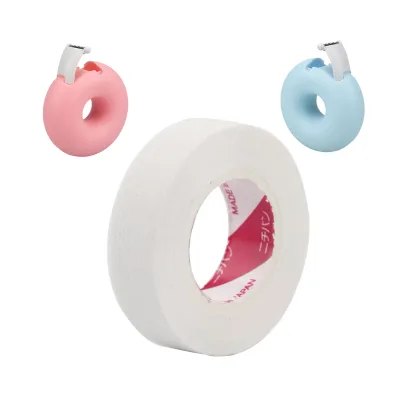


PE Acrylic Acid Glue PE Tape Medical Adhesive PE Tape Eyelash Extension Tape
$0.03 - $1.00
MOQ: 10000 Rolls

Comprehensive Sourcing Guide
Strategic Sourcing Guide for Hypoallergenic Non-Woven Eyelash Extension Tape
Understanding Material Composition and Core Specifications
The foundation of a successful procurement strategy for eyelash extension tape begins with a rigorous analysis of material composition. In the context of the current market, the primary material of interest is non-woven fabric. This material is distinct from woven textiles due to its manufacturing process, which bonds fibers together mechanically, chemically, or thermally rather than weaving them. For beauty professionals and distributors, the non-woven structure offers specific advantages, including breathability and a soft texture that minimizes irritation to the sensitive skin around the eyes.
When evaluating product listings, buyers must distinguish between different non-woven variants. The available data indicates that some products utilize "Non Woven Material" while others specify "Non-Woven fabric." While these terms are often used interchangeably in general commerce, precise verification is required to ensure the material meets the hypoallergenic requirements of the end-user. The supply chain data also highlights the presence of Polyolefin film as a material option in related eyelash tools. Buyers must carefully separate tape products from other tools, such as eyelash extension tools or glue nozzle cleaners, which may share similar packaging or branding but differ fundamentally in material composition.
A critical specification to verify is the physical form of the product. The market data confirms that eyelash extension tape is typically supplied in a "Solid" form. This distinguishes it from liquid adhesives or gels. The dimensions of the product are equally vital for application precision. Observed specifications include a standard size of 3*4.5cm for certain variants, while others are packaged in boxes measuring 10.2X7X2.5 cm or 10X10X2 cm. The thickness and width of the tape directly impact its ability to hold lashes in place without slipping. Procurement teams should request physical samples to measure the actual width and length, as the "standard" listed in catalogs may vary from the actual product delivered.
Compliance, Safety Standards, and Regulatory Verification
Safety is the paramount concern when sourcing products intended for use on the human face, particularly in the delicate eye area. The term "hypoallergenic" is a marketing claim that requires substantiation through objective data. Buyers must not accept this label at face value. Instead, they must verify the product's classification and sterilization status.
The supply data indicates that certain eyelash tools are classified as "Class I" instruments. While this classification often applies to general medical devices, it serves as a useful benchmark for hygiene standards in beauty tools. However, the specific tape products must be evaluated for their own safety profile. A key data point to note is the presence of products explicitly marked as "Without Ethylene Oxide Sterilization." This is a significant finding for buyers concerned about chemical residues. Ethylene oxide is a common sterilizing agent that can leave harmful residues if not properly aerated. The absence of this process suggests a different sterilization method or a reliance on clean-room manufacturing, which must be confirmed with the supplier.
Buyers should also investigate the adhesive properties of the tape. The data mentions "Hot Melt Glue" and "Acrylic Acid Glue" in the context of related products. For the tape itself, the adhesive must be strong enough to hold lashes but gentle enough to remove without damaging natural lashes or causing allergic reactions. The presence of "Low Smell" and "Fast Dry" attributes in the product features suggests that the adhesive formulation is designed to minimize volatile organic compounds (VOCs), which are common triggers for allergic reactions.
Regarding certifications, the provided facts do not list specific third-party certifications like ISO or CE for the tape itself. Therefore, buyers must treat the "Class I" classification and "Without Ethylene Oxide Sterilization" as baseline observations rather than comprehensive compliance proof. It is essential to request a Certificate of Analysis (CoA) or a Material Safety Data Sheet (MSDS) from the supplier to verify the absence of latex, nickel, or other common allergens. The "Quality Guarantee Period" of two years mentioned for some items suggests a manufacturer's confidence in the product's shelf life and stability, but this should be cross-referenced with storage requirements and expiration dates.
Cost Drivers and Pricing Dynamics
The pricing structure for non-woven eyelash extension tape is influenced by several variable factors, primarily driven by order volume and customization requirements. The observed market data reveals a wide price range, with listed prices spanning from $0.01 to $1.75 USD. This variance is not necessarily indicative of quality differences alone but is heavily correlated with the Minimum Order Quantity (MOQ) and the level of customization.
The MOQ data shows a significant spread, ranging from as low as 10 pieces to as high as 100,000 pieces. This indicates a highly flexible supply chain that caters to both small boutique salons and large-scale distributors. For buyers with lower volume needs, the unit cost will likely be higher due to the fixed costs of setup and packaging. Conversely, buyers committing to large volumes can leverage economies of scale to reduce the per-unit cost significantly. The "Customized" attribute is a major cost driver. Products that allow for "Customized Colour" or "Logo Printing" will inherently carry a higher price point than standard white or multi-color options. The data confirms that "Logo Printing" is available, which adds value for branding but increases the production complexity and cost.
Packaging also plays a role in the final cost. Products are observed in various packaging formats, including "Box," "Bottle," and "1 pcs/opp bag." The "Box" packaging is typically more expensive due to the materials and labor involved but offers better protection and a premium presentation. The "opp bag" (oriented polypropylene) is a cost-effective solution suitable for bulk distribution. Buyers must weigh the cost of packaging against the perceived value to their end customers. Additionally, the "Single gross weight" of the items, ranging from 0.03 kg to 0.05 kg, affects shipping costs. For international procurement, the weight and dimensions of the "Single package size" (e.g., 5X5X5 cm or 10X10X10 cm) are critical for calculating freight charges, which can significantly impact the total landed cost.
Typical Applications and Functional Versatility
The primary application of non-woven eyelash extension tape is to isolate individual lashes during the extension process. This isolation is crucial for preventing lashes from sticking together, ensuring a clean, precise application. The "Breathable" feature noted in the product attributes is particularly valuable in this context. A breathable tape allows air circulation around the eyelid, reducing the risk of sweat accumulation and discomfort for the client during the procedure.
Beyond simple isolation, the tape serves as a protective barrier. It shields the lower lashes from adhesive glue, which can cause irritation or clumping if it comes into contact with the natural lashes. The "Durable" feature mentioned in the data suggests that the tape maintains its integrity throughout the duration of the application, resisting tearing or peeling. This durability is essential for technicians who work quickly and require materials that do not fail under tension.
The product is also noted for its "Colorful" options, including pink, blue, white, and green. While white is the standard for blending with skin tones, colored tapes can serve a functional purpose in training environments or for specific aesthetic preferences. For example, a colored tape might help a technician visualize the separation lines more clearly. The "Round" shape of some related tools and the "Solid" form of the tape indicate that the product is designed for ease of handling and application. The "Fast Dry" attribute of the associated glue suggests that the tape must be compatible with quick-setting adhesives, ensuring that the isolation remains secure while the glue cures.
Supplier Evaluation and Origin Verification
When selecting a supplier for non-woven eyelash extension tape, the origin of the product is a critical factor. The data consistently points to "China" as the place of origin, with specific mentions of "Shandong" and "SHN" (likely an abbreviation for Shandong). This region is a known hub for textile and beauty product manufacturing. Buyers should verify the specific factory location within the province to assess logistics capabilities and production capacity.
Supplier evaluation should focus on their ability to meet customization requests. The availability of "Customized Colour" and "Logo Printing" indicates that suppliers are willing to tailor products. However, buyers must verify the supplier's capacity to maintain consistency across large orders. The "Brand name: PR" observed in the data suggests that some suppliers operate under their own branding, while others may be OEM manufacturers. It is important to distinguish between a brand owner and a contract manufacturer to understand who holds the intellectual property and who controls the quality standards.
The "Quality Guarantee Period" of two years is a strong indicator of supplier confidence. However, buyers should clarify what this guarantee covers. Does it cover the shelf life of the adhesive, or does it cover the structural integrity of the non-woven material? A reputable supplier will provide clear terms regarding returns and replacements for defective batches. Additionally, the "Instrument Classification" of Class I suggests that the supplier is familiar with medical device regulations, which is a positive signal for hygiene and safety standards.
Quality Control Protocols and Long-Term Procurement
Implementing a robust quality control (QC) protocol is essential for maintaining the integrity of the supply chain. Given the "Non-Disposable" attribute observed for some related products, buyers must clarify whether the tape is intended for single-use or multi-use. In the context of eyelash extensions, tape is typically single-use to prevent cross-contamination. If a product is marketed as non-disposable, it must be clearly defined how it can be sanitized and reused without compromising the "Without Ethylene Oxide Sterilization" status.
For long-term procurement, consistency in material quality is paramount. The "Non-Woven fabric" must maintain its breathability and adhesive strength over time. Buyers should establish a sampling protocol where a random selection of units from each batch is tested for tensile strength, adhesive tackiness, and color consistency. The "100" and "10pcs" MOQ variations suggest that buyers can start with small test orders to validate quality before committing to larger volumes.
The "Box" and "Bottle" packaging options also require QC checks. Packaging must be sealed properly to prevent contamination from dust or moisture, which could degrade the non-woven material or the adhesive. The "Single package size" and "Single gross weight" data should be used to verify that the supplier is adhering to the specified dimensions and weight, ensuring that the product matches the description and does not suffer from underfilling or overfilling.
In conclusion, sourcing hypoallergenic non-woven eyelash extension tape requires a balanced approach that considers material science, regulatory compliance, cost efficiency, and supplier reliability. By focusing on the specific attributes of non-woven fabric, verifying the absence of harmful sterilization agents, and leveraging the flexibility of the supply chain for customization, buyers can secure a high-quality product that meets the demanding standards of the beauty industry. The wide range of available options, from standard white tapes to customized colored variants, offers significant opportunities for differentiation in the market, provided that the core requirements of safety and performance are rigorously maintained.
FAQs
What material is used for hypoallergenic non-woven eyelash extension tape?
The tape is made from non-woven fabric or non-woven material, distinct from woven textiles. This structure offers breathability and a soft texture to minimize irritation on sensitive skin around the eyes during application.
Can buyers request customized colors for the eyelash extension tape?
Yes, customization is available for colors including pink, blue, white, and green. Buyers can also request customized colors to match specific branding needs, though this may affect the minimum order quantity requirements.
How is the product packaged for shipping and protection?
Products are available in various packaging formats including boxes, bottles, and individual OPP bags. The specific packaging dimensions vary, with some single packages measuring 10x10x2 cm or 5x5x5 cm depending on the model.
What is the minimum order quantity for purchasing this tape?
The minimum order quantity ranges from 10 pieces to 100,000 pieces depending on the supplier and customization level. Standard orders often start at 100 pieces, while smaller test batches may be available at lower thresholds.
Does the tape require ethylene oxide sterilization for safety?
Some products are explicitly marked as without ethylene oxide sterilization, relying on clean-room manufacturing instead. Buyers should verify the specific sterilization method with the supplier to ensure it meets their hygiene standards.
Which features ensure the tape is durable during lash application?
The tape is designed to be durable and breathable, maintaining integrity without tearing under tension. It also features fast-drying properties compatible with adhesives to ensure lashes stay isolated securely throughout the procedure.