Source Intelligent Programmable RoboMaster S1 Robot for Education, Assembly, and Research
Find 30 listings for the Intelligent Programmable RoboMaster S1 Robot, comparing options from Guangdong and Shanghai suppliers. Evaluate specifications such as multi-axis control, electric drive modes, and educational applications to select the right unit for your needs.
Key considerations
Products List
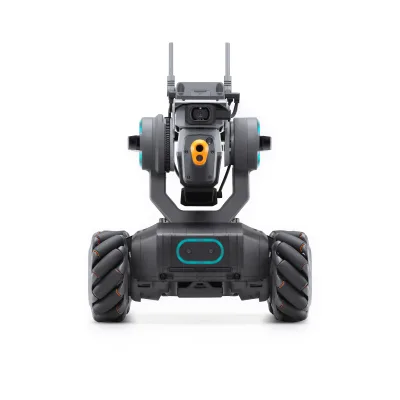


Intelligent Control Robotic / Intelligent Robot / Industrial Robot / Robots
$6200.00 - $7499.00
MOQ: 1 SET


Factory Direct Sales Industrial-Robot / Industrial Robots / Humanoid Robot
$6200.00 - $7499.00
MOQ: 1 SET


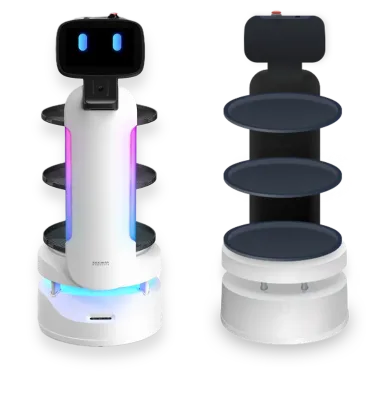

Comprehensive Sourcing Guide
Intelligent Programmable RoboMaster S1 Robot Sourcing Guide
When sourcing an Intelligent Programmable RoboMaster S1 Robot, buyers must navigate a complex landscape of educational hardware and industrial automation components that share similar naming conventions. The core keyword often triggers listings for distinct product categories, ranging from small-scale educational kits designed for STEM learning to larger, heavy-duty autonomous mobile robots intended for factory floor logistics. Understanding this divergence is critical before initiating any supplier engagement, as the technical requirements, safety protocols, and commercial terms for a 1.65 kg educational unit differ vastly from those of a 47 kg industrial manipulator or a 300 kg load-bearing AMR. Procurement teams must first define whether the objective is to acquire a programmable platform for coding education or a functional automation tool for material handling, as this decision dictates the entire sourcing strategy.
The observed market signals indicate a wide variance in product attributes, with prices ranging from approximately $3.87 to $89,900 and minimum order quantities (MOQs) spanning from single units to batches of 300. This disparity suggests that the term "RoboMaster S1" is frequently used as a generic descriptor for various intelligent robots, including models like the Unitree H1, AMR L-600J, and CW-R1 series, which may be listed under similar search terms. Buyers should exercise extreme caution when interpreting listing titles, as a product labeled as an "Educational Robot" may actually be a component of a larger industrial system or vice versa. Verifying the specific model number and physical dimensions early in the inquiry process is essential to ensure that the supplier is offering the exact hardware configuration required for the intended application, whether it be classroom instruction or warehouse automation.
Product Scope and Observed Listing Signals
The product scope for intelligent programmable robots in this category encompasses a diverse array of devices, primarily divided into educational kits and industrial automation units. Educational variants, such as the RoboMaster S1 Intelligent Educational Robot, are typically compact, weighing around 1.65 kg, and are designed for single-item sale with a focus on programming and learning. These units often feature multi-axis degrees of freedom and continuous path control, making them suitable for teaching robotics concepts to students. In contrast, industrial applications involve heavier machinery, such as the Unitree H1, which weighs 47 kg and stands 180 cm tall, or the AMR L-600J, which is designed for loading and machine tending with a maximum load capacity of 300 kg. Buyers must clearly distinguish between these scopes to avoid purchasing a high-torque industrial joint for a low-stakes educational project or a lightweight toy for a heavy-duty assembly line.
Listing signals reveal significant variations in packaging, origin, and physical specifications that serve as key identifiers for product type. Educational robots are often shipped in standard boxes with single package sizes around 30x25x23 cm, while industrial units may require wooden cases or specialized packaging to protect sensitive electronics during transit. The place of origin is predominantly China, with specific manufacturing hubs noted in Guangdong, Wuhan, and Shanghai, each potentially offering different supply chain advantages and lead times. Additionally, the presence of private molds and customization options suggests that many suppliers offer OEM services, allowing buyers to tailor the robot’s appearance or functionality. However, buyers should verify whether customization applies to the educational kit’s software interface or the industrial robot’s mechanical structure, as this distinction impacts development time and cost.
Technical Specifications to Verify
Technical verification must begin with the model number and physical dimensions, as these are the primary differentiators between educational and industrial robots. For educational units, buyers should confirm the single gross weight, which is typically around 1.65 kg, and the height, which is often compact enough for desk use. In contrast, industrial models like the Unitree H1 have a height of 180 cm and a weight of 47 kg, requiring robust structural support and specialized handling equipment. The degrees of freedom are another critical specification; educational robots may offer multi-axis control for flexible movement, while industrial units like the AMR L-600J may have a fixed six-degree-of-freedom configuration optimized for precise loading tasks. Buyers must request detailed technical datasheets that specify the drive mode, which is typically electric for these units, and the maximum joint torque, which can reach up to 360 N.m in high-performance models.
Battery performance and charging infrastructure are vital considerations, particularly for mobile robots that require extended operational time. Educational robots often feature battery capacities around 6000 mAh, providing an approximate battery life of 1 to 2 hours, and require a 220V charging adapter with a charger output of 25.2V at 2A. Industrial AMRs, such as the CW-R1 or CW-RX series, may have different power requirements and ground clearances, with some models offering a ground clearance of 25mm to navigate uneven surfaces. Buyers should verify the speed capabilities, which can range from 0 to 0.6 m/s for smaller units, and ensure that the charging voltage and output specifications match the available power infrastructure at the deployment site. Additionally, the extended size and dimensions of larger robots, such as the CW-RX with an extended size of 1870x1935x430 mm, must be accounted for in facility planning and storage logistics.
Compliance and Safety Documentation
Compliance and safety documentation are non-negotiable requirements for importing and deploying intelligent robots, regardless of their intended use. Buyers must verify that all products carry recognized certifications such as ISO and CE, which indicate adherence to international quality management and European safety standards. For educational robots, additional safety considerations may include child-safe materials and low-voltage operation to prevent electrical hazards during classroom use. Industrial robots, however, require rigorous safety assessments to ensure they meet machinery directives and workplace safety regulations, particularly when operating in environments with human workers. Buyers should request copies of the certification documents and verify their validity with the issuing bodies, as counterfeit or expired certifications pose significant legal and operational risks.
Warranty and condition policies also play a crucial role in risk mitigation, especially for high-value industrial equipment. Most suppliers offer a one-year warranty for both educational and industrial units, but the scope of coverage can vary significantly. Buyers should clarify whether the warranty covers parts, labor, and shipping costs for repairs, and whether it includes software updates and technical support. The condition of the product should be confirmed as "New," but buyers must also inquire about the return policy and the process for handling defective units. For customized orders, the warranty terms may differ, so it is essential to have these conditions explicitly stated in the purchase agreement. Additionally, buyers should ensure that the supplier provides comprehensive user manuals and safety guidelines in the local language to facilitate proper operation and maintenance.
Cost Drivers and Commercial Terms
Cost drivers for intelligent programmable robots are influenced by the complexity of the hardware, the level of customization, and the volume of the order. Educational robots, being smaller and less complex, typically have lower unit costs and higher profit margins for suppliers, leading to more competitive pricing. Industrial robots, with their heavy-duty components, high-torque motors, and advanced control systems, command significantly higher prices, often exceeding tens of thousands of dollars per unit. The availability of private molds and customization options can further increase costs, as these features require additional engineering and manufacturing time. Buyers should request detailed cost breakdowns to understand the value proposition and identify areas where costs can be optimized without compromising quality.
Commercial terms, including MOQs and payment conditions, vary widely across the product range. Educational robots often have low MOQs, sometimes as low as one unit, making them accessible for individual educators or small schools. Industrial robots, however, may require higher MOQs, up to 300 units, to justify the production setup costs. Buyers should negotiate flexible payment terms, such as partial upfront payments and balance upon shipment, to manage cash flow and reduce financial risk. Lead times are another critical factor, with customized orders potentially requiring longer production periods. Buyers should establish clear delivery schedules and include penalties for delays in the contract to ensure timely deployment. Additionally, buyers should consider the total cost of ownership, including maintenance, spare parts, and software licensing, when evaluating the overall value of the procurement.
Supplier Qualification and Quality Control
Supplier qualification is a critical step in ensuring the reliability and quality of the sourced robots. Buyers should conduct thorough due diligence on potential suppliers, verifying their business licenses, manufacturing capabilities, and past performance. Suppliers with private molds and customization options often have stronger engineering teams, but buyers should assess their track record in delivering consistent quality. Factory audits, either physical or virtual, can provide valuable insights into the production processes, quality control measures, and working conditions. Buyers should also check for any negative reviews or complaints from previous clients to identify potential red flags. Establishing a strong relationship with a qualified supplier can lead to better pricing, priority support, and improved product quality over time.
Quality control measures must be implemented throughout the production and delivery process to minimize defects and ensure compliance with specifications. Buyers should define clear quality standards and inspection criteria, including visual checks, functional tests, and performance benchmarks. For industrial robots, this may involve testing the maximum joint torque, speed, and load-bearing capacity under various conditions. Educational robots should be tested for programming functionality, battery life, and durability. Third-party inspection services can be engaged to conduct pre-shipment inspections, providing an independent verification of product quality. Buyers should also establish a clear process for handling non-conforming products, including return, replacement, or repair procedures. Regular communication with the supplier regarding quality issues can help drive continuous improvement and prevent future defects.
Long-Term Procurement Checks
Long-term procurement checks focus on sustaining the value and performance of the intelligent robots over their lifecycle. Buyers should establish a regular review process to assess the ongoing performance of the robots, including software updates, hardware reliability, and user satisfaction. For educational robots, this may involve monitoring student engagement and learning outcomes, while for industrial robots, it may involve tracking uptime, maintenance costs, and productivity gains. Buyers should maintain open lines of communication with the supplier to address any emerging issues and explore opportunities for upgrades or enhancements. Regular feedback loops can help identify areas for improvement and ensure that the robots continue to meet the evolving needs of the organization.
Strategic sourcing practices should also include evaluating the supplier’s innovation capabilities and product roadmap. Suppliers that invest in research and development are more likely to offer cutting-edge features and improved performance in future models. Buyers should stay informed about industry trends and technological advancements to make informed decisions about future procurement. Additionally, buyers should consider the sustainability and environmental impact of the robots, including energy efficiency and recyclability. By adopting a proactive and strategic approach to long-term procurement, buyers can maximize the return on investment and ensure that the intelligent programmable robots continue to deliver value over time.
FAQs
What is the RoboMaster S1 used for?
The RoboMaster S1 is an intelligent educational robot designed primarily for kids gifts and educational purposes. It features multi-axis degrees of freedom and continuous path control to facilitate learning in robotics and programming for students.
Can I customize the RoboMaster S1 robot?
Yes, customization is available for the RoboMaster S1 intelligent educational robot. Buyers can request specific modifications to suit their educational or application needs while maintaining the core electric drive mode and multi-axis capabilities.
What certifications does the robot have?
The product holds ISO and CE certifications, ensuring it meets international safety and quality standards. These certifications apply to the educational robot manufactured in Guangdong, China, and support its use in various global markets.
How long is the warranty period?
The warranty period for the RoboMaster S1 is one year from the date of purchase. This coverage applies to the new condition units and ensures support for the electric drive system and control modes during the specified timeframe.
What is the battery capacity and life?
The robot features a 6000mAh battery capacity with an approximate battery life of 1 to 2 hours. It charges using a 220V adapter with a charger output of 25.2V at 2 amps for reliable operation.
Where is the product manufactured?
The RoboMaster S1 is manufactured in Guangdong, China, with some units originating from Wuhan or Shanghai. These locations indicate the production sites for the educational robot and its various models like the CW-R1 and CW-RX.
What is the single package size?
The single package size for the RoboMaster S1 is 30x25x23 cm. The product is packed in a box or wooden case depending on the specific model, with a single gross weight of 1.650 kg.