Source Keyless Hardening Drill Chuck for Woodworking Metalworking
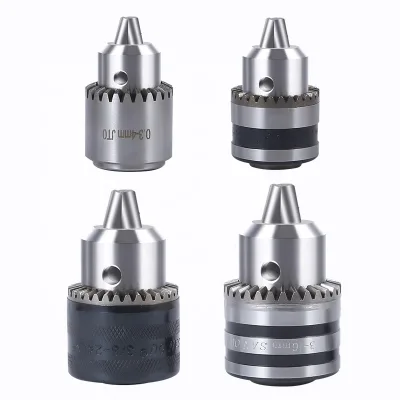
Compare 30 Keyless Hardening Drill Chuck options from verified Chinese manufacturers. Buyers can evaluate clamping ranges, material grades, and delivery times for industrial drilling applications.
Key considerations
Products List




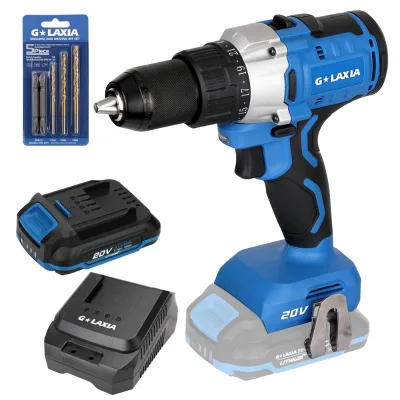
Brushless Motor Lithium Power Cordless Drill with 13mm Keyless Chuck (CD028)
$25.60 - $28.20
MOQ: 500 Pieces


Comprehensive Sourcing Guide
Strategic Sourcing Guide for Keyless Hardening Drill Chucks
Understanding Technical Specifications and Performance Metrics
When sourcing keyless hardening drill chucks, the primary objective is to identify components that balance high torque transmission with precise clamping capabilities. The market offers a diverse array of models, ranging from compact units designed for light-duty tasks to robust assemblies intended for heavy-duty drilling operations. Buyers must first distinguish between the specific mechanical configurations available. For instance, the product landscape includes models designated as "Key Type Drill Chuck" and "Keyless Drill Chuck," each serving distinct operational needs. The "Keyless" designation implies a mechanism that allows for rapid bit changes without the need for a separate wrench, a feature critical for high-volume production environments where downtime must be minimized.
The physical dimensions and clamping ranges are fundamental parameters that dictate suitability for specific machinery. Observed specifications indicate a standard clamping range of 1-24mm for certain general-purpose models, while specialized variants like the C25-Apu13 and C25-Apu16 offer precise ranges of 1-13mm and 1-16mm respectively. These numerical values are not merely descriptive; they represent the hard limits of the tool's gripping capability. A buyer selecting a chuck for a machine with a spindle capacity of 10mm must ensure the chuck's minimum clamping range does not exceed this limit, or the tool will fail to secure smaller bits. Conversely, the maximum range must accommodate the largest drill bit required for the application.
Material composition is another critical technical factor. The supply chain features chucks constructed from both standard metal alloys and stainless steel. The choice between these materials often depends on the operating environment. Stainless steel variants are typically preferred in applications involving moisture, corrosive chemicals, or food processing, where rust resistance is paramount. Standard metal chucks, while robust, may require additional maintenance in harsh environments. Furthermore, the accuracy of the chuck is a measurable performance metric. Data suggests that high-quality units can achieve runout accuracy of less than 0.07mm. This level of precision is essential for applications requiring tight tolerances, such as fine machining or electronics assembly, where even minor deviations can lead to product rejection.
Compliance, Certification, and Standard Verification
Navigating the regulatory landscape is a non-negotiable aspect of B2B procurement for industrial hardware. While specific certification statuses vary by manufacturer, the presence of ISO 9001 certification is a common benchmark for quality management systems in this sector. Buyers should verify that the supplier's quality management system is certified, as this indicates a commitment to consistent manufacturing processes and continuous improvement. The documentation provided by suppliers often lists "ISO 9001" alongside customization capabilities, suggesting that certified entities are more likely to accommodate bespoke requirements without compromising quality control.
Standards compliance extends beyond general quality management to specific product standards. In the observed market, various standard codes appear, including "1-24MM," "Q," and thread specifications like "1/2-20UNF" and "3/8-24UNF." These codes represent the mechanical interfaces and dimensional tolerances that the product must adhere to. The "UNF" (Unified National Fine) designation refers to a specific thread standard used in North America, ensuring compatibility with machinery manufactured to those specifications. When sourcing, buyers must cross-reference these standard codes with their existing machinery inventory. A mismatch in thread standards, such as attempting to fit a 3/8-24UNF chuck onto a 1/2-20UNF spindle, will result in immediate incompatibility and potential safety hazards.
It is imperative to treat certification claims as observations rather than universal guarantees. While some listings explicitly mention ISO 9001, others may not. Buyers should not assume that all products in a category possess the same certification status. Instead, the procurement strategy should involve a direct request for valid certification documents from the shortlisted suppliers. This due diligence ensures that the purchased components meet the necessary regulatory and safety requirements of the buyer's jurisdiction and industry. Additionally, the "Heavy Duty Drilling" suitability attribute found in some listings suggests that certain models are engineered to withstand higher torque loads, but this claim should be validated against the specific load requirements of the intended application.
Cost Drivers and Pricing Dynamics
The pricing structure for keyless hardening drill chucks is influenced by a complex interplay of factors, including material costs, manufacturing complexity, and customization levels. The observed price range in the market spans from $0.99 to $69.26, reflecting the vast diversity in product quality and specifications. The lower end of this spectrum typically corresponds to basic models with standard metal construction and minimal customization. These units are often suitable for general-purpose applications where extreme precision or durability is not the primary concern. In contrast, the higher price points are associated with specialized models featuring stainless steel construction, tighter accuracy tolerances (such as <0.07mm), and advanced features like specific clamping ranges or heavy-duty ratings.
Material selection is a significant driver of cost. Stainless steel chucks generally command a premium over standard metal equivalents due to the higher raw material costs and the additional processing required to achieve corrosion resistance. Similarly, the inclusion of precision-engineered components that ensure low runout and high torque capacity adds to the manufacturing expense. Customization is another variable that impacts pricing. While the market supports both "Customized" and "Non-Customized" options, bespoke orders involving specific logo printing, unique packaging, or tailored specifications will invariably incur higher costs. The availability of OEM/ODM support suggests that suppliers are willing to adapt their products, but these services come with a price premium.
Minimum Order Quantity (MOQ) also plays a crucial role in the total cost of ownership. The observed MOQ range is broad, extending from 1 piece to 500 pieces. For buyers with small-scale needs or those testing a new product line, the ability to order single units (1PCS) is a significant advantage, allowing for low-risk procurement. However, larger orders often benefit from economies of scale, potentially lowering the unit cost. Buyers must balance the upfront cost of the unit against the volume discounts available. Additionally, packaging requirements, such as the choice between plastic boxes, carton boxes, or double blister cards, can influence the final price, especially for international shipments where packaging must meet specific logistical standards.
Typical Applications and Operational Suitability
The versatility of keyless hardening drill chucks makes them suitable for a wide array of industrial and commercial applications. The "Heavy Duty Drilling" attribute indicates that specific models are engineered to handle demanding tasks, such as drilling into steel, concrete, or other tough materials. These applications require chucks that can withstand high rotational speeds and significant torque without slipping or deforming. For such scenarios, the selection of a chuck with a robust metal or stainless steel construction is essential to ensure longevity and safety.
Conversely, there are applications that demand higher precision rather than brute force. The "Accuracy: Less Than 0.07mm" specification highlights the suitability of certain models for fine machining, electronics assembly, or medical device manufacturing. In these fields, even a slight deviation in the drill bit's alignment can result in defective products. The ability to maintain tight tolerances is a critical performance metric for buyers in these sectors. Furthermore, the specific clamping ranges, such as 1-13mm or 1-16mm, make these chucks ideal for applications involving smaller diameter bits, which are common in detailed work or micro-drilling operations.
The "Keyless" feature is particularly advantageous in environments where rapid tool changes are necessary. In high-volume manufacturing lines, the time saved by eliminating the need for a separate wrench can significantly boost productivity. This feature is also beneficial for maintenance teams that need to quickly swap out worn bits for new ones to minimize machine downtime. The "Key Type Drill Chuck" variants, while requiring a wrench, may offer superior grip strength for applications where the highest possible torque transmission is required, even at the cost of slower changeover times. Buyers must carefully evaluate their operational workflow to determine whether the speed of a keyless system or the grip of a key-type system better aligns with their production goals.
Supplier Evaluation and Sourcing Strategy
Evaluating potential suppliers requires a systematic approach that goes beyond price comparison. The origin of the product is a key indicator of supply chain stability and quality control capabilities. The market data points to several key manufacturing regions, including Qingdao, Shandong, and the broader People's Republic of China. These regions are known for their established manufacturing ecosystems, but buyers should verify the specific factory capabilities and track records of the suppliers they engage. A supplier located in a region with a strong history of metalworking and precision engineering is more likely to deliver high-quality products.
The customization capabilities of a supplier are another critical evaluation criterion. The availability of OEM/ODM support, logo printing options, and tailored packaging solutions indicates a supplier's flexibility and willingness to collaborate. Buyers should assess whether the supplier can accommodate specific requirements, such as custom branding or unique packaging formats like "Plastic Box and Carton" or "Double Blister Card/Inner Box/Shipping Carton." The ability to provide these services suggests a mature supply chain capable of handling complex logistics.
Lead time and delivery reliability are also paramount. The observed delivery times vary, with some listings indicating a standard 25-day lead time, while others suggest a faster 7-15 day window. Buyers must align these timelines with their production schedules to avoid stockouts or delays. It is essential to confirm the lead time with the supplier before placing an order, as these figures can fluctuate based on raw material availability and production capacity. Additionally, the inspection protocols employed by the supplier, such as "100% Inspection," provide assurance of product quality. Buyers should request details on the inspection process to ensure that every unit meets the specified standards before shipment.
Quality Control and Long-Term Procurement Considerations
Ensuring consistent quality is the cornerstone of successful long-term procurement. The "100% Inspection" attribute observed in the market highlights a commitment to quality control, but buyers should seek more detailed information on the inspection methods used. This includes verifying the equipment used for testing accuracy, the criteria for rejecting defective units, and the frequency of quality audits. A robust quality control system should include checks for dimensional accuracy, material integrity, and functional performance, such as the ability to maintain a secure grip under load.
Long-term procurement considerations also involve the availability of spare parts and after-sales support. While drill chucks are generally durable components, wear and tear are inevitable in high-use environments. Buyers should inquire about the availability of replacement parts, such as jaws or internal mechanisms, to extend the lifespan of the tool. Furthermore, the warranty terms and return policies provided by the supplier are critical factors in mitigating risk. A supplier that offers a clear warranty and a responsive support team demonstrates confidence in their product quality and a commitment to customer satisfaction.
Payment terms and logistical arrangements are also part of the long-term strategy. The observed payment methods, including T/T, Western Union, and PayPal, offer flexibility, but buyers should negotiate terms that align with their cash flow management. For large orders, securing favorable payment terms can improve financial efficiency. Additionally, the packaging standards, such as the use of "Carton Box" or "Plastic Box," impact the safety of the product during transit. Buyers should ensure that the packaging is sufficient to prevent damage during shipping, especially for international orders where the product may undergo multiple handling stages.
Final Procurement Recommendations
In conclusion, sourcing keyless hardening drill chucks requires a meticulous approach that balances technical specifications, compliance requirements, cost considerations, and supplier reliability. Buyers must carefully evaluate the clamping ranges, material composition, and accuracy metrics to ensure the selected chuck meets the specific demands of their application. Verifying certifications like ISO 9001 and confirming adherence to relevant standards is essential for maintaining quality and safety. The wide price range and MOQ flexibility offer opportunities for buyers of all sizes, but the final decision should be based on a comprehensive assessment of the supplier's capabilities and the total cost of ownership.
By prioritizing suppliers with proven track records, robust quality control systems, and flexible customization options, buyers can secure a reliable supply of high-performance drill chucks. The strategic selection of these components will not only enhance operational efficiency but also contribute to the overall quality and safety of the manufacturing process. As the market continues to evolve, maintaining a vigilant approach to supplier evaluation and product verification will ensure that procurement strategies remain effective and aligned with business objectives.
FAQs
What customization options are available for drill chucks?
Customization is available for these products, including logo printing and tailored packaging. Buyers can choose between customized and non-customized options depending on their branding needs. OEM and ODM support is also provided to accommodate specific design requirements.
Which materials are used to manufacture these drill chucks?
The chucks are manufactured from metal and stainless steel materials. Stainless steel variants are suitable for environments requiring corrosion resistance, while standard metal alloys offer robust performance for general heavy-duty drilling applications.
How accurate are the keyless hardening drill chucks?
High-quality units achieve an accuracy of less than 0.07mm. This precision is essential for fine machining and electronics assembly where tight tolerances are required to prevent product rejection during manufacturing processes.
What is the typical delivery time for these products?
Delivery times vary between 7 to 25 days depending on the specific supplier and order volume. Buyers should confirm the exact lead time with the vendor before placing an order to align with their production schedules.
Can I order a single unit of the drill chuck?
Yes, the minimum order quantity can be as low as 1 piece. This allows buyers to test new product lines or fulfill small-scale needs without committing to large bulk orders immediately.
What certifications do the suppliers hold?
Some suppliers hold ISO 9001 certification for their quality management systems. Buyers should verify specific certification documents with shortlisted vendors to ensure compliance with regulatory and safety requirements.
Which clamping ranges are available for these chucks?
Available clamping ranges include 1-13mm, 1-16mm, and 1-24mm for general models. Selecting the correct range is critical to ensure the chuck can securely grip the specific drill bits required for your application.