Source KTV UHF Microphone for Stage Performance Karaoke Church
Find 30 KTV UHF Microphone options from Guangdong suppliers. Compare dynamic and wireless models with cardioid patterns, varying frequency ranges, and metal builds for stage performance, karaoke, and church applications.
Key considerations
Products List
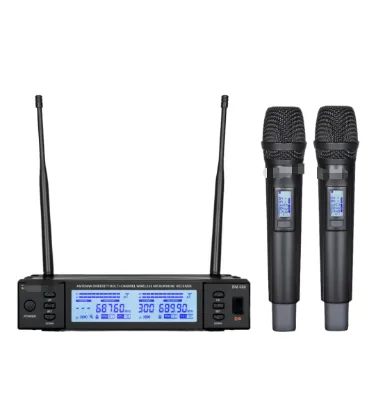
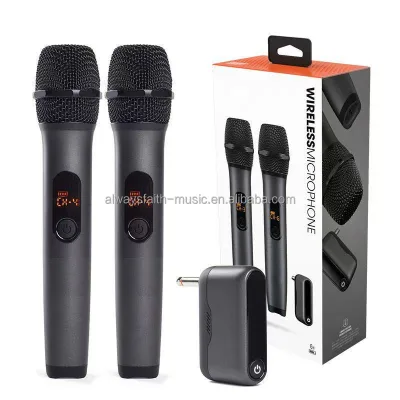


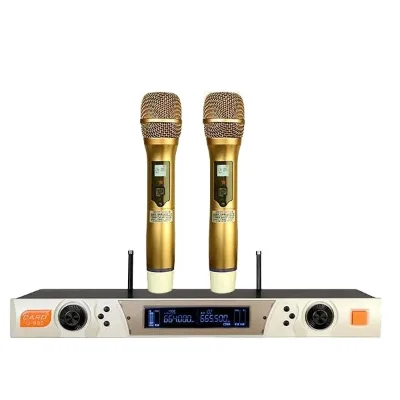
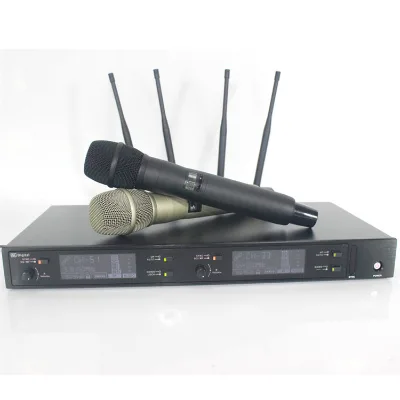


Comprehensive Sourcing Guide
Strategic Sourcing Guide for KTV UHF Microphone Procurement
The global demand for professional audio equipment, specifically UHF wireless microphones tailored for Karaoke Television (KTV) environments, has driven a complex supply chain landscape. Buyers entering this market must navigate a wide array of technical specifications, regulatory requirements, and supplier capabilities. The core keyword "KTV UHF Microphone" points to a specialized segment where signal stability, frequency agility, and durability are paramount. This guide synthesizes available market data to provide a disciplined framework for procurement, ensuring that buyers can distinguish between generic consumer-grade devices and professional-grade solutions suitable for commercial KTV venues, stages, and broadcasting applications.
Technical Architecture and Frequency Performance
Understanding the technical architecture of a UHF microphone is the first step in any sourcing strategy. The UHF band, typically ranging from 600 MHz to 928 MHz, offers superior penetration and reduced interference compared to VHF bands, making it the industry standard for professional KTV and live performance applications. When evaluating potential products, buyers must verify the specific frequency range supported by the unit. Market observations indicate that reliable units in this category often operate within the 600-928 MHz spectrum, ensuring compatibility with regional regulatory allocations.
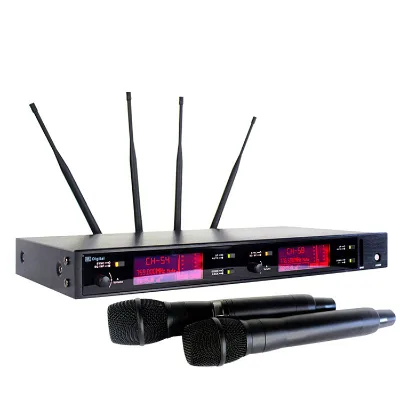
Signal transmission distance is another critical technical parameter. For KTV venues, which can vary from small private rooms to large banquet halls, the effective range is a key performance indicator. Data suggests that high-performance handheld wireless systems can achieve distances up to 80 meters under optimal line-of-sight conditions. However, buyers should note that real-world performance is heavily influenced by environmental factors such as wall density and RF congestion. The system type is also vital; while dynamic microphones are preferred for their durability and ability to handle high sound pressure levels (SPL), some configurations offer dual-channel capabilities to allow for simultaneous use by two performers.
The frequency response rate defines the fidelity of the audio reproduction. A standard professional specification for these units often falls between 40 Hz and 15 kHz, covering the essential vocal range for singing and speech. Sensitivity is equally important; a typical benchmark for high-quality units is around -42 dB ± 2 dB at 1 kHz. This ensures that the microphone captures subtle vocal nuances without requiring excessive gain, which could introduce noise. Additionally, the polar pattern, typically cardioid, helps reject background noise from the sides and rear, which is crucial in noisy KTV environments where multiple sound sources exist.
Regulatory Compliance and Certification Standards
In the international B2B market, compliance is not merely a formality but a prerequisite for market access and liability protection. Buyers must verify that suppliers possess valid certifications for the target markets. Common certifications observed in this sector include CE, FCC, RoHS, and CB. These certifications indicate that the product meets specific safety, electromagnetic compatibility, and environmental standards. For instance, FCC compliance is essential for sales in North America, while CE is mandatory for the European Union.
The presence of these certifications should be verified through official documentation rather than relying solely on supplier claims. Buyers should request test reports that explicitly reference the standards met. Furthermore, the manufacturing facility's history and adherence to quality management systems are indicators of reliability. Suppliers with a factory history of more than ten years often demonstrate a commitment to maintaining consistent quality and regulatory compliance.
Protection mechanisms are also part of the compliance and safety profile. Features such as protection against high temperatures, overload, and short circuits are critical for equipment that may be subjected to rough handling or extended periods of operation. A warranty period of three years is a strong indicator of a supplier's confidence in their product's longevity and their willingness to support long-term procurement needs.
Cost Drivers and Pricing Structures
The pricing of KTV UHF microphones is influenced by a multitude of factors, ranging from material quality to the complexity of the electronic circuitry. The observed price range in the market is extensive, spanning from approximately $0.20 to $650.00 USD. This wide variance reflects the difference between basic consumer-grade units and professional, feature-rich systems. Buyers must understand that a lower price point often correlates with compromises in build quality, signal stability, or the inclusion of fewer advanced features.
Material composition is a primary cost driver. Units constructed from metal offer superior durability and heat dissipation compared to those made from plastic or "other" materials. The build quality directly impacts the Maximum Sound Pressure Level (SPL) the microphone can handle, with high-end units capable of withstanding up to 125 dB without distortion. This is essential for KTV applications where singers may project their voices at high volumes.
Packaging and logistics also contribute to the final cost. The single package size and gross weight are significant considerations for shipping. For example, a single unit might have a package size of 50x35x10 cm and a gross weight of 2.500 kg. These dimensions affect freight costs, especially when ordering in bulk. Buyers should calculate the total landed cost, including shipping, duties, and insurance, rather than focusing solely on the unit price.
Typical Applications and Usage Scenarios
The versatility of UHF microphones allows them to serve a broad spectrum of applications beyond just KTV rooms. The observed usage scenarios include conference microphones, church performances, stage performances, speech delivery, teaching, and general communication. This versatility makes them a valuable asset for suppliers targeting diverse market segments.
In the specific context of KTV, the microphone must be robust enough to handle the high-energy environment of a live stage or a crowded party room. The application extends to home theater systems, computer usage, and portable players, indicating a need for adaptability. The "2 channel microphone" feature is particularly useful for duets or interactive performances, a common requirement in KTV settings.
The design of the microphone, often described as "small, tiny, and portable," caters to the need for mobility. Whether for a handheld performance or a stationary setup, the physical form factor must balance ergonomics with functionality. The availability of various colors, including blue, black, red, gold, white, and purple, allows buyers to customize the aesthetic to match the branding of their KTV venues or event themes.
Supplier Evaluation and Manufacturing Capabilities
Selecting the right supplier requires a deep dive into their manufacturing capabilities and business practices. The brand name is a significant factor, with options ranging from established names like DAYMIC and RYD to OEM/ODM providers like Qqchinapa. While branded products offer consistency, OEM/ODM options provide flexibility for private labeling, which is crucial for buyers looking to build their own brand identity.
The place of origin is a critical indicator of supply chain logistics. Most suppliers in this sector are located in Guangdong or Guangzhou, China, regions known for their robust electronics manufacturing ecosystems. This concentration allows for efficient supply chains but requires buyers to conduct thorough due diligence to ensure the supplier is not just a trading company but a capable manufacturer.
Key evaluation metrics include the supplier's ability to handle customization, their warranty policies, and their delivery timelines. A lead time of 2 to 25 days suggests a flexible production schedule, but buyers must confirm if this applies to standard stock or custom orders. The acceptance of small orders is another positive indicator of supplier flexibility, allowing buyers to test the market with lower initial investment.
Quality Control and Performance Verification
Quality control (QC) is the backbone of successful procurement. Buyers must establish clear criteria for performance verification before finalizing orders. Key performance indicators include the signal-to-noise ratio (SNR), which should ideally be between 78 dB and 90 dB for clear audio transmission. A higher SNR ensures that the background noise is minimized, providing a cleaner sound experience for the end-user.
Testing protocols should cover the frequency response, sensitivity, and maximum SPL. Buyers should request sample units to conduct independent testing or hire third-party inspection agencies to verify these specifications. The "Carry Nice Sound Performance" advantage claimed by some suppliers must be validated through objective testing rather than subjective marketing language.
The build quality, including the material and the finish, should be inspected for durability. Metal construction is preferred for its resistance to wear and tear. Additionally, the electrical components must be tested for protection against high temperatures and short circuits to prevent safety hazards.
Long-Term Procurement Considerations
Sourcing KTV UHF microphones is not a one-time transaction but a long-term partnership. Buyers should consider the availability of spare parts, the scalability of the supply chain, and the supplier's ability to adapt to changing market trends. The "private mold" status is an important consideration; suppliers without private molds may have limited customization options, whereas those with private molds can offer unique designs.
The warranty period is a critical factor in long-term cost management. A three-year warranty indicates a high level of confidence in product reliability and reduces the total cost of ownership. Buyers should also evaluate the supplier's track record for after-sales support, including technical assistance and replacement policies.
Finally, the flexibility of the supplier to accommodate changing order volumes is essential. The observed MOQ range of 0 to 5000 units suggests that many suppliers are willing to accommodate both small trial orders and large-scale production runs. This flexibility allows buyers to scale their operations without being locked into rigid contractual obligations. By focusing on these long-term factors, buyers can secure a reliable supply chain that supports their business growth and reputation in the competitive KTV audio market.
| Feature Category | Key Specification / Observation | Procurement Verification Point |
|---|---|---|
| Frequency Range | 600-928 MHz | Verify regional regulatory compliance for target markets. |
| Transmission Distance | Up to 80 M | Test in actual venue conditions; line-of-sight vs. obstructed. |
| Sensitivity | -42dB ± 2dB @ 1KHz | Request test reports for sensitivity calibration. |
| Signal-to-Noise Ratio | 78dB - 90dB | Measure SNR in controlled environment to ensure clarity. |
| Maximum SPL | 125 dB | Verify distortion levels at high volume outputs. |
| Material | Metal | Inspect physical samples for build quality and finish. |
| Certifications | CE, FCC, RoHS, CB | Validate certificates against official regulatory databases. |
| Warranty | 3 Years | Review terms and conditions for coverage scope. |
| Origin | Guangdong/Guangzhou, China | Confirm factory location and audit capabilities. |
| Customization | Available (OEM/ODM) | Discuss private mold options and lead times. |
FAQs
What frequency range does the KTV UHF Microphone support?
The microphone operates within the 600-928 MHz spectrum for stable signal transmission. This range ensures reduced interference in professional KTV environments compared to VHF bands.
How far can the wireless signal travel effectively?
High-performance units can achieve transmission distances up to 80 meters under optimal line-of-sight conditions. Real-world performance depends on environmental factors like wall density and RF congestion.
Which certifications are required for international sales?
Common certifications include CE, FCC, RoHS, and CB for safety and electromagnetic compatibility. These are mandatory for market access in regions like the European Union and North America.
Can buyers order small quantities for testing?
Yes, small orders are accepted with an MOQ range starting from 0 units. This flexibility allows buyers to test the market with lower initial investment before scaling up.
What is the typical signal-to-noise ratio for these units?
The signal-to-noise ratio typically falls between 78 dB and 90 dB for clear audio. A higher ratio ensures background noise is minimized for a cleaner sound experience.
Where are the primary manufacturing locations for these microphones?
Most suppliers are located in Guangdong or Guangzhou, China, known for robust electronics ecosystems. This concentration supports efficient supply chains for global procurement needs.
How long is the warranty period for the product?
A standard warranty period is three years, indicating high confidence in product reliability. This reduces the total cost of ownership for long-term procurement partnerships.