Source LED Digital Solder Paste Mixer for Electronics, Labs, and Manufacturing
Find and compare 30 LED Digital Solder Paste Mixer options for electronics assembly, laboratory research, and manufacturing workflows. Evaluate specifications such as spiral stirring, planetary mixing, and conical drum designs to select the right equipment for your production needs; compare the available evidence and request quotations based on your requirements.
Key considerations
Products List


$2400.00 - $2600.00
MOQ: 1


SMT Solder Paste Mixer Shenzhen High Quality Planetary Solder Paste Mixer
$430.00 - $500.00
MOQ: 1 Sets


Easy Operation Solder Paste Mixer SMT Paste Mixer Solder Cream Mixer with CE
$500.00 - $1000.00
MOQ: 1 Pieces


High Speed Tin Paste Mixing Machine PCB Solder Paste Mixer with Fast Delivery
$500.00 - $1000.00
MOQ: 1 Pieces

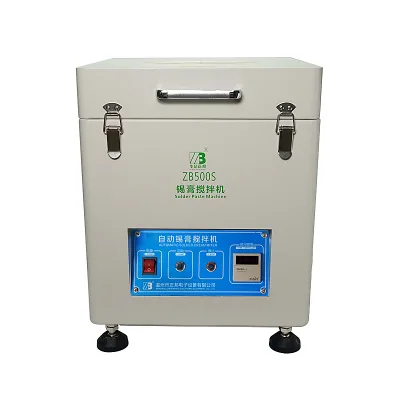


SMD Peripheral Equipment AC-118 Manufacturers SMT Solder Paste Mixer Machine
$500.00 - $1999.00
MOQ: 1 Pieces

$1500.00 - $30000.00
MOQ: 1 Pieces
Comprehensive Sourcing Guide
LED Digital Solder Paste Mixer Sourcing Guide
Procuring a LED Digital Solder Paste Mixer requires distinguishing between general industrial mixers and specialized units designed for electronic assembly materials. The observed product data reveals a diverse range of mixing technologies, including planetary, double ribbon, and agitator types, which suggests that buyers must carefully map specific solder paste rheology to the correct mechanical design. While some listed units feature spiral stirring types suitable for liquid with suspended solids, others are configured for viscous fluids or powders, necessitating a precise match between the mixer's internal geometry and the solder paste's viscosity profile.
Buyers must also scrutinize the control systems and power specifications to ensure compatibility with existing factory infrastructure. The available data indicates a mix of button controls and advanced PLC systems, alongside varying power supplies ranging from 0.1kw starting power to standard AC 220V configurations. Selecting the appropriate unit involves verifying that the speed range, whether fixed at 1000 Rpm or variable, aligns with the mixing requirements for consistent paste homogeneity without introducing air bubbles or degrading the flux components essential for reliable soldering joints.
Product Scope and Observed Listing Signals
The market listing signals indicate a broad spectrum of mixer capabilities, from high-speed planetary mixers to continuous operating units with conical mixing drums. This variety implies that a single "LED Digital Solder Paste Mixer" listing may encompass different mechanical architectures, such as horizontal layouts or vacuum-capable systems, which significantly impact the final product quality. Buyers should not assume that all listed units possess the same stirring direction or cooling method, as the data shows options ranging from air cooling to water cooling and revolution or rotation stirring directions.
When evaluating product scope, attention must be paid to the specific application areas listed, which include chemical processing, engineering, and construction sectors. Although these applications are broad, the presence of attributes like "coating" capabilities and "vacuum" additional features suggests that some units are versatile enough for specialized electronic material preparation. However, the presence of different packing standards, such as plywood boxes or vacuum wooden boxes, indicates that logistics and protection during transit vary by manufacturer, requiring buyers to verify the specific packaging integrity for sensitive electronic components.
Technical Specifications to Verify
Technical verification begins with the mixing drum shape and the specific stirring mechanism employed within the unit. The observed data highlights conical mixing drums and spiral stirring types, which are critical for ensuring uniform distribution of solder paste components. Buyers must confirm that the selected mixer's layout type, such as horizontal configurations, supports the specific flow dynamics required for the solder paste being processed, as mismatched geometries can lead to dead zones where unmixed material accumulates.
Power and control specifications are equally critical for operational reliability and process consistency. The available listings show a range of power supplies, including AC 220V 50Hz and specific voltage requirements, alongside control systems that vary from simple button controls to sophisticated PLC systems. It is essential to verify that the speed range, whether it is 60 R/min or higher, and the starting power of 0.1kw are sufficient for the intended batch size and viscosity, ensuring that the machine can maintain the necessary shear rates without overheating or stalling during continuous operation.
Compliance and Safety Documentation
Compliance verification is paramount when sourcing industrial mixing equipment, particularly for applications involving electronic materials where safety standards are stringent. The observed product data lists certifications such as ISO, CE, and CCC, which serve as foundational indicators of regulatory adherence. Buyers must request current certification documents to confirm that the specific unit model, such as the T186 or ZD-400, meets the safety and quality standards required for operation in their specific jurisdiction, ensuring that the equipment does not pose electrical or mechanical hazards.
Safety features and emergency protocols must be explicitly detailed in the product documentation before finalizing a purchase. The data indicates the presence of safety features like emergency stop buttons, which are non-negotiable for high-speed mixing operations. Additionally, buyers should verify the availability of after-sales support, including online support, video technical assistance, and the option for engineers to service machinery overseas, as these services are crucial for maintaining compliance and operational safety throughout the equipment's lifecycle.
Cost Drivers and Commercial Terms
Cost drivers for led digital solder paste mixers are heavily influenced by the complexity of the control system and the materials used in construction. Units featuring PLC control systems and stainless steel main materials, as observed in the data, typically command higher prices than those with basic button controls and alternative materials. The inclusion of additional capabilities like vacuum operation or electric heating methods also adds to the manufacturing cost, which is reflected in the observed price range of 300 to 39,999 USD, requiring buyers to balance budget constraints with performance needs.
Commercial terms regarding warranty and customization availability significantly impact the total cost of ownership. The standard warranty period observed is one year, but buyers should negotiate terms that cover critical components like motors and control boards. Furthermore, the availability of customization options allows for tailoring the mixer to specific production lines, though this may extend lead times and increase initial costs. Buyers must clarify the MOQ, which appears to be 1 unit in the observed data, and understand how customization affects the final delivery schedule and pricing structure.
Supplier Qualification and Quality Control
Supplier qualification requires a rigorous assessment of the manufacturer's origin and their ability to deliver consistent quality. The data points to origins in Beijing and China, indicating a concentration of manufacturing capabilities in these regions. Buyers should verify the supplier's track record in producing mixers for the chemical and engineering sectors, as these industries demand high reliability. The presence of specific model numbers like T186 and ZD-400 suggests established product lines, but buyers must ensure that the specific batch they are purchasing adheres to the same quality standards as previous successful deliveries.
Quality control processes must be validated through the supplier's documentation and testing protocols. The observed data mentions standards such as ISO and specific dimensions like 400x400x420mm, which serve as benchmarks for dimensional accuracy. Buyers should request evidence of quality control checks performed on the main material, typically stainless steel, to ensure corrosion resistance and durability. Additionally, verifying the supplier's ability to provide detailed packing specifications, such as vacuum wooden boxes, ensures that the equipment arrives in pristine condition, ready for immediate installation and operation.
Long-Term Procurement Checks
Long-term procurement success depends on the availability of spare parts and the robustness of the after-sales service network. The observed data highlights services like online support and video technical assistance, which are vital for troubleshooting issues without immediate on-site intervention. Buyers should establish a clear protocol for accessing these services and verify the lead times for critical spare parts, ensuring that production downtime is minimized in the event of a mechanical failure or component wear.
Maintenance and operational longevity are further ensured by understanding the heating and cooling methods integrated into the mixer design. The data indicates options for electric heating, hot water heating, air cooling, and water cooling, each with different maintenance requirements. Buyers must develop a maintenance schedule that accounts for these specific systems, checking for wear on heating elements and the efficiency of cooling mechanisms. Regular audits of the control system and speed control mechanisms will help maintain the precision required for solder paste mixing over the long term, preserving the investment and ensuring consistent product quality.
FAQs
What certifications do these mixers typically hold?
These mixers typically hold ISO, CE, and CCC certifications. This ensures compliance with international safety and quality standards for industrial equipment. Buyers can verify these credentials to ensure the machinery meets regulatory requirements for their specific operational environment and regional compliance needs.
Can the mixer handle viscous fluids and suspended solids?
Yes, the mixer is designed for liquid with suspended solids and viscous fluids. It features a spiral stirring type and planetary mixing action. This configuration ensures thorough blending of complex materials, making it suitable for chemical and engineering applications requiring consistent homogeneity.
What is the standard power supply for these units?
The standard power supply is AC 220 V 50Hz. Some models may also support 220V configurations. This electrical specification allows for direct connection to standard industrial outlets in many regions, facilitating easy installation without requiring complex voltage conversion infrastructure for basic operations.
Which models offer vacuum capabilities for coating applications?
Models like the T186 and ZD-400 offer additional vacuum capabilities. These features support coating applications by removing air bubbles during mixing. The vacuum function enhances product quality by ensuring a dense, bubble-free mixture, which is critical for high-precision industrial processes and material consistency.
What after-sales support is provided for these mixers?
Support includes online assistance, video technical guidance, and available engineers for overseas service. This comprehensive support structure ensures minimal downtime. Buyers receive remote troubleshooting help or on-site maintenance, guaranteeing long-term operational reliability and quick resolution of any technical issues that may arise.
How is the equipment packaged for safe shipping?
Equipment is packaged in plywood cases, wooden boxes, or vacuum wooden boxes. This robust packaging protects the mixer during transit. The specific packing method depends on the model, ensuring the machinery arrives undamaged and ready for immediate installation at the buyer's facility without additional protective measures.