Source LPG Storage ISO Tank Container for Chemical, Gas, and Fuel
Find 30 verified listings for LPG Storage ISO Tank Container units with varying capacities from 20 to 46 cubic meters. Buyers can compare specifications including pressure ratings, material grades like Q345r, and design standards such as GB150 and ISO for industrial separation and storage needs.
Key considerations
Products List

$5500.00 - $10000.00
MOQ: 1 Pieces


LPG Liquid Gas Carried ISO Storage Tanker Tank Container Transport
$16500.00 - $23900.00
MOQ: 1 Pieces

$16000.00 - $23900.00
MOQ: 1 Pieces


LPG/LNG/Gas Transport ISO Tank, Gpl Gas Transport Trucks Tank Container
$21000.00 - $39000.00
MOQ: 1 Pieces


20FT 40FT Liquid Nitrogen Gas Storage Frame Chassis LNG Tank Container
$31790.00 - $39000.00
MOQ: 1 Pieces
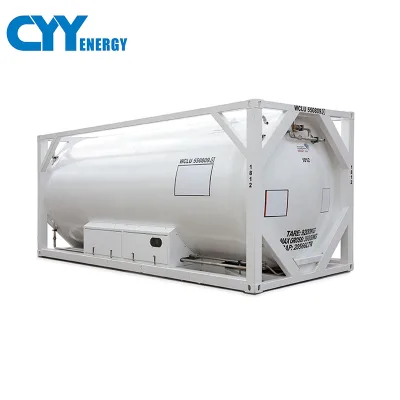


China Manufacture ISO 20ft LPG Tank Container Tank Top Safety 40ft Tank Container
$19500.00 - $29800.00
MOQ: 1 Pieces


Comprehensive Sourcing Guide
Strategic Sourcing Guide for LPG Storage ISO Tank Containers
Procuring liquefied petroleum gas (LPG) storage ISO tank containers requires a rigorous approach that balances technical precision with regulatory compliance. These specialized vessels are critical infrastructure for the storage and transport of flammable and explosive media, demanding that buyers possess a deep understanding of design standards, material properties, and operational constraints. The following guide synthesizes observed market data and technical facts to assist procurement professionals in evaluating potential suppliers and selecting the right equipment for their specific operational needs.
Technical Specifications and Design Parameters
The foundation of a successful procurement strategy lies in a precise understanding of the technical specifications that define the vessel's capabilities. LPG storage tanks are not generic containers; they are engineered pressure vessels designed to withstand specific internal pressures and environmental conditions. Based on observed market data, these units typically feature a cubic meter capacity ranging from 20 to 46 cubic meters, with specific models offering capacities such as 23.5 cubic meters or 46 cubic meters. The physical dimensions are equally critical for logistics planning, with overall dimensions frequently observed around 6058mm in length, 2438mm in width, and 2591mm in height. However, variations exist, with some barrel dimensions recorded as 2350mm in diameter by 5843mm in length, or 2250mm by 1175mm for specific configurations.
Material selection is paramount for safety and longevity. The tank material is predominantly carbon steel, with specific grades such as Q345r frequently cited for their suitability in pressure vessel applications. The design thickness of the tank barrel and heads is a critical engineering parameter; observed data indicates barrel design thicknesses ranging from 11.76 mm to 12.5 mm, while head design thicknesses vary between 11.74 mm and 12.5 mm. These dimensions are calculated based on the maximum design pressure, which for many units falls within the medium pressure range of 1.6 MPa to 10.0 MPa. Specific observed values include a maximum design pressure of 2.65 Bar, a calculated pressure of 10 Bar, and a designed pressure of 1.80 MPa. Buyers must verify that the selected vessel's pressure rating aligns with the intended storage medium, which is often LPG (Propane), a flammable and toxic substance.
The operational envelope is defined by the working temperature, typically ranging from -20°C to 50°C, and the corrosion allowance, which is observed at 1.0 mm. The tare weight of these vessels can be substantial, with observations noting weights of 5000 kg, while the gross weight capacity may reach up to 28 tons. The maximum gross weight (Gvw) is another vital metric, with specific models showing a Gvw of 7800 kg or a curb weight of 14100 kg depending on the chassis or container configuration. Understanding these weight parameters is essential for calculating payload limits and ensuring compliance with road transport regulations.
Compliance and Certification Standards
Navigating the regulatory landscape is perhaps the most critical aspect of sourcing LPG storage containers. These vessels must adhere to strict international and national standards to ensure safety and legal operability. The primary design standard observed in the market is GB150-98, a Chinese national standard for pressure vessels. Additionally, the product standard is frequently cited as the China Standard GB150, which governs the manufacturing and testing requirements. For international trade and interoperability, the ISO standard is a key benchmark, with specific references to ISO Tank certification.
Certification verification is non-negotiable. Buyers should look for explicit certification marks such as ISO Tank, CCC (China Compulsory Certification), and ISO9000 quality management system certification. These certifications indicate that the manufacturer has undergone rigorous auditing and that the product meets defined safety and quality thresholds. The observed data also mentions a standard of 1219124382591mm, which likely refers to dimensional compliance with ISO container standards, ensuring the vessel fits within standard shipping protocols.
It is important to distinguish between the product standard and the design standard. While GB150 governs the vessel construction, the overall product may also need to comply with ISO standards for transport. Buyers must request documentation proving that the specific model, such as HT9410I, SY0587KL6H, or SLS9404GYY, has been tested and certified according to these standards. The absence of clear certification documentation should be treated as a red flag, as it may indicate non-compliance with safety regulations that could lead to operational bans or insurance voidance.
Cost Drivers and Pricing Factors
The pricing of LPG storage ISO tank containers is influenced by a complex array of factors, including material costs, design complexity, and customization requirements. The observed listed price range in the market spans from 1000 USD to 80,000 USD, reflecting the diversity of configurations available. This wide range suggests that price is not solely a function of capacity but is heavily dependent on the specific technical specifications, such as the thickness of the steel, the pressure rating, and the level of customization.
Customization is a significant cost driver. The market data confirms that customization is available, allowing buyers to tailor the vessel to specific needs, such as color options or specific internal configurations. However, custom features invariably increase the unit cost and may impact the lead time. The condition of the product is another factor; all observed units are listed as "New," which implies a premium price compared to refurbished or used equipment.
Logistics and packing methods also contribute to the final cost. The observed packing methods include Bulk Cargo Ship, RO-RO Ship, Flat Deck, and After Waxing by Container. Each method has different associated costs. For instance, waxing provides additional corrosion protection but adds to the expense, while bulk cargo shipping may be more economical for large orders but requires specialized handling. The minimum order quantity (MOQ) observed is consistently 1, offering flexibility for buyers who need a single unit, though this may affect the per-unit pricing compared to bulk orders. Buyers should request detailed breakdowns of costs to understand how much of the price is attributed to raw materials, labor, and logistics.
Typical Applications and Operational Use Cases
LPG storage ISO tank containers are designed for specific applications, primarily the storage and separation of liquefied gases. The primary application is for LPG (Propane), a flammable and explosive medium that requires specialized handling. These vessels function as both separation pressure vessels and storage pressure vessels, making them versatile for various stages of the supply chain, from production facilities to distribution centers.
The media characteristics are strictly defined as flammable and explosive, which dictates the operational protocols for the vessel. The storage medium is often toxic, requiring strict safety measures during loading and unloading. The working temperature range of -20°C to 50°C ensures that the vessel can operate in a variety of climates, but buyers must ensure that the insulation and heating/cooling systems are adequate for their specific regional conditions.
In terms of logistics, these containers are designed for multimodal transport. The observed packing methods indicate compatibility with RO-RO ships, bulk freighters, and flat decks, allowing for seamless integration into global supply chains. The specific models, such as the SY0586KY9L or SY0563KL5J, may be optimized for different transport modes or storage durations. Buyers should align their procurement with their specific logistical needs, ensuring that the container's dimensions and weight limits match the infrastructure of their storage facilities and transport networks.
Supplier Evaluation and Origin Verification
When evaluating potential suppliers, origin verification is a crucial step. The observed data indicates that the majority of these products originate from China, specifically the Shandong province. This region is a known hub for heavy machinery and pressure vessel manufacturing. However, buyers must verify the specific origin of the unit they are purchasing, as the "China" designation can be broad. The product origin should be clearly stated on all documentation to ensure transparency and to assess the supplier's reputation within that specific region.
Supplier evaluation should extend beyond the origin to include a review of their manufacturing capabilities and quality control processes. Buyers should verify that the supplier adheres to the stated standards, such as GB150 and ISO, and that they have the necessary certifications. The presence of a welded joint coefficient of 1.0mm suggests a high level of welding quality, but buyers should request evidence of this, such as weld inspection reports.
It is also important to assess the supplier's ability to provide customization. Since customization is available, the supplier must demonstrate the technical expertise to modify the vessel without compromising its structural integrity or safety. Buyers should inquire about the supplier's track record with similar projects and their ability to meet specific design requirements.
Quality Control and Long-Term Procurement Considerations
Quality control is an ongoing process that begins during the manufacturing phase and continues through the lifecycle of the vessel. The observed data highlights several quality indicators, such as the corrosion allowance of 1.0 mm and the welded joint coefficient of 1.0mm. These parameters must be verified through third-party inspection reports to ensure they meet the specified standards. Buyers should insist on comprehensive quality control documentation, including material certificates, pressure test results, and dimensional inspection reports.
Long-term procurement considerations involve the maintenance and lifecycle management of the vessel. The condition of the product is listed as "New," but buyers should plan for regular inspections and maintenance to ensure continued safety and compliance. The color of the vessel is optional, but this choice may have implications for heat absorption and visibility, which can affect the vessel's performance in different environments.
Buyers should also consider the scalability of their procurement strategy. With an MOQ of 1, it is possible to start with a single unit and expand as needed. However, buyers should evaluate the potential for bulk ordering to reduce per-unit costs and streamline logistics. The lead time, while not explicitly stated in the observed data, is a critical factor that should be clarified with the supplier, especially for customized orders.
Conclusion
Sourcing LPG storage ISO tank containers is a complex process that requires a meticulous approach to technical specifications, compliance, and supplier evaluation. By focusing on the observed data and adhering to the standards and certifications mentioned, buyers can make informed decisions that ensure safety, efficiency, and cost-effectiveness. The wide range of available models and customization options provides flexibility, but it also demands a thorough understanding of the specific requirements of the application. Ultimately, the success of the procurement depends on the buyer's ability to navigate the technical and regulatory landscape with precision and diligence.
FAQs
What is the typical capacity range for these tanks?
Observed capacities range from 20 to 46 cubic meters, with specific models offering 23.5 cubic meters or 46 cubic meters. Buyers should verify the exact cubic meter rating against their storage needs before ordering.
Which design standards do these vessels comply with?
These tanks primarily comply with the GB150-98 Chinese national standard and ISO standards. Some units also carry CCC and ISO9000 certifications to ensure safety and quality management compliance.
Can the tank material be customized for specific needs?
Yes, customization is available for these pressure vessels. While carbon steel and Q345r are common materials, buyers can request specific configurations to match their operational requirements.
What is the maximum design pressure for these containers?
The maximum design pressure varies, with observed values including 2.65 Bar, 10 Bar, and 1.80 MPa. These units generally fall within the medium pressure range of 1.6 MPa to 10.0 MPa.
How are these tanks typically packed for shipping?
Packing methods include Bulk Cargo Ship, RO-RO Ship, Flat Deck, and After Waxing by Container. The specific packing method depends on the model and logistics requirements of the buyer.
What is the origin of these LPG storage containers?
The majority of these products originate from China, specifically the Shandong province. Buyers should verify the specific origin on documentation to ensure transparency and assess supplier reputation.
What is the minimum order quantity for these units?
The observed minimum order quantity is 1 unit, offering flexibility for buyers needing a single vessel. This allows for small-scale procurement without requiring bulk commitments.