Source LPG Scooter for Petroleum, New Energy, and Food
Find and compare 30 LPG Scooter options from verified suppliers in China. Buyers can evaluate specifications like engine size, certifications, and customization for petroleum, new energy, food, and electronic applications.
Key considerations
Products List


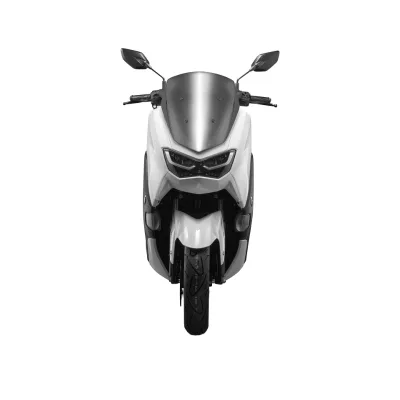
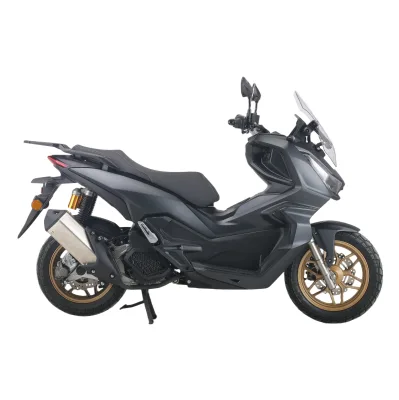
Xgp150t Motor Scooter, Gas/Gasoline Motorbike, Motorcycle, Street Bike
$300.00 - $500.00
MOQ: 26 Pieces


Comprehensive Sourcing Guide
Strategic Sourcing Guide for LPG Scooter Procurement
The global demand for alternative fuel mobility solutions has elevated the strategic importance of LPG (Liquefied Petroleum Gas) scooters in B2B procurement cycles. These vehicles, often categorized under gas-powered two-wheelers, offer a distinct value proposition for fleets operating in urban environments where fuel costs and emission regulations are critical. Sourcing these assets requires a disciplined approach that balances technical performance with rigorous compliance verification. The following guide outlines the essential parameters for evaluating LPG Scooter suppliers, focusing on the specific attributes observed in current market listings and the necessary due diligence for international procurement.
Technical Architecture and Performance Specifications
When evaluating LPG scooters, the primary focus must be on the engine architecture and its compatibility with the intended fueling infrastructure. The observed market data indicates a prevalence of single-cylinder, four-stroke engines with displacement ranges typically falling between 126cc and 250cc. This displacement class is optimal for urban delivery and personal transport, balancing power output with fuel efficiency. Specific model observations highlight engine sizes strictly under 250cc, with power outputs reaching approximately 8.3kW at 8500 RPM and maximum speeds recorded in specific configurations around 7500 RPM.
The fuel system integration is the defining technical characteristic. Unlike standard gasoline scooters, these units are engineered to handle LPG steel cylinders. The supply chain must ensure that the fuel tank capacity, observed at 14 liters in specific configurations, is compatible with the high-pressure gas cylinder requirements. The working pressure for these systems is classified as high-pressure gas cylinder standards, necessitating robust sealing and pressure regulation components. The cooling method is predominantly air-cooling, which simplifies maintenance but requires careful thermal management in high-load scenarios.
Transmission systems in this segment are consistently chain-driven, offering a balance of durability and cost-effectiveness. The braking system typically employs a front disc and rear drum configuration, providing adequate stopping power for the vehicle's weight class. Ground clearance is observed around 140mm, and wheelbase dimensions vary between 1300mm and 1370mm depending on the specific model variant, such as the UY-150 or NVX series. Buyers must verify that the physical dimensions, including standard lengths around 1950mm to 2000mm and widths near 750mm to 775mm, align with their operational logistics and storage facilities.
Compliance and Certification Verification
Navigating the regulatory landscape is perhaps the most critical phase of LPG Scooter procurement. The market data reveals a complex matrix of certifications that vary by region and intended application. A high-confidence observation confirms the presence of ISO certification, alongside specific standards such as ISO 22991, which relates to the safety of gas cylinders. Additionally, DOT (Department of Transportation) certification is frequently cited, indicating compliance with US safety standards for vehicle components.
For markets in Asia, particularly China, the data points to COC (Certificate of Conformity) and CCC (China Compulsory Certification) as mandatory requirements. In European contexts, CE marking and CQC (China Quality Certification Centre) are observed as key compliance indicators. Procurement teams must not assume that a single certification covers all jurisdictions. The presence of multiple certifications, such as CE, CQC, COC, and CCC, suggests a supplier capable of meeting diverse regulatory frameworks, but verification of the specific certificate validity for the destination country is essential.
The manufacturing method is described as "controlled gas cylinders," implying a standardized production process for the fuel storage units. However, buyers must explicitly request test reports and certification documents for the specific batch of vehicles being purchased. The absence of UL 2272 in the high-confidence data suggests that this specific standard may not be universally applicable or observed in the current dataset, and therefore should not be assumed as a baseline requirement without direct supplier confirmation.
Cost Drivers and Pricing Dynamics
The pricing structure for LPG scooters is influenced by a combination of material costs, certification fees, and customization levels. The observed price range in the market spans from $1 to $1200 USD, a wide variance that likely reflects differences between complete vehicles, partial kits, or specific component assemblies. This broad range necessitates a clear definition of the procurement scope. A unit price at the lower end of the spectrum may indicate a CKD (Completely Knocked Down) kit requiring local assembly, while higher prices likely correspond to fully assembled, certified units ready for immediate deployment.
Material costs play a significant role, with steel being the primary material for the gas cylinders and frames. The "Steel Frame with Carton Box" packaging observation suggests that structural integrity is prioritized, but the packaging method can impact shipping costs. The Minimum Order Quantity (MOQ) ranges from 0 to 200 units, offering flexibility for small fleet pilots but potentially requiring larger commitments for optimal unit economics. Buyers should be aware that customization options, such as color variations and specific packing requirements, can introduce variable costs that affect the final landed price.
Lead times are another critical cost driver. The standard delivery time is noted as approximately 45 days after the receipt of a deposit. This timeline must be factored into the total cost of ownership, particularly for time-sensitive fleet expansions. Delays in the supply chain, often caused by the complexity of gas cylinder manufacturing or certification delays, can inflate inventory carrying costs. Therefore, financial planning should include a buffer for potential logistical delays beyond the standard 45-day window.
Typical Applications and Operational Use Cases
The versatility of LPG scooters allows them to serve a diverse range of industrial and commercial sectors. The observed application fields include petroleum, new energy, food service, and electronic manufacturing. In the petroleum sector, these scooters are ideal for site inspections and maintenance tasks where spark-ignition engines pose a safety risk. The use of LPG reduces the risk of fire compared to gasoline, making them suitable for environments with flammable vapors.
In the food and beverage industry, LPG scooters are increasingly adopted for last-mile delivery. The lower operating cost of LPG compared to gasoline provides a significant advantage for high-volume delivery fleets. The "Food" application field suggests that these vehicles are often used for transporting perishable goods, where the reliability of the engine and the cleanliness of the exhaust are paramount. Similarly, in the electronic manufacturing sector, the low-emission profile of LPG makes these vehicles suitable for campus transportation, ensuring a cleaner working environment.
The "Racing Motorcycle" classification observed in some listings indicates that high-performance variants exist, though these may be less relevant for standard commercial fleet operations. However, the underlying engine technology, such as the 4-stroke design and high-pressure gas cylinder handling, remains consistent across both standard and performance models. Buyers should align their procurement strategy with the specific operational demands of their industry, ensuring that the vehicle's payload capacity and range meet the daily operational requirements.
Supplier Evaluation and Quality Control
Evaluating suppliers for LPG scooters requires a rigorous assessment of their manufacturing capabilities and quality control systems. The origin of the products is predominantly China, with specific mentions of Jiangsu as a manufacturing hub. This regional concentration suggests a mature supply chain but also necessitates due diligence regarding the specific factory's capacity and history. Buyers should verify the supplier's ability to provide "Customization" services, as the market data confirms this attribute is available. Customization can range from color schemes to specific packing configurations like "Plastic Bag, Plastic Web, Carton or Other Packing."
Quality control must extend beyond the final assembly to the critical components, such as the valve, regulator, gas pipe, and burner. The accessories list includes these essential parts, but their quality determines the safety and longevity of the vehicle. Suppliers should demonstrate a track record of adhering to the "New" condition standard and providing detailed inspection reports. The "Guard & Base" being "as Required" indicates that safety features may be customizable, and buyers must explicitly define these requirements to ensure compliance with local safety regulations.
The packaging method is a key indicator of logistics readiness. Observations of "Carton," "Container," and "CKD/SKD/Customization" packing suggest that suppliers offer various shipping options. For international buyers, the "Container" option is likely the most cost-effective for large orders, while "CKD" (Completely Knocked Down) is suitable for local assembly operations. Buyers should request samples of the packaging to ensure that the vehicles are protected during transit, especially given the high-pressure nature of the gas cylinders.
Long-Term Procurement and Maintenance Considerations
Sourcing LPG scooters is not merely a transactional purchase but a long-term commitment to a specific fuel ecosystem. The availability of spare parts, such as valves, regulators, and burners, is critical for maintaining fleet uptime. The "Parts" attribute explicitly lists "Valve," indicating that these are replaceable components, but buyers must ensure that the supplier maintains a consistent inventory of these parts. The "Stove" and "LPG Lam" accessories suggest that the supply chain extends beyond the vehicle itself, potentially including refueling or cooking equipment, which could be relevant for specific industrial applications.
Maintenance protocols should be established early in the procurement process. The "Air Cooling" method simplifies maintenance but requires regular inspection of cooling fins and airflow. The "Front Disc Brake Drum" system requires periodic adjustment and pad replacement. Buyers should negotiate service level agreements (SLAs) with suppliers that include training for local maintenance teams and guaranteed availability of technical support. The "After 2010" year range observation suggests that the technology is mature, but buyers should verify the production date of the specific units to ensure they are not obsolete.
Finally, the procurement strategy should account for the evolving regulatory environment regarding alternative fuels. As governments worldwide push for lower carbon emissions, the demand for LPG vehicles is likely to increase. Buyers should consider the resale value and the potential for retrofitting existing fleets. The "Customization" attribute offers a pathway to future-proof the fleet by allowing for upgrades or modifications as technology evolves. By focusing on these long-term considerations, buyers can ensure that their investment in LPG scooters remains viable and compliant for years to come.
FAQs
What certifications do LPG scooters typically have?
LPG scooters typically hold ISO, DOT, COC, CCC, CE, and CQC certifications. Specific models may also feature ISO 22991 for gas cylinder safety, ensuring compliance with diverse international regulatory frameworks for vehicle components.
How long is the delivery time for LPG scooters?
The standard delivery time is about 45 days after receiving the deposit. This timeline accounts for manufacturing controlled gas cylinders and final assembly, though delays may occur due to supply chain complexities or certification verification.
Which engine specifications are common for these scooters?
Common specifications include single-cylinder, four-stroke engines with displacements between 126cc and 250cc. Power output often reaches 8.3kW at 8500 RPM, with air cooling and chain transmission systems designed for urban mobility.
Can buyers customize the color and packaging of scooters?
Yes, customization is available for color and packaging options like cartons, containers, or CKD kits. Buyers can specify requirements for steel frames, plastic bags, or other packing methods to suit their logistical needs and fleet branding.
What is the minimum order quantity for LPG scooters?
The minimum order quantity ranges from 0 to 200 units, offering flexibility for small fleet pilots. Larger orders may yield better unit economics, but the low MOQ allows buyers to test the market without significant initial commitment.
Where are LPG scooters primarily manufactured?
LPG scooters are primarily manufactured in China, with specific hubs located in Jiangsu. This regional concentration supports a mature supply chain for steel frames, valves, and high-pressure gas cylinders used in these vehicles.
What fuel tank capacity is standard for these models?
A standard fuel tank capacity of 14 liters is observed in specific configurations. This capacity is designed to handle high-pressure gas cylinder requirements while balancing range and vehicle weight for efficient urban delivery operations.