Source Luxury 5D Car Floor Mats for sedan, SUV, and truck interiors
Explore 30 listings for Luxury 5D Car Floor Mats featuring custom shapes and materials like PU, rubber, and PVC. Buyers can compare specifications, customization options, and pricing for various vehicle models.
Key considerations
Products List


5D Car Floor Mats Luxury Car Accessories Waterproof Custom Leather Car Mats
$23.75 - $25.42
MOQ: 100 Pieces


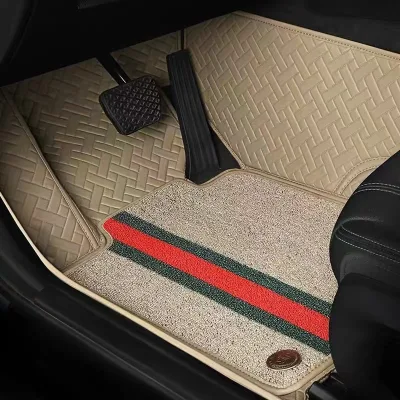


Comprehensive Sourcing Guide
Strategic Sourcing Guide for Luxury 5D Car Floor Mats
Understanding the 5D Mat Architecture and Technical Specifications
The term "5D car floor mat" in the B2B procurement landscape refers to a specific evolution of vehicle interior protection that combines precise three-dimensional contouring with advanced material engineering. Unlike standard flat mats, these products are engineered to fit the unique geometry of a vehicle's footwell, offering full coverage that extends up the sides of the cabin. The core technical differentiator lies in the "Three-Dimensional" shape, which is explicitly observed in the product attributes of high-end offerings. This architectural approach ensures that the mat conforms to the floor, pedals, and side walls, preventing debris from shifting into hard-to-reach areas.
When evaluating technical specifications, buyers must distinguish between the various production techniques available. The market presents two primary manufacturing methods: "Machine Woven Mat" and "Machine Molding Mat." The woven variant typically utilizes a textile-based structure, often made from materials like PU (Polyurethane) or leather, which offers a softer, more flexible feel suitable for luxury interiors. Conversely, the molding technique, often associated with rubber or PVC, creates a rigid, form-fitting structure that excels in heavy-duty protection and liquid containment. The "Special Type" classification found in product data suggests that these are not generic off-the-shelf items but rather custom-engineered solutions.
Material composition is a critical variable in defining the "luxury" aspect of the product. The supply chain data indicates a diverse range of materials, including PU, Rubber, PVC, and Leather. Leather options generally command a higher price point and are preferred for their aesthetic appeal and tactile quality, while rubber and PVC variants are selected for their durability and ease of cleaning. The "Easy Cleaned" feature is a standard attribute across these categories, indicating that the surface treatment or material density is designed to resist staining and allow for rapid maintenance. Buyers should verify that the specific model number, such as "SG CAR MAT" or "MT5012," aligns with the intended material properties for their specific vehicle application.
Compliance, Certification, and Quality Assurance Protocols
In the B2B sector, compliance is not merely a regulatory checkbox but a fundamental indicator of supplier reliability and product safety. The procurement of luxury automotive accessories requires rigorous verification of management certifications. The available data points to "ISOISO/TS" as a relevant management certification standard. While the exact scope of this certification (such as ISO/TS 16949 for automotive quality management) must be verified directly with the supplier, its presence suggests adherence to automotive industry-specific quality control systems. Buyers should treat the mention of "ISO" as a baseline requirement and request specific documentation to confirm the current validity and scope of the certificate.
Beyond management systems, product-specific standards are essential for ensuring that the mats meet safety and performance expectations. The data references "Export Standard" as a general compliance metric, which implies that the products are manufactured to meet international shipping and quality requirements. However, specific numerical standards, such as flammability ratings or chemical emission limits (VOCs), are not explicitly detailed in the provided context. Therefore, procurement teams must include a verification step in their quality control plan to demand test reports for these specific metrics. For luxury applications, the absence of harmful odors and the stability of the materials under temperature fluctuations are paramount.
Quality assurance also extends to the physical construction of the mat. The "Three-Dimensional" shape must be consistent across the entire set, which typically consists of "4pcs" for a full vehicle set. Buyers should inspect the stitching quality for woven mats and the edge bonding for molded mats to ensure there are no delamination issues. The "Custom Logo Accepted" feature adds a layer of complexity to quality control, as the application of branding must not compromise the structural integrity or the aesthetic finish of the mat. Verification of the logo application method—whether it is embossed, printed, or embroidered—is necessary to ensure it meets the brand's luxury standards.
Cost Drivers and Pricing Dynamics in the Luxury Segment
The pricing structure for Luxury 5D Car Floor Mats is influenced by a complex interplay of material costs, customization levels, and order volumes. The observed market data indicates a price range of 6 to 55.8 USD per unit. This significant variance is primarily driven by the choice of material and the degree of customization. Lower-end units within this range typically utilize standard rubber or PVC materials with minimal customization, while the upper end of the spectrum corresponds to leather or PU options with full 5D contouring and bespoke branding.
Minimum Order Quantity (MOQ) is another critical cost driver. The data shows an MOQ range from 1 to 1000 sets, with specific instances of 10, 50, and 100 pieces. For buyers seeking to test the market or fulfill small fleet requirements, suppliers offering an MOQ of 10 or 50 sets provide a lower barrier to entry. However, larger orders often unlock economies of scale, potentially reducing the per-unit cost. The "Customized Color" and "Custom Logo" options generally incur additional setup fees or higher per-unit costs, which should be factored into the total cost of ownership.
Packaging requirements also impact the final landed cost. The supply chain data lists "Carton Box," "Sack," and "Woven Bag" as common packing methods. For luxury products, the packaging must be robust enough to prevent damage during transit while presenting the product attractively. "Carton Box" is typically the preferred method for high-value items, whereas "Sack" or "Woven Bag" might be used for bulk shipments or lower-cost variants. Buyers should clarify if the packaging cost is included in the unit price or billed separately, as this can affect the overall budget.
Typical Applications and Market Segmentation
The primary application for these products is clearly defined as "Car Interior Floor" protection, with specific mentions of "Car Floor" and "Drawer Anti-Slip Mat" usage. The versatility of the 5D design allows it to serve multiple functions, from protecting the vehicle's original carpet from dirt and moisture to enhancing the aesthetic appeal of the cabin. The "Application: Car Interior Floor" attribute confirms that these mats are designed for passenger vehicles, including sedans, SUVs, and potentially commercial vehicles, depending on the "Car Model" provided by the client.
The market segmentation for luxury 5D mats is broad, with the "Main Market" identified as North America. This suggests that the design and material choices are tailored to meet the preferences of Western consumers, who often prioritize durability, ease of cleaning, and premium aesthetics. The "Client Provide" specification for car models indicates a high degree of customization, allowing suppliers to produce mats for a wide array of vehicle makes and models, including specific references like "Chronos," "Amarok," "Alaskany," and "Posavaso." This flexibility is crucial for B2B buyers serving diverse automotive fleets or aftermarket retailers.
The "FLOOR" position and "4pcs" configuration are standard for full-set applications, ensuring complete coverage of the driver, passenger, and rear footwells. The "Application: car floor protection and clean" highlights the dual purpose of these mats: they are functional tools for maintenance and aesthetic upgrades. For fleet managers, the "Easy Cleaned" feature is particularly valuable, as it reduces the time and cost associated with vehicle detailing and interior cleaning.
Supplier Evaluation and Sourcing Strategy
Evaluating suppliers for Luxury 5D Car Floor Mats requires a multi-faceted approach that goes beyond price comparison. The "Place of Origin" is consistently listed as "China," with specific mentions of "Hubei, China." This geographic concentration suggests a mature supply chain with established logistics networks. However, buyers should verify the specific factory capabilities and capacity to ensure they can meet demand fluctuations. The "Customization: Available" attribute is a key indicator of a supplier's flexibility, but it also necessitates a thorough review of their design and prototyping processes.
When assessing suppliers, buyers should look for evidence of the "Machine Molding Mat" or "Machine Woven Mat" capabilities. The presence of advanced machinery often correlates with higher precision and consistency in the final product. Additionally, the ability to accept "Custom Logo" and "Customized Color" requests demonstrates the supplier's willingness to collaborate on branding and design. Buyers should request samples that showcase the "Three-Dimensional" shape and the material finish to ensure they meet the luxury standards of their target market.
The "MOQ" requirements should be aligned with the buyer's inventory strategy. Suppliers with lower MOQs (e.g., 10 or 50 sets) are ideal for startups or those testing new product lines, while those with higher MOQs (e.g., 1000 sets) may offer better pricing for established businesses. The "prod_packing" options should also be evaluated to ensure they meet the buyer's logistical needs. A supplier that offers "Carton Box" packaging for luxury items is preferable to one that only offers "Sack" packaging, as the former provides better protection and presentation.
Quality Control and Long-Term Procurement Considerations
Implementing a robust quality control (QC) protocol is essential for maintaining the integrity of Luxury 5D Car Floor Mats. Given the "Three-Dimensional" nature of the product, dimensional accuracy is paramount. Buyers should verify that the mats fit the specified "Car Model" without gaps or overlaps. The "Standard: 807535 cm" provides a reference point for size, but the "Size: up to the car" attribute indicates that custom sizing is common. QC checks must include a visual inspection for defects such as uneven stitching, color inconsistencies, or loose edges.
Long-term procurement considerations involve building a sustainable relationship with suppliers who can consistently deliver high-quality products. The "ISOISO/TS" certification is a strong indicator of a supplier's commitment to quality management, but it should be complemented by regular audits and performance reviews. Buyers should also consider the "Lead Time" and "Production Capacity" of the supplier, especially when dealing with custom orders that may require additional setup time.
The "Main Market: North America" focus suggests that suppliers are familiar with the regulatory and quality expectations of this region. However, buyers should remain vigilant regarding changes in regulations or standards that may affect the import or sale of automotive accessories. Establishing clear communication channels and defining quality expectations in the purchase agreement will help mitigate risks and ensure a smooth procurement process. By focusing on these key areas, buyers can secure a reliable supply of Luxury 5D Car Floor Mats that meet their specific business needs and customer expectations.
Comparative Analysis of Material and Production Options
To assist buyers in making informed decisions, the following table compares the key attributes of the different material and production options observed in the market data. This comparison highlights the trade-offs between durability, aesthetics, and cost.
| Attribute | Machine Woven Mat (PU/Leather) | Machine Molding Mat (Rubber/PVC) |
|---|---|---|
| Primary Material | PU, Leather | Rubber, PVC |
| Aesthetic Profile | Premium, Soft, Luxury Finish | Rugged, Functional, High-Grip |
| Shape Technology | Three-Dimensional (Contoured) | Three-Dimensional (Form-Fit) |
| Cleaning Feature | Easy Cleaned | Easy Cleaned |
| Typical MOQ | 50 Sets | 10 Sets |
| Customization | Custom Color, Custom Logo | Custom Color, Custom Logo |
| Best Application | Luxury Interior, Aesthetic Focus | Heavy Duty, High Traffic |
This comparison underscores that while both options offer "Three-Dimensional" shapes and "Easy Cleaned" features, the choice between woven and molded mats depends heavily on the intended use case. Woven mats with PU or leather are ideal for buyers targeting the luxury segment where aesthetics are paramount, while molded rubber or PVC mats are better suited for high-traffic or commercial applications where durability is the primary concern. Buyers should align their material selection with the specific needs of their target market to ensure optimal product performance and customer satisfaction.
FAQs
What materials are used for Luxury 5D Car Floor Mats?
Luxury 5D Car Floor Mats are commonly made from PU, rubber, PVC, or leather. The choice depends on the desired balance between aesthetic appeal and durability, with leather often selected for premium interiors and rubber or PVC for heavy-duty protection and easy cleaning.
Can buyers request custom logos on these mats?
Yes, custom logos are accepted on Luxury 5D Car Floor Mats. Suppliers typically allow branding integration alongside customized colors, ensuring the mats meet specific corporate or personal aesthetic requirements while maintaining the three-dimensional fit for the vehicle.
Which certification standards do these mats meet?
These mats often carry ISOISO/TS management certification standards. While this indicates adherence to automotive quality control systems, buyers should verify specific documentation to confirm the scope and validity of the certificate for their intended market regulations.
How are the mats packaged for shipping?
Packaging options include carton boxes, sacks, or woven bags depending on the order volume and product type. Carton boxes are preferred for luxury items to ensure protection and presentation, while sacks or woven bags may be used for bulk shipments.
What is the typical minimum order quantity for these mats?
The minimum order quantity ranges from 1 to 1000 sets, with common thresholds at 10, 50, or 100 pieces. Lower MOQs allow for market testing, while larger orders may unlock better pricing and economies of scale for established buyers.
Where are these mats manufactured?
These mats are manufactured in China, with specific origins noted in Hubei. This location suggests a mature supply chain with established logistics networks capable of handling export standards and custom production requirements for international clients.
What shapes do the mats come in?
The mats feature a three-dimensional shape designed to fit unique vehicle footwell geometries. This contouring extends up the sides of the cabin to prevent debris from shifting, ensuring full coverage and protection for the car interior floor.