Source Luxury Recycled Jewelry Paper Bag with Magnetic Closure for retail, gifts, and promotions
Find 30 listings for a Luxury Recycled Jewelry Paper Bag with Magnetic Closure suitable for retail, gifts, and promotions. Buyers can compare customization options, material types, and pricing details across verified suppliers.
Key considerations
Products List


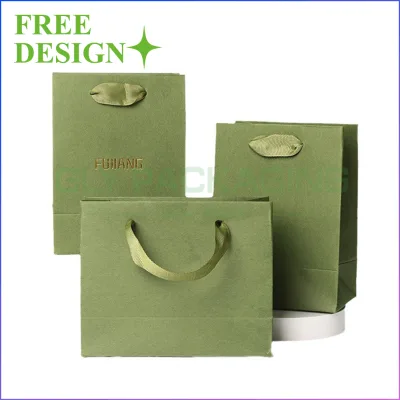
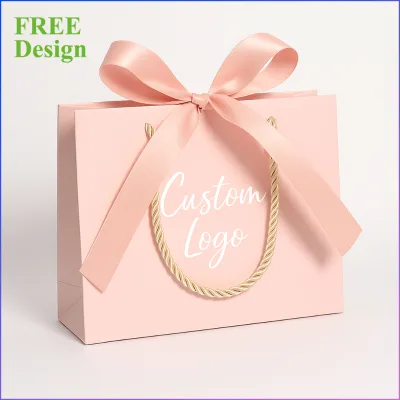

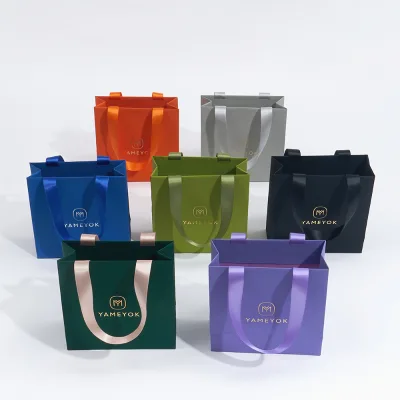
Paper Bags Luxury Jewelry Bracelet Packaging Gift Shopping Bag with Ribbon Close
$0.22 - $0.38
MOQ: 1000 Pieces

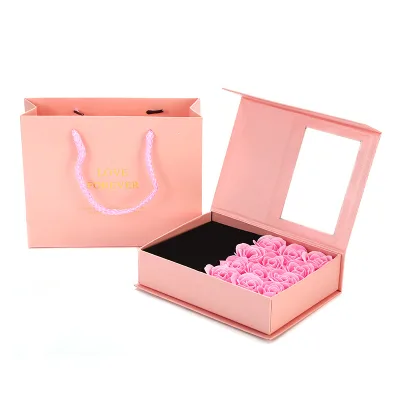
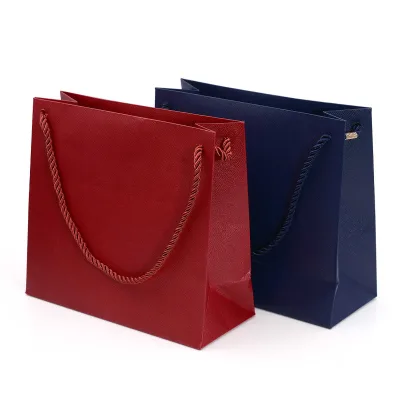
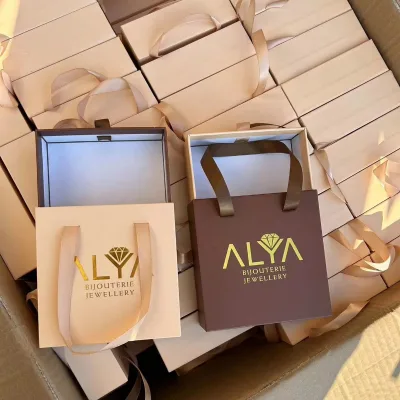
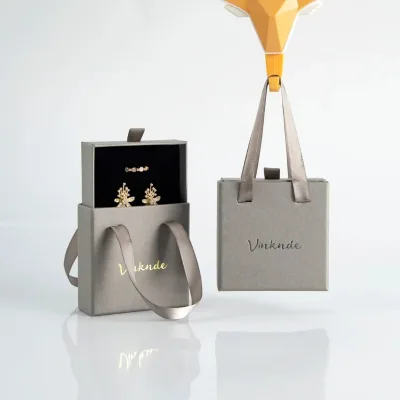
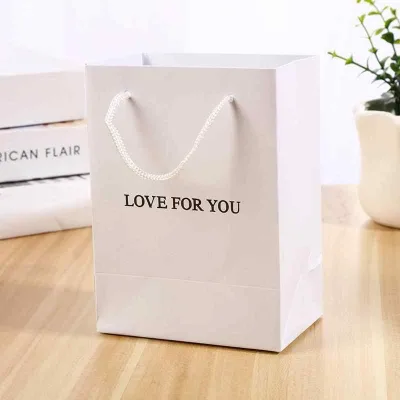
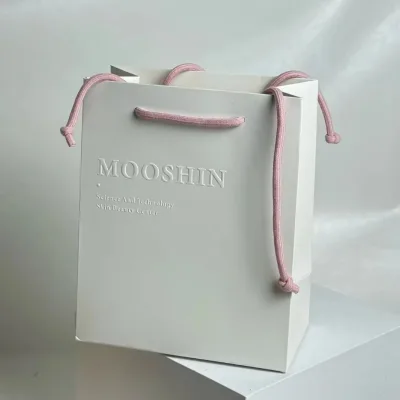


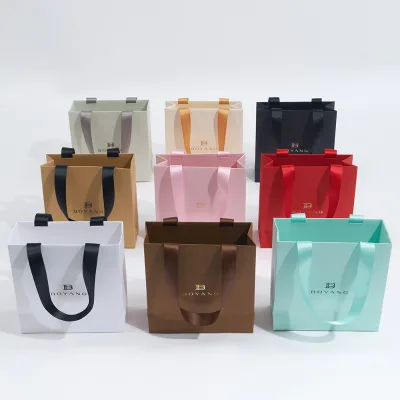
Wholesale Printed Luxury Paper Bag Jewelry Gift Packaging Bags with Handle
$0.15 - $0.25
MOQ: 10000 Pieces


Custom Logo Printed Jewelry Shopping Paper Bag Luxury Gift Bag with Logo
$0.28 - $0.46
MOQ: 1000 pieces

Wholesale Jewellery Gifts Packing Bag Customized Recyclable Shopping Gift Bag
$0.25 - $0.38
MOQ: 2000 pieces
Comprehensive Sourcing Guide
Strategic Sourcing Guide for Luxury Recycled Jewelry Paper Bags with Magnetic Closures
Navigating the B2B market for luxury packaging requires a precise understanding of material specifications, customization capabilities, and the specific constraints of the supply chain. When sourcing a "Luxury Recycled Jewelry Paper Bag with Magnetic Closure," buyers must distinguish between general paper packaging and specialized items designed for high-value goods. The available market data indicates a diverse range of products, from simple cardboard carriers to complex jewelry gift boxes with velvet interiors. This guide synthesizes observed product attributes, manufacturing processes, and logistical parameters to provide a disciplined framework for procurement.
Technical Specifications and Material Composition
The foundation of any luxury paper bag lies in its material composition and structural integrity. Based on the observed product data, the market offers bags constructed from various paper types, including Cardboard, Art Paper, and Recyclable Paper. For a "luxury" designation, the use of Art Paper or high-grade Cardboard is typical, often treated with specific surface finishes to enhance tactile appeal. The data confirms that surface treatments such as Glossy or Matt Lamination are standard processes, while UV coating is frequently available as a customization option. These finishes are critical for protecting the print quality and providing the smooth, premium feel associated with luxury goods.
Regarding the specific request for a "magnetic closure," the supplied product facts highlight a broader category of "Jewelry Gift Box" and "Jewelry Set Box" rather than simple open-top bags. These boxes often feature an "Open Way" described as "Pull-out" and include internal linings such as Velvet. While the primary keyword focuses on bags, the functional requirement for a magnetic closure often implies a rigid or semi-rigid structure similar to the observed "Jewelry Set Box" category. Buyers should verify if the supplier can adapt the "Paper Bag Packaging" model to include rigid inserts or magnetic flaps, as standard soft paper bags typically rely on handles or simple folding mechanisms. The "Weight Limit" for these items varies significantly in the observed data, ranging from less than 0.5 kg to over 10 kg, necessitating a clear definition of the intended load to ensure the selected paper grade and thickness (e.g., 1 mm observed in some models) are sufficient.
Customization Capabilities and Design Flexibility
One of the most significant advantages in the current market is the high degree of customization available. The data explicitly lists "Customization: Available," "Design: Custom Available," and "OEM: Yes" as high-confidence attributes. This allows buyers to tailor the product to specific brand identities. The "Color" attribute is listed as both "White" and "Green" in specific instances, but more importantly, "Customized to your design" is a recurring specification. This suggests that while standard colors exist, the primary value proposition lies in bespoke color matching and design execution.
The printing capabilities are equally robust, with "Full Color" and "Offset Printing" identified as standard processes. The "Logo Printing" feature is confirmed as "With Logo Printing," and the "Logo" itself is listed as "Custom." This indicates that suppliers are equipped to handle complex graphic requirements, including multi-color logos and intricate patterns, which are essential for luxury branding. Furthermore, the "prod_standard" is noted as "custom size available," and specific dimensions like "16.512.58" and "16137" are observed as examples of customized designs. Buyers should leverage this flexibility to ensure the bag dimensions perfectly accommodate their jewelry inventory, preventing movement that could cause damage during transit or display.
Cost Drivers and Economic Parameters
Understanding the cost structure of luxury paper packaging is vital for budgeting and negotiation. The observed price range in the market spans from $0.05 to $1.83 USD. This wide variance is likely driven by the complexity of the design, the quality of the paper, the extent of surface treatments (lamination, UV coating), and the inclusion of additional features like velvet linings or magnetic closures. The "MOQ" (Minimum Order Quantity) is a critical cost driver; while some listings show an MOQ as low as 1, a high-confidence fact indicates an MOQ of 1000 PCS for certain product lines. Buyers must align their order volume with these thresholds to achieve optimal unit pricing.
Other economic factors include the "prod_packing" method, which is listed as "Standard Shipping Carton" or "Export Carton." The choice of packaging for the finished goods affects shipping costs and potential damage rates. Additionally, the "prod_origin" is consistently noted as "Shanghai" or "China," which places the supply chain within a major manufacturing hub known for competitive labor costs and efficient logistics. However, buyers should be aware that "Recyclable Paper" materials may carry a slight premium over standard paper types, depending on the sourcing of the raw fiber and the certification processes involved.
Compliance, Certification, and Environmental Standards
In the luxury sector, environmental responsibility is increasingly a key purchasing criterion. The observed data includes "Materials: Recyclable Paper" and "prod_standard: custom," suggesting a market that supports sustainable practices. While the specific certification "FSC" is listed in the low-confidence background section, buyers should not assume all products carry this status without verification. Instead, procurement teams must actively request proof of certification from potential suppliers.
Compliance checks should extend beyond the paper itself to the inks and adhesives used in the printing and assembly processes. Since "Offset Printing" is a standard process, verifying that the inks are soy-based or otherwise environmentally friendly is a prudent step. The "Weight Limit" and "Hardness" attributes (ranging from "Soft" to "Partial Hard") also play a role in compliance; for instance, if the bag is intended for heavy jewelry, the structural integrity must meet safety standards to prevent collapse. Buyers should request material safety data sheets (MSDS) and confirm that the "Surface Treatment" processes do not introduce hazardous substances that would violate export regulations to specific markets.
Supplier Evaluation and Quality Assurance
Selecting the right supplier requires a rigorous evaluation process that goes beyond the initial product listing. The "prod_origin" being in Shanghai or China provides a large pool of potential vendors, but differentiation is key. Buyers should prioritize suppliers who demonstrate a clear understanding of the "Jewelry" and "Gift" usage contexts. The observed "Usage" categories include "Shopping, Promotion, Packing, Gift, Household," indicating versatility, but a specialist in jewelry packaging will likely offer better protection and presentation.
Quality control (QC) should focus on the consistency of the "Full Color" printing and the durability of the "Glossy/Matt Lamination." Defects in lamination, such as peeling or bubbling, can severely detract from the luxury appeal. For the "magnetic closure" aspect, which may require integration with the "Jewelry Set Box" style, suppliers must be tested for the alignment and strength of the magnets. The "Inside" lining, often "Velvet" in the observed jewelry boxes, must be securely attached and free of loose fibers. Buyers should request pre-production samples to verify the "Customized to your design" specifications against the actual physical output, ensuring that the "Size" and "Shape" (e.g., Square) match the design intent exactly.
Typical Applications and Market Positioning
The versatility of these products is evident in the broad "Usage" spectrum. While the core keyword targets jewelry, the data shows applications extending to "Arts and Crafts, Electronic Products, Food, Garment & Shoes, Cosmetic." This suggests that the manufacturing infrastructure is capable of producing high-quality packaging for various luxury goods. The "Jewelry ribbon paper bags" and "custom paper jewelry bags" models are specifically tailored for the jewelry market, offering a blend of elegance and functionality.
For luxury brands, the bag serves as a critical touchpoint in the customer experience. The "With Handle" feature, specifically the "String Handle," enhances portability and presentation. The "Shape" and "Size" customization allow for unique unboxing experiences that differentiate a brand in a crowded market. Whether used for "Storage, Packing, Collection, Gift," the packaging must convey value. The "Partial Hard" hardness observed in some items suggests a balance between rigidity for protection and flexibility for storage, a key consideration for retailers who need to stack inventory efficiently.
Long-Term Procurement Considerations
Sourcing luxury packaging is not a one-time transaction but a long-term partnership. Buyers should consider the scalability of the supplier's production capacity. With an observed MOQ range of 1 to 10,000, suppliers can accommodate both trial runs and large-scale production, but the "1000 PCS" high-confidence MOQ suggests that consistent volume is expected for standard pricing. Lead times, while not explicitly detailed in the facts, are influenced by the "Custom" nature of the design and the "Export Carton" packing requirements.
Future-proofing the procurement strategy involves maintaining a relationship with suppliers who can adapt to changing sustainability standards. As regulations on "Recyclable Paper" and packaging waste evolve, having a supplier who is already versed in these materials will be advantageous. Additionally, the ability to maintain consistent "Color" and "Logo" quality over multiple production runs is essential for brand integrity. Buyers should establish clear quality benchmarks for the "Surface Handling" and "Printing" processes to ensure that every batch meets the luxury standard established by the initial sample. By focusing on these long-term factors, buyers can secure a reliable supply chain that supports their brand's growth and reputation in the luxury market.
FAQs
Can I get custom colors and designs for these bags?
Yes, customization is available with colors matching your design. You can specify dimensions like 16.5 by 12.5 by 8 centimeters and choose from white, green, or fully custom options to suit your brand identity.
What is the minimum order quantity for these paper bags?
The standard minimum order quantity is 1000 pieces for most product lines. However, some listings allow orders starting from just one unit, so you should verify the specific MOQ with the supplier before placing an order.
How are these bags constructed and what materials are used?
These bags are typically made from cardboard, art paper, or recyclable paper. They often feature glossy or matte lamination, velvet interiors for jewelry boxes, and string handles for easy carrying and presentation.
What printing options are available for logo and design?
Full color and offset printing are standard processes with logo printing included. You can have custom logos applied, and the surface treatment can be enhanced with UV coating for a premium finish on the packaging.
Where are these luxury paper bags manufactured and shipped from?
Products originate from Shanghai, China, and are packed in standard shipping or export cartons. This location allows for competitive pricing while ensuring the goods are prepared for international transport with appropriate protective packaging.
What are the weight limits and hardness specifications?
Weight limits vary from under 0.5 kg to over 10 kg depending on the specific model. Hardness ranges from soft to partial hard, allowing you to select a structure that balances protection with flexibility for your jewelry items.