Source Marine Wire Rope Fittings D-Ring for Outdoor, Marine, and Industrial Use
Compare 30 listings for Marine Wire Rope Fittings D-Ring options made from stainless steel 316 or 304. These durable accessories support outdoor, marine outfitting, and industrial applications with polished or self-color finishes available from multiple suppliers; compare the available evidence and request quotations based on your requirements.
Key considerations
Products List
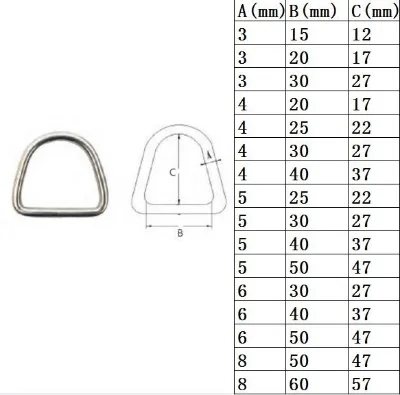
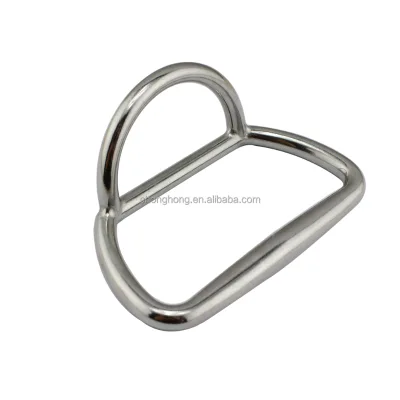
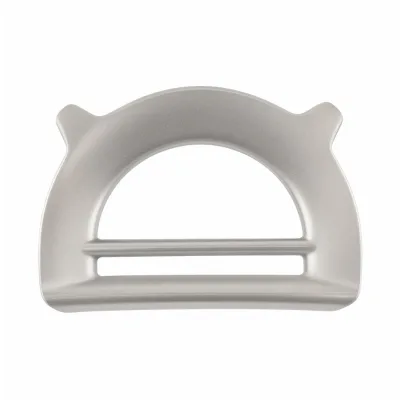


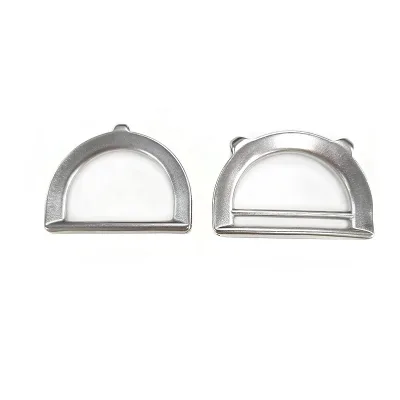
Marine Hardware 304 Stainless Steel Rings Welded D Ring for Belt Buckle
$0.23 - $0.37
MOQ: 1000 Pieces

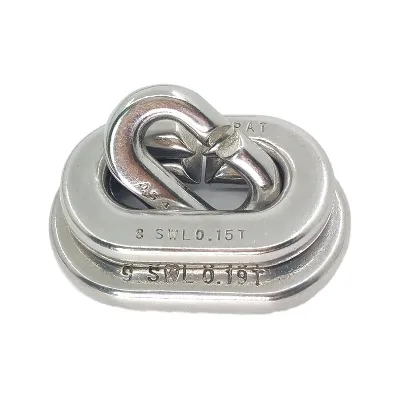
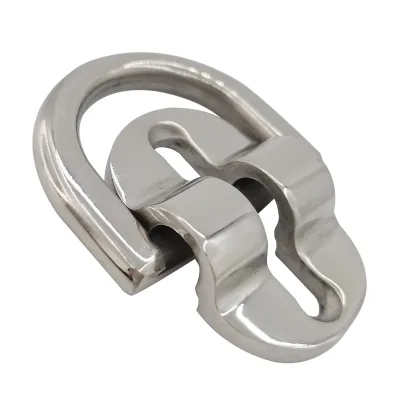
High Quality Stainless Steel 316 Quick Link C Connected Ring for Boat Fittings
$1.93 - $2.07
MOQ: 50 Pieces


$2.30 - $2.50
MOQ: 100 Pieces


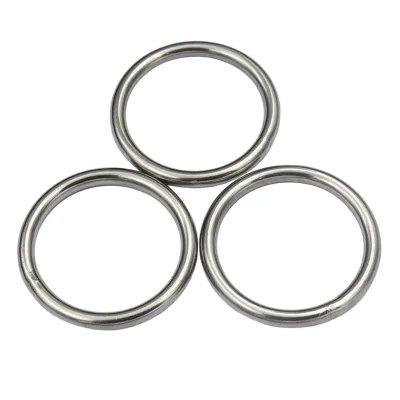
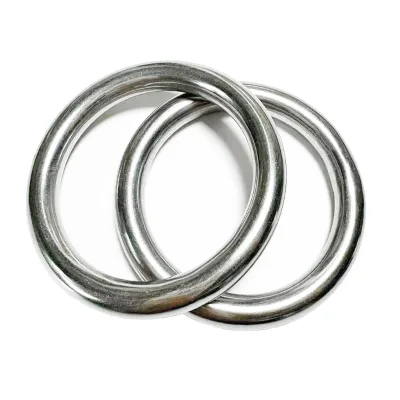
Forged High Strength Mooring Round Ring for Aquaculture Marine Hardware Connecting
$50.00 - $1000.00
MOQ: 1 Pieces



Comprehensive Sourcing Guide
Marine Wire Rope Fittings D-Ring Sourcing Guide
Procurement professionals must first distinguish between general outdoor accessories and specialized marine-grade components when evaluating listings for D-ring fittings. The available market data indicates a clear divergence in material specifications, with some items explicitly utilizing marine grade 316 stainless steel while others list generic stainless steel or 304 variants. This distinction is critical because 316 material offers superior resistance to chloride-induced corrosion, a necessity for environments exposed to saltwater spray or immersion. Buyers should verify the specific alloy grade in the product description rather than assuming all stainless steel listings meet marine durability standards.
Beyond material composition, the intended application scope significantly influences the required engineering tolerances and surface treatments. Listings describe products ranging from general outdoor camping gear to specific marine outfitting and wire rope fitting applications. A D-ring designed for a playground or hiking trail may not possess the structural integrity or corrosion resistance required for a towing ring on a vessel. Sourcing teams must align the product's stated application, such as "Marine Outfitting" or "Wire Rope Fittings," with the actual operational environment to prevent premature failure due to environmental stress or mechanical overload.
Product Scope and Observed Listing Signals
The observed product range reveals significant variability in physical dimensions and packaging configurations, which directly impacts logistics planning and inventory management. Data points show sizes ranging from compact 25mm units to larger 90mm rings, with package sizes varying from 3x3x3 cm to 20x10x5 cm. Some suppliers offer single-item packaging, while others utilize cartons stacked on pallets for bulk shipments. Buyers must carefully cross-reference the specific size requirements of their project with the available multi-specification options to ensure compatibility with existing wire rope assemblies or mounting hardware.
Brand identity and customization capabilities also serve as key signals for product differentiation in this category. While some listings feature established brand names like FBM or CHONGHONG, others appear as generic OEM products with customizable features. The presence of "OEM: Accept" and "Customization: Available" attributes suggests that suppliers can tailor dimensions or finishes to specific client needs. However, the lack of standardized branding across all listings requires buyers to conduct deeper due diligence on the manufacturer's capability to maintain consistent quality control during custom production runs.
Technical Specifications to Verify
Surface finish and manufacturing processes are primary indicators of the long-term durability and aesthetic quality of the D-ring fittings. The market data highlights specific finishing techniques such as polished surfaces and self-color treatments, alongside manufacturing methods like precision casting. A polished finish often indicates a higher level of quality control and reduced surface roughness, which can minimize friction and wear on the wire rope. Conversely, self-color finishes may be more cost-effective but require verification to ensure they provide adequate protection against the specific corrosive elements present in the buyer's operating environment.
Dimensional accuracy and weight specifications are equally critical for ensuring the mechanical performance of the fittings. Listings provide gross weights ranging from 0.200 kg to 1.000 kg and specific size options including 25mm, 30mm, 40mm, 50mm, and 55mm. These variations suggest that the load-bearing capacity will differ significantly between models. Procurement teams must verify that the selected size and weight correspond to the intended load requirements, ensuring that the D-ring can safely handle the tension forces generated during towing or securing operations without deformation or failure.
Compliance and Safety Documentation
Certification status serves as a fundamental baseline for verifying the quality management systems of potential suppliers. Some product listings explicitly mention ISO9001 and ISO14001 certifications, indicating that the manufacturer adheres to international standards for quality assurance and environmental management. These certifications suggest a structured approach to production consistency and risk mitigation, which is essential for components used in safety-critical marine applications. Buyers should request valid certification documents to confirm that the supplier's quality processes are current and applicable to the specific product line being sourced.
Safety and performance claims must be treated as observations rather than guaranteed attributes unless supported by independent test data. While listings describe products as "Durable" or "Light Weight," these are subjective marketing terms that do not replace rigorous engineering validation. In the absence of specific test results or load ratings in the provided data, buyers must insist on third-party verification of tensile strength and corrosion resistance. Relying solely on manufacturer assertions without documented proof of performance can lead to significant safety risks in marine environments where equipment failure can have severe consequences.
Cost Drivers and Commercial Terms
Pricing and minimum order quantities (MOQ) exhibit a wide range in the current market, reflecting the diversity of product specifications and supplier capabilities. The observed price range spans from $0.05 to $1000, with MOQs varying from 1 unit to 5000 units. This disparity suggests that costs are heavily influenced by material grade, size, and order volume. Buyers should analyze the cost per unit relative to the specific material requirements, understanding that marine grade 316 stainless steel will inherently command a higher price point than generic stainless steel or 304 variants.
Lead times and stock availability are critical factors that influence supply chain reliability and project scheduling. Some suppliers indicate a delivery time of 10-15 days and maintain stock for regular sizes, while others may require longer production cycles for customized orders. The availability of stock for standard dimensions can significantly reduce lead times for urgent procurement needs. However, for specialized sizes or custom finishes, buyers must account for potential delays and negotiate clear delivery schedules to avoid project bottlenecks caused by supply chain disruptions.
Supplier Qualification and Quality Control
Geographic origin and manufacturing location provide context for the logistical and regulatory landscape surrounding the procurement process. The majority of observed listings originate from China, with specific mentions of Shandong as a production hub. This concentration of manufacturing in specific regions can offer economies of scale but also requires careful evaluation of local export regulations and shipping logistics. Buyers should verify the specific factory location to assess the supplier's proximity to ports and their experience with international shipping requirements for heavy or specialized metal components.
Quality control processes must be rigorously evaluated to ensure that the final product meets the stringent demands of marine applications. The presence of attributes like "New" condition and "Precision Casting" suggests a focus on manufacturing quality, but these claims require on-site verification or third-party inspection. Buyers should implement a quality assurance protocol that includes pre-shipment inspections to verify material composition, dimensional accuracy, and surface finish. Establishing a clear communication channel for quality issues and defining acceptance criteria before production begins is essential for maintaining product integrity.
Long-Term Procurement Checks
Sustainability and environmental compliance are increasingly important considerations for modern procurement strategies in the marine industry. The mention of ISO14001 certification indicates that some suppliers are committed to environmental management systems, which can be a deciding factor for organizations with strict sustainability goals. Buyers should inquire about the supplier's waste management practices and the recyclability of the stainless steel materials used. Ensuring that the supply chain aligns with environmental standards can mitigate regulatory risks and enhance the overall corporate reputation of the purchasing organization.
Future-proofing the procurement strategy involves maintaining a relationship with suppliers who can adapt to evolving market demands and technological advancements. The availability of customization and OEM services suggests that suppliers are capable of responding to specific design changes or new product requirements. Buyers should establish a long-term partnership framework that includes regular performance reviews and the ability to scale production up or down based on project needs. This approach ensures a stable supply of high-quality D-ring fittings while allowing for flexibility in response to changing operational requirements.
FAQs
What materials are used for marine D-rings?
Marine D-rings are typically manufactured from marine grade 316 stainless steel or standard stainless steel 316/304. These materials provide essential corrosion resistance for outdoor and marine outfitting applications. The polished or self-color surface treatment further enhances durability against harsh environmental conditions while maintaining structural integrity for towing and wire rope fittings.
Can I customize the size of a D-ring?
Yes, customization is available for many D-ring models. Suppliers offer multiple specifications including sizes like 25mm, 30mm, 40mm, 50mm, and 55mm. Some manufacturers also provide multi-specification options to meet specific project requirements. Buyers should verify available stock for regular sizes and confirm lead times for custom orders directly with the supplier.
What certifications do these D-ring suppliers hold?
Reputable manufacturers often hold ISO9001 and ISO14001 certifications to ensure quality management and environmental standards. These credentials indicate a commitment to consistent production processes and reliable product quality. Buyers should request certification documents to verify compliance before placing large orders, ensuring the supplier meets international standards for marine and industrial hardware components.
How long is the delivery time for D-rings?
Standard delivery times are typically within 10-15 days for available stock. Suppliers often maintain inventory for regular sizes to ensure quick shipment. For custom specifications or large volume orders, lead times may vary. Buyers should confirm current stock levels and production schedules with the vendor to align with their project timelines and avoid delays.
What is the minimum order quantity for D-rings?
Minimum order quantities generally range from 1 to 5000 units depending on the supplier and product specification. Small quantities are often available for sampling or small projects, while bulk discounts may apply for larger orders. Buyers should check specific supplier listings for exact MOQ requirements and pricing tiers to determine the most cost-effective purchasing option.
Where are these marine fittings manufactured?
These marine wire rope fittings are primarily manufactured in China, with specific origins noted in regions like Shandong. Chinese manufacturers offer a wide range of stainless steel D-rings for global export. Buyers should verify the place of origin and supplier location to assess shipping logistics, import duties, and potential supply chain reliability for their specific region.