Source Menstrual Panties for Period Protection, Night Use, and External Care
Compare 30 Menstrual Panties from Chinese manufacturers offering OEM services and high absorption. Buyers can evaluate features like super absorbent materials, winged shapes, and various sizes for period protection and night use.
Key considerations
Products List


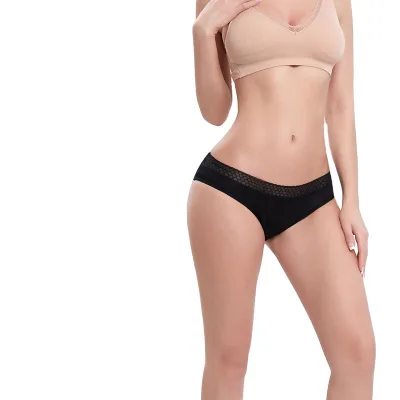
Sanitary Panties Leak Proof Period Eco Friendly Mesh Menstrual Sanitary Panties
$0.05 - $0.10
MOQ: 150000 Pieces




Comprehensive Sourcing Guide
Strategic Sourcing Guide for Menstrual Panties
Understanding Product Categories and Technical Specifications
When sourcing Menstrual Panties, also known as period underwear or sanitary pants, buyers must first navigate a complex landscape of technical specifications that define product performance and suitability. The core product category encompasses absorbent undergarments designed for external use, specifically targeting female period protection. These items are distinct from traditional disposable pads due to their reusable or hybrid nature, though the supplied data indicates a significant portion of the market involves disposable variants with ultra-thin or regular profiles.
A critical technical differentiator is the material composition. Sourcing data reveals a dichotomy in material claims, with products listed as both Non-Woven and Cotton. Non-woven materials often provide a specific texture and cost advantage, while cotton offers a natural feel preferred by many consumers. The backsheet material is equally vital; observed specifications point to a "Clothlike Film," which suggests a balance between breathability and liquid containment. This construction is essential for preventing leaks while maintaining comfort during extended wear.
Absorption capabilities are another primary specification. The data highlights "Super Absorbent" features and the use of "Japan Sap" (Super Absorbent Polymer), indicating a high-performance core designed to lock in moisture. The absorption rating is described as "High," and specific leakage protection is noted as "360 Anti-Side Leakage," a crucial feature for ensuring security during sleep or high-movement activities. The weight of the product is also a defining characteristic, with observed ranges between 25-32g, suggesting a lightweight design that avoids the bulkiness often associated with traditional menstrual products.
Dimensions vary significantly across the supply base. Length specifications range from 260mm to 400mm, with some models exceeding 400mm to accommodate larger sizes or specific body types. The product shape is consistently described as "Winged," which aids in positioning and securing the garment within regular underwear. Furthermore, the sizing spectrum is broad, covering sizes from Small (S) to Extra Extra Large (XXXL), ensuring inclusivity for diverse customer demographics. The folded state of the product is also a logistical consideration, with many items supplied in a folded configuration to optimize packaging volume.
Compliance, Certification, and Quality Standards
In the B2B procurement of intimate apparel, verifying compliance and certification is non-negotiable. The supplied product facts explicitly mention ISO9001 certification, which serves as a baseline indicator that the manufacturer maintains a quality management system. However, buyers should not assume that every listed product automatically satisfies this standard without verification. The presence of "International" as a standard in some listings suggests that products may be designed to meet varying regional regulatory requirements, but specific local compliance (such as FDA registration or CE marking) must be confirmed on a per-supplier basis.
The distinction between "International" standards and specific textile certifications like OEKO-TEX is important. While OEKO-TEX is mentioned in background contexts, it should not be treated as a guaranteed attribute of the supplied products unless explicitly stated in the supplier's current documentation. Buyers must verify if the materials used, particularly the "Japan Sap" and the "Clothlike Film" backsheet, comply with relevant safety standards for direct skin contact. The absence of specific flavor claims for most products ("Without Flavor") contrasts with a subset that offers "With Flavor," requiring clear communication to ensure the final product matches the target market's expectations regarding sensory attributes.
Quality assurance extends beyond certifications to the physical integrity of the product. The "3 Years" warranty mentioned in the data is an unusual attribute for a disposable or semi-disposable hygiene product and warrants immediate clarification. Buyers should treat this as an observation requiring validation rather than a standard industry guarantee. It is essential to request test reports that validate the "High Absorption" and "Anti-Side Leakage" claims through standardized liquid retention tests. Without such data, procurement decisions rely on unverified performance claims.
Cost Drivers and Pricing Structures
The pricing landscape for Menstrual Panties is influenced by a multitude of factors, including material costs, customization levels, and order volume. The observed listed price range in the market data spans from $0.05 to $5.00 USD. This wide variance indicates that the market accommodates both ultra-low-cost disposable options and premium, feature-rich reusable or high-end disposable variants. The lower end of the spectrum likely corresponds to basic non-woven models with standard packaging, while the higher end may reflect cotton blends, advanced SAP cores, or specialized designs like the "Ultra Thin" or "Winged" configurations.
Minimum Order Quantity (MOQ) is a significant cost driver in this sector. The observed MOQ range is extensive, spanning from 10 units to 150,000 units. This flexibility allows buyers to test the market with small batches or secure economies of scale for large-volume distribution. However, the cost per unit is rarely linear; suppliers often structure pricing tiers where the unit cost decreases significantly as the order volume approaches the higher end of the MOQ spectrum. Buyers must balance the upfront capital required for larger orders against the per-unit savings to optimize their cash flow.
Customization is a major factor influencing the final cost. The data confirms that "Customization" and "OEM/ODM" services are available. Customizing the product model, such as selecting specific sizes (S-XXXL), altering the packaging (e.g., "10pcs/bag, 48bags/ctn" vs. "2pcs/bag, 60bags/ctn"), or adding branding, incurs additional costs. The "Magic Tape" feature mentioned in the specifications suggests a specific fastening mechanism that may add to the manufacturing complexity and cost compared to standard adhesive or elastic closures. Additionally, the choice of packing material, ranging from simple "Polybag/Inner Carton/Master Carton" to more elaborate "Carton" solutions, will impact the landed cost.
Typical Applications and Target Demographics
Menstrual Panties are designed for a variety of applications, primarily centered around "Female Period Protection." The data explicitly categorizes the usage as "External Use," which is a standard classification for hygiene products. However, the specific application can vary based on the product's absorption capacity and design. The "Night" usage attribute highlights the suitability of certain models for overnight protection, where leakage prevention is paramount. These models often feature higher absorption and longer lengths (up to 400mm or more) to provide comprehensive coverage during sleep.
The target demographic is clearly identified as "Children" in some listings, though this is likely a specific niche or a misclassification in the raw data, as Menstrual Panties are predominantly marketed toward adolescents and adults. The size range from S to XXXL supports a broad adult demographic, including those with larger body types who may struggle to find suitable traditional products. The "Regular" and "Ultra Thin" types cater to different flow intensities and comfort preferences, allowing buyers to segment their product lines for various consumer needs.
The "Folded" attribute indicates that the product is pre-folded for retail display or ease of use, which is a key feature for consumer convenience. The "Without Flavor" and "With Flavor" options suggest that the market is exploring sensory differentiation, although the majority of products appear to be unscented to minimize the risk of irritation. The "Super Absorbent" and "High Absorption" features make these products suitable for heavy flow days, while the "Breathable" attribute addresses comfort concerns related to prolonged wear.
Supplier Evaluation and Service Capabilities
Evaluating suppliers requires a deep dive into their service capabilities and operational flexibility. The data indicates that "OEM / ODM" services are widely available, meaning suppliers can manufacture products under the buyer's brand or develop custom designs. The "Supply Type" is listed as "OEM Service," reinforcing the expectation that most suppliers in this dataset are capable of private labeling. Buyers should verify the extent of these services, including whether the supplier handles design, material sourcing, and final packaging, or if they require the buyer to provide specific inputs.
The "Samples" attribute is a critical component of the supplier evaluation process. The fact that samples are "Offered" allows buyers to physically inspect the product quality, test the absorption, and verify the fit before committing to a large order. This is particularly important given the variability in material composition (Non-Woven vs. Cotton) and the specific claims regarding leakage protection. Buyers should request samples of different models, such as the "WP310" or "UPP01" models, to compare performance across the supplier's portfolio.
Geographic origin is another factor in supplier selection. The data lists origins in "China," "Fujian, China," "Shantou, China," and "Tianjin." These regions are known for their textile and hygiene product manufacturing clusters. However, buyers should verify the specific factory location and capacity, as different cities may have different regulatory environments or logistical advantages. The "International" standard mentioned in some listings suggests that suppliers are experienced in exporting to global markets, but buyers must confirm that the supplier has a track record of meeting the specific compliance requirements of their target destination.
Quality Control and Long-Term Procurement Considerations
Establishing a robust quality control (QC) protocol is essential for maintaining brand reputation in the Menstrual Panties market. Given the sensitive nature of the product, QC must focus on material safety, absorption performance, and structural integrity. Buyers should implement a sampling plan that tests for "Leakage" resistance, specifically the claimed "360 Anti-Side Leakage" feature. This may involve liquid retention tests and stress testing of the "Winged" shape and "Magic Tape" fasteners to ensure they hold under pressure.
The "Warranty" of "3 Years" mentioned in the data is an outlier that requires immediate attention. For a product classified as "Disposable" or "Night" use, a multi-year warranty is highly unusual. Buyers must clarify if this refers to the durability of the reusable components, the packaging, or if it is a marketing error. Relying on such a claim without written verification could lead to significant liability issues. Instead, buyers should focus on standard quality guarantees, such as a defect rate threshold (e.g., less than 1%) and a clear return policy for non-conforming goods.
Long-term procurement considerations involve building a sustainable supply chain. The "Customized" and "OEM" capabilities suggest that buyers can work with suppliers to develop exclusive products that differentiate them in the market. However, this requires a deep understanding of the supply chain's capacity to handle volume fluctuations. The wide MOQ range (10 to 150,000) offers flexibility, but buyers must plan for lead times that may vary based on order size and customization complexity.
| Feature Category | Observed Specification | Procurement Verification Point |
|---|---|---|
| Material | Non-Woven, Cotton | Verify material composition ratio and safety data sheets. |
| Absorption | Super Absorbent, Japan Sap | Request test reports for liquid retention capacity. |
| Leakage | 360 Anti-Side Leakage | Conduct physical leak tests on sample units. |
| Packaging | Carton, Polybag, 10pcs/bag | Confirm packaging durability and labeling accuracy. |
| Certification | ISO9001 | Verify current certificate validity and scope. |
| Origin | China (Fujian, Shantou, Tianjin) | Confirm factory location and export compliance. |
Ultimately, successful sourcing of Menstrual Panties depends on a meticulous approach to verifying claims, understanding the nuances of product specifications, and building a partnership with suppliers who can deliver consistent quality. By focusing on the tangible attributes provided in the data and maintaining a rigorous verification process, buyers can mitigate risks and secure a reliable supply of high-performance menstrual protection products.
FAQs
What materials are used for Menstrual Panties?
Products are available in Non-Woven and Cotton materials. Non-woven options often provide cost advantages, while cotton offers a natural feel. Buyers should verify the specific material composition for each model to ensure it meets comfort and safety requirements.
Can I get customized packaging for my brand?
Yes, customization and OEM/ODM services are available for packaging. Options include specific bag counts like 10pcs/bag or 2pcs/bag within master cartons. Buyers must confirm the exact packing standard with the supplier to align with their logistics needs.
Which certification do these products hold?
Some listings explicitly state ISO9001 certification as a quality standard. While this indicates a quality management system, buyers should not assume all products automatically satisfy this without verification. Additional safety certifications may be required depending on the target market regulations.
How does the absorption capability compare?
The products feature Super Absorbent properties using Japan SAP for high absorption. Specific models claim 360 Anti-Side Leakage protection for secure wear. Buyers should request test reports to validate these performance claims before placing large orders.
What is the minimum order quantity required?
The observed MOQ range spans from 10 units up to 150,000 units. This flexibility allows for small market tests or large-scale distribution. The unit cost typically decreases as the order volume approaches the higher end of this spectrum.
Are samples offered for product evaluation?
Samples are offered to allow buyers to inspect quality and test absorption. This is crucial for verifying the fit and material composition before committing to bulk orders. Buyers should request samples of different models to compare performance across the supplier portfolio.
Where are these products manufactured?
Products originate from various locations in China, including Fujian, Shantou, and Tianjin. These regions are known for textile and hygiene manufacturing clusters. Buyers should verify the specific factory location to understand logistical advantages and regulatory environments.