Source Mercedes Benz Front Bumper for W205, GL, and W167 Models
Explore 30 listings for Mercedes Benz Front Bumper options including W205, GL, and W167 models. Buyers can compare specifications like material, fitment, and delivery times from verified suppliers offering customization services.
Key considerations
Products List

Auto Parts Front Bumper Car Bumper for Mercedes-Benz Viano V-Class Vito
$100.00 - $200.00
MOQ: 1 Pieces

Auto Parts Rear Bumper Car Bumper for Mercedes-Benz V-Class W447 OEM 4488850500
$100.00 - $110.00
MOQ: 1 Pieces


PP Plastics Maybach Design Body Kit Car Bumpers for Mercedes Benz W223 2021
$550.00 - $650.00
MOQ: 2 Sets


W463 to W463A W464 Car Bumper Bonnet for Mercedes Benz G Wagon B Body Kit
$2450.00 - $2500.00
MOQ: 2 Sets
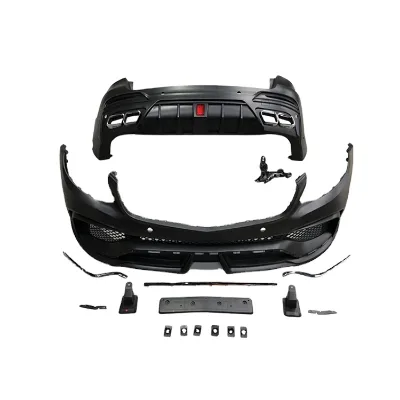


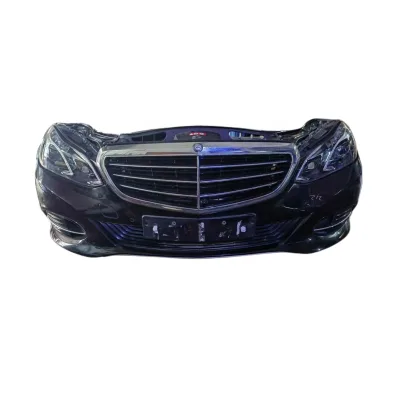
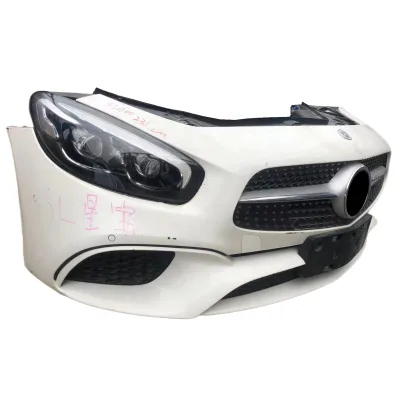
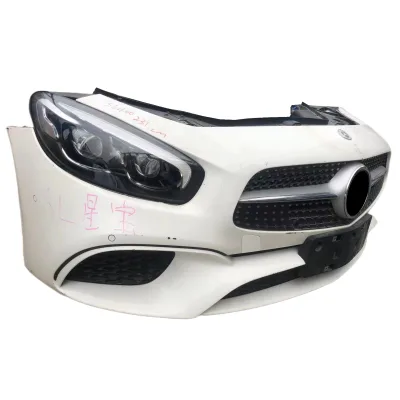
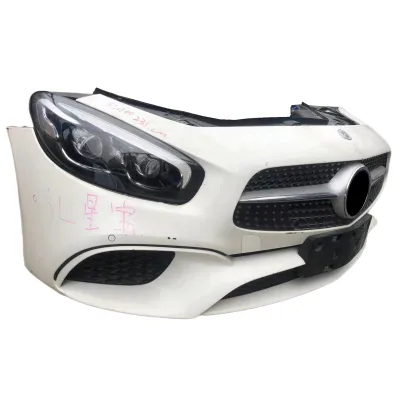
Factory Direct Sale Wear-Resistance Car Bumper Factory for SL 231 Front Bumper
$100.00 - $200.00
MOQ: 1 pieces


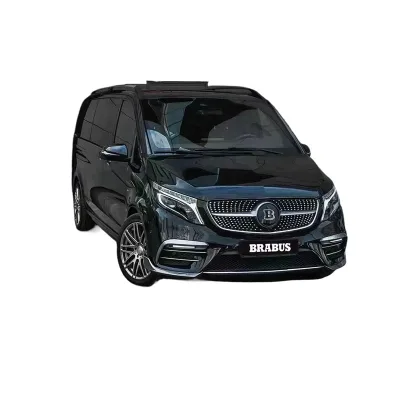


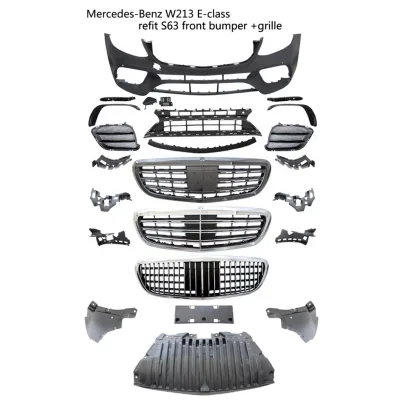

2118800712 Auto Parts Front Left Driver Side Bumper Molding for Mercedes Benz W211
$9.90 - $19.90
MOQ: 100 Pieces


Comprehensive Sourcing Guide
Strategic Sourcing Guide for Mercedes-Benz Front Bumper Components
Procuring replacement or aftermarket front bumper components for Mercedes-Benz vehicles requires a disciplined approach that balances aesthetic customization with rigorous engineering compliance. The global market for these automotive parts is vast, yet the specific requirements for fitment, material integrity, and regulatory adherence can vary significantly between suppliers. This guide synthesizes observed market data and technical specifications to provide a structured framework for B2B buyers. The objective is to navigate the complexities of sourcing high-quality components while mitigating risks associated with fitment errors, material degradation, and supply chain inconsistencies.
Technical Specifications and Dimensional Analysis
The foundation of a successful procurement strategy lies in a precise understanding of the technical specifications provided by potential suppliers. In the current market, front bumper components for Mercedes-Benz vehicles exhibit a wide range of dimensional profiles. Observed data indicates that specific bumper units may have a length ranging between 1850 mm and 1900 mm, with a horizontal depth (width) of approximately 120 mm to 150 mm. The vertical height typically falls within the 450 mm to 500 mm range. These dimensions are critical for ensuring that the component aligns with the vehicle's chassis and aerodynamic design.
Beyond physical dimensions, the material composition is a primary determinant of performance and durability. The majority of observed listings specify the use of high-grade plastics, specifically ABS (Acrylonitrile Butadiene Styrene) combined with PP (Polypropylene). This composite material is favored for its balance of impact resistance, flexibility, and weight reduction compared to traditional metal alternatives. The manufacturing process for these components often involves injection molding, a technique that ensures consistent wall thickness and high precision in the final product. Buyers must verify that the supplier utilizes injection molding machines capable of maintaining tight tolerances, as deviations can lead to the "High Fitment" or "Perfect 100% Fitment" claims failing in practice.
Furthermore, the product model and origin play a significant role in specification verification. Listings frequently reference specific model codes such as W205, W167, GL X164, and part numbers like 4488850500 or 246 880 4640. These identifiers are not merely marketing labels but serve as essential cross-reference points for compatibility. The origin of the product, often cited as China or specifically Guangzhou, suggests a concentration of manufacturing capabilities in this region. However, the origin alone does not guarantee quality; it is the adherence to the stated standard, whether labeled as "Standard" or specific part-number-based standards, that defines the component's integrity.
Compliance, Certification, and Material Standards
In the automotive aftermarket, compliance with international standards is non-negotiable. While specific test results are not universally disclosed in all listings, buyers should prioritize suppliers who can demonstrate adherence to recognized quality management systems. One observed certification in the market is ISO, which indicates that the manufacturer has established processes for quality control and consistency. This certification is a baseline indicator that the supplier operates under a structured management framework, though it does not automatically validate the specific performance of every bumper unit.
When evaluating material standards, buyers must look beyond the generic claim of "High Quality" or "Good Quality Car Body Part." The specific material formulation, such as the ABS+PP blend, must be verified against the vehicle manufacturer's original equipment specifications. The absence of a specific certification for a particular bumper model should not be assumed to be a defect, but rather a signal to request detailed material safety data sheets (MSDS) or compliance certificates from the supplier. The standard for the product itself may be listed as a specific code (e.g., 246 880 4640) or a generic "Standard" designation. In the latter case, the buyer must define what "Standard" means in the context of their specific application, ensuring it meets the mechanical and chemical requirements of the intended vehicle platform.
It is also crucial to verify that the product origin and manufacturing location align with the buyer's regulatory requirements. For instance, while the origin is frequently listed as China, specific regional variations like Guangzhou may imply different logistical or regulatory environments. Buyers should ensure that the supplier's stated standards match the regulatory framework of the destination market, particularly regarding emissions, flammability, and impact resistance.
Cost Drivers and Pricing Structures
The pricing landscape for Mercedes-Benz front bumpers is highly variable, with observed ranges spanning from 1 USD to 5250 USD. This extreme variance is driven by several factors, including the complexity of the design, the quality of materials, and the level of customization required. A basic replacement bumper may fall at the lower end of the spectrum, while a full body kit or a customized unit with advanced features like integrated sensors or active aerodynamics will command a premium price.
The Minimum Order Quantity (MOQ) is another significant cost driver. Market observations show an MOQ range from 1 set to 100 sets, with specific listings indicating MOQs of 2 sets or 1 set. For buyers looking to test the market or fulfill small-scale orders, suppliers with lower MOQs are essential. However, higher volumes often unlock better unit pricing. The cost structure is also influenced by the packaging requirements; some listings specify a simple box, while others require a "Carton Box with Wood Frame" or specific dimensions like 2168984cm. These packaging standards add to the overall logistics cost and must be factored into the total landed cost calculation.
Additionally, the level of service offered impacts the final price. Suppliers offering "OEM, ODM, and Customized Orders" typically charge a premium for the engineering and tooling required to produce non-standard parts. The "Professional Service" and "Within 24 Work Hours" response times also suggest a higher operational cost structure, which may be reflected in the unit price. Buyers should carefully analyze the total cost of ownership, including shipping, duties, and potential returns, rather than focusing solely on the unit price.
Typical Applications and Fitment Verification
The primary application for these components is the automotive sector, specifically for Mercedes-Benz vehicles. The fitment is a critical success factor, with many suppliers claiming "Perfect 100% Fitment" and "High Fitment." These claims are supported by the observation that the products are designed for "Original Car Hole Installation," meaning they are engineered to align with existing mounting points without the need for extensive modification.
The applications extend beyond simple replacement. Many listings describe the products as "Modified Body Kits" or "Full Body Kits," indicating their use in customization and performance enhancement. Specific model compatibility is frequently cited, including the C-Class W205, GL X164, and W167 platforms. The color options observed include standard Black and Gloss Black, which are popular choices for both aesthetic matching and performance-oriented styling.
To verify fitment, buyers should cross-reference the product model numbers with the vehicle's VIN or specific model year data. The observation of specific part numbers like 4488850500 and 246 880 4640 provides a concrete starting point for this verification. However, buyers must remain cautious, as "For Mercedes Benz" is a broad descriptor that may not apply to all model years or trims. The "Carlsson" designation in some listings suggests a specific aftermarket tuning brand, which may have unique fitment requirements compared to standard OEM parts.
Supplier Evaluation and Quality Control
Evaluating a supplier for Mercedes-Benz front bumpers requires a multi-faceted approach. The first step is to assess the supplier's production capabilities, specifically their use of injection molding machines. This technology is essential for producing the complex geometries required for modern bumper designs. Buyers should request evidence of the supplier's quality control processes, including in-line inspections and final product testing.
The "Crafts" attribute, specifically "Injection Molding Machine Molding," should be verified through site audits or detailed process documentation. The consistency of the molding process directly impacts the dimensional accuracy and surface finish of the bumper. Additionally, the "Quality" attribute, often described as "High Quality" or "Good Quality," should be substantiated by the supplier's track record and customer feedback.
A key aspect of supplier evaluation is the reliability of the delivery timeline. Observed lead times vary from 3-7 working days after payment to 15-30 days. This discrepancy highlights the importance of clear communication regarding production schedules and shipping logistics. Suppliers offering "Service: Within 24 Work Hours" demonstrate a commitment to responsiveness, which is crucial for resolving any issues that may arise during the procurement process.
Long-Term Procurement Considerations
Sourcing front bumpers is not a one-time transaction but part of a long-term supply chain strategy. Buyers should consider the scalability of the supplier's operations. Can the supplier handle increased order volumes without compromising quality? The "Customization: Available" attribute suggests flexibility, but buyers must ensure that the supplier has the capacity to manage custom orders efficiently.
The packaging and shipping logistics are also critical for long-term success. The observation of various packaging types, from simple boxes to wood-framed cartons, indicates that the supplier must be able to adapt to different shipping requirements. The volume of the product, estimated at 0.10 to 0.14 cubic meters, and the weight, ranging from 3.5 to 5 kg, are key factors in determining shipping costs and storage requirements.
Finally, buyers should establish a robust quality assurance protocol for incoming goods. Even with high-quality claims, the risk of defects exists. Implementing a system for inspecting samples before full-scale production and maintaining open communication channels with the supplier will help mitigate risks and ensure a steady supply of high-quality components. The "Features: Excellent Fitment, Easy Installation" should be validated through practical testing to ensure that the components meet the expectations of the end-user.
Summary of Key Sourcing Parameters
The following table summarizes the critical parameters observed in the market for Mercedes-Benz front bumper components. This overview serves as a checklist for buyers to ensure all essential aspects are covered during the procurement process.
| Parameter | Observed Range/Value | Verification Requirement |
|---|---|---|
| Condition | New | Confirm with supplier documentation |
| Material | Plastic, ABS+PP | Request material safety data sheets |
| Fitment | High Fitment, Perfect 100% | Cross-reference with vehicle model codes |
| Origin | China, Guangzhou | Verify shipping and regulatory compliance |
| MOQ | 1 Set to 100 Sets | Negotiate based on order volume |
| Lead Time | 3-7 Days to 15-30 Days | Confirm production schedule |
| Certification | ISO | Request valid certification copies |
| Packaging | Box, Carton, Wood Frame | Assess for shipping safety |
| Dimensions | L: 1850-1900mm, W: 120-150mm, H: 450-500mm | Verify against vehicle specs |
| Weight | 3.5 - 5 Kg | Confirm for logistics planning |
By adhering to these guidelines and maintaining a rigorous approach to verification, buyers can effectively navigate the complex landscape of Mercedes-Benz front bumper sourcing, ensuring the acquisition of components that meet both functional and aesthetic requirements.
FAQs
What material is used for these front bumpers?
The bumpers are constructed from a blend of ABS and PP plastic. This composite offers high impact resistance and flexibility while maintaining a lightweight profile suitable for automotive applications.
Which Mercedes-Benz models do these parts fit?
These components are designed for specific models including the C-Class W205, GL X164, and W167 platforms. They also reference part numbers like 4488850500 and 246 880 4640 for compatibility verification.
How long does delivery take after payment?
Delivery times typically range from 3 to 7 working days or 15 to 30 days depending on the specific order and supplier. Some listings indicate a service response within 24 work hours to confirm these timelines.
Can I request custom modifications for this bumper?
Yes, customization is available for these front bumper components. Suppliers offer OEM, ODM, and customized order services to meet specific aesthetic or functional requirements for the vehicle.
What is the minimum order quantity for purchase?
The minimum order quantity varies between 1 set and 100 sets depending on the supplier. Specific listings indicate MOQs of 1 set or 2 sets for testing or small-scale procurement needs.
How are the products packaged for shipping?
Packaging options include simple boxes, carton packages, or carton boxes with wood frames. Dimensions for packaging can vary, with some standard sizes reaching up to 216 by 89 by 84 centimeters.
Are the bumpers certified for quality standards?
Some products carry ISO certification indicating adherence to quality management systems. The manufacturing process often involves injection molding to ensure consistent wall thickness and high precision fitment.