Source Menopause Support Soy Isoflavones Extract for Supplements, Functional Foods, and Pharmaceutical Formulations
Browse 30 listings of Menopause Support Soy Isoflavones Extract from extract powders to finished softgels. Compare purity levels, dosage forms, certifications, packaging options, and MOQs to match your supplement, health product, or medicine application needs.
Key considerations
Products List

Standardized Soy Isoflavone Extract for Menopause and Women Health Support Genistein Powder
$56.70 - $60.30
MOQ: 1 kilograms


Health Care Use Isoflavones Powder Pure Soya Extract 80% Soy Isoflavone
$28.00 - $198.00
MOQ: 1 kilograms

Health Care Supplements Use Isoflavones Powder Pure Soya Extract 80% Soy Isoflavone
$24.00 - $28.00
MOQ: 1 kilogram


Comprehensive Sourcing Guide
Menopause Support Soy Isoflavones Extract Sourcing Guide
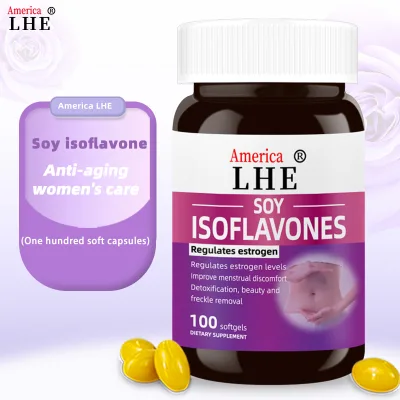
Sourcing soy isoflavones extract for menopause support requires a clear distinction between finished consumer supplements and bulk raw materials. The market offers a wide spectrum of products, ranging from ready-to-consume softgels designed for adult women to high-purity powders intended for further manufacturing. Buyers must first determine their position in the supply chain. If the goal is private labeling or direct retail, finished dosage forms such as softgels are the appropriate choice. These products typically come in specific bottle capacities, such as 100 softgels per container, and are formulated for immediate consumption with defined dosing instructions. Conversely, if the objective is to formulate custom health care products, medicines, or food additives, bulk powder extracts are the necessary input. These raw materials are often sold in larger packaging units, such as 25kg cardboard drums or foil bags, and require additional processing before reaching the end consumer.
The core active ingredient in these products is soy isoflavones, with genistein often cited as a primary component. This botanical extract is derived from the seed of the soybean plant, typically through solvent extraction methods. The resulting material can vary significantly in appearance and concentration. Bulk powders may appear as light yellow or yellow powder, with purity levels that can range from standard food-grade concentrations to highly refined extracts exceeding 98% or 99%. Finished supplements, on the other hand, encapsulate these extracts into softgel forms to ensure stability and ease of ingestion. Understanding this distinction is critical for procurement, as the verification processes, regulatory requirements, and quality control measures differ vastly between a finished dietary supplement and a raw botanical extract.
Product Scope and Observed Listing Signals
The current market landscape for soy isoflavones extract reveals a diverse array of product listings that cater to different buyer needs. Observed data indicates a product count of approximately 30 distinct listings, with prices ranging from $1 to $198 USD. This wide price variance reflects the difference between small quantities of finished supplements and bulk industrial orders of raw extract. Minimum Order Quantities (MOQs) also vary significantly, spanning from as low as 1 gram for sample testing or small-batch customization up to 5,000 units for larger commercial orders. Some suppliers offer an MOQ of just 1 kilogram for bulk powder, while others may require larger drum quantities. Buyers should interpret these signals carefully, recognizing that a low price per unit often correlates with higher volume commitments and less personalized service.
Brand presence and origin are also key signals in this category. Products are frequently associated with brands such as France shGrace, indicating a potential focus on Western market aesthetics or branding strategies. The place of origin for these products is predominantly China, with specific mentions of regions like Guangdong and Shannxi. This geographic concentration suggests a mature supply chain for soy-based botanicals in these areas. Additionally, the application forms for these extracts are versatile, including capsules, tablets, pastes, suppositories, lotions, and even injections, although the most common forms for menopause support are oral capsules and softgels. The shelf life for these products is generally listed as 24 months or 2 years, provided they are stored correctly. Buyers must verify that the specific listing they are evaluating aligns with their intended application, whether it is for direct consumer sale or industrial formulation.
Technical Specifications to Verify
When evaluating soy isoflavones extract, the purity and assay methods are the most critical technical specifications to verify. For bulk powders, purity levels are often advertised as above 98% or 99%, but these claims must be backed by rigorous testing. Buyers should insist on verification through established analytical methods such as High-Performance Liquid Chromatography (HPLC), UV spectroscopy, and HPLC-MS. These methods provide precise quantification of isoflavone content and ensure the absence of contaminants. The standard concentration for some extracts may be listed as 20%-40%, which is typical for less refined botanical powders. In contrast, highly purified extracts may meet a 98% standard. It is essential to request a Certificate of Analysis (CoA) that details the results of these specific tests, rather than relying solely on the supplier’s marketing claims.
The physical state and packaging of the product also require careful attention. Bulk extracts are typically supplied as powders, with descriptions noting a light yellow or yellow appearance. Packaging options vary from small foil bags for samples to large 25kg cardboard drums or 20kg boxes for industrial use. Some listings mention candrumvacuum packing, which may refer to vacuum-sealed drums to protect the powder from moisture and oxidation. For finished supplements, the dosage form is usually a softgel, with a specific dose of two softgels once daily. The bottle capacity is often standardized at 100 softgels. Buyers must ensure that the packaging chosen protects the integrity of the product, especially for hygroscopic powders that may degrade if exposed to humidity. Additionally, the model numbers and product codes, such as SI-L01 or WG-VS01, should be cross-referenced with the supplier’s catalog to ensure consistency in future orders.
Compliance and Safety Documentation
Regulatory compliance is a non-negotiable aspect of sourcing soy isoflavones extract, particularly when the product is intended for human consumption. Suppliers often list a range of certifications, including HACCP, ISO, BRC, FDA, and RoHS. While these certifications indicate a commitment to quality management and safety standards, buyers must verify the validity and scope of each certificate. For instance, FDA registration does not imply FDA approval of the specific product but rather indicates that the facility is registered to export to the United States. Similarly, HACCP and ISO certifications relate to process control and quality management systems, not the safety of the final ingredient itself. Buyers should request copies of these certificates and check their expiration dates and the specific facilities covered.
Safety documentation must also address the specific populations for whom the product is not intended. Soy isoflavones extracts are generally marketed for adult women, but they are explicitly not applicable to pregnant women and newborns. This contraindication must be clearly communicated in the product labeling and safety data sheets. Furthermore, the grade of the product is often listed as food grade, which is appropriate for health care products and food applications. However, if the extract is intended for medicinal use, additional pharmacopeial standards may apply. Buyers should ensure that the supplier provides a comprehensive safety data sheet (SDS) and any relevant toxicological studies. The cultivation method, noted as artificial planting, should also be considered in the context of pesticide residue limits and environmental standards, which may vary by destination market.
Cost Drivers and Commercial Terms
The cost of soy isoflavones extract is influenced by several factors, including purity level, packaging format, and order volume. Bulk powders with lower purity levels, such as 20%-40%, are generally less expensive than highly purified extracts exceeding 98%. However, the cost per kilogram may decrease significantly with larger order volumes, making it crucial for buyers to align their procurement strategy with their production needs. The MOQ is a key commercial term, with some suppliers offering low MOQs of 1g or 1kg for testing purposes, while others require larger commitments. Buyers should negotiate terms that allow for flexibility, especially when introducing a new product to the market. Shipping methods, such as DHL, FedEx, TNT, and EMS, also impact the total landed cost, with express courier services being more suitable for small samples and air freight or sea freight being more cost-effective for bulk orders.
Customization is another significant driver of cost and commercial terms. Many suppliers offer customization services, allowing buyers to tailor the product to their specific needs, whether through different packaging, labeling, or formulation adjustments. This flexibility can add value but may also increase the unit cost due to setup fees or minimum run requirements. The shelf life of the product, typically 24 months, should be considered in inventory planning to minimize waste. Buyers should also clarify the Incoterms of the sale, such as FOB or CIF, to understand who is responsible for shipping and insurance costs. Payment terms, such as T/T or L/C, should be negotiated based on the order size and the buyer’s relationship with the supplier. Clear communication of these commercial terms helps avoid unexpected costs and ensures a smooth transaction process.
Supplier Qualification and Quality Control
Qualifying a supplier of soy isoflavones extract requires a thorough assessment of their manufacturing capabilities and quality control systems. Buyers should verify the supplier’s place of origin, with Guangdong and Shannxi in China being common sources. It is advisable to conduct a factory audit or request a virtual tour to inspect the production facilities. The extraction type, typically solvent extraction, should be evaluated for safety and efficiency. Buyers should inquire about the solvents used and the measures taken to remove residual solvents from the final product. Additionally, the supplier’s ability to provide consistent quality across batches is crucial. This can be assessed by reviewing their internal quality control procedures and their adherence to standards such as ISO and BRC.
Quality control should extend beyond the initial purchase to include ongoing monitoring and testing. Buyers should establish a protocol for receiving inspections, which may include random sampling and third-party testing to verify purity and potency. The assay methods used by the supplier, such as HPLC and UV, should be compatible with the buyer’s own testing capabilities or those of their contracted laboratory. It is also important to verify the supplier’s traceability systems, ensuring that they can track the raw materials from cultivation to final packaging. The cultivation method, noted as artificial planting, should be documented to ensure compliance with agricultural standards. By implementing a robust supplier qualification and quality control process, buyers can mitigate risks and ensure the consistency and safety of their soy isoflavones extract supply.
Long-Term Procurement Checks
Long-term procurement of soy isoflavones extract requires continuous monitoring of market trends and regulatory changes. The demand for menopause support products is growing, driven by an aging population and increased awareness of hormonal health. Buyers should stay informed about new research on the effectiveness of soy isoflavones in regulating estrogen levels and their impact on menopausal symptoms. This knowledge can help in positioning products effectively and addressing consumer concerns. Additionally, buyers should regularly review their supplier’s performance, including delivery times, product quality, and responsiveness to issues. Establishing a long-term partnership with a reliable supplier can lead to better pricing, priority service, and collaborative product development.
Regulatory landscapes are also evolving, with new standards and requirements emerging in various markets. Buyers must ensure that their suppliers remain compliant with these changes, particularly regarding labeling, safety, and environmental standards. Regular audits and updates to quality agreements are essential to maintain compliance. Furthermore, buyers should consider diversifying their supplier base to mitigate risks associated with supply chain disruptions. This may involve sourcing from different regions or working with multiple suppliers for different product grades. By maintaining a proactive approach to procurement, buyers can ensure a stable and compliant supply of soy isoflavones extract, supporting the long-term success of their menopause support product line.
FAQs
What is Menopause Support Soy Isoflavones Extract used for?
It is used in supplements intended to regulate estrogen levels and support women during menopause. The extract, typically derived from soybean seed via solvent extraction, is formulated into softgels, capsules, and tablets. Manufacturers also apply it in health care products and medicines, with dosage forms and formulations varying by supplier and target product.
Which dosage forms can soy isoflavones extract be supplied in?
The raw powder extract is commonly processed into capsules and tablets for supplements. Listed application forms also include paste, suppository, lotion, and injection for certain applications. Buyers should confirm which forms a supplier can produce, since raw material suppliers and finished-product manufacturers often serve different stages of the production chain.
What specifications are typical for soybean isoflavone extract powder?
Listed products reference purity standards such as 20%-40% and up to 98% or 99%, typically verified by HPLC testing. The extract appears as a light yellow powder of food grade, with genistein among the main active components. Request assay certificates to confirm which specification applies to a specific lot before ordering.
How is soy isoflavones extract packaged for shipping?
Raw extract powder is commonly packed in foil bags, boxes, or drums, with listed formats including 25kg net cardboard drums and 20kg boxes, some vacuum packed. Finished softgel bottles are listed at 100 softgels per bottle. Shipping methods mentioned include DHL, FedEx, TNT, and EMS, though bulk orders usually use freight forwarders instead.
What is the typical shelf life of soy isoflavones extract products?
Listed shelf life is 24 months, or 2 years, from production when stored properly. Keep the powder or finished softgels in a cool, dry place away from direct sunlight in sealed packaging. Confirm the manufacturing date on each batch, since effective shelf life depends on storage conditions during warehousing and transit.
What certifications do listed soy isoflavones extract suppliers hold?
Listed certifications include HACCP, FDA, ISO, BRC, and RoHS, though not every product carries every certification. Buyers should request current certificates for the specific facility producing their order, as certification scope varies between factories and product lines. Verify certificate validity dates and issuing bodies before committing to a supplier.
Can soy isoflavones extract be customized for private label supplement brands?
Customization is listed as available for these products. Options can include formulation strength, dosage form such as capsules or softgels, packaging design, and labeling for private brands. Discuss minimum order quantities, artwork requirements, and regulatory documentation with suppliers early, since customization typically affects pricing, tooling costs, and production lead times.
What is the minimum order quantity for soy isoflavones extract?
Listed minimums range widely, from 1 gram for sample quantities of raw extract powder to 1 kilogram for standard orders and up to 5000 units for finished products. Small trial orders let buyers evaluate quality first. Confirm the exact MOQ per product and specification directly with each supplier before requesting quotations.