Source Mini Handheld Sewing Machine for Factory, Household, and Garment Use
Explore 30 listings for the Mini Handheld Sewing Machine suitable for factory, household, and garment applications. Buyers can compare models like frj152 and FX-DC6V Series with varying drive types, stitch options, and certifications to find the right equipment.
Key considerations
Products List


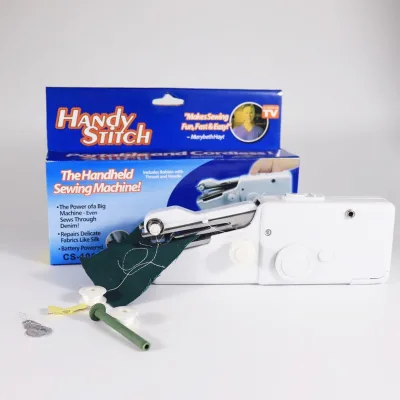
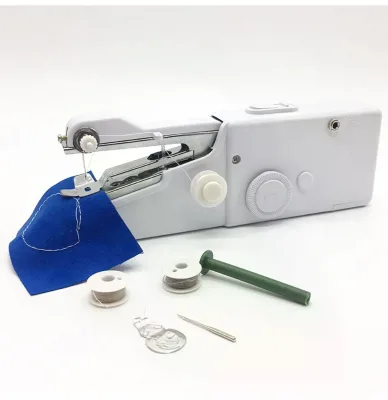
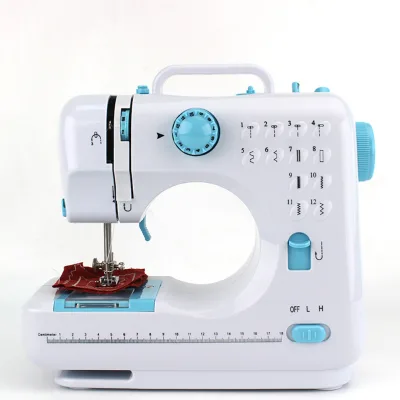
3 Portable Mini Handheld Sewing Machines
$0.40 - $0.50
MOQ: 210 Pieces
Jinhua Hengyang Cross-Border Trade Limited Liability Company


Comprehensive Sourcing Guide
Strategic Sourcing Guide for Mini Handheld Sewing Machines
Understanding the Technical Landscape and Drive Mechanisms
The category of mini handheld sewing machines encompasses a diverse range of devices designed for both industrial and domestic environments. When evaluating products within this sector, buyers must first distinguish between the primary drive mechanisms, as this dictates the machine's operational capacity and intended use case. The available market data indicates a split between Hand Type and Electric drive systems. Hand Type mechanisms typically rely on manual operation, often categorized under Manual automation levels, making them suitable for low-volume, on-the-go repairs or specific artisanal applications where power sources are unavailable. Conversely, Electric drive systems offer consistent stitch formation and are often associated with higher throughput requirements, even within the handheld form factor.
A critical technical differentiator is the needle and thread configuration. The observed product attributes reveal a prevalence of Single Needle and Single Thread configurations. These machines often utilize a Chain Type stitch, which is distinct from the Lock Type stitch found in other models within the same category. The Chain Type stitch is generally faster to produce but may be less secure than a lock stitch, which is a vital consideration for applications requiring high durability. Furthermore, the classification of these devices varies significantly; some are explicitly labeled as Sewing Machines with Semiautomatic automatic grades, while others are marketed as Sewing Kits or Portable Pocket-Sized units. The latter often feature Natural Fiber sewing threads and are designed for extreme portability, whereas the former may be integrated into Assembly production lines or designated for Factory use.
The physical specifications also vary widely. While some units are described as Garment specific, others are defined by their material composition, such as Steel construction, which implies durability and resistance to wear. The Applicable Thickness is noted as Thin Material, suggesting that these handheld units are not intended for heavy-duty industrial sewing of thick denim or leather but rather for lightweight fabrics, linings, and quick mending tasks. Understanding these technical nuances is the first step in aligning the procurement with specific operational needs.
Compliance, Certification, and Safety Standards
In the global B2B market, compliance with international safety and quality standards is non-negotiable. For mini handheld sewing machines, buyers must verify the presence of recognized certifications that validate the product's safety and electrical integrity. The supplied data confirms the existence of products carrying the CE certification, which indicates conformity with health, safety, and environmental protection standards for products sold within the European Economic Area. Additionally, GS certification is observed, a German mark of safety that is highly regarded in the industry for ensuring rigorous testing of electrical appliances.
Beyond specific certifications, the prod_standard attribute provides insight into the weight and dimensional constraints of the units. Observed standards include weights of 0.3kg, 0.35kg, and 1kg, alongside dimensional standards such as 9 x 2.25 x 7.5 inches. These figures are not merely marketing claims but serve as critical verification points for logistics and ergonomic planning. A buyer sourcing for a specific region must ensure that the product's weight and dimensions align with local regulations and user expectations. For instance, a unit weighing 0.3kg may be ideal for a Household application where portability is paramount, whereas a 1kg unit might be required for a Factory setting where stability and robustness are prioritized.
It is imperative to note that while CE and GS are present in the data, the absence of these marks on a specific listing does not automatically disqualify a product, but it necessitates a deeper inquiry into the manufacturer's quality assurance protocols. Buyers should request test reports or documentation proving compliance with local standards, such as UL in North America or CCC in China, depending on the destination market. The prod_packing standard of Standard Export Packaging or Cartons also plays a role in compliance, ensuring that the product arrives in a condition that meets international shipping safety requirements.
Cost Drivers and Pricing Dynamics
The pricing structure for mini handheld sewing machines is highly variable, reflecting the diversity in specifications, automation levels, and included accessories. The observed listed price range spans from 0.4 USD to 54,523.53 USD. This extreme variance is not indicative of a single product line but rather a spectrum ranging from basic Sewing Kits with Ordinary Hand Sewing Needles to complex Electric units with advanced automation features.
Several factors drive these costs. First, the Drive mechanism is a primary cost determinant. Electric models generally command higher prices due to the inclusion of motors, circuitry, and safety components compared to Hand Type manual units. Second, the Automation level influences the price; Semiautomatic models with Assembly line capabilities are priced significantly higher than fully Manual devices. Third, the Application Place dictates the build quality and material costs. Units designed for Factory use often feature Steel construction and higher durability standards, leading to a higher price point compared to Household or Portable Pocket-Sized versions.
The MOQ (Minimum Order Quantity) also impacts the effective unit cost. The observed MOQ range is 1 to 2000. Buyers purchasing at the lower end of the MOQ spectrum (e.g., 1 Set) may face higher per-unit costs, while those ordering in bulk (up to 2000 units) can leverage economies of scale. Additionally, the prod_packing method, whether 1PC/Box or bulk Cartons, affects the final landed cost due to packaging material and labor expenses. Buyers must analyze the total cost of ownership, including shipping, tariffs, and potential rework costs, rather than focusing solely on the listed unit price.
Typical Applications and Operational Context
The versatility of mini handheld sewing machines allows them to serve a wide array of applications, from domestic repairs to industrial assembly. The data highlights two primary application contexts: Factory and Household. In a Factory setting, these machines are often integrated into Assembly lines or used for specific tasks requiring Semiautomatic operation. The Chain Type or Lock Type stitch capabilities are selected based on the specific garment or material being processed. For instance, Garment production may require the higher durability of a Lock Type stitch, while quick-fix operations might utilize the speed of a Chain Type stitch.
For Household users, the focus shifts to Portable Pocket-Sized convenience. These units are designed for Thin Material and often come as Sewing Kits that include Natural Fiber threads and Ordinary Hand Sewing Needles. The Hand Type drive mechanism is particularly popular in this segment, offering a low-cost, low-maintenance solution for mending clothes, altering hems, or crafting. The Needle Number of Single Needle is standard across most models, simplifying the learning curve for users who may not have extensive sewing experience.
It is crucial to match the machine's Classification to the intended use. A Sewing Machine classified for Factory use may be over-engineered and expensive for a home user, while a Sewing Kit might lack the durability required for continuous industrial operation. The Transportation methods listed, such as Sea and Air, also suggest that these products are often sourced globally, requiring careful consideration of supply chain logistics to ensure timely delivery for both retail and wholesale markets.
Supplier Evaluation and Quality Assurance
When evaluating suppliers for mini handheld sewing machines, buyers must look beyond the basic product listing and assess the supplier's ability to meet specific quality and logistical requirements. The prod_origin is consistently listed as China, with specific mentions of Zhejiang, China, a region known for its manufacturing capabilities. However, the presence of a specific origin does not guarantee quality; buyers must verify the supplier's track record, production capacity, and adherence to the stated prod_standard.
Quality assurance should begin with the verification of Certification documents. Suppliers claiming CE or GS certification must provide valid certificates that are current and applicable to the specific model number, such as frj152, frj58, or FX-DC6V Series. The prod_model variations indicate a wide range of SKUs, and buyers must ensure that the specific model they are sourcing matches the technical specifications they require. For example, the FX-788 and FX788 models may share similar features but could have distinct performance characteristics.
The Condition of the product is listed as New, which is a baseline expectation. However, buyers should also inquire about the Customization availability. The data confirms that Customization is available, which is a significant advantage for buyers seeking tailored solutions. This could include modifications to the Drive mechanism, Stitch Type, or prod_packing. Suppliers offering customization should be able to provide samples or prototypes to validate the changes before committing to a large order.
Logistics, Lead Times, and Procurement Considerations
Logistics play a pivotal role in the procurement of mini handheld sewing machines. The Delivery Time is observed as 7 Days for certain listings, which suggests a relatively fast turnaround for standard orders. However, this lead time may vary based on the MOQ, the Customization requirements, and the Transportation method selected. Buyers should clarify whether the 7-day lead time refers to production time, shipping time, or the total time from order placement to delivery.
The prod_packing standards, such as Standard Export Packaging or 1PC/Box, are critical for ensuring the product arrives in good condition. For international shipments, Cartons are often preferred for bulk orders to maximize space efficiency and protect the units during transit. The Transportation options of Sea and Air offer flexibility; Air shipping is faster but more expensive, while Sea shipping is cost-effective for large volumes but requires longer lead times.
Buyers must also consider the Automatic Grade and Transmission Type. The Flexible transmission type noted in the data suggests a design that can accommodate various operational stresses, which is beneficial for long-term reliability. The Semiautomatic grade indicates a balance between manual control and automated efficiency, which can reduce operator fatigue in high-volume environments. Finally, the Standard of 0.3kg or 1kg should be factored into the overall logistics plan, as weight affects shipping costs and handling requirements.
Long-Term Procurement and Maintenance Strategy
Sourcing mini handheld sewing machines is not just a one-time transaction but part of a long-term supply chain strategy. Buyers should establish a relationship with suppliers who can provide consistent quality, reliable Delivery Time, and responsive after-sales support. The availability of Customization options allows for future scalability, enabling buyers to adapt the product line to changing market demands without switching suppliers.
Maintenance and spare parts availability are also critical considerations. Since the Needle Number is typically Single Needle and the Thread Number is Single Thread, the supply of compatible needles and threads must be secure. Buyers should verify that the supplier can provide a steady stream of consumables, such as Natural Fiber threads, to ensure uninterrupted operation. Additionally, the Material composition, specifically Steel, suggests a need for periodic maintenance to prevent rust and ensure smooth operation, especially in humid environments.
In conclusion, successful procurement of mini handheld sewing machines requires a comprehensive understanding of the technical specifications, compliance requirements, cost drivers, and logistical considerations. By carefully evaluating the prod_model, Certification, and Application Place, buyers can select the right products for their specific needs, ensuring a reliable and efficient supply chain for their operations.
FAQs
What drive types are available for mini handheld sewing machines?
Both Hand Type and Electric drive mechanisms are available in this category. Hand Type units rely on manual operation for portability, while Electric models offer consistent stitching for higher throughput requirements in various settings.
Which certifications are verified for these sewing machines?
Products in this category carry CE and GS certifications to ensure safety and compliance. These marks validate electrical integrity and adherence to international standards for health and environmental protection in the European Economic Area.
How does the stitch type vary among the listed models?
The available stitch types include Chain Type and Lock Type configurations. Chain Type stitches are often faster but less secure, whereas Lock Type stitches provide higher durability suitable for garment production and heavy-duty applications.
Can buyers request customization for these sewing machines?
Yes, customization is available for specific product attributes and configurations. Buyers can request tailored solutions regarding drive mechanisms, stitch types, or packaging to meet unique operational needs or branding requirements.
What is the typical delivery time for these orders?
The observed delivery time for certain listings is 7 days. This lead time may vary based on the minimum order quantity, customization requirements, and the selected transportation method such as sea or air freight.
Which materials are used to construct these machines?
Steel is a primary material used in the construction of these units. This material choice implies durability and resistance to wear, making them suitable for both factory assembly lines and long-term household use.
What is the minimum order quantity for purchasing these machines?
The minimum order quantity ranges from 1 set to 2000 units depending on the supplier. Lower MOQs allow for smaller trial orders, while bulk purchases up to 2000 units can leverage economies of scale.
Where are these mini handheld sewing machines manufactured?
The products originate from China, with specific manufacturing hubs in Zhejiang. This region is known for its manufacturing capabilities, offering a wide range of models from portable kits to industrial-grade units.