Find Mini Wireless Lavalier Microphone for Meeting, Recording, and Broadcast
Source 30 verified options for the Mini Wireless Lavalier Microphone suitable for meetings, vocal recording, and professional broadcast. Compare adjustable features, battery life, and connectivity to find the right solution for your needs.
Key considerations
Products List


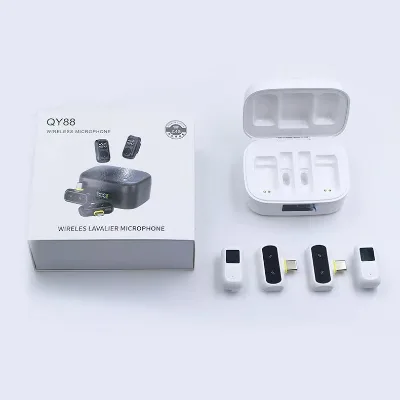
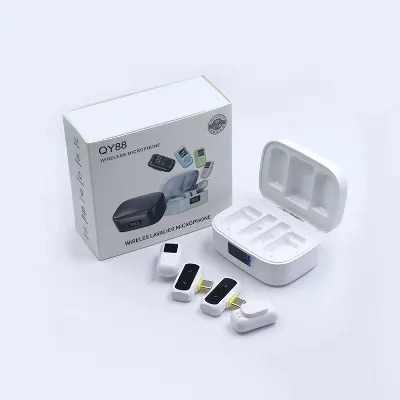
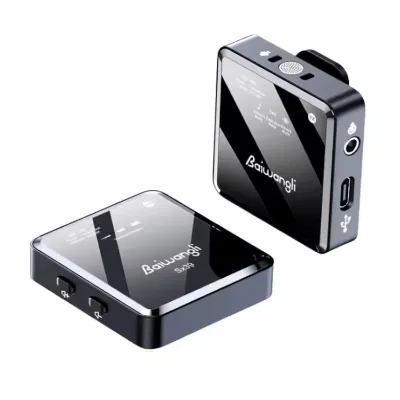
Factory OEM Mini Lavalier Wireless Instrument Microphone with Charging Case
$13.40 - $14.20
MOQ: 100 Pieces


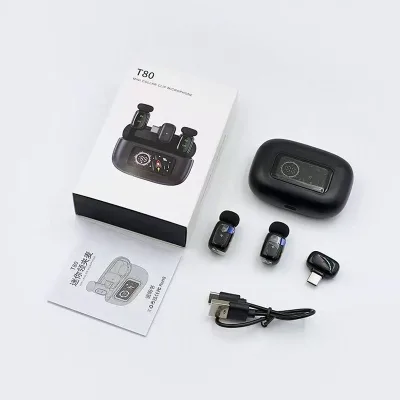
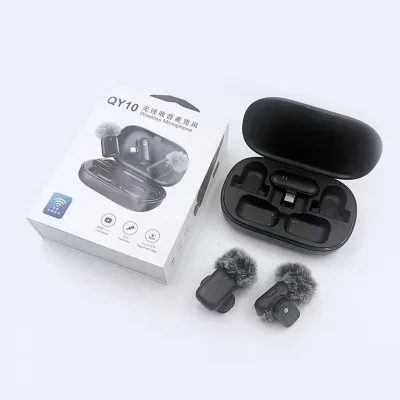
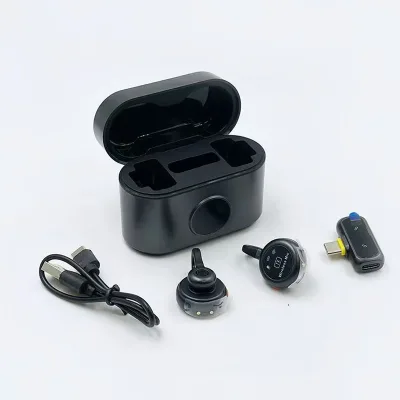
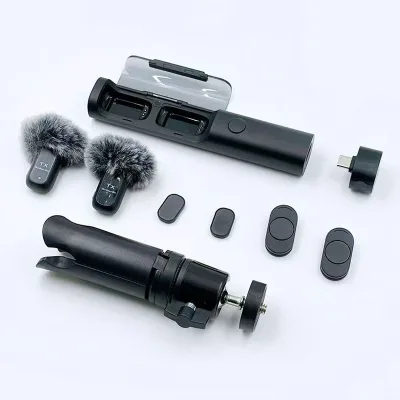



Comprehensive Sourcing Guide
Strategic Sourcing Guide for Mini Wireless Lavalier Microphones
The global demand for compact, high-fidelity audio capture solutions has surged, driven by the proliferation of content creation, remote broadcasting, and professional recording needs. For procurement professionals targeting the "Mini Wireless Lavalier Microphone" category, the market presents a complex landscape of technical specifications, varying application requirements, and diverse supplier capabilities. This guide synthesizes observed market data and technical attributes to provide a disciplined framework for sourcing decisions. Buyers must navigate a field where product attributes such as "Adjustable," "Handsfree," and "Stereo" capabilities are common, yet specific performance metrics like working time, charging duration, and signal transmission technology vary significantly between SKUs.
Technical Architecture and Signal Transmission
Understanding the underlying technology is the first step in evaluating a potential supplier. The market for mini wireless lavalier microphones is defined by the transition from analog to digital transmission and the integration of advanced connectivity standards. Observed data indicates a prevalence of UHF (Ultra High Frequency) technology, which remains a standard for professional broadcast and commercial applications due to its robust signal penetration and resistance to interference. However, newer iterations are increasingly leveraging DSP (Digital Signal Processing) for enhanced audio clarity and noise reduction.
When evaluating technical specifications, buyers should scrutinize the transducer principle. The "Electrodynamic Microphone" is a standard configuration observed in this category, offering durability and a reliable frequency response. The directivity pattern is equally critical; while "Uni-direction" microphones are ideal for isolating a specific speaker in noisy environments, "Bi-direction" and "Omni-direction" options serve different recording scenarios, such as interviews or ambient capture. The "Pressure Type" sound field force is another specific attribute to verify, as it influences how the microphone handles acoustic pressure and low-frequency response.
Connectivity and compatibility are paramount for modern procurement. The "Plug play" feature is a highly desirable attribute that reduces setup time, allowing immediate integration with cameras, smartphones, and computers. Furthermore, the integration of Bluetooth 5.0 represents a significant leap in wireless stability and power efficiency. Buyers must verify if the product supports "Stereo" sound channels, as this is essential for high-quality video production and professional broadcasting. The "Working Time" of 6 hours and "Charging Time" of 1.5 hours observed in specific models provide a benchmark for battery performance, though these figures should be treated as observations of specific SKUs rather than universal guarantees.
Application-Specific Requirements and Use Cases
The versatility of mini wireless lavalier microphones allows them to serve a wide array of industries. The observed application spectrum ranges from "Camera" and "Smartphone" integration to "Professional broadcast" and "Military" use. This breadth necessitates a tailored approach to sourcing. For instance, a procurement team for a "Commercial" setting might prioritize "Noise reduction" features and "Handsfree" operation to ensure clear communication in dynamic environments. Conversely, a "Gaming" or "Vocal recording" application might focus on "Audio record" capabilities and "Musical" fidelity.
The "Style" of the microphone also dictates its suitability. The "Headset Microphone" style is prevalent for applications requiring total mobility, such as "Teaching" or "Live broadcasting," while the "Handheld Microphone" style remains relevant for specific performance or measurement tasks. The "Material" composition, often "ABS" in observed listings, offers a balance of durability and lightweight design, which is crucial for extended wear. Additionally, the "Output Impedance" range of 50-1000Ω is a technical parameter that must match the input requirements of the receiving device to prevent signal loss or distortion.
Buyers must also consider the "Signal Transmission" method. Whether utilizing "Wireless" UHF or DSP Digital technology, the "Work Range" is a critical factor. An observed range of 25 meters provides a baseline for indoor and outdoor events, but procurement teams should verify if this range holds under specific environmental conditions. The "Matching Methods," such as "Self-Motion," can also influence the ease of pairing the transmitter and receiver, a feature that is vital for rapid deployment in "Meeting" or "Amplify" scenarios.
Cost Drivers and Pricing Dynamics
The pricing structure for mini wireless lavalier microphones is influenced by a confluence of factors, including technology level, build quality, and order volume. The observed price range in the market spans from $2.45 to $124.35 USD, reflecting the vast disparity between entry-level consumer devices and high-end professional broadcast equipment. This wide variance underscores the importance of defining the specific value proposition required for the procurement.
Several key drivers influence the final cost. First, the inclusion of advanced features such as "Bluetooth 5.0," "Dual mic" arrays, and "Remote control" capabilities typically commands a premium. Second, the "Customization" availability is a significant cost factor; suppliers offering tailored branding or specific technical modifications will likely have higher unit costs. Third, the "MOQ" (Minimum Order Quantity) plays a crucial role. With observed MOQs ranging from 1 to 3000 units, buyers can negotiate better per-unit pricing by committing to larger volumes, though the "Small Orders: Accepted" policy allows for flexibility in initial testing phases.
The "Product Packing" also contributes to cost. Options like "White Box" or standard "Box" packaging vary in expense, and custom packaging solutions will further increase the unit price. Buyers should also consider the "Standard" compliance of the product. While specific standards like "5.0" or dimensions like "1309025mm" are observed, the cost of adhering to rigorous international safety and quality standards will be reflected in the final price. It is essential to balance the budget against the required performance metrics, ensuring that cost-cutting measures do not compromise critical features like "Signal to Noise Ratio" or "Input Pressure."
Supplier Evaluation and Verification Protocols
Selecting the right supplier requires a rigorous vetting process that goes beyond surface-level product listings. The "Origin" of the product, frequently listed as "China" or specifically "Shenzhen, China," indicates a high concentration of manufacturing capability in this region. However, the presence of a specific brand name, such as "HIPPO" or "HIPPO 2.4G Wireless Microphone," does not guarantee quality or consistency across all SKUs. Buyers must treat product attributes as observations of specific items rather than universal claims for every listed product.
When evaluating suppliers, procurement teams should verify the "Brand Name" consistency and the authenticity of the "Model Number." Observed model numbers like "M30-#9021," "M43-#3142," and "M15DC-#5208" suggest a complex product portfolio. A reliable supplier should be able to provide clear documentation linking these model numbers to specific technical specifications. Furthermore, the "Customization" capability should be confirmed through direct communication, ensuring the supplier can meet specific branding or technical requirements.
The "Standard" compliance is another critical verification point. While specific standards like "5.0" or "1309025mm" are noted, buyers must confirm if these align with international regulations relevant to their market. The "Connector(s)" type, such as "USB," must be compatible with the buyer's existing ecosystem. Additionally, the "Weight" of the device, observed at 7.8kg for certain handheld models, is a factor that requires careful consideration for portability, although this figure seems unusually high for a "mini" lavalier and warrants immediate verification to ensure it is not a data error or refers to a different product category.
Quality Control and Performance Verification
Quality control in the wireless microphone sector is paramount to ensure consistent audio performance and reliability. The "Signal to Noise Ratio" of 85dB observed in some models serves as a benchmark for audio clarity, but buyers should demand test results for their specific orders. The "Input Pressure" of 97dB Spl (Built-in Microphone) is another technical metric that must be verified to ensure the microphone can handle high-volume sound sources without distortion.
Buyers should implement a multi-stage quality control process. First, verify the "Working Time" and "Charging Time" through independent testing to ensure the battery performance matches the supplier's claims. Second, test the "Work Range" under various conditions to confirm the "25m" observation holds true in real-world scenarios. Third, evaluate the "Noise reduction" capabilities, which are listed as a key feature, to ensure they effectively mitigate background interference in "Meeting" or "Outdoor" environments.
The "Material" quality, specifically "ABS," should be inspected for durability and resistance to wear and tear. For "Professional broadcast" applications, the "Directivity" pattern must be precisely calibrated to ensure the intended audio capture. The "Output Impedance" should be tested for compatibility with various receiving devices to prevent signal degradation. Finally, the "Product Packing" should be inspected to ensure it meets the required standards for shipping and storage, preventing damage during transit.
Long-Term Procurement and Supply Chain Resilience
Sourcing mini wireless lavalier microphones is not merely a transactional activity but a strategic decision that impacts long-term operational efficiency. The "Small Orders: Accepted" policy offers an advantage for buyers looking to test the market or manage inventory flexibly. However, for large-scale deployments, establishing a long-term relationship with a supplier capable of handling "MOQ" values up to 3000 units is essential for cost stability and supply chain continuity.
Buyers should also consider the "Lead Time" and "Production Capacity" of the supplier. While specific lead times are not provided in the observed data, the complexity of the "Wireless Technology" and "Customization" options can impact production schedules. Ensuring that the supplier has the capacity to scale production without compromising quality is crucial for meeting demand spikes.
Furthermore, the "Standard" compliance and "Certification" status of the products must be monitored continuously. As regulations evolve, suppliers must adapt to maintain compliance. Buyers should establish clear communication channels with suppliers to stay informed about any changes in standards or manufacturing processes. The "Brand Name" consistency and "Model Number" tracking should be maintained to ensure that replacement parts and accessories remain compatible over the product lifecycle.
In conclusion, sourcing mini wireless lavalier microphones requires a meticulous approach that balances technical specifications, application needs, cost drivers, and supplier reliability. By leveraging the observed data and adhering to strict verification protocols, procurement professionals can secure high-quality audio solutions that meet the demands of diverse industries. The key lies in treating product attributes as specific observations, verifying claims through rigorous testing, and building resilient supply chains that can adapt to the evolving needs of the market.
FAQs
What features do mini wireless lavalier microphones offer?
These microphones typically include adjustable settings, noise reduction, and stereo sound channels. Many models support Bluetooth connectivity and offer plug-and-play functionality for immediate use with cameras or smartphones without complex setup procedures.
How long does the battery last on these devices?
Observed working time for specific models is approximately 6 hours on a single charge. The charging time required to fully replenish the battery is typically around 1.5 hours, though this varies by specific SKU and usage conditions.
Which directivity patterns are available for these microphones?
Available directivity patterns include uni-direction, bi-direction, and omni-direction configurations. Uni-direction models are ideal for isolating speakers in noisy environments, while omni-direction options capture sound from all sides for broader coverage.
Can I customize the packaging or branding for orders?
Customization is available for many products in this category, allowing for tailored branding or specific technical modifications. Buyers should verify specific customization options with suppliers, as availability depends on the model and order volume requirements.
What is the typical wireless range for these microphones?
The observed working range for these wireless systems is approximately 25 meters. This range supports indoor and outdoor events, but actual performance may vary based on environmental interference and the specific wireless technology used, such as UHF or DSP.
How much do these microphones cost per unit?
The observed price range in the market spans from 2.45 to 124.35 USD. Pricing varies significantly based on features like Bluetooth version, build quality, and order volume, with higher costs associated with professional broadcast capabilities and customization.
What materials are used to construct these microphones?
Common materials include ABS plastic, which offers a balance of durability and lightweight design. This material choice ensures the devices are robust enough for professional use while remaining comfortable for extended wear during teaching or broadcasting sessions.