Source Mitsubishi Auto Car Starter for Engine Repair, Vehicle Maintenance, and Fleet Upgrades
Find a wide selection of Mitsubishi Auto Car Starter options with varying voltages, power ratings, and customization services. This catalog features 30 verified products from Chinese manufacturers, allowing buyers to compare specifications like teeth count and control systems for their specific vehicle needs.
Key considerations
Products List

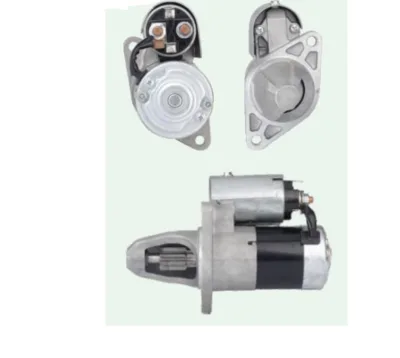
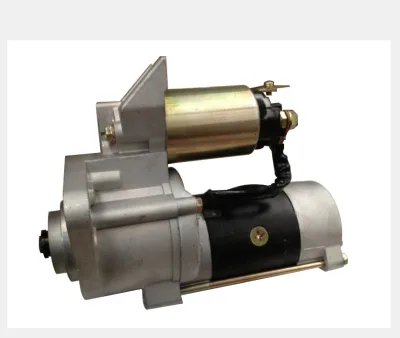
GDST Auto Car Engine Motor Starter for Toyota Honda Suzuki Nissan Mitsubishi
$20.00 - $40.00
MOQ: 100 Pieces


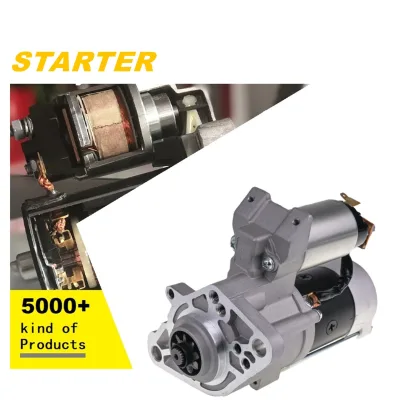
![Toka MD301351 Auto Starter Compatible with Mitsubishi Carisma 1.8 [4G93] 07.1995-02.1999](https://image.made-in-china.com/221f0j00qnmkOtFEEUzl/Toka-MD301351-Auto-Starter-Compatible-with-Mitsubishi-Carisma-1-8-4G93-07-1995-02-1999.webp)


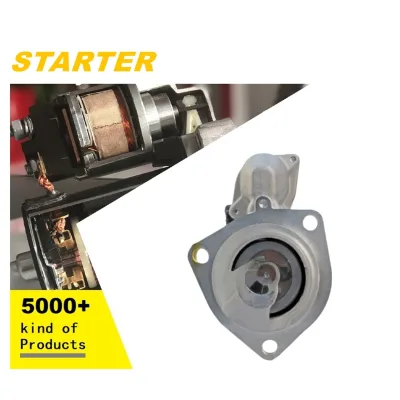
![Starter for Mitsubishi M0t32671 Chrysler 300 C 2.7 [2.7fx]](https://image.made-in-china.com/221f0j00PlnbEuOraCpT/Starter-for-Mitsubishi-M0t32671-Chrysler-300-C-2-7-2-7fx-.webp)

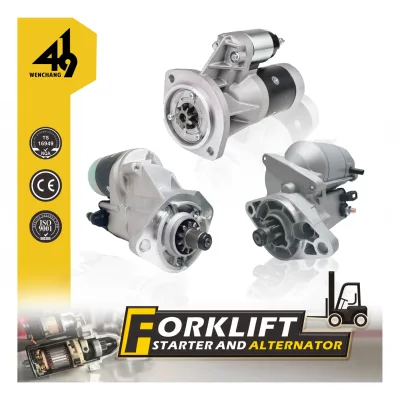
![Starter for Mitsubishi M2t56272 Mitsubishi Engine [K3d]Mitsubishi Engine [K4d]](https://image.made-in-china.com/221f0j00FWtbBfmKknrq/Starter-for-Mitsubishi-M2t56272-Mitsubishi-Engine-K3d-Mitsubishi-Engine-K4d-.webp)




Comprehensive Sourcing Guide
Strategic Sourcing Guide for Mitsubishi Auto Car Starter Components
Procuring replacement starter motors for Mitsubishi automotive systems requires a disciplined approach that balances technical compatibility with rigorous supplier verification. The global market for automotive starting systems is vast, yet the specific requirements for Mitsubishi engines demand precise attention to voltage, gear teeth, and mounting configurations. This guide synthesizes available product data and industry best practices to assist procurement professionals in identifying reliable sources for high-performance starter components. The focus remains on evidence-based selection criteria, ensuring that buyers can navigate the complexities of the supply chain without relying on unverified claims or speculative market data.
Technical Specifications and Compatibility Verification
The foundation of any successful procurement strategy for starter motors lies in the accurate interpretation of technical specifications. For Mitsubishi applications, the electrical and mechanical parameters must align perfectly with the engine's design requirements. Based on observed product attributes in the current market, buyers should prioritize units that operate within specific voltage ranges, as the data indicates both 12V and 24V systems are prevalent in this sector. Selecting the incorrect voltage can lead to immediate system failure or damage to the vehicle's electrical architecture.
Mechanical compatibility is equally critical. The data highlights specific gear configurations, such as 13 teeth with a 40mm diameter and 11 teeth with varying diameters (40mm and 41mm). These dimensions are not interchangeable; a starter motor with 11 teeth will not engage correctly with a flywheel designed for 13 teeth. Furthermore, the driving type varies between "Armature Changed" and "Deceleration" mechanisms. Buyers must verify which driving type matches the specific Mitsubishi model in question. For instance, heavy-duty applications may require the higher power output observed at 5.0kW, whereas standard passenger vehicles might utilize the 1.7kW or 1.2kW variants.
The DC form of the motor is another decisive factor. The market presents options ranging from "Permanent Magnet Starter Motor" to "Common Starter Motor." Permanent magnet designs often offer higher efficiency and compactness, while common starter motors may be preferred for specific legacy Mitsubishi engine architectures. Additionally, the control system plays a vital role in operation reliability. The observed data lists both "Direct Manipulation" and "Electromagnetic-Operated" systems. The choice between these depends on the vehicle's ignition switch design and the required engagement force.
| Parameter | Observed Range/Options | Verification Requirement |
|---|---|---|
| Voltage | 12V, 24V | Match vehicle battery system exactly. |
| Power Output | 1.2kW, 1.7kW, 3.5kW, 5.0kW | Ensure sufficient torque for engine displacement. |
| Gear Teeth | 11t, 13t | Must match flywheel ring gear count precisely. |
| Gear Diameter | 40mm, 41mm | Critical for proper meshing depth. |
| DC Form | Permanent Magnet, Common | Align with engine manufacturer specifications. |
| Control System | Direct Manipulation, Electromagnetic | Verify compatibility with ignition circuit. |
Compliance and Certification Standards
In the B2B automotive sector, compliance is not merely a formality but a prerequisite for market access and liability protection. While specific certification statuses vary by supplier, the industry standard for quality management systems is ISO 9001. The provided data explicitly references ISO 9001:2000 as a certification held by certain suppliers. Buyers should verify if a supplier's current certification is up to date, as standards evolve, and older certifications may not reflect current manufacturing capabilities.
Product standards are also a key area of verification. The data indicates that products often adhere to "Standard" specifications, with some listing specific packaging dimensions like 272115CM or 352515CM. While these dimensions describe the packaging rather than the product itself, they indicate a level of standardization in logistics and handling. Buyers must ensure that the product standard claimed by the supplier matches the OEM requirements for the specific Mitsubishi model. Relying on "OEM Standard" or "OEM Standard" model numbers is a good starting point, but cross-referencing with the vehicle's service manual is essential to confirm that the part number (such as MDH303 or MD301351) is an exact replacement.
Furthermore, the origin of the product influences compliance expectations. The data points to origins in Anhui, China, and Hebei, China. While these regions are major manufacturing hubs, buyers should not assume that all products from these locations meet the same quality threshold. Instead, the origin should be treated as a variable to be verified against the supplier's quality assurance protocols. The presence of certifications like ISO 9001:2000 suggests a commitment to process control, but the buyer must confirm that this certification covers the specific production line for the starter motor being sourced.
Cost Drivers and Pricing Dynamics
Understanding the cost structure of starter motors is essential for budgeting and negotiation. The observed price range in the market spans from 19 USD to 358 USD. This wide variance is driven by several factors, including power output, technical complexity, and the degree of customization. A basic 1.2kW unit with standard packing will naturally fall at the lower end of this spectrum, while a high-performance 5.0kW unit with specialized features like "Electromagnetic-Operated" control systems and "Permanent Magnet" technology will command a higher price.
Customization is a significant cost driver. The data confirms that customization is available, and services such as OEM and ODM are offered. Buyers requesting custom specifications, such as unique gear tooth counts, specific bonding types for magnetic field windings, or tailored packaging (e.g., "Pallet + Carton + Antirust Paper" versus standard "Plastic Bag+Color Box+Carton"), should anticipate a premium. The level of customization directly impacts the unit price and potentially the minimum order quantity (MOQ).
The MOQ range observed is between 1 and 100 units. This flexibility allows buyers to scale their orders based on demand. For small-scale procurement or testing, an MOQ of 1 is advantageous, whereas bulk purchasing for fleet maintenance or aftermarket distribution can leverage the lower per-unit costs associated with higher volumes. However, buyers must be cautious of suppliers who offer low prices but have hidden costs related to shipping, especially given the varied packaging standards. The "Standard Packing" versus "Antirust Paper" options can affect shipping costs and the risk of damage during transit, which indirectly influences the total cost of ownership.
Typical Applications and Engine Systems
The application of starter motors is highly specific to the engine architecture. The data identifies "Auto Engine System" as a primary application, but more specific use cases are also evident. For example, one product is explicitly linked to "J08c Sk260-8," indicating compatibility with heavy-duty diesel engines often found in construction or industrial machinery. This highlights that the term "Mitsubishi Auto Car Starter" may encompass a broader range of applications than just passenger vehicles, including commercial trucks and specialized equipment.
When sourcing for Mitsubishi vehicles, buyers must distinguish between passenger car applications and heavy-duty engine systems. The power requirements differ significantly; a passenger car starter might operate at 1.7kW, while a heavy-duty application like the J08c engine may require 5.0kW. The gear teeth and diameter also vary to accommodate different flywheel sizes and engagement speeds. For instance, the 11t 40mm configuration is distinct from the 13t 40mm setup, and using the wrong gear can result in catastrophic failure of the starter or the flywheel.
Additionally, the data mentions "Head Cover" and "Magneto Alternator" attributes, which suggests that some products may be part of a larger assembly or have integrated components. Buyers should verify whether the starter motor is sold as a standalone unit or as part of a larger assembly, as this affects installation procedures and compatibility with existing vehicle systems. The "Head Cover Position: Front" attribute further emphasizes the need for precise spatial alignment during installation.
Supplier Evaluation and Sourcing Strategy
Evaluating suppliers requires a multi-faceted approach that goes beyond price comparison. The data indicates that suppliers offer "OEM ODM Customized" services and accept "OEM" orders, suggesting a level of flexibility and capability. However, buyers should verify the supplier's ability to meet specific technical requirements, such as the "Bonding Type of Magnetic Field Winding: Inner Bonding" or the "Brushless Alternator Type: Magnetizing Type." These technical details are not universal and require suppliers with specialized manufacturing expertise.
The origin of the product, specifically Anhui and Hebei, China, provides a geographic context for the supply chain. Buyers should assess the logistical capabilities of suppliers in these regions, including their ability to handle international shipping and customs clearance. The packaging standards, ranging from simple "Carton" to complex "Pallet + Carton + Antirust Paper," also reflect the supplier's attention to detail and commitment to product protection. A supplier offering robust packaging is more likely to deliver products in pristine condition, reducing the risk of returns and warranty claims.
Furthermore, the "Quality: 100% Tested" attribute is a critical selling point. Buyers should request evidence of this testing process, such as test reports or quality control procedures, to ensure that the claim is substantiated. While the data confirms that testing is a standard practice, the depth and rigor of the testing can vary between suppliers. A robust quality control program should include electrical performance tests, mechanical durability checks, and environmental stress testing to ensure the starter motor can withstand the rigors of automotive use.
Quality Control and Long-Term Procurement
Ensuring long-term reliability is paramount in B2B procurement. The "100% Tested" claim is a strong indicator of quality, but it must be backed by a consistent quality management system. Buyers should inquire about the specific tests performed, such as voltage drop tests, current draw measurements, and gear engagement cycles. The "Electronical" voltage adjuster type mentioned in the data suggests that some products include advanced electronic controls, which require precise calibration and testing to function correctly.
For long-term procurement, buyers should consider the availability of spare parts and the supplier's ability to maintain consistent quality over time. The "Standard" product model and "OEM Standard" specifications suggest that these parts are designed for mass production and widespread availability. However, buyers should verify that the supplier has the capacity to scale production to meet fluctuating demand without compromising quality. The "Customization: Available" attribute offers an opportunity for buyers to work with suppliers to develop bespoke solutions, but this requires a long-term partnership and clear communication of technical requirements.
Finally, buyers should establish a clear feedback loop with suppliers to monitor product performance in the field. If a starter motor fails prematurely, the supplier should be willing to investigate the root cause and implement corrective actions. This collaborative approach ensures that the procurement process remains dynamic and responsive to real-world performance data. By focusing on technical specifications, compliance, and supplier capabilities, buyers can build a resilient supply chain for Mitsubishi Auto Car Starter components that delivers value and reliability over the long term.
FAQs
What voltage options are available for these starter motors?
Both 12V and 24V voltage options are available for these starter motors. Buyers must verify the specific vehicle battery system to ensure the selected unit matches the required electrical architecture for proper operation.
Which gear tooth configurations are offered for Mitsubishi engines?
The market offers gear configurations with 11 teeth and 13 teeth, both typically featuring a 40mm or 41mm diameter. Selecting the correct tooth count is critical to ensure proper engagement with the flywheel ring gear.
Can suppliers provide customized starter motors for specific models?
Yes, customization is available, and suppliers offer OEM and ODM customized services. Buyers requesting unique specifications or specific bonding types should anticipate potential adjustments to pricing and minimum order quantities.
How is product quality verified before shipment to buyers?
Products undergo 100% testing before shipment to ensure reliability and performance. Buyers should request evidence of these quality control procedures to confirm that electrical and mechanical standards are met.
What certifications do the manufacturers hold for quality assurance?
Some suppliers hold ISO 9001:2000 certification for their quality management systems. Buyers should verify if this certification is current and covers the specific production lines for the starter motors being sourced.
Which power outputs are suitable for heavy-duty applications?
Power outputs range from 1.2kW to 5.0kW depending on the application requirements. Heavy-duty systems like the J08c Sk260-8 may require the higher 5.0kW output to ensure sufficient torque for engine starting.
Where are these starter motors typically manufactured?
These starter motors are typically manufactured in Anhui and Hebei, China. Buyers should assess the logistical capabilities of suppliers in these regions to ensure efficient international shipping and customs clearance.