Source Mirror Surface Silicone Mold for Resin, Jewelry, and Crafts
Compare 30 Mirror Surface Silicone Mold options from verified suppliers. Buyers can evaluate features like easy demoulding, eco-friendly materials, and customization services for applications in resin crafting, jewelry making, and household use.
Key considerations
Products List
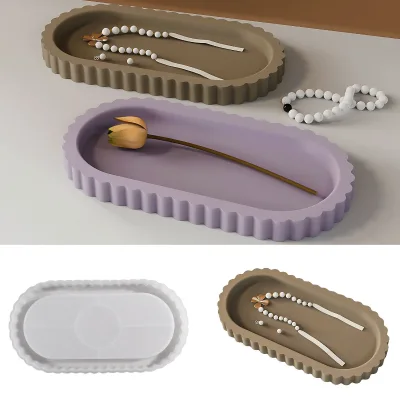


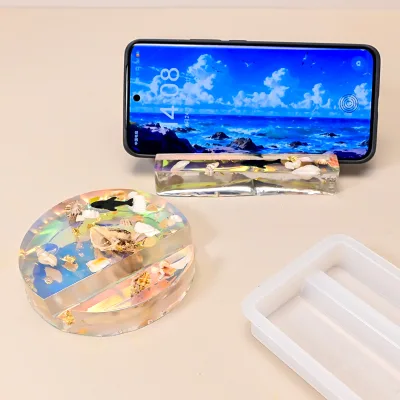


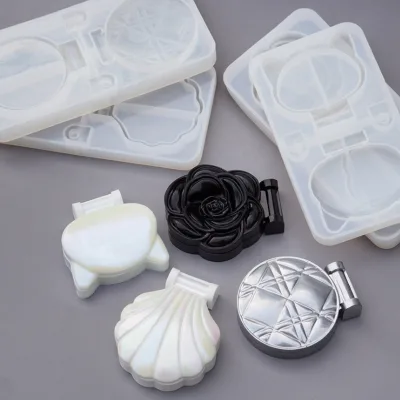


Comprehensive Sourcing Guide
Strategic Sourcing Guide for Mirror Surface Silicone Molds
Understanding Product Attributes and Technical Specifications
When sourcing mirror surface silicone molds, buyers must first distinguish between general silicone baking tools and specialized molds designed for resin casting, epoxy making, or decorative mirror applications. The supplied data indicates a diverse range of product attributes that define the market landscape. A primary observation is the material composition, which is consistently identified as silicone or silicone products. This material choice is critical because it dictates the flexibility, heat resistance, and demoulding capabilities of the final tool. The feature set frequently highlights "easy demoulding" and "Eco-Friendly" properties, which are essential for high-volume production where labor costs and material waste are concerns.
The physical specifications of these molds vary significantly, reflecting their intended use cases. While some listings describe a "Single package size" of 20.00x11.00x3.00 cm, others indicate dimensions of 10x10x6 cm or 14.00x14.00x6.00 cm. For mirror surface applications, the shape is often described as "Irregular," suggesting these molds are designed for custom or artistic forms rather than standard geometric shapes. The "Single gross weight" ranges from 0.085 kg to 0.500 kg, indicating a variance in wall thickness and density that directly impacts the mold's durability and the detail it can capture.
Color is another critical specification. The data shows options ranging from "White" and "WhiteD1/WhiteD2" to "clear" and various white sub-codes like "white 01" through "white 04." For mirror surface work, the transparency of the mold material can be a deciding factor; clear silicone allows the user to monitor the resin flow and air bubble removal during the casting process, whereas white silicone offers high contrast for observing the surface finish. The "Care instructions" provided in the data include "Hand Wash Only" for some items, while others claim to be "Oven Safe, Microwave Safe, Freezer safe." Buyers must verify which care instructions apply to their specific application, as resin molds generally do not require oven safety but do require chemical resistance to epoxy solvents.
Compliance Verification and Certification Standards
In the B2B procurement of silicone molds, particularly those intended for applications involving food or decorative items, verifying compliance is non-negotiable. The supplied product data explicitly lists several certifications, including TSCE, ISO, and FDA. These certifications serve as evidence that the manufacturer adheres to specific safety and quality management standards. The presence of "TSCE" and "ISO" suggests a commitment to international quality benchmarks, while "FDA" certification is particularly relevant if the molds are intended for any application involving food contact or if the end-user requires assurance of non-toxicity.
However, buyers must exercise caution when interpreting these certifications. The data notes that some products are certified while others may not be, and the specific scope of the certification (e.g., food-grade vs. industrial-grade) must be confirmed. The "Low-confidence background" section mentions ISO 27001:2022, but this standard relates to information security management rather than product material safety. Therefore, relying on ISO 27001 for material compliance would be a strategic error. Instead, procurement teams should request valid, current certificates for FDA and ISO standards directly from the supplier to ensure they match the specific product model, such as the "H007" or "SLD8" models mentioned in the data.
Furthermore, the "Customization" attribute is listed as "Available" and "Customized," implying that many suppliers offer tailored solutions. When customizing, the certification status of the new mold design must be re-verified. A custom mold made from the same base silicone material may not automatically inherit the certification of a standard SKU unless the entire production run is audited. Buyers should explicitly ask for a Certificate of Analysis (CoA) or a Declaration of Conformity (DoC) that covers the specific custom order to mitigate liability risks.
Cost Drivers and Pricing Dynamics
The pricing structure for mirror surface silicone molds is highly variable, with observed listed prices ranging from $0.01 to $98,452.90 USD. This extreme range is not indicative of a single product category but rather reflects the spectrum from simple, single-piece handcrafted molds to large-scale industrial tooling or complete production lines. The "MOQ" (Minimum Order Quantity) also varies widely, from 1 piece to 1,000 pieces, which significantly influences the unit cost.
Several factors drive these costs. First, the "Design Software" used, such as AutoCAD or UG (Unigraphics), suggests that complex, precision-engineered molds require significant engineering time, which increases the upfront cost. Second, the "Application" field lists diverse uses including "Car," "Household Appliances," "Electronic," and "Hardware," indicating that molds for high-performance industrial applications will command higher prices than those for simple "Home Use" or "DIY" projects. The "Production capacity" standard of 50-60 boxes/min implies that some suppliers are offering automated manufacturing capabilities, which may be bundled into the price of larger orders.
Buyers should also consider the "Packaging" costs. Some items are packed in "Bottles" or "1pc/opp bag," while others are shipped in "Wooden Case." Wooden case packaging is more expensive but necessary for protecting delicate molds during international shipping, especially for heavy or large items. The "Selling Units" are typically "Single item," but bulk discounts are likely available for orders exceeding the MOQ. The "Service" options of OEM (Original Equipment Manufacturer) and ODM (Original Design Manufacturer) add value but also increase the price due to the labor involved in branding and custom design.
Typical Applications and Functional Versatility
The versatility of silicone molds is evident in the diverse applications listed in the product data. While the core keyword focuses on "mirror surface" molds, the data reveals that these tools are used in a wide array of industries. The "Function" is explicitly stated as "Crystal Epoxy Making," which is the primary use case for creating decorative mirror-like surfaces in resin art. This application requires molds with a smooth, non-porous surface to ensure the resin cures without imperfections.
Beyond resin art, the "Application" field includes "Car," "Household Appliances," "Electronic," and "Furniture." This suggests that silicone molds are used for creating interior trim, decorative panels, and custom components for these sectors. The "Type" is categorized as "Cake Tools" in some listings, indicating a dual-use capability where the same silicone material can be used for both culinary and artistic purposes, provided the correct certification is verified. The "Shape" being "Irregular" supports the use of these molds in creating unique, non-standard components for furniture or automotive interiors.
The "Customization" feature allows for the creation of molds tailored to specific product designs. For example, a manufacturer might need a mold with a specific "prod_model" like "SLD9" to produce a custom mirror cover. The "Automatic Grade" of "Automatic" suggests that these molds can be integrated into automated production lines, which is crucial for high-volume manufacturing in the electronics or appliance sectors. Buyers should align their application needs with the specific "prod_model" and "prod_standard" of the supplier to ensure compatibility with their production workflow.
Supplier Evaluation and Selection Criteria
Selecting the right supplier for mirror surface silicone molds requires a rigorous evaluation process based on the available data points. The "place of origin" is consistently listed as "Guangdong, China," which is a major manufacturing hub for silicone products. While this indicates a concentration of supply, buyers should not assume uniform quality across all suppliers in this region. The "brand name" is often listed as "other" or "custom," suggesting that many suppliers operate as private label manufacturers or white-label providers. This is common in the B2B market but requires buyers to perform due diligence on the actual factory behind the brand.
Key evaluation criteria should include the supplier's capability in "Design Software" such as AutoCAD and UG. A supplier proficient in these tools is more likely to deliver precise, high-quality molds that meet exact specifications. The "Service" offering of OEM and ODM is another positive indicator, showing that the supplier is willing to collaborate on custom projects. Buyers should also verify the "Customization" availability and the "prod_standard" of "customization" to ensure the supplier can handle bespoke requirements.
The "MOQ" of 10pcs for some items and up to 1000 for others indicates flexibility in order sizes. For startups or small businesses, a supplier with a low MOQ is preferable to minimize inventory risk. Conversely, large enterprises may prefer suppliers with higher production capacities, such as the "50-60 boxes/min" standard mentioned. The "Packaging" method, whether "in Wooden Case" or "1pc/opp bag," should be evaluated based on the fragility of the molds and the shipping distance. Finally, the "Care instructions" and "Feature" set, such as "Non-Toxic" and "Stocked," should be cross-referenced with the buyer's safety and availability requirements.
Quality Control and Long-Term Procurement Considerations
Quality control is paramount when sourcing silicone molds, especially for mirror surface applications where surface finish is critical. Buyers should implement a quality assurance plan that includes verifying the "material" consistency and checking for defects such as bubbles or uneven surfaces. The "Single gross weight" and "Single package size" should be measured upon receipt to ensure they match the supplier's specifications. Any deviation could indicate a change in material density or dimensions that affects the final product quality.
Long-term procurement considerations involve the durability and lifecycle of the molds. The "Feature" set includes "Handmade," which may imply a higher level of craftsmanship but also potential variability in quality. Buyers should assess whether the "Handmade" aspect is a selling point or a risk factor for consistency. The "Eco-Friendly" attribute is increasingly important for companies with sustainability goals, and buyers should request documentation to substantiate this claim.
The "Certification" status should be reviewed periodically, as certifications can expire or be revoked. Maintaining a relationship with a supplier who provides ongoing support and updates on certification status is beneficial. Additionally, the "prod_model" and "prod_standard" should be documented for future reference to ensure that replacement orders match the original specifications. For custom molds, maintaining a digital archive of the design files (e.g., AutoCAD or UG files) is essential for future reordering or modifications.
In conclusion, sourcing mirror surface silicone molds requires a balanced approach that considers technical specifications, compliance, cost, and supplier capability. By leveraging the detailed product attributes and certifications available in the market, buyers can make informed decisions that align with their specific production needs and quality standards. The wide range of options, from simple DIY molds to complex industrial tooling, offers significant flexibility for buyers across various industries.
FAQs
What certifications are available for mirror surface silicone molds?
Some products carry TSCE, ISO, and FDA certifications to ensure safety and quality. Buyers must verify that the specific model, such as H007 or SLD8, holds valid certificates for their intended use before ordering.
How can I customize the design of a silicone mold?
Customization is available for mirror surface silicone molds using design software like AutoCAD or UG. Suppliers offer OEM and ODM services to create tailored shapes, though custom orders require re-verification of material certifications.
Which materials are used to make these silicone molds?
The primary material is silicone or silicone products, often described as eco-friendly and non-toxic. These materials provide easy demoulding properties suitable for applications ranging from cake tools to crystal epoxy making.
Can I find molds with specific package sizes and weights?
Yes, single package sizes vary from 10x10x6 cm to 20x11x3 cm with weights between 0.085 kg and 0.500 kg. Buyers should check the specific product listing to match dimensions and gross weight to their shipping needs.
What is the minimum order quantity for these molds?
The minimum order quantity ranges from 1 piece to 1000 pieces depending on the supplier and product type. Some listings specify an MOQ of 10 pieces for custom items, while others allow single item purchases.
Where are these silicone molds manufactured?
The place of origin for these products is consistently listed as Guangdong, China. This region is a major hub for silicone manufacturing, offering a wide variety of vendors and factories for sourcing.
How do I care for silicone molds used for resin?
Care instructions vary, with some items requiring hand wash only while others are oven, microwave, and freezer safe. Users must confirm the specific care guidelines for their application, as resin molds generally need chemical resistance rather than heat safety.