Source Modular 5G WiFi6 Router for SOHO, Business, FTTH Networks
Find and compare 30 Modular 5G WiFi6 Router options featuring single bus symmetric multi-CPU architecture and line-rate performance. Buyers can evaluate specifications including 5G speeds up to 3.2 Gbps, Wi-Fi 6 data rates, and PoE output capabilities for diverse networking needs.
Key considerations
Products List


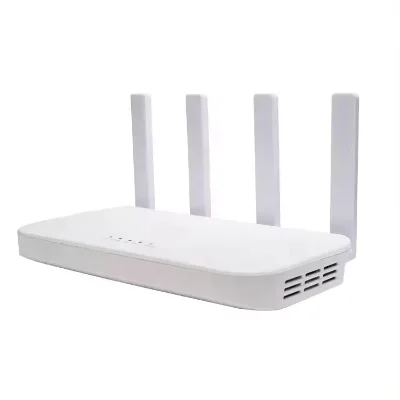


Gigabit Dual Band 5g WiFi Router on-Board 12V and 36V Power 5g LTE Router
$42.00 - $48.00
MOQ: 1 Pieces

5g WiFi6 CPE 4G LTE SIM Card Wireless Dual Mode Nsa/SA Wi-Fi 6router 5g SIM Router
$160.00 - $168.00
MOQ: 1 Pieces


5g Mobile Hotspot Modem 5g Wireless WiFi Hotspot Router with SIM Card Slot
$75.00 - $85.00
MOQ: 1 Pieces

Professional Router LTE SIM Card WiFi Router Wireless Hotspot 3G 4G Router
$18.00 - $26.00
MOQ: 1 Pieces


Comprehensive Sourcing Guide
Sourcing Guide for Modular 5G Wi-Fi 6 Routers in B2B Procurement
Procuring a modular 5G Wi-Fi 6 router requires a disciplined approach that distinguishes between observed product attributes and generalized market claims. Buyers must navigate a landscape where specific hardware configurations, such as single bus symmetric multi-CPU architectures, coexist with diverse interface standards and application-specific requirements. This guide provides a framework for evaluating potential suppliers and products based on verified technical facts, compliance standards, and operational constraints. The focus remains on ensuring that the selected hardware aligns with the specific needs of SOHO (Small Office/Home Office) or business environments while adhering to strict verification protocols for network performance and regulatory adherence.
Technical Architecture and Interface Specifications
The foundation of a reliable 5G Wi-Fi 6 router lies in its internal architecture and physical interface capabilities. When evaluating a "modular" device, buyers must first verify the port structure. Contrary to the expectation of modularity in some high-end enterprise gear, observed product data indicates that certain 5G routers feature a "Not Modular" port structure. This distinction is critical for procurement planning, as it implies a fixed configuration of ports that cannot be expanded via add-on cards. Specifically, the interface often includes three 10/100/1000Mbps RJ45 ports, supporting a transfer rate of up to 1000Mbps per port.
The network performance is frequently characterized as "Line-Rate Router" capability, ensuring that data throughput is not bottlenecked by the device's processing power under normal load. The wireless specification is a key differentiator, with many units supporting the 11ax Wi-Fi 6 standard. This standard facilitates a data rate of 1800Mbps on the dual-band spectrum, operating across both 2.4GHz and 5.8GHz frequencies. Buyers should verify that the specific unit supports the 5G NSA (Non-Standalone) and SA (Standalone) modes, with observed bands including N1, N3, N5, N7, N8, N20, N28, N38, N40, N41, N75, N76, N77, and N78. The theoretical maximum speed for these 5G connections can vary, with some configurations citing up to 2.2Gbps or 3.2Gbps downlink, depending on the specific chipset, such as the Unisoc 5G CPU, and the network environment.
Furthermore, the device's ability to support legacy networks is essential for continuity. Most modern 5G routers in this category maintain support for 4G and 3G networks, ensuring fallback options in areas with incomplete 5G coverage. The inclusion of Tr069 protocol support allows for remote management and configuration, which is vital for fleet deployments. Buyers must also check for Power over Ethernet (PoE) capabilities, as some units offer 48V PoE output, enabling the connection of IP phones and IP cameras without separate power adapters.
Compliance and Certification Verification
Regulatory compliance is a non-negotiable aspect of B2B procurement, particularly for devices intended for international deployment. The supply chain for 5G routers often involves products originating from specific manufacturing hubs, such as Hubei, China. While the country of origin is a logistical fact, the certifications attached to the device determine its legal marketability. Buyers must insist on documentation for CE, RoHS, and FCC certifications. These standards ensure that the device meets electromagnetic compatibility requirements, restricts hazardous substances, and complies with US Federal Communications Commission regulations.
In addition to the core certifications, some products may carry TUV marks, indicating further safety and quality assurance. It is important to note that certification status is not universal across all models; a specific model number, such as KS-5G-XM520 or KS-5G-XM530, may have different certification profiles than another. Procurement teams must request the specific test reports for the exact model being ordered rather than relying on general brand claims. The absence of a specific certification in the product listing should be treated as a red flag, requiring immediate clarification from the supplier.
The firmware language is another compliance-adjacent factor. While many units come with English firmware, the availability of localized firmware for specific regions can impact deployment speed and ease of use. Buyers should verify if the firmware supports the required languages for their end-users and if it includes the necessary security patches for the region of operation.
Cost Drivers and Pricing Dynamics
Understanding the cost structure of 5G Wi-Fi 6 routers is essential for budgeting and total cost of ownership (TCO) analysis. The observed price range for these devices spans from $1 to $200 USD, a wide variance that reflects differences in chipset quality, build materials, and feature sets. A device priced at the lower end of this spectrum may lack advanced features like VoLTE (Voice over LTE) support or high-speed 5G capabilities, while premium models within the range may offer enhanced security, higher throughput, and more robust PoE integration.
The Minimum Order Quantity (MOQ) is another significant cost driver. The observed MOQ range is between 1 and 1000 units. For small-scale deployments, such as a single SOHO location, an MOQ of 1 is ideal. However, for larger enterprise rollouts, negotiating an MOQ closer to 1000 can significantly reduce the unit price. Buyers should also consider the packaging; standard "Box" packaging is common, but custom packaging solutions may incur additional costs or require higher volume commitments.
Other cost factors include the power supply configuration. Devices supporting EU, US, UK, and AU plugs may require different SKUs for different markets, potentially increasing the complexity of the order. Additionally, the warranty terms, typically ranging from 12 months to 1 year, should be factored into the long-term cost. Extended warranty options or service level agreements (SLAs) may be available but are not guaranteed and should be negotiated explicitly.
Typical Applications and Deployment Scenarios
The versatility of 5G Wi-Fi 6 routers allows them to serve a wide array of applications, from small business offices to complex fiber-to-the-home (FTTH) and fiber-to-the-building (FTTB) networks. The "SOHO" application tag suggests suitability for small offices, but the "Business" use case indicates that these devices are also robust enough for larger commercial environments. In FTTH, FTTB, and FTTX networks, these routers act as the critical bridge between the optical network terminal and the local Wi-Fi network, providing high-speed connectivity to end-users.
The inclusion of 5G capabilities makes these routers particularly valuable in scenarios where wired infrastructure is unavailable or unreliable. They can serve as temporary or permanent solutions for remote sites, construction zones, or events. The support for PoE output expands their utility to smart building applications, where they can power connected devices like IP cameras and VoIP phones directly. The "Line-Rate" performance ensures that these devices can handle the bandwidth demands of modern applications, including video conferencing, cloud computing, and large file transfers, without significant latency.
Supplier Evaluation and Quality Control
Selecting the right supplier requires a rigorous evaluation process that goes beyond price comparisons. Buyers should verify the supplier's ability to provide the specific model numbers observed in the market, such as the KS-5G-XM520 or KS-5G-XM530, and confirm the authenticity of the brand name, such as TP-Link, if applicable. It is crucial to avoid suppliers who make unverified claims about certifications or performance metrics.
Quality control should be a collaborative effort between the buyer and the supplier. Key areas to focus on include the consistency of the 5G band support, the reliability of the Wi-Fi 6 throughput, and the durability of the physical ports. The "Not Modular" port structure means that any hardware failure in the RJ45 ports can render the device unusable, so the quality of the port construction is paramount. Buyers should request samples for testing before committing to large orders. These samples should be tested for real-world 5G speeds, Wi-Fi coverage, and PoE stability.
Furthermore, the supplier's ability to provide firmware updates and technical support is a critical quality indicator. The availability of English firmware is a baseline, but the long-term support for security patches and feature updates is what ensures the device remains viable over its lifecycle. Buyers should also check the supplier's track record for handling returns and replacements, especially given the potential for hardware defects in electronic devices.
Long-Term Procurement Considerations
Sourcing 5G Wi-Fi 6 routers is not just a one-time purchase; it involves planning for the long-term lifecycle of the device. The "Recyclable" status of the product, which may be listed as "Non-Recyclable" for certain components, should be considered in the context of environmental, social, and governance (ESG) goals. While the device itself may not be fully recyclable, the supplier's commitment to responsible disposal and recycling programs can mitigate environmental impact.
The lead time and supply chain stability are also critical factors. While specific lead times are not provided in the general data, buyers should anticipate potential delays due to global supply chain fluctuations, especially for 5G chipsets. Establishing a relationship with a supplier who can guarantee consistent supply and provide advance notice of potential shortages is essential for maintaining operational continuity.
Finally, the scalability of the solution should be considered. As the business grows, the need for additional devices or upgrades may arise. A supplier that offers a range of compatible models and can support bulk orders with consistent quality will be more valuable than one that only offers a single product line. The ability to customize the product, as indicated by the "Available" customization attribute, can also be a significant advantage for large enterprises with specific branding or configuration requirements.
Summary of Key Technical and Compliance Parameters
To facilitate quick reference during the procurement process, the following table summarizes the critical technical and compliance parameters observed in the market for 5G Wi-Fi 6 routers.
| Parameter Category | Observed Attribute / Range | Verification Requirement |
|---|---|---|
| Architecture | Single Bus Symmetric Multi CPU | Confirm CPU type and bus topology |
| Port Structure | Not Modular | Verify fixed port count (e.g., 3x RJ45) |
| Transfer Rate | ≤ 10/100/1000Mbps | Test actual throughput under load |
| Wi-Fi Standard | 11ax Wi-Fi 6 | Verify dual-band (2.4GHz/5.8GHz) support |
| Wi-Fi Speed | 1800Mbps Data Rate | Confirm real-world speed vs. theoretical |
| 5G Bands | N1/N3/N5/N7/N8/N20/N28/N38/N40/N41/N75/N76/N77/N78 | Check local carrier compatibility |
| 5G Speed | Up to 3.2Gbps (DL) / 500Mbps (UL) | Validate with carrier network tests |
| Certifications | CE, RoHS, FCC, TUV | Request specific test reports per model |
| Origin | China (e.g., Hubei) | Verify shipping and customs documentation |
| Warranty | 12 Months / 1 Year | Confirm terms and claim process |
| Power | 48V PoE Output | Verify PoE compatibility with peripherals |
By adhering to these guidelines and focusing on verified facts rather than marketing claims, buyers can secure 5G Wi-Fi 6 routers that meet their specific operational needs while maintaining high standards of quality and compliance. The procurement process should remain evidence-based, ensuring that every decision is supported by concrete data and rigorous testing.
FAQs
What is the port structure of this Modular 5G WiFi6 Router?
The port structure is not modular, featuring a fixed configuration. It typically includes three 10/100/1000Mbps RJ45 ports for stable connectivity without expansion cards.
Can this router support 5G NSA and SA modes simultaneously?
Yes, the device supports both 5G NSA and SA modes for flexible network integration. It covers bands like N41, N78, and N79 for NSA, and N1, N28, and N41 for SA.
Which certifications are required for international deployment of this router?
The router must hold CE, RoHS, and FCC certifications for global compliance. Some models may also include TUV marks to ensure safety and quality assurance standards.
How does the 5G speed vary between different network modes?
Speed varies by mode, with NSA offering up to 3.2Gbps downlink and SA providing up to 2.2Gbps. The actual performance depends on the Unisoc CPU and network environment.
What is the minimum order quantity for purchasing these routers?
The minimum order quantity ranges from 1 to 1000 units depending on the supplier. Small deployments can start with single items, while bulk orders may require higher volumes.
Does the router support Power over Ethernet for connected devices?
Yes, it offers 48V PoE output to power IP phones and cameras directly. This feature simplifies installation by eliminating the need for separate power adapters for connected devices.
Where are these modular 5g wifi6 routers manufactured?
The products originate from Hubei, China, as confirmed by the product origin data. Buyers should verify specific factory locations to ensure supply chain stability and logistics planning.