Source Nano Micro Bubble Air Stone for Fish Pond Aeration
Find and compare 30 Nano Micro Bubble Air Stone options for fish pond aeration, sewage treatment, and irrigation. Buyers can evaluate specifications like bubble size, material, and flow range from verified Chinese manufacturers offering customized solutions.
Key considerations
Products List


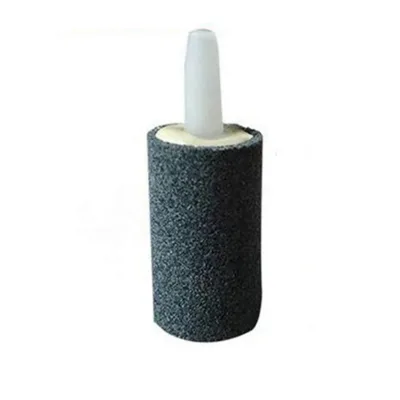
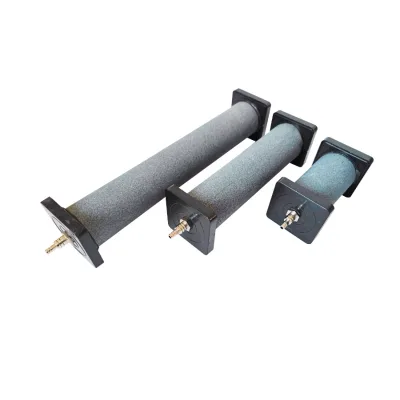

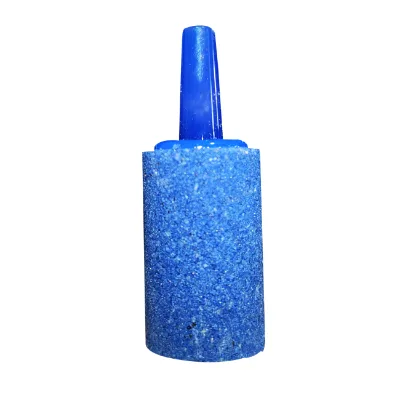


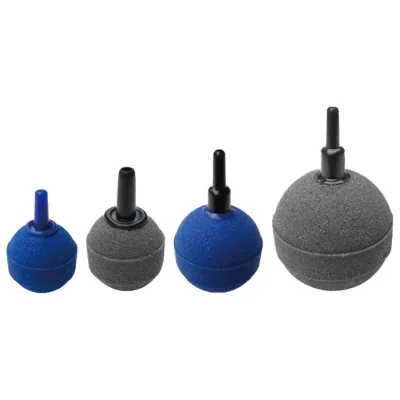


Comprehensive Sourcing Guide
Strategic Sourcing Guide for Nano Micro Bubble Air Stones
Understanding the Technical Architecture of Nano Bubble Systems
When sourcing nano micro bubble air stones, buyers must first distinguish these specialized aeration devices from standard aquarium or pond air stones. The core differentiator lies in the bubble diameter and the resulting surface area-to-volume ratio. Based on observed product specifications, these units are engineered to produce bubbles with diameters ranging strictly between 0.5mm and 2mm, with some specific models targeting a range of 1mm to 2mm. This fine bubble generation is critical for maximizing oxygen transfer efficiency in water treatment and aquaculture applications.
The material composition is a primary technical variable. The supplied data indicates that high-performance units utilize Nano Microporous materials, which are distinct from traditional ceramic or EPDM/Silicon/PTFE membrane constructions. While ceramic is listed as a material for certain aquarium-related accessories, the specific nano bubble aeration units often rely on advanced membrane technologies to achieve the requisite bubble size. The edge processing for these components is typically flat, ensuring uniform flow distribution across the surface. Furthermore, the physical dimensions vary significantly depending on the application scale. Buyers will encounter models with diameters of 215mm, 260mm, and 300mm, as well as smaller tubing variants with a 16mm diameter. The standard configuration often references a thickness of 40mm by 200mm by 8mm for specific plate-style units, while others are defined by their circular diameter.
Compliance Verification and Certification Standards
In the B2B procurement of industrial and agricultural aeration equipment, verifying compliance is as important as the physical specifications. The supplied product facts explicitly list CE certification as a standard attribute for these units. This indicates that the manufacturing process adheres to European safety, health, and environmental protection requirements. However, buyers should not assume that every listed product in a catalog carries this certification without explicit verification on the specific item's datasheet.
Beyond the CE mark, the "standard" attribute in the product data references "Multiples sizes" and specific dimensional standards like 402008mm or 215/260/300mm. These are not merely descriptive but serve as quality benchmarks for dimensional consistency. When evaluating a supplier, procurement teams must request documentation that confirms the product meets these dimensional tolerances. The "prod_standard" field often implies adherence to specific manufacturing protocols for bubble uniformity. For applications involving potable water or sensitive aquatic environments, buyers should also inquire about additional certifications such as NSF or ISO standards, even if they are not explicitly listed in the initial product summary. The presence of "CE" suggests a baseline of regulatory compliance, but the specific application (e.g., sewage aeration vs. fish pond) may require further validation of material safety and chemical resistance.
Cost Drivers and Pricing Structure Analysis
The pricing landscape for nano micro bubble air stones is influenced by several distinct factors, including material complexity, customization levels, and order volume. The observed price range in the market spans from $0 to $5,000 USD. This wide variance suggests that the cost is not linear but heavily dependent on the scale of the unit and the specific technology employed. Small, standard-sized units likely fall at the lower end of this spectrum, while large-scale industrial aeration systems with custom configurations command higher prices.
Material costs are a significant driver. Units constructed from Nano Microporous membranes generally cost more than those made from standard ceramic or basic EPDM/Silicon due to the advanced manufacturing processes required to achieve the nano-scale pore structure. Additionally, the "Customization" attribute is available for many of these products, allowing for tailored sizes, colors (Black, Blue, Red), and connector types. Customization inevitably adds to the unit cost. The "MOQ" (Minimum Order Quantity) is another critical cost factor. The data indicates an observed MOQ range of 1 to 5,000 pieces, with a specific high-confidence fact noting an MOQ of 500 pieces for certain models. Buyers ordering below the standard MOQ may face premium pricing or may need to negotiate a higher unit cost to cover the supplier's setup fees.
The "Service Life" is also a hidden cost driver. Products boasting a service life of "More Than 5 Years" or "Long Service Life" often carry a higher initial price but offer a lower total cost of ownership. Conversely, cheaper units with shorter lifespans may require frequent replacement, increasing long-term operational expenses. Buyers should calculate the cost per year of operation rather than focusing solely on the initial purchase price.
Typical Applications and Performance Expectations
The versatility of nano micro bubble air stones is evident in the diverse applications listed in the product data. These devices are designed for a wide array of environments, including Pond, Pool, Waterfall, Fountains, Irrigation, and Fish farming. Specific high-performance models are optimized for "Sewage Aeration Fish Pond" applications, indicating their utility in both environmental remediation and aquaculture. The "Method" of operation is identified as "Biological Treatment," which is crucial for wastewater management where oxygenation drives the breakdown of organic matter.
Performance metrics are defined by the flow range and bubble characteristics. The observed flow range is 1-10m³/H, which is suitable for medium-scale operations. The "Bubble Type" is consistently listed as "Fine Bubble," with a specific "Bubble Size" of 1-2mm and a "Bubble Diameter" of 0.5-2mm. This fine bubble generation is essential for increasing the contact time between air and water, thereby enhancing oxygen dissolution rates. The "Application Water Depth" is specified as 0-5 meters, suggesting these units are effective in shallow to moderately deep water bodies.
For industrial and agricultural uses, the "Usage" field lists "Industrial" and "Agriculture" alongside "Home." This broad applicability means that a single product line can serve multiple sectors, but buyers must ensure the specific model selected matches the intensity of the required aeration. For instance, a unit used for a home fish pond may differ significantly in durability and flow capacity from one used for a large-scale sewage treatment facility. The "Condition" is listed as "New," implying that buyers should expect pristine, factory-fresh units rather than refurbished or used equipment.
Supplier Evaluation and Customization Capabilities
Evaluating suppliers for nano micro bubble air stones requires a focus on their ability to meet specific customization and logistical requirements. The product data confirms that "Customization" is available and that "OEM" (Original Equipment Manufacturer) services are accepted, with some suppliers explicitly stating they "Accept Customized" orders. This flexibility allows buyers to request specific colors (Black, Blue, Red), connector types (3/4 NPT), and dimensions.
The "prod_packing" attribute varies, with options including "Carton," "Retail Box," and "Packed in Cartons." This variation suggests that suppliers may offer different packaging tiers depending on the order size and destination. For bulk industrial orders, "Carton" or "Packed in Cartons" is likely the standard, while "Retail Box" might be reserved for smaller, direct-to-consumer shipments. The "Packing Quantity" is also a critical logistical detail; for example, tubing rolls may contain 200 meters per roll, which impacts shipping volume and cost calculations.
When selecting a supplier, buyers should verify the "prod_origin," which is listed as "China." While this is a common manufacturing hub, it necessitates a thorough vetting process to ensure quality control standards are maintained. The "Advantage" attributes listed include "Durable" and "Long Service Life," which are claims that must be backed by supplier testimonials or third-party testing. Buyers should request references from other clients in similar industries, such as sewage treatment or large-scale aquaculture, to validate these performance claims.
Quality Control and Long-Term Procurement Strategy
Quality control in the procurement of nano micro bubble air stones extends beyond the initial inspection of the product. The "Edge Processing" is noted as "Flat," a detail that ensures proper sealing and installation. However, buyers must verify that this flatness is consistent across the entire batch, as uneven edges can lead to leaks or inefficient aeration. The "Material" consistency is equally important; whether the unit is made of Ceramic, EPDM/Silicon/PTFE Membrane, or Nano Microporous material, the composition must be uniform to ensure consistent bubble size and longevity.
For long-term procurement, the "Service Life" of "More Than 5 Years" is a key metric. Buyers should establish a maintenance schedule that aligns with this lifespan, including regular cleaning to prevent clogging of the nano pores. The "Flow Range" of 1-10m³/H should be monitored to ensure the system is operating within the designed parameters. Deviations from this range could indicate wear or blockage, necessitating replacement.
The "MOQ" of 500 pieces for certain models suggests that these products are best suited for medium-to-large scale operations. For smaller buyers, negotiating a lower MOQ or consolidating orders with other facilities may be necessary to achieve cost-effective pricing. Additionally, the "Color" options (Black, Blue, Red) may have implications for UV resistance and material degradation over time, which should be factored into the long-term durability assessment.
In summary, sourcing nano micro bubble air stones requires a meticulous approach that balances technical specifications, compliance, cost, and supplier reliability. By focusing on the verified attributes such as bubble diameter, material composition, and certification status, buyers can make informed decisions that ensure optimal performance and longevity in their specific applications. The wide range of applications, from sewage treatment to home aquaculture, underscores the importance of selecting the right model for the specific environmental conditions and operational requirements.
FAQs
What materials are used for nano micro bubble air stones?
These units are constructed from Nano Microporous materials, EPDM, Silicon, PTFE membranes, or Ceramic. The specific material depends on the model, with advanced membrane technologies often used to achieve the required fine bubble size for efficient oxygen transfer.
Can these air stones be customized for specific needs?
Yes, customization is available for dimensions, colors like Black, Blue, or Red, and connector types such as 3/4 NPT. OEM services are accepted, allowing buyers to request tailored configurations for industrial, agricultural, or home applications.
Which certifications do these products typically hold?
The products carry CE certification, indicating compliance with European safety and environmental standards. Buyers should verify this on specific item datasheets, as the certification applies to the manufacturing process and dimensional consistency of the units.
How long is the service life of these air stones?
The service life is typically more than 5 years, offering a long-term solution for aeration needs. This durability is supported by the flat edge processing and high-quality materials like Nano Microporous structures designed for consistent performance.
What is the minimum order quantity for these units?
The minimum order quantity is 500 pieces for certain models, though ranges from 1 to 5000 exist. Buyers ordering below standard MOQs may face different pricing structures, so verifying the specific model requirements is essential for cost planning.
What bubble size do these air stones produce?
They produce fine bubbles with a diameter ranging from 0.5mm to 2mm, specifically targeting 1mm to 2mm for some models. This fine bubble generation maximizes surface area for effective oxygen transfer in sewage aeration and fish pond applications.