Source Natural Shade Dried Raisins for Baking, Snacks, and Cereals
Find 23 listings for Natural Shade Dried Raisins with varying storage and packing options. Buyers can compare specifications like grain count, shelf life, and origin to select suitable suppliers for bulk orders.
Key considerations
Products List


Chinese Factory Natural Shade Dried Raisins Wholesale Dried Green Raisins
$1800.00 - $2750.00
MOQ: 5 Tons


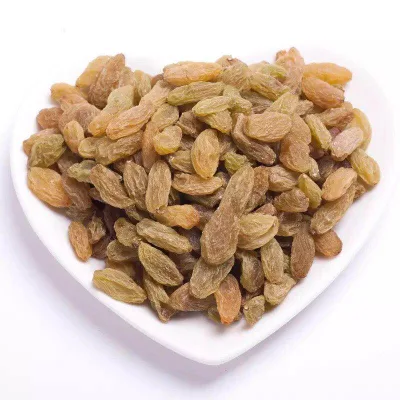


$1.50 - $1.80
MOQ: 1000 kg


Comprehensive Sourcing Guide
Strategic Sourcing Guide for Natural Shade Dried Raisins
Understanding Product Specifications and Variability
The procurement of Natural Shade Dried Raisins requires a precise understanding of the technical attributes that define this specific category of dried fruit. Unlike sun-dried varieties, shade-dried raisins are processed to retain a more delicate texture and a higher retention of natural sugars and nutrients, often resulting in a distinct golden or amber hue. The supplied product data indicates that the core product type is identified as "Raisin" or "Dried Raisin," with the specific fruit source confirmed as "Grape." A critical observation for buyers is the variability in physical specifications across different listings. The shape is described variously as "Indehiscent" or "Long," suggesting that the specific grape cultivar and the drying method significantly influence the final morphology of the fruit.
Buyers must verify the color profile, as the data lists "Green/Golden/Red/Black" as available options. For "natural shade dried" specifications, the "Golden" or "Green" varieties are typically the most relevant, as these are often the result of specific drying protocols that prevent the darkening associated with rapid sun exposure. The texture is consistently noted as "Sweet," which is a natural characteristic of the dehydration process concentrating the fruit's sugars. However, the ingredient list varies; some entries specify "Raisin, Sugar," indicating that some suppliers may add sugar during processing, while others list only the fruit. Procurement teams must explicitly distinguish between 100% natural shade-dried fruit and those with added sweeteners to ensure compliance with internal quality standards.
The storage conditions for these products are equally critical. The data presents conflicting or alternative storage requirements, listing "Room Temperature," "Low Temperature," and "Shade" as valid conditions. This suggests that the stability of the raisin is highly dependent on the specific packaging and the moisture content at the time of sealing. A product listed with a shelf life of "12 Months" or "24 Months" must be stored in a "Cool Dry Place" or "Shade" to maintain this duration. The drying process is identified as "AD" (likely Air Drying or a specific drying protocol) or "Raw," emphasizing that the product has undergone minimal thermal processing compared to cooked or candied alternatives.
Compliance, Certification, and Regulatory Standards
In the B2B procurement of food ingredients, verifying compliance is as important as the product itself. The supplied data confirms that suppliers in this category often hold major international certifications, specifically "FDA," "ISO," and "BRC." These certifications are not merely marketing terms but are essential for ensuring that the production facilities adhere to rigorous safety and quality management systems. The FDA certification indicates compliance with United States food safety regulations, which is a prerequisite for importing into the American market. ISO certification, typically referring to the ISO 22000 or ISO 9001 standards, validates the supplier's ability to manage food safety and quality consistently. BRC (British Retail Consortium) certification is a global benchmark for food safety, often required by major retailers in Europe and beyond.
When evaluating potential suppliers, buyers should request current, valid certificates for these standards. It is important to note that the data also mentions a "Grade: a" classification. While this suggests a high-quality tier, the specific criteria for this grade are not defined in the provided text. Buyers must clarify with the supplier what "Grade a" entails regarding size uniformity, defect tolerance, and moisture content. Furthermore, the product standards vary, with some listings citing "380grains, 350grains" and others referencing "10KG/CARTON" or "11.34kg/carton." These grain counts likely refer to the number of raisins per pound or kilogram, a critical metric for pricing and recipe formulation. A "big" standard is also mentioned, which may refer to the physical size of the raisin rather than the quantity.
The origin of the product is another compliance factor. The data specifies "China" and "Shandong, China" as the primary production locations. Shandong is a major agricultural region known for its grape production. Buyers should verify that the specific origin aligns with their country of import's phytosanitary requirements. While the data does not list specific pesticide residue limits, the presence of BRC and ISO certifications implies that the supplier adheres to strict residue testing protocols. However, buyers should not assume compliance based solely on the certification label; they must request recent third-party test reports for heavy metals, aflatoxins, and pesticide residues to ensure the product meets the specific regulatory limits of the destination market.
Cost Drivers and Pricing Dynamics
The pricing structure for Natural Shade Dried Raisins is influenced by several dynamic factors, including the specific variety, the certification status, and the packaging requirements. The observed price range in the market data spans from $1.50 to $3,999 USD. This wide variance is not indicative of a single product's price fluctuation but rather reflects the difference between bulk commodity pricing and specialized, small-batch, or premium-certified orders. The lower end of the range likely corresponds to bulk purchases of standard grades, while the higher end may reflect specialized packaging, expedited shipping, or smaller order quantities that incur higher per-unit handling costs.
Minimum Order Quantity (MOQ) is a significant cost driver. The data indicates an MOQ range of 1 to 1000 units, with a specific entry noting "500kgs" as a standard threshold. This suggests that while some suppliers may accommodate trial orders, the most competitive pricing is usually reserved for orders meeting the 500kg benchmark. Buyers attempting to source quantities below this threshold should expect a premium per kilogram. Additionally, the packaging material plays a role in cost. Options range from "Plastic Bags" to "Metal" packaging and "Carton" boxes. The "Metal" packaging option, while offering superior protection against moisture and pests, is likely more expensive than standard cardboard cartons. The standard packing size of "20kg/Carton" or "10kg Carton" also affects logistics costs; smaller cartons may increase handling time and shipping volume, thereby raising the total landed cost.
Lead times also impact the overall cost of procurement. The data specifies a delivery time of "15 days," which is a standard timeframe for domestic or regional shipping within China. However, for international buyers, this lead time must be added to ocean or air freight durations. If a buyer requires "According to Request" packaging, this customization will likely extend the lead time and increase the unit cost due to the additional labor and material setup. The "Sugar Added" standard mentioned in the data represents a potential cost variable; products with added sugar may be priced differently than 100% natural varieties due to the cost of the added ingredient and the specific processing required.
Typical Applications and Usage Scenarios
Natural Shade Dried Raisins are versatile ingredients used across various food and beverage sectors. Their "Sweet" texture and "Flavor" profile make them ideal for direct consumption as a snack, but their primary industrial application lies in baking and confectionery. The "Long" shape and "Indehiscent" nature of the fruit make them suitable for products where visual appeal and texture retention are paramount, such as in artisanal breads, cookies, and granola bars. The "Nutrient Composition" listed as "Vitamin, Protein, Mineral, Amino Acid, Lipid" highlights their value as a functional ingredient in health-conscious product formulations.
In the beverage industry, these raisins are often used in the production of wines, vinegars, and non-alcoholic concentrates. The specific "Green/Golden/Red/Black" color options allow for color-matching in finished products, which is crucial for brand consistency. For example, golden raisins are often preferred in light-colored cakes to avoid discoloration, while black raisins are used in dark breads or stews. The "Dried" style and "Shade" drying method ensure that the fruit retains a plump texture that rehydrates well in doughs and batters, unlike sun-dried varieties which can be harder and more brittle.
The data also mentions "All sizes" and "Multiple categories," indicating that these raisins can be sourced for both bulk industrial processing and premium retail packaging. In the pharmaceutical or nutraceutical sectors, the high nutrient density and natural composition make them a candidate for inclusion in dietary supplements or functional foods. The "Raw" processing status suggests that the fruit has not been subjected to high-heat treatments that might degrade heat-sensitive vitamins, making them a preferred choice for products claiming "natural" or "unprocessed" attributes.
Supplier Evaluation and Quality Control Protocols
Evaluating suppliers for Natural Shade Dried Raisins requires a multi-faceted approach that goes beyond checking certifications. Buyers should assess the supplier's ability to maintain consistent quality across batches. The data lists "prod_model" values such as "1," "Dried Raisin," "R-1," and "All sizes," which indicates that suppliers may have different product lines or internal coding systems. A robust supplier will be able to map these internal codes to external quality standards clearly. The "Grade: a" designation should be backed by a detailed specification sheet that defines the maximum allowable percentage of defects, moisture content, and size distribution.
Quality control should focus on the "Shelf Life" and "Storage" parameters. The data shows shelf lives ranging from "12 Months" to "24 Months," with storage conditions varying between "Room Temperature," "Low Temperature," and "Shade." A reliable supplier will provide a clear protocol for maintaining these conditions during transit and storage. Buyers should verify that the packaging, whether "Plastic Bags," "Carton," or "Metal," is designed to prevent moisture ingress and pest infestation. The "Cool Dry Place" requirement for delivery time suggests that temperature control is critical during the logistics phase.
When evaluating suppliers, buyers should also consider the customization capabilities. The data confirms that "Customization" is "Available," which is a significant advantage for buyers with specific branding or packaging needs. However, customization often comes with higher MOQs and longer lead times. Buyers should request samples that reflect the exact specifications they intend to order, including the specific "prod_standard" (e.g., "380grains" or "10KG/CARTON"). The "Flavor & Odor" attribute is listed as "Flavor," which is a generic term; buyers should request sensory evaluation reports to ensure the raisins do not have off-flavors or odors indicative of spoilage or improper storage.
Long-Term Procurement and Supply Chain Considerations
Sourcing Natural Shade Dried Raisins is a long-term strategic decision that requires careful supply chain planning. The "Delivery Time" of "15 days" is a baseline that must be integrated into the buyer's inventory management system. For international buyers, this domestic lead time must be combined with shipping duration, customs clearance, and inland transportation. The variability in "prod_packing" (ranging from "20kg/Carton" to "All") suggests that buyers should standardize their packaging requirements to optimize logistics efficiency. Switching between different packing sizes frequently can lead to increased handling costs and potential damage to the product.
The "Nutrient Composition" and "Ingredient" lists indicate that the product is highly susceptible to changes in quality if not stored correctly. The presence of "Lipid" and "Protein" in the composition means that the raisins are prone to oxidation and rancidity if exposed to high temperatures or light. Therefore, long-term contracts should include strict clauses regarding storage conditions and temperature monitoring during transit. The "Shade" storage requirement is particularly important for maintaining the "Natural" color and preventing the darkening that can occur with prolonged sun exposure.
Buyers should also monitor the "Standard" variations, such as "Sugar Added" versus "All sizes." If a buyer's product formulation relies on 100% natural ingredients, they must ensure that the supplier does not inadvertently switch to a "Sugar Added" standard without notification. The "Location" of "Shandong, China" is a stable source, but buyers should have contingency plans for supply disruptions due to weather or agricultural issues. Finally, the "Certification" status should be reviewed annually to ensure that the supplier maintains their FDA, ISO, and BRC accreditations, as lapses in certification can disrupt the supply chain and lead to regulatory non-compliance in the destination market.
FAQs
What certifications do natural shade dried raisin suppliers hold?
Suppliers typically hold FDA, ISO, and BRC certifications to ensure food safety compliance. These standards validate that production facilities adhere to rigorous international quality management systems required for importing into major markets like the US and Europe.
How long is the shelf life of these dried raisins?
The shelf life ranges from 12 to 24 months depending on storage conditions. Products must be kept in cool, dry places or shaded areas to maintain quality and prevent spoilage during the specified duration.
Which packaging options are available for bulk orders?
Available packaging includes 20kg cartons, plastic bags, and metal containers. Buyers can also request custom packaging solutions, though this may affect the minimum order quantity and lead time for delivery.
Can I customize the product specifications for my needs?
Customization is available for various product attributes and packaging requirements. Buyers should verify specific grain counts, sizes, and sugar content levels before placing orders to ensure the final product meets their exact standards.
What is the typical delivery time for these raisins?
The standard delivery time is 15 days from the point of order confirmation. This timeframe applies to domestic or regional shipping within China and may vary for international freight based on logistics conditions.
Which origin locations supply Natural Shade Dried Raisins?
Primary production origins include China and specifically the Shandong region. Buyers should verify that the specific origin aligns with their country of import's phytosanitary requirements before finalizing procurement agreements.