Source Ni-MH Survey Battery for Total Stations, Range Finders, and Leveling
Find and compare 30 Ni-MH Survey Battery options tailored for geodetic instruments. Evaluate specifications like DC output, charging time, and dimensions to select the right power source for your field equipment needs.
Key considerations
Products List


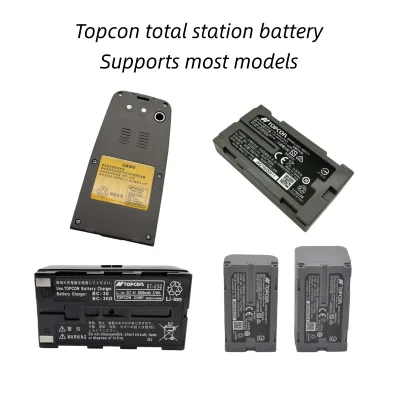


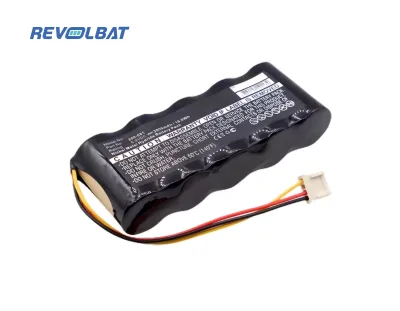


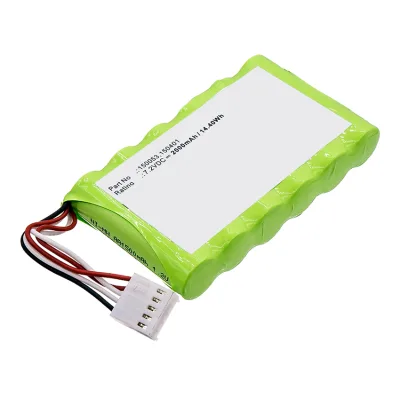


GPS Survey Equipment 7.2V 11.1V 14.8V Li Ion Battery with Custom Function
$20.00 - $40.00
MOQ: 100 Pieces
Comprehensive Sourcing Guide
Ni-Mh Survey Battery Sourcing Guide
Sourcing Ni-MH survey batteries requires a precise understanding of the specific voltage and capacity requirements for professional geodetic and total station equipment. The available market data indicates a diverse range of models, such as the BAT-111, BAT-recon, and BAT-65, each designed with distinct output specifications like DC6V/2.1Ah or DC7.2V/3.8Ah. Buyers must align their procurement strategy with the exact power demands of their instruments, as mismatched voltage or capacity can lead to equipment failure or inaccurate field measurements.
The procurement landscape for these components is characterized by significant variation in physical dimensions and weight, which directly impacts portability and instrument balance. Observed listings show batteries ranging from compact units weighing 186g to larger survey packs exceeding 550g, with dimensions varying from 70mm to 170mm in length. This variance necessitates a careful review of the physical footprint to ensure compatibility with the battery compartments of specific surveying devices, such as the Npl-821 or Dtm-800 total stations, before placing any order.
Product Scope and Observed Listing Signals
The product scope for Ni-MH survey batteries encompasses a variety of form factors tailored for different surveying applications, including range finding and general measurement tasks. Listings reveal specific compatibility with chargers like the Gkl112, Gkl221, and Bc-G1c, indicating that the battery ecosystem is often proprietary or model-specific. Buyers should verify that the selected battery model, such as the BAT-G1 or BAT-80, is explicitly listed as suitable for their existing charger infrastructure to avoid purchasing incompatible power solutions.
Market signals suggest that customization is a key differentiator in this category, with many suppliers offering OEM and ODM support to meet specific project needs. While the core technology remains consistent as Ni-MH rechargeable batteries, the external packaging and labeling can vary, with some units shipped in cartons and others featuring specific color coding like green or yellow for easy identification. Procurement teams should prioritize suppliers who provide clear documentation on the "Suitable Charger" and "Function of Measurement" to ensure the battery integrates seamlessly into their existing workflow.
Technical Specifications to Verify
Voltage and capacity are the most critical technical parameters to validate when selecting a Ni-MH survey battery, as these directly determine the operational runtime of the equipment. The observed data includes outputs ranging from DC2.4V to DC7.2V, with capacities varying from 2.1Ah to 4.0Ah, and energy values specified in watt-hours such as 16Wh or 19Wh. Buyers must cross-reference these specifications against the manufacturer's requirements for their specific surveying instruments to prevent under-powering the device or causing damage through over-voltage conditions.
Physical dimensions and weight are equally vital for ensuring the battery fits within the instrument's housing and maintains the center of gravity required for accurate measurements. Listings provide specific measurements, such as 140mm x 79mm x 34mm for the BAT-G1 model or 155mm x 80mm x 37mm for the BAT-80, alongside net weights that can range from 186g to 550g. It is essential to verify these exact dimensions against the physical constraints of the surveying tool, as even minor discrepancies in length or width can prevent the battery from seating correctly or accessing the charging port.
Compliance and Safety Documentation
While specific certification marks like CE and RoHS are noted in background data, buyers should treat these as potential attributes rather than guaranteed standards for every listed product. The primary safety documentation to request from suppliers includes detailed test results regarding the battery's charging cycle, thermal stability, and leakage resistance, particularly given the high discharge rates required for surveying equipment. Without explicit, verifiable test reports for each batch, relying solely on general certification claims can expose the procurement process to significant safety risks in the field.
Standardization of the product is another area requiring rigorous verification, as the data shows variations in how standards are reported, with some entries listing net weight as the standard and others citing specific model numbers. Buyers should insist on a clear definition of the product standard that governs the manufacturing process, ensuring that the battery meets the necessary safety protocols for industrial use. This includes confirming that the "Custom Made Processing" status is accurately defined, as some listings indicate no custom processing while others highlight customization availability, which affects the consistency of the safety profile.
Cost Drivers and Commercial Terms
The cost of Ni-MH survey batteries is driven by a combination of capacity, voltage, and the complexity of the internal cell configuration, leading to a wide observed price range from $6.13 to $136.65. Higher capacity units, such as those delivering 3.8Ah or 4.0Ah, typically command a premium over lower capacity models, while specialized models designed for specific total stations may also carry higher price points due to their tailored engineering. Buyers should analyze the cost per watt-hour to determine the true value of the battery, rather than focusing solely on the unit price, to ensure they are not overpaying for unnecessary capacity or underpaying for insufficient power.
Commercial terms, including Minimum Order Quantity (MOQ) and lead times, vary significantly across the market, with observed MOQs ranging from 1 to 200 units. This flexibility allows small procurement teams to test samples with low MOQs while larger organizations can leverage bulk purchasing power to reduce unit costs. However, buyers must be aware that customization options, such as OEM branding or specific packaging requirements, may increase the MOQ and extend the lead time, necessitating a clear agreement on these terms before production begins.
Supplier Qualification and Quality Control
Supplier qualification for Ni-MH survey batteries should focus on their ability to provide consistent product attributes and reliable after-sales support, including warranty coverage. The market data indicates that many suppliers offer a standard one-year warranty, which serves as a baseline for quality assurance, but buyers should verify the specific terms and conditions of this warranty to understand what is covered in case of premature failure. Additionally, the availability of customization support, such as OEM and ODM services, suggests that the supplier has the manufacturing flexibility to adapt to specific quality requirements.
Quality control processes must be verified through the supplier's ability to provide detailed product specifications and consistent performance data. Buyers should request evidence of the supplier's adherence to the stated product standards, such as the specific net weights and dimensions listed for models like the BAT-65 or BAT-G1W, to ensure that the delivered goods match the ordered specifications. It is also prudent to inquire about the supplier's origin, as the data points to Henan, China as a primary production hub, and to understand the quality control measures in place at that location to mitigate risks associated with international shipping.
Long-Term Procurement Checks
Long-term procurement success for Ni-MH survey batteries depends on establishing a reliable supply chain that can maintain consistent product quality over time. Buyers should implement a system for tracking the performance of batteries in the field, monitoring metrics such as charging time, which is observed to be around 9 hours for some models, and overall cycle life. This data collection will help identify any degradation in battery performance and allow for proactive replacement before critical surveying operations are compromised.
Regular audits of supplier performance and product consistency are essential to ensure that the batteries continue to meet the technical and safety requirements of the organization. Buyers should periodically review the supplier's ability to maintain the specified dimensions, weights, and electrical outputs, as well as their responsiveness to warranty claims and customization requests. By maintaining a close relationship with the supplier and demanding transparency in the manufacturing process, organizations can secure a stable supply of high-quality Ni-MH survey batteries for their long-term operational needs.
FAQs
What battery types are available for survey equipment?
The available options include Ni-MH rechargeable batteries designed for survey instruments. Specific models like BAT-111 and BAT-65 support various voltage outputs such as DC6V or DC7.2V to ensure compatibility with different total stations and range finders.
Which chargers are suitable for these Ni-MH batteries?
Several compatible chargers exist depending on the specific battery model. For instance, the Gkl112 and Gkl221 work with certain units, while the Q-75e and Bc-G1c are suitable for other models like the BAT-65 and BAT-G1 series.
Can I request custom packaging or branding for these batteries?
Yes, customization is available for these products. The supplier supports OEM and ODM services, allowing buyers to tailor specifications or branding to meet specific project requirements while maintaining the core Ni-MH rechargeable functionality.
What are the dimensions and weight of the BAT-65 battery?
The BAT-65 battery measures 140mm by 79mm by 34mm and weighs 302 grams. This compact design ensures portability for field surveying tasks while providing a reliable DC7.2V output with 2.3Ah capacity for extended operation.
How long does it take to fully charge these batteries?
Full charging typically requires approximately 9 hours for the listed Ni-MH rechargeable units. This duration ensures the battery reaches optimal capacity for use in surveying equipment without risking damage from overcharging or insufficient power.
Where are these Ni-MH survey batteries manufactured?
These batteries originate from China, specifically from the Henan region. The products are packed in cartons and meet standard weight specifications, ensuring consistent quality and reliability for international buyers sourcing survey equipment components.