Source OE Design Plastic Interior Kit for Automotive, Medical, and Household
Find a curated selection of 30 OE Design Plastic Interior Kit options from verified manufacturers. Buyers can compare specifications such as material, customization, and certifications to match requirements for automotive, medical, and household applications.
Key considerations
Products List


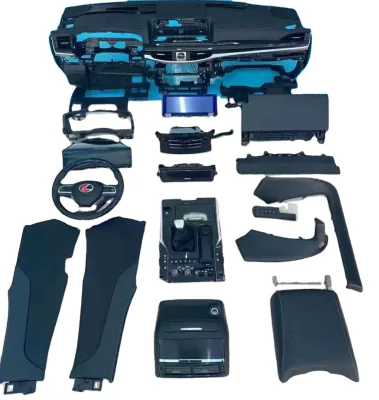
New OEM Design 1:1 Dashboard Inside Interior Kits for LX570 08-15 Upgrade to 2016-21
$7517.67 - $8187.05
MOQ: 1 sets


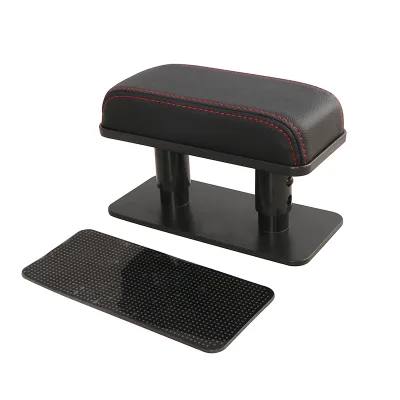
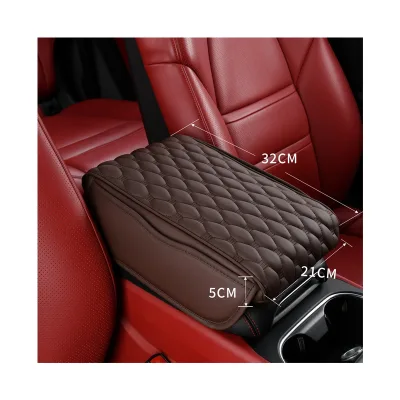
Comprehensive Sourcing Guide
Strategic Sourcing Guide for OE Design Plastic Interior Kits
The procurement of OE (Original Equipment) design plastic interior kits requires a disciplined approach that balances aesthetic fidelity with rigorous functional performance. In the current global supply chain, buyers seeking components that mimic or replace original automotive and industrial interior elements must navigate a complex landscape of material science, manufacturing standards, and compliance verification. This guide synthesizes available market data and technical observations to provide a framework for sourcing high-quality plastic interior kits, specifically focusing on PVC-based panel systems and related modular components. The objective is to equip procurement professionals with the evidence-based criteria necessary to evaluate suppliers without relying on unverified marketing claims.
Material Composition and Functional Performance
The foundational element of any plastic interior kit is the base material, which dictates the product's durability, safety profile, and environmental resistance. Based on observed market data, PVC (Polyvinyl Chloride) emerges as a primary material for interior panel applications. This material choice is significant because it offers a unique combination of properties essential for interior environments. The functional attributes observed in high-confidence product listings include fireproof, waterproof, soundproof, and heat insulation capabilities. These four pillars of performance are non-negotiable for interior kits intended for automotive, medical, or high-traffic commercial applications.
When evaluating a potential supplier, buyers must verify that the PVC formulation meets specific fire safety standards. While general "fireproof" claims are common, the specific testing protocols (such as UL94 or equivalent regional standards) must be confirmed. Similarly, the waterproof and soundproof characteristics require verification against humidity exposure tests and acoustic transmission loss measurements. The material must also withstand thermal fluctuations without warping, a critical factor for heat insulation performance.
Beyond PVC, the market also presents plastic-based alternatives with varying degrees of customization. Some listings indicate "Plastic" as a general material category, often paired with irregular shapes or specific dimensions like 1589cm or 12.588cm. For OE design kits, the precision of the plastic molding is paramount. The "Customized" attribute frequently appears in product specifications, suggesting that suppliers can adapt the base material to specific dimensional requirements. However, buyers should treat "Any Size" and "Any Color" claims with caution. While these indicate flexibility, they often imply a higher MOQ or longer lead time. The procurement strategy should prioritize suppliers who can demonstrate a track record of maintaining material consistency across custom runs, rather than those who simply offer broad customization options without defined quality controls.
Technical Specifications and Dimensional Precision
Precision engineering is the hallmark of OE design components. Unlike generic aftermarket parts, OE kits must fit existing mounting points and interface seamlessly with other vehicle or machinery systems. The observed product data highlights several critical specification parameters that buyers must scrutinize.
First, the model designation and dimensional data provide the baseline for fitment. Listings reference specific models such as "ZJKM PVC Panel" and "YB-PLASTIC," alongside precise measurements like 127.36.5cm. These figures are not merely descriptive; they are the primary verification points for compatibility. When sourcing, buyers should request CAD drawings or physical samples that match these exact dimensions. The "Customized design" attribute suggests that suppliers can modify these base models, but the tolerance levels for these modifications must be explicitly defined.
Second, the classification of the product type is essential for functional integration. While some listings describe "Sewing Machine" components or "Dampers," the core focus for interior kits remains on the panel and structural elements. The "Open" body type and "Two-Way" damping directions observed in related automotive components indicate that the interior kit may need to accommodate moving parts or specific mechanical interactions. For instance, if the kit includes door panels or trim pieces that interact with latches or dampers, the torque force (e.g., 1.75n.Cm) and damping direction must align with the system's mechanical requirements.
Third, the packaging and unit specifications offer insight into the supply chain's maturity. Standard packaging formats, such as "1pcs/plastic bag, 50pcs/ctn" or "5000PCS/Carton," reflect the supplier's experience with bulk logistics. For OE projects, where thousands of units may be required, the ability to maintain product integrity during transport is critical. The "Export Packing" and "International Standard Package Acc" attributes suggest a readiness for global distribution, but buyers should verify that the packaging protects the plastic surfaces from scratches and deformation during transit.
Compliance, Certification, and Quality Systems
In the realm of automotive and industrial interiors, compliance is not optional; it is a prerequisite for market entry. The supply chain data indicates that reputable suppliers operate under established quality management systems. Specifically, the "ISO9001: 2008 IATF16949" standard is a critical benchmark. IATF 16949 is the global technical standard for the automotive industry, and its presence signals that the supplier has a robust system for defect prevention, variation reduction, and continuous improvement.
Additionally, the "ISO" certification is frequently cited, serving as a baseline for general quality assurance. While "CE" certification is mentioned in background data, it should be treated as a secondary verification point rather than a primary claim. Buyers must insist on current, valid certificates from accredited bodies. The "Quality System: IATF 16929" reference further underscores the importance of automotive-specific standards, although the more common standard is IATF 16949. Procurement teams should verify the exact version of the standard held by the supplier, as older versions may not cover current regulatory requirements.
For interior kits, chemical compliance is equally vital. The "Fireproof" and "Heat Insulation" claims must be backed by third-party test reports. Buyers should request documentation proving that the PVC formulation does not release toxic fumes under fire conditions and meets the specific flammability ratings required by the target market (e.g., FMVSS 302 in the US or ECE R118 in Europe). The "Application" field listing "Agricultural, Automotive, Electronics, Household, Medical" indicates versatility, but each sector has distinct regulatory hurdles. An automotive interior kit must meet stricter criteria than a household item. Therefore, the certification scope must explicitly cover the intended application.
Cost Drivers and Economic Considerations
Understanding the cost structure of plastic interior kits is essential for budgeting and negotiation. The observed price range of 0.01 to 40,000 USD reflects the vast disparity between single-unit samples and bulk industrial orders. This wide range is driven by several key factors: material volume, customization complexity, and order quantity.
The MOQ (Minimum Order Quantity) range of 1 to 5000 units further illustrates the economic dynamics. Low MOQs (e.g., 1-10 units) typically command a higher unit price due to the setup costs for tooling and production lines. Conversely, high-volume orders (e.g., 5000 units) benefit from economies of scale, reducing the per-unit cost significantly. Buyers should be aware that "Customized" attributes often incur a one-time NRE (Non-Recurring Engineering) cost for mold creation, which is amortized over the production run.
The "Foreign Trade: Since 2016" attribute suggests that established suppliers have a mature logistics network, which can stabilize costs by reducing shipping delays and currency fluctuations. However, the "Free Samples Available" offer, often limited to specific components like dampers or latches, should be viewed as a sampling tool rather than a cost-saving measure for the entire kit. Buyers must budget for the freight costs associated with these samples, as the "Excluding Freight" clause is standard.
Supplier Evaluation and Geographic Context
Geographic location plays a significant role in supplier reliability and logistics efficiency. The data points to "China" as the primary origin, with specific hubs in "Ningbo" and "Shanghai." These cities are known for their manufacturing clusters and export infrastructure. A supplier located in Shanghai, for instance, may offer better access to automotive supply chains, while a Ningbo-based facility might specialize in general plastic molding.
When evaluating suppliers, the "Factory Visit: Welcome" attribute is a strong indicator of transparency. Buyers should prioritize suppliers who invite on-site audits. This allows for direct verification of the "Quality System" and "Production Capacity." The "Sample Request" policy, particularly for specific components, serves as a low-risk method to assess quality before committing to a large order.
However, buyers must remain vigilant regarding the "Classification" and "Type" attributes. Some listings mix unrelated categories, such as "Sewing Machine" or "Hand Sewing Needle," with "Plastic Panel" products. This suggests that some suppliers operate as general trading companies rather than specialized manufacturers. For OE design kits, it is crucial to identify the actual manufacturer. A trading company may offer a wider range of products but lacks the technical depth to solve complex engineering challenges. Buyers should verify the "Factory Location" and ensure it matches the claimed production capabilities.
Quality Control and Long-Term Procurement Strategy
Quality control (QC) is the final gatekeeper in the procurement process. The "Standard" attribute, listed as "Customized" or "Standard," must be defined with specific test parameters. For plastic interior kits, QC should include dimensional checks, material density tests, and surface finish inspections. The "Export Packing" standard ensures that products arrive in the condition required for installation, but in-plant QC is necessary to prevent defects before packaging.
Long-term procurement requires a partnership model rather than a transactional relationship. The "Since 2016" experience of suppliers suggests a capacity for long-term support. Buyers should establish clear communication channels for design changes and quality feedback. The "Customized" nature of the products means that the supply chain must be agile enough to handle design iterations without compromising lead times.
Furthermore, the "Application" diversity (Automotive, Medical, etc.) implies that the supplier must have the flexibility to adapt to different regulatory environments. A robust supplier will maintain separate production lines or strict segregation protocols to prevent cross-contamination between different industry standards.
Conclusion
Sourcing OE design plastic interior kits is a multifaceted process that demands a deep understanding of material science, regulatory compliance, and supply chain logistics. The observed data confirms that PVC-based panels with fireproof, waterproof, and soundproof properties are the industry standard, provided they are backed by IATF 16949 and ISO certifications. Buyers must rigorously verify dimensional specifications, avoid generic claims without supporting test data, and prioritize suppliers with transparent factory operations in established manufacturing hubs like Shanghai and Ningbo. By adhering to these evidence-based criteria, procurement professionals can mitigate risk and secure high-quality components that meet the stringent demands of modern interior applications. The journey from specification to delivery requires diligence, but the result is a supply chain that delivers reliability, safety, and performance.
FAQs
What materials are used for OE design plastic interior kits?
PVC is the primary material used for these interior kits, offering fireproof, waterproof, soundproof, and heat insulation properties. Some listings also reference general plastic alternatives, but PVC remains the standard for functional performance in automotive and medical applications.
Which certifications should I verify for automotive interior components?
You should verify that suppliers hold ISO9001:2008 and IATF16949 certifications, as these are critical for automotive quality systems. While ISO certification is common, the specific IATF standard ensures defect prevention and variation reduction required for OE design kits.
Can I get custom sizes for plastic interior panels?
Yes, customization is available with options for any size and color, though this may affect lead times and minimum order quantities. Specific models like ZJKM PVC Panel or YB-PLASTIC exist, but buyers must confirm tolerance levels for custom dimensions to ensure fitment.
Where are the manufacturing factories for these kits located?
Factories are primarily located in China, with specific hubs in Shanghai and Ningbo. Shanghai-based facilities often align with automotive supply chains, while Ningbo locations may specialize in general plastic molding and export logistics for international distribution.
What is the typical minimum order quantity for these products?
The minimum order quantity ranges from 1 to 5000 units depending on the supplier and customization level. Low MOQs like 1 unit are often for samples, while bulk orders of 5000 units benefit from economies of scale and lower per-unit costs.
How are the products packaged for international shipping?
Products are typically packed using export packing standards, such as 1 piece per plastic bag with 50 pieces per carton. Some suppliers use international standard packaging to protect plastic surfaces from scratches and deformation during transit to global destinations.
Are free samples available for testing before bulk orders?
Free samples are available for specific components like dampers or latches, excluding freight costs. Buyers should budget for shipping fees as the sample request policy usually covers only the product unit, not the logistics required to deliver the test item.