Source Organic Coconut Mct Oil for Food, Medicine, and Cosmetics
Explore 30 verified listings for Organic Coconut Mct Oil suitable for food, health care, and cosmetic applications. Buyers can compare specifications, certifications, and packaging options to find the right supplier for their needs.
Key considerations
Products List


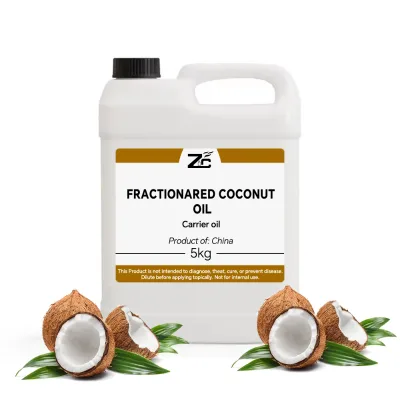
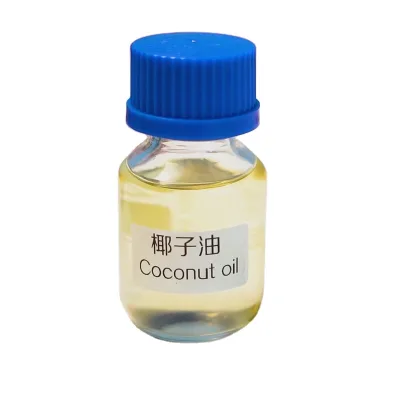
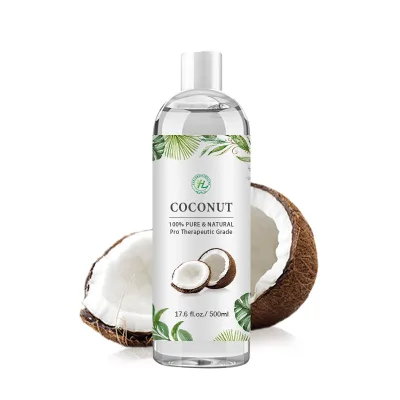
Natural Mct Oil Coconut Chain Triglyceride Food Grade Organic Mct Oil
$10.00 - $25.00
MOQ: 1 kilograms


Hot Selling Mct Coconut Oil Medium Chain Triglyceride Oil Food Grade Oil
$5.00 - $25.00
MOQ: 1 kilograms




Comprehensive Sourcing Guide
Strategic Sourcing Guide for Organic Coconut Mct Oil Procurement
The global demand for Medium Chain Triglycerides (MCT) derived from coconut oil has surged, driven by the health and wellness sector's focus on ketogenic diets, cognitive enhancement, and metabolic support. For B2B procurement professionals, sourcing "Organic Coconut Mct Oil" requires a nuanced understanding of the distinction between the raw botanical source and the refined chemical product. The market presents a complex landscape where product attributes vary significantly between suppliers, ranging from liquid oils to powdered formulations. This guide provides an evidence-based framework for evaluating suppliers, verifying technical specifications, and ensuring compliance without relying on unverified marketing claims.
Technical Specifications and Product State Variability
The first critical step in sourcing is defining the exact physical and chemical state of the required product. A common point of confusion in the MCT market is the discrepancy between the raw material (coconut oil) and the processed MCT fraction. While the core keyword implies a liquid oil, the supply chain data indicates that MCT products are frequently available in multiple states, including "Powder," "Plant Oil," and "Liquid." Buyers must explicitly verify the "State" attribute before placing orders. Some listings describe the product as "off-White to Light Yellow Oil," while others specify "Yellow" or "Transparent Liquid."
Furthermore, the purity and assay standards are paramount. The supply data references specific purity benchmarks, such as "99%" and "Ration: 99%," which often appear in conjunction with the product model "Mct Oil" or "HZ- MCT OIL." However, not all products labeled as MCT oil meet this specific threshold. Buyers should request the Assay Method report to confirm the concentration. The documented methods for verification include UV, HPLC, GPC, and HPLC-MS. Relying on a single method may be insufficient; a robust procurement strategy demands that the supplier provides data generated via High-Performance Liquid Chromatography (HPLC) to ensure the triglyceride profile matches the specification.
The physical form also dictates the application. While the primary application is often liquid oil for food and beverage integration, the market also offers "Capsule" and "Tablet" application forms, as well as "Paste" and "Lotion" forms for the cosmetic sector. If the procurement goal is to formulate a specific dietary supplement, the buyer must ensure the supplier's "Product Name" aligns with the intended use, distinguishing between "Coconut Oil" and "Medium Chain Triglycerides." The ingredient list should explicitly state "Medium Chain Triglycerides" rather than generic coconut oil, as the latter contains long-chain fatty acids that do not provide the same metabolic benefits.
Compliance Framework and Certification Verification
In the B2B food and pharmaceutical supply chain, certification is not merely a marketing asset but a prerequisite for market access. The supply data highlights a robust array of certifications, including HACCP, FDA, ISO, BRC, RoHS, Halal, and Kosher. However, the presence of these certifications on a supplier's website does not guarantee that every SKU meets these standards. Buyers must verify that the specific batch of "Organic Coconut Mct Oil" holds the relevant certifications for the target market.
For instance, products intended for the European market may require BRC certification, while those targeting the United States must comply with FDA regulations. The data also lists "RoHS," which is typically associated with electronics but may appear in broader chemical compliance contexts. More critically, for food-grade applications, the "Food Grade" designation is essential. Some listings indicate a broader grade range of "Food Grade / Cosmetic Grade / Feed Grade." Procurement teams must clarify which specific grade applies to the ordered batch, as feed-grade products are not suitable for human consumption or pharmaceutical use.
The "Halal" and "Kosher" certifications are vital for suppliers targeting specific demographic markets. These certifications often require distinct supply chain audits to ensure no cross-contamination with non-compliant ingredients. Buyers should request valid, up-to-date certificates from the issuing bodies rather than relying on self-declared claims. Additionally, the "ISO" certification should be specified (e.g., ISO 22000 for food safety or ISO 9001 for quality management) to ensure the supplier's management system aligns with industry best practices.
Cost Drivers and Pricing Structure Analysis
Understanding the cost structure of MCT oil is essential for budgeting and negotiation. The observed price range in the market is extensive, spanning from $0.38 to $12,000 USD. This wide variance is not indicative of a single product's price fluctuation but rather reflects the diversity of product forms, packaging sizes, and purity levels. A price of $0.38 likely corresponds to a bulk raw material or a specific unit of measurement for a lower-grade or powdered variant, whereas the $12,000 figure may represent a specialized, high-purity, or small-batch order with significant logistical costs.
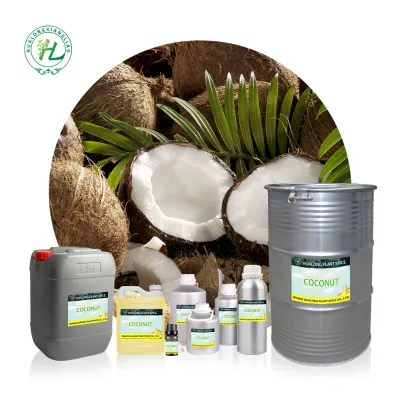
Several factors drive the final cost. The "Grade" is a primary driver; Food Grade MCT oil commands a premium over Feed Grade. The "Purity" level, such as the 99% standard observed in the data, also significantly impacts pricing. Higher purity requires more rigorous refining processes and advanced testing (HPLC-MS), which increases production costs. Packaging is another critical cost component. The data lists various packing options, including "1kg/Bag," "25kg/Drum," "190kg/Drum," and "Box" or "Bottle." Bulk packaging in 25kg or 190kg drums typically reduces the unit cost compared to smaller retail-ready packaging.
The "MOQ" (Minimum Order Quantity) also influences the effective cost per unit. The observed MOQ range is 1 to 500 units. Suppliers with a low MOQ of 2 units may charge a higher premium for flexibility, while those requiring 500 units may offer volume discounts. Buyers should calculate the total landed cost, including shipping and handling, rather than focusing solely on the unit price. The "Capacity" of the supplier, noted as 50,000 tons/year in some contexts, suggests that larger suppliers may offer more stable pricing due to economies of scale, whereas smaller suppliers might have higher volatility.
Typical Applications and Formulation Compatibility
The versatility of MCT oil allows it to serve multiple industries, but formulation compatibility varies by product state. The primary applications identified are "Medicine," "Health Care Products," and "Food." In the food sector, MCT oil is often used as a functional ingredient in ketogenic snacks, beverages, and protein bars. The "Appearance" of the oil, described as "off-White to Light Yellow Oil" or "Transparent Liquid," must be compatible with the final product's aesthetic requirements. For clear beverages, a "Transparent Liquid" is preferred, whereas opaque products may tolerate a "Yellow" or "Light Yellow" hue.
In the pharmaceutical and health care sectors, the "Application Form" is a decisive factor. The data indicates that MCT oil is utilized in "Capsule" and "Tablet" formulations, as well as "Paste" and "Lotion" for topical applications. For capsule production, the oil must be free of impurities that could affect the encapsulation process or the stability of the soft shell. The "Storage" requirements, specified as "Cool and Dry Place," are critical for maintaining the integrity of the oil during storage and transit. Failure to adhere to these storage conditions can lead to oxidation, rancidity, and a reduction in shelf life.
The "Shelf Life" of the product is typically listed as "2 Years," but this is contingent upon proper storage. Buyers must ensure that the logistics chain maintains the required temperature and humidity levels. For cosmetic applications, the "Ingredient" profile must be free from allergens and irritants, which is where the "Natural Preservatives" attribute becomes relevant. However, buyers should verify if the "Natural Preservatives" are added during processing or if the oil is naturally stable due to its chemical structure.
Supplier Evaluation and Operational Due Diligence
Evaluating a supplier for MCT oil procurement requires a multi-dimensional approach that goes beyond price and certification. The "Location" of the supplier is a key operational factor. The data points to origins in "Jiangsu, China," "Shaanxi," and general "China" locations. While these regions are known for chemical and food processing, buyers should assess the specific logistics capabilities of the supplier. A supplier in Jiangsu may have better access to ports for international shipping compared to one in Shaanxi, which is inland.
The "Capacity" of the supplier, such as the 50,000 tons/year figure, indicates their ability to fulfill large orders. However, capacity does not guarantee consistency. Buyers should request references from other clients in the same industry to verify the supplier's reliability. The "Sample" availability is another critical evaluation metric. The data mentions a sample size of "10-20ml," which is sufficient for initial quality testing. Buyers should insist on receiving samples before committing to a bulk order to verify the "Appearance," "Color," and "Assay Method" results personally.
Furthermore, the "Customization" attribute is a significant differentiator. Some suppliers offer "Packing: According to Customer Requirements," which is essential for private label brands or companies with specific packaging needs. Buyers should confirm the feasibility of custom packaging and the associated lead times. The "Other Name" attribute, such as "Mct Oil" for "Coconut Oil," highlights the importance of clear communication. Misunderstandings regarding the product name can lead to the delivery of the wrong product type.
Quality Control Protocols and Long-Term Procurement Strategy
Establishing a robust quality control (QC) protocol is essential for mitigating risks in MCT oil procurement. The "Assay Method" is the cornerstone of QC. Buyers should mandate that the supplier provides a Certificate of Analysis (CoA) for every batch, detailing the results of HPLC, UV, or GPC testing. The "Standard" of 99% should be the baseline, but buyers must verify the specific impurities and fatty acid profile. The "Mesh Size" of 80, mentioned in the data, is relevant for powdered forms, ensuring the particle size is consistent for uniform mixing in formulations.
Long-term procurement requires a focus on supply chain resilience. The "Lead Time" is not explicitly provided in the data, but buyers should negotiate clear timelines for production and delivery. The "Storage" requirements must be communicated to the logistics provider to prevent degradation during transit. For long-term contracts, buyers should consider the "Shelf Life" of the product in relation to their inventory turnover. A 2-year shelf life offers flexibility, but buyers should aim to rotate stock to ensure product freshness.
Finally, the "Resource" attribute, described as "Natural Preservatives," suggests a focus on clean-label products. However, buyers must verify the source and efficacy of these preservatives. In the context of "Organic" claims, which are implied by the keyword but not explicitly confirmed in the data, buyers should request organic certification documents. Without explicit organic certification, the product may be conventional MCT oil. A comprehensive sourcing strategy combines technical verification, certification validation, and operational due diligence to ensure the procurement of high-quality, compliant, and cost-effective MCT oil.
| Attribute Category | Key Observation from Data | Buyer Verification Action |
|---|---|---|
| Physical State | Liquid, Powder, Plant Oil, Paste | Confirm "State" matches application needs (e.g., liquid for beverages). |
| Purity Standard | 99% (Ration/Standard) | Request CoA with HPLC results to verify triglyceride concentration. |
| Certifications | HACCP, FDA, ISO, BRC, Halal, Kosher | Validate current certificates for the specific target market. |
| Packaging | 1kg/Bag, 25kg/Drum, 190kg/Drum | Select based on MOQ and logistics capabilities; verify custom options. |
| Origin | Jiangsu, Shaanxi, China | Assess logistics efficiency and port access for international shipping. |
| Shelf Life | 2 Years | Ensure storage conditions (Cool and Dry) are maintained throughout transit. |
| Application | Medicine, Food, Health Care, Cosmetic | Match product form (Capsule, Tablet, Lotion) to end-use requirements. |
FAQs
What is the typical purity level for Organic Coconut Mct Oil?
The typical purity level is 99 percent as observed in product specifications. Buyers must verify this standard through assay methods like HPLC or UV testing to ensure the triglyceride profile matches the requirement before placing an order.
Which certifications are commonly available for these products?
Common certifications include HACCP, FDA, ISO, BRC, RoHS, Halal, and Kosher. Procurement teams must verify that the specific batch holds the relevant certifications for the target market rather than relying on general supplier claims.
How is the product state defined in the supply data?
The product state varies and can be liquid, powder, or plant oil depending on the listing. Buyers must explicitly verify the physical state attribute to ensure compatibility with their intended application form such as capsules or lotions.
Can suppliers offer customized packaging for bulk orders?
Yes, customization is available with options like 25kg drums or 1kg bags. Buyers should confirm the feasibility of custom packaging requirements and associated lead times before committing to a bulk purchase agreement.
What is the minimum order quantity for sourcing this oil?
The minimum order quantity ranges from 1 to 500 units depending on the supplier. Lower MOQs may carry a higher premium, while larger orders often benefit from volume discounts and more stable pricing structures.
Where are the primary manufacturing locations for this product?
Primary origins include Jiangsu, Shaanxi, and other regions in China. Buyers should assess the specific logistics capabilities of the supplier location to ensure efficient international shipping and supply chain reliability.
How long is the shelf life of the stored product?
The shelf life is typically two years when stored correctly. Products must be kept in a cool and dry place to prevent oxidation and maintain the integrity of the medium chain triglycerides during transit and storage.