Source Organic GAC Fruit Extract Powder for Food and Supplements
Find 30 listings for Organic GAC Fruit Extract Powder from Chinese suppliers. Compare specifications such as HPLC assay methods, 80 mesh particle sizes, and ISO certifications. Evaluate options for health food and capsule applications with MOQs starting at 1 kg.
Key considerations
Products List
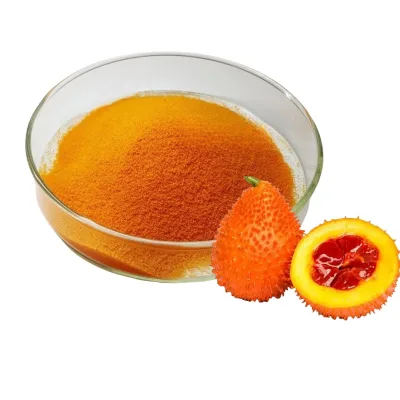
Gac Fruit Extract Gac Fruit Freeze Dried Powder Gac Fruit Juice Powder
$15.38 - $20.51
MOQ: 1 kilograms


Free Sample Natural Momordica Cochinchinensis 10: 1 GAC Fruit Extract
$10.00 - $25.00
MOQ: 5 kilograms

Pure Natural Organic Spinach Extract Vegetable Powder Spinach Extract Powder
$10.00 - $15.00
MOQ: 1 kilograms
Comprehensive Sourcing Guide
Organic GAC Fruit Extract Powder Sourcing Guide
Procuring Organic GAC Fruit Extract Powder requires distinguishing between specific juice powders and broader herbal extracts, as the market often lists Gac alongside other botanicals like passion fruit or cnidium. Buyers must verify that the "Gac Fruit Juice Powder" designation aligns with the actual botanical source, ensuring the product is derived specifically from Momordica cochinchinensis rather than a generic fruit blend. The observed listings indicate a focus on health food applications, where the active ingredients are primarily vitamins and carotenoids extracted via solvent methods.
Sourcing decisions should prioritize suppliers who explicitly define their extraction type and particle size, as these factors directly impact solubility and bioavailability in final formulations. While some listings suggest a 99% specification, buyers must confirm if this refers to the purity of the extract or the concentration of specific active compounds. The distinction between a single-item selling unit and bulk packaging options like 25kg drums is critical for determining whether the supplier can support pilot testing or large-scale industrial production without compromising product integrity.
Product Scope and Observed Listing Signals
The product scope for gac fruit extract powder typically encompasses health food applications, though some listings extend to medicine and general food categories. Buyers should note that observed data includes variations such as "Passion Fruit Powder" and "Cnidium Fruit Extract," which indicates a need for rigorous SKU verification to ensure the correct botanical is delivered. The form is consistently listed as powder, with particle sizes often specified as passing through an 80 mesh, a standard that influences mixing efficiency in capsule or tablet manufacturing.
Commercial signals reveal a wide range of packaging options, from 1kg bags to 25kg drums, suggesting flexibility for different order volumes. The presence of OEM and ODM services implies that suppliers are prepared to customize branding and specifications, but this requires clear communication regarding the base material's origin. Buyers must also observe that cultivation methods are listed as artificial planting, which may influence the organic certification status and requires verification against specific organic standards rather than relying on general "health food grade" claims.
Technical Specifications to Verify
Technical verification must begin with the assay method, as listings cite HPLC, UV, and HPLC-MS as standard testing protocols for active ingredient quantification. Buyers should demand a Certificate of Analysis (COA) that explicitly matches the assay method used for the specific batch, ensuring that the reported 99% specification or 10:1 to 20:1 concentration ratios are derived from validated analytical procedures. The solubility profile is another critical parameter, with water solubility being a key attribute for gac powder intended for liquid food applications or reconstitution.
Particle size distribution and physical form are essential for processing compatibility, particularly for manufacturers producing capsules or tablets. The observed requirement of "NLT 100% Through 80 Mesh" serves as a baseline, but buyers should verify if tighter tolerances are available for specific machinery. Additionally, the storage conditions of a cool, dry place are non-negotiable for maintaining the stability of heat-sensitive vitamins and carotenoids, and the supplier must demonstrate a supply chain capable of maintaining these conditions from the Shaanxi origin to the final destination.
Compliance and Safety Documentation
Compliance documentation is paramount when sourcing herbal extracts for food and health care products, as the market lists multiple certifications including ISO, HACCP, FDA, BRC, and RoHS. Buyers must verify that the specific facility producing the gac powder holds current, valid certificates for the target market, as the presence of a general ISO label does not guarantee compliance with specific regional food safety regulations. The availability of COA and MSDS documents is standard, but these must be reviewed to ensure they cover the specific contaminants relevant to the intended application.
Safety verification extends to the extraction process, where solvent extraction is noted as the method used. Buyers should request detailed residue reports to confirm that any solvents used have been removed to levels compliant with international food safety standards. Furthermore, the distinction between "health food grade" and pharmaceutical-grade materials must be clarified through documentation, as this determines the allowable claims and regulatory pathways for the final product. Without explicit documentation, the safety profile of the extract remains undefined for regulatory submission.
Cost Drivers and Commercial Terms
Cost drivers in the gac fruit extract market are heavily influenced by the concentration ratio, such as 10:1 or 20:1, and the purity specifications like 99% or 10%-98%. Buyers should understand that higher concentration ratios and stricter purity thresholds typically command a premium, as they require more raw material and more rigorous processing steps. The observed price range of 2.9 to 100 USD reflects these variations, but the final cost will depend on the specific assay results and the volume of the order relative to the minimum order quantity.
Commercial terms regarding payment and shipping are equally critical for managing cash flow and logistics risk. Listings indicate flexibility with payment methods including TT, PayPal, and Western Union, yet buyers should negotiate terms that align with their internal financial controls. Shipping options like FedEx, UPS, and specialized lines offer speed but vary in cost and reliability. The MOQ of 1kg to 510 units allows for small-scale entry, but buyers must calculate the per-unit cost impact of smaller orders against the economies of scale offered by bulk drum shipments.
Supplier Qualification and Quality Control
Supplier qualification requires a deep dive into the manufacturing facility's location and operational history, with Shaanxi, China, being a primary origin point for these extracts. Buyers should verify the supplier's capacity to maintain consistent quality across batches, as the "artificial planting" method suggests controlled agricultural practices that need to be monitored for consistency. The ability to provide a traceable supply chain from the cultivation site to the final packaging is essential for validating the organic claims and ensuring the absence of unauthorized additives.
Quality control protocols must be robust, encompassing the entire production lifecycle from raw material intake to final packaging. The listed certifications like HACCP and FDA suggest a structured approach to safety, but buyers should audit the specific quality control checkpoints used for gac fruit. This includes verifying the test methods for heavy metals, pesticides, and microbial contamination, which are not explicitly detailed in the general listing but are critical for health food applications. A supplier's willingness to share detailed QC reports is a strong indicator of their reliability and commitment to product integrity.
Long-Term Procurement Checks
Long-term procurement success depends on establishing a framework for continuous quality monitoring and supply chain resilience. Buyers should implement a schedule for periodic re-testing of incoming batches to ensure that the shelf life of two years is maintained under actual storage conditions. The variability in test methods and specifications across different listings necessitates a standardized internal protocol for acceptance, ensuring that every shipment meets the same rigorous criteria regardless of the specific batch or production date.
Strategic planning must also account for the potential for specification drift or changes in raw material availability due to seasonal or agricultural factors. Although the product is listed for all seasons, the quality of the gac fruit can vary based on harvest conditions, which may affect the final extract's potency. Buyers should maintain open communication channels with suppliers to anticipate these fluctuations and adjust their inventory or formulation strategies accordingly. Establishing a long-term partnership with a supplier who demonstrates transparency and adaptability is key to sustaining a reliable supply of high-quality gac fruit extract powder.
FAQs
What is Organic GAC Fruit Extract Powder typically used for?
Organic GAC Fruit Extract Powder is typically used in food, health food, and dietary supplement applications, including capsules, tablets, and blended powder formulations. It is classified as a herbal extract with vitamin content and water-soluble properties, which makes it suitable for beverage mixes and functional products. Buyers should confirm the intended application and grade requirements with suppliers before ordering.
How is the powder tested for quality and potency?
Quality and potency are verified through analytical methods such as HPLC, TLC, UV, and HPLC-MS, depending on the supplier's testing protocol. These assay methods confirm active ingredient content and specification levels. Buyers should request a certificate of analysis for each batch and may arrange third-party testing to verify results before accepting shipment of larger orders.
What is the minimum order quantity and standard packaging?
The minimum order quantity starts at 1 kg, making trial purchases practical for evaluation. Standard packaging is 1 kg per bag, with 25 kg drums for bulk orders, and options include bottles and cans. Aluminum foil bag inner lining with drum or carton outer packaging is also available. Confirm packaging preferences and customization options with the supplier when placing an order.
Which certifications do suppliers hold for this powder?
Listed certifications include ISO, HACCP, FDA, BRC, and RoHS, though specific holdings vary by supplier. Certificates such as COA and MSDS are commonly provided to document product quality. Buyers should request current certificates directly from suppliers and verify their validity, since certification status can change and may differ between individual manufacturers and listings.
Can the powder be customized or supplied under private label?
Yes, OEM and ODM services are acceptable, and customization is available from listed suppliers. This can include formulation adjustments, packaging formats such as bottles, cans, or drums, and private label arrangements. Buyers should discuss minimum quantities for customized runs, design requirements, and lead times with suppliers, as customization terms often differ from standard catalog orders.
How should the powder be stored and what is its shelf life?
The powder should be stored in a cool, dry place away from moisture and direct sunlight. The stated shelf life is 2 years when stored under proper conditions. Because the product is water soluble and finely milled to pass through 80 mesh, sealing containers tightly after opening helps preserve quality and prevent clumping during warehouse storage and distribution.
What specifications should buyers confirm before ordering?
Key specifications include the 99% stated specification, particle size of NLT 100% through 80 mesh, water solubility, and extraction type using solvent extraction. The product is a fruit-derived herbal extract in powder form from artificially planted sources. Buyers should verify which specification values apply to each supplier's offering, since details may vary between listings and production batches.
How is shipping and payment typically handled?
Shipping options commonly include FedEx, UPS, and special line services, depending on destination and order size. Payment methods generally accepted include T/T, PayPal, and Western Union. Terms vary by supplier, order volume, and destination country, so buyers should confirm shipping costs, transit times, and accepted payment terms directly with suppliers before confirming an order.