Source Pet Cremation Urns for Dogs, Cats, and Birds
Compare 30 pet cremation urns from verified Chinese suppliers. Buyers can review materials like wood and metal, sizes, and customization options for dogs, cats, birds, and rabbits.
Key considerations
Products List






Design Cremation Urns Waterdrop Pet Cremation Box Aquamation Urn Hydrolysis Coffin
$10.19 - $12.42
MOQ: 5000 Pieces

Comprehensive Sourcing Guide
Strategic Sourcing Guide for Pet Cremation Urns
The global demand for specialized memorial products has driven a significant expansion in the market for pet cremation urns. For B2B procurement professionals, navigating this sector requires a disciplined approach that balances emotional sensitivity with rigorous supply chain management. The core keyword "Pet Cremation Urn" encompasses a diverse range of products, from wooden caskets to stainless steel containers, each serving specific market segments. This guide provides a structured framework for sourcing these items, focusing on technical specifications, material verification, cost structures, and supplier evaluation based on observed market data and industry standards.
Understanding Product Variability and Material Composition
The first critical step in sourcing is recognizing the inherent variability in product definitions. Market observations indicate that "pet cremation urns" are not a monolithic category but rather a collection of distinct product types defined by material, size, and intended application. Procurement teams must distinguish between products explicitly labeled as "Wooden Cremation Urns" and those described as "Pet Stainless Steel Urns" or "Ceramic" alternatives.
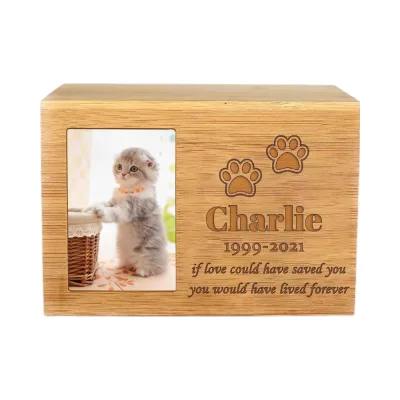
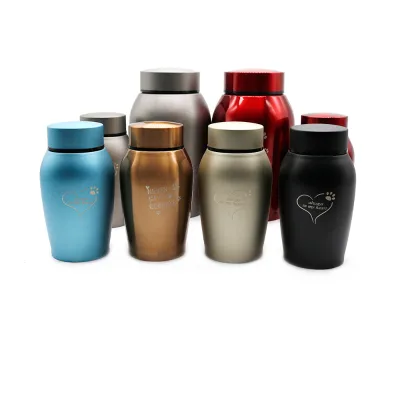
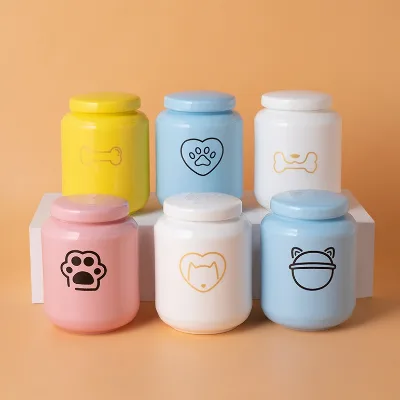
The material composition is a primary driver of product identity and cost. Data from the current market shows a prevalence of wood, with specific attributes noting "Wood" as a primary material for items described as "Eco-Friendly" and "Durable." These wooden units often feature a "Rectangle" shape and are marketed with "Customized Color" options, allowing for brand differentiation. However, buyers must be vigilant, as some listings in the same category reference "Metal" or "Ceramic" materials. For instance, specific model numbers in the market are associated with "Metal" grades, while others are linked to "Ceramic" with "High Grade" classifications.
When evaluating materials, the buyer must verify the specific grade. The market data reveals a spectrum ranging from "Low Grade" to "High Grade" and "Mid Grade." A "Low Grade" classification may imply a material that is less durable or suitable for specific budget-conscious segments, whereas "High Grade" materials often command higher price points and are associated with premium finishes like "Polishing" or "Electroplating." The "Surface Treatment" process is equally critical; options such as "Polishing" and "Electroplating" significantly alter the final aesthetic and protective qualities of the urn. Buyers should not assume that all products in a search result share the same material properties. Instead, they must request detailed material certificates and physical samples to confirm whether the product is truly wood, metal, or ceramic, and to assess the quality of the surface treatment.
Technical Specifications and Dimensional Standards
Technical specifications define the functional utility of the urn. The most critical specification is volume capacity, which must align with the size of the pet. The market data highlights a wide range of sizes, from "Small" to "Large." Specific standard dimensions observed include "161111cm" and "181313cm," while other listings reference volume capacities ranging from "190ml-2000ml." This variance indicates that a single supplier may offer a portfolio of sizes to accommodate different pet breeds, from small birds and rabbits to large dogs.
The shape is another key technical parameter. While "Rectangle" is a common shape observed in the data, the "Style" attribute varies significantly, with options like "American Style" and "European Style" appearing in different product listings. These stylistic differences often correlate with the intended demographic and cultural preferences of the end consumer. For example, a "European Style" urn might feature more ornate detailing compared to the simpler lines of an "American Style" unit.
Buyers must also scrutinize the "Standard" attribute, which can refer to physical dimensions or industry benchmarks. In the observed data, standards are listed as specific measurements like "25*16mm" or volume ranges. It is essential to clarify whether these standards represent the internal capacity or the external footprint. Additionally, the "Customization" attribute is frequently marked as "Available," suggesting that many suppliers can modify dimensions, colors, and engravings. However, the feasibility of customization depends on the production process, which is often described as "handmade" in the market data. Handmade processes offer unique aesthetic value but may introduce variability in dimensions that requires tighter quality control protocols.
Cost Drivers and Minimum Order Quantity Analysis
Pricing and order volume are central to the financial viability of a procurement strategy. The observed price range in the market spans from $1.50 to $25.00 USD. This wide disparity is driven by multiple factors, including material cost, labor intensity, and finishing processes. A wooden urn with "Customized Color" and "handmade" attributes will naturally fall on the higher end of this spectrum compared to a mass-produced metal or ceramic unit.
The Minimum Order Quantity (MOQ) is another significant cost driver. The market data shows an MOQ range from 2 units to 5,000 units. Specific listings indicate MOQs of 10 pieces, 100 pieces, or even higher. For a buyer entering the market with a limited budget, an MOQ of 10 or 2 units may be attractive for initial testing. However, for large-scale distribution, an MOQ of 100 or 5,000 units may be necessary to achieve economies of scale. Buyers must calculate the total landed cost, which includes the unit price multiplied by the MOQ, plus shipping and handling.
It is crucial to understand that the "Grade" of the product directly influences the price. A "High Grade" ceramic urn with "Polishing" treatment will likely have a higher MOQ and unit price than a "Low Grade" metal urn. Furthermore, the "ODM/OEM" capability of a supplier can impact costs. Suppliers offering "ODM/OEM" services often require higher MOQs to cover the setup costs for custom branding and design. Buyers should negotiate based on their volume requirements and be prepared to adjust their order size to meet the supplier's thresholds.
Supplier Evaluation and Geographic Considerations
Supplier selection is a critical risk management step. The market data indicates that a significant portion of these products originates from "Shandong, China" or generally "China." This geographic concentration suggests a mature supply chain with established logistics networks. However, buyers must verify the specific "place_of_origin" for each product, as manufacturing capabilities can vary even within the same region.
When evaluating suppliers, the "Brand Name" is a useful indicator of market presence. For example, "LongRiver" is a brand name observed in the product listings. While this does not guarantee quality, it suggests a level of market recognition. Buyers should also look for suppliers that explicitly state "ODM/OEM: Yes" and "Sample: Avaliable." The availability of samples is a vital step in the vetting process, allowing buyers to physically inspect the "Surface Treatment," "Color," and "Style" before committing to a large order.
The "Application" attribute provides insight into the supplier's specialization. Some products are listed for "Pet" only, while others are suitable for "Adult, Pet" or "Pet and Human." A supplier offering "Suit for: Pet and Human" products may have a more versatile manufacturing capability, but buyers must ensure that the specific pet urns meet the necessary size and durability requirements for animals. Additionally, the "Style" of the product, such as "American Style" or "European Style," should align with the target market's cultural preferences.
Quality Control and Compliance Verification
Quality control is paramount in the funeral and memorial industry, where product failure can have severe emotional consequences for the client. Buyers must implement a rigorous QC protocol that addresses the specific attributes observed in the market. The "Grade" of the material, whether "Low," "Mid," or "High," must be verified through physical inspection. For wooden urns, buyers should check for warping, cracks, or poor joint construction. For metal urns, the "Electroplating" and "Polishing" must be uniform, with no visible defects or peeling.
Compliance and certification checks are essential, although specific certification names are not provided in the source data. Buyers should request documentation regarding the "Eco-Friendly" claims, particularly for wooden products. This may include FSC certification or proof of sustainable sourcing. For metal and ceramic urns, buyers should verify that the materials are non-toxic and safe for long-term storage of remains. The "Standard" attribute, such as "190ml-2000ml," should be validated against actual capacity measurements to ensure accuracy.
The "prod_packing" attribute, which includes options like "Carton" or "Mini," is also a quality indicator. Proper packaging is essential to prevent damage during transit. Buyers should inspect the packaging materials to ensure they are robust enough to protect the urn, especially given the "handmade" nature of some products which may be more fragile.
Long-Term Procurement and Strategic Sourcing
Sourcing pet cremation urns is not a one-time transaction but a long-term strategic partnership. The "Customization" and "ODM/OEM" capabilities of suppliers allow for brand building and product differentiation over time. Buyers should look for suppliers who can scale their production to meet growing demand without compromising quality. The "Lead Time" and "MOQ" flexibility are key factors in maintaining a responsive supply chain.
Buyers should also consider the "Applicable Pet" range. A supplier offering urns for "Dogs, Cats, Birds, Rabbits" provides a comprehensive solution for pet retailers and funeral homes. This versatility reduces the need to manage multiple suppliers for different pet sizes. Additionally, the "Color" options, including "Customized Color," "White," "Red," and "Black," allow for a diverse product line that can cater to various consumer preferences.
In conclusion, successful sourcing of pet cremation urns requires a deep understanding of the product's technical specifications, material composition, and market dynamics. By carefully evaluating suppliers, verifying quality through samples, and negotiating based on clear MOQ and pricing structures, buyers can build a robust supply chain that meets the needs of the memorial industry. The observed data highlights a market rich in variety, from wooden caskets to stainless steel urns, offering ample opportunities for strategic procurement.
FAQs
What materials are used for pet cremation urns?
Pet cremation urns are primarily made from wood, metal, or ceramic. The observed market includes wooden options described as eco-friendly and durable, alongside metal and ceramic variants with different grades ranging from low to high quality.
Can I customize the color and size of the urn?
Yes, customization is available for color, size, and shape. Buyers can request customized colors and dimensions, with options ranging from small to large sizes and standard dimensions like 16*11*11cm or 18*13*13cm depending on the model.
What is the minimum order quantity for these urns?
The minimum order quantity varies significantly by supplier and product type. Observed MOQs range from as low as 2 units to as high as 5000 units, with specific listings showing thresholds of 10 or 100 pieces for different models.
Which styles are available for pet memorial urns?
Available styles include American Style and European Style, with shapes typically being rectangular. Some products are handmade, offering unique aesthetic variations, while others feature surface treatments like polishing or electroplating for a refined finish.
How much do pet cremation urns cost per unit?
The unit price ranges from 1.50 to 25.00 USD depending on material and grade. Higher prices often correlate with high-grade materials like ceramic or metal, while lower prices may reflect mid or low-grade wooden or metal options.
Are these urns suitable for different types of pets?
Yes, the urns are applicable for dogs, cats, birds, and rabbits. Some models are specifically designed for pets, while others are suitable for both adults and pets, accommodating a wide range of animal sizes and needs.
Can suppliers provide samples before bulk ordering?
Samples are available for many products to verify quality and specifications. Buyers can request samples to inspect surface treatments, colors, and dimensions before committing to larger orders that may require ODM or OEM services.