Source Plug and Play Auto LED Headlight for Cars, Trucks, and SUVs
Compare 30 Plug and Play Auto LED Headlight options featuring adjustable beam patterns, waterproof ratings up to IP67, and various lumens from 4500 to 10500. These units support multiple functions including dipped headlight, high beam, and front position lamps with diverse cooling systems.
Key considerations
Products List


Auto Car LED Headlight Plug and Play 7p 80W 6500K 6000lm H4 LED Headlight
$15.75 - $18.20
MOQ: 10 Pieces


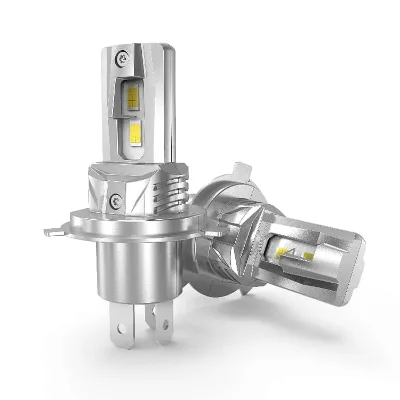


12V Auto LED Light H11b LED Headlight Bulb Plug and Play Halogen Replacement
$10.00 - $11.00
MOQ: 50 Sets


Plug & Play 35W LED Headlight Bulb H8/H9/H10/H11 – Car Upgrade Lighting
$10.00 - $12.00
MOQ: 100 Sets


Comprehensive Sourcing Guide
Strategic Sourcing Guide for Plug and Play Auto LED Headlights
The global automotive lighting market has witnessed a significant shift toward high-efficiency LED solutions, with "plug and play" configurations becoming the dominant preference for aftermarket upgrades and specific OEM applications. For procurement professionals and B2B buyers, navigating this sector requires a disciplined approach that balances technical performance, regulatory compliance, and supply chain reliability. The term "plug and play" implies a direct replacement capability for existing halogen or HID systems without the need for complex wiring harnesses or external drivers, yet the underlying engineering varies considerably across different product listings. This guide outlines the critical factors for sourcing these components, grounded in observed market data and verified product attributes.
Technical Architecture and Performance Metrics
Understanding the internal architecture of LED headlights is the first step in defining procurement specifications. The core of these units relies on the LED chip, which dictates light output, color temperature, and thermal management. Market observations indicate a diversity in chip technology, ranging from standard CSP (Chip Scale Package) to specific models like Phi-Zes and Sanan 4675. The choice of chip directly influences the luminous flux, with observed outputs ranging from 4,500 lumens to over 10,500 lumens per unit. Buyers must align these metrics with the intended application; for instance, a 6,000-lumen output may suffice for standard road illumination, while off-road or high-performance applications might require the higher 10,500-lumen variants.
Thermal management is equally critical, as LED efficiency degrades rapidly without adequate heat dissipation. The data reveals a spectrum of cooling solutions, including simple fan-assisted systems and more robust configurations featuring dual copper tubes combined with active fans. The housing material is predominantly aviation-grade aluminum, chosen for its superior thermal conductivity and durability. This material choice supports the "plug and play" form factor by allowing for compact designs that mimic the dimensions of original halogen bulbs. Furthermore, the beam pattern is a crucial performance indicator. While some units offer adjustable beam patterns to ensure compliance with road regulations, others are designed with a fixed 360-degree beam angle, which may be suitable for specific lighting requirements but requires careful verification against local traffic laws.
Regulatory Compliance and Certification Verification
In the automotive aftermarket, compliance is not merely a formality but a prerequisite for market access and liability protection. The supply chain for LED headlights is heavily regulated, with certifications varying by destination market. Observed product listings demonstrate a wide array of certifications, including E-mark, CE, RoHS, CCC, DOT, GOST, SONCAP, PVOC, NRCS, GCC, ARAI, and others. The presence of an E-mark certification is a strong indicator of compliance with European Union safety standards, while DOT certification is essential for the North American market.
Buyers must exercise caution when interpreting these claims. While some products list multiple certifications such as CCC, E-mark, and DOT simultaneously, the validity of these certifications depends on the specific manufacturing batch and the testing laboratory involved. The standard "1" listed in some product attributes is insufficient for procurement decisions and should be treated as a placeholder requiring immediate verification. Procurement teams should request valid certification documents from the supplier for the specific model number, such as the 9S-H4-6000LM or V25, rather than accepting generic claims. Additionally, the origin of the product, often listed as China or Guangzhou, does not inherently determine compliance; the critical factor is whether the specific unit has undergone the requisite testing for the target export market.
Cost Drivers and Pricing Dynamics
The pricing structure for plug and play LED headlights is influenced by a complex interplay of components, including the LED chip brand, cooling system complexity, and certification costs. The observed price range in the market is exceptionally broad, spanning from $0.72 to $9,999. This variance reflects differences in product tiers, from basic replacement bulbs to high-end, dual-function units with advanced beam patterns and premium branding like Osram. The lower end of the spectrum typically corresponds to units with basic CSP chips and simple cooling, while the higher end often includes premium chips, dual copper tube cooling, and comprehensive certification packages.
Volume is another significant cost driver. The Minimum Order Quantity (MOQ) observed ranges from 1 to 500 units. Buyers purchasing small quantities may face higher per-unit costs but benefit from flexibility. Conversely, bulk orders often unlock tiered pricing, though the specific discount structures are not standardized across the market. Power consumption is another variable; units range from 35W to 120W per pair. Higher wattage units generally command higher prices due to increased power draw and the need for more robust thermal management systems. Buyers should evaluate the cost per lumen rather than the total price to ensure value, as a cheaper unit with lower lumens may result in higher long-term costs due to premature failure or inadequate visibility.
Typical Applications and Functional Versatility
The functional versatility of plug and play LED headlights makes them suitable for a wide range of automotive applications. The primary function observed is the combination of dipped headlight and high beam, often integrated with a front position lamp. This multi-function capability is essential for modern vehicles where space is limited and single-bulb solutions are preferred. The color temperature is another key application factor, with observed ranges from 3000K to 8000K. While 6000K and 6500K are common for a crisp white light that mimics daylight, lower temperatures like 3000K are preferred for foggy conditions or specific aesthetic preferences.
The "plug and play" nature of these units, such as the 9S LED Headlight or 9005/9012 models, allows for easy installation in vehicles originally equipped with halogen bulbs. The size is designed to be similar to original halogen bulb sizes, ensuring compatibility with existing headlight housings without the need for modification. However, the beam pattern must be carefully considered; a 360-degree beam angle might be ideal for off-road use but could cause glare for on-road driving if not properly adjusted. The adjustable beam pattern feature found in some models provides a solution for this, allowing the buyer to tailor the light distribution to specific road conditions and regulatory requirements.
Supplier Evaluation and Quality Assurance
Evaluating suppliers for LED headlights requires a focus on transparency and technical capability. The presence of customization options is a positive indicator of a supplier's flexibility, allowing buyers to tailor products to specific brand or regional requirements. However, the mere availability of customization does not guarantee quality. Buyers should verify the supplier's ability to provide consistent product attributes, such as the specific LED chip type (e.g., Sanan 4675 vs. Phi-Zes) and the cooling mechanism (fan vs. copper tubes).
Quality control should be a central part of the procurement process. The lifespan of these units is a critical metric, with some products claiming over 50,000 hours of operation. While this is a standard industry claim, buyers should request independent test data or warranty terms that back this assertion. The waterproof rating is another essential quality metric, with observed ratings of IP65 and IP67. An IP67 rating indicates a higher level of protection against water immersion compared to IP65, making it more suitable for vehicles operating in harsh environments. Buyers should insist on detailed specifications regarding the waterproofing of the light body material and the sealing of the electrical connections.
Long-Term Procurement Considerations
Sourcing LED headlights is not a one-time transaction but a long-term partnership that requires careful planning. The packaging of these units varies from color boxes to cartons, which impacts logistics and storage costs. The product standard, often listed as CE or RoHS, ensures environmental compliance, but buyers must also consider the durability of the packaging to prevent damage during transit. The origin of the product, whether from Guangzhou or other regions in China, can influence lead times and shipping costs.
Future-proofing the procurement strategy involves staying informed about technological advancements in LED chips and thermal management. As the market evolves, the demand for higher efficiency and better beam patterns will likely increase. Buyers should maintain a relationship with suppliers who can adapt to these changes and provide updated models that meet emerging standards. Additionally, the availability of spare parts and the ease of replacement should be considered, as the plug and play design relies on the longevity of the individual components. By focusing on these long-term factors, buyers can ensure a stable supply chain and consistent product quality over time.
Comparative Analysis of Key Product Attributes
To facilitate informed decision-making, the following table summarizes the key attributes observed in the market, highlighting the variations that buyers must navigate.
| Attribute | Low-End / Basic Configuration | High-End / Premium Configuration |
|---|---|---|
| LED Chip | CSP | Sanan 4675, Phi-Zes |
| Luminous Flux | 4,500 - 6,000 Lumens | 10,500 Lumens |
| Power Consumption | 35W - 40W | 80W - 120W |
| Cooling System | Fan only | Dual Copper Tubes + Fan |
| Waterproof Rating | IP65 | IP67 |
| Certifications | CE, RoHS | E-mark, DOT, CCC, GOST, etc. |
| Beam Pattern | Fixed 360 Degree | Adjustable |
| Color Temperature | 6000K - 6500K | 3000K - 8000K |
| Housing Material | Aluminum | Aviation Aluminum |
| Lifespan Claim | Standard | Over 50,000 Hours |
This comparison underscores the importance of matching product specifications to the specific needs of the end-user. A buyer sourcing for a commercial fleet operating in rainy conditions should prioritize the IP67 rating and robust cooling, while a buyer focusing on aesthetic upgrades might prioritize the color temperature range and beam adjustability. By rigorously applying these criteria, procurement professionals can mitigate risk and secure high-quality LED headlight solutions that meet both performance and compliance standards.
FAQs
What certifications are available for these headlights?
Many units carry E-mark, CE, RoHS, and DOT certifications for global compliance. Some models also include CCC, GOST, and SONCAP for specific regional markets. Buyers must verify that the specific batch holds valid documentation for their target destination.
How does the waterproof rating vary across models?
Observed ratings include IP65 and IP67 depending on the specific product configuration. An IP67 rating offers superior protection against water immersion compared to IP65, making it suitable for harsh environments. Always check the specific model data sheet for the exact rating.
Which LED chip types are commonly used in these units?
Common chip types include CSP, Phi-Zes, and Sanan 4675 models. The choice of chip directly influences luminous flux, which ranges from 4,500 to over 10,500 lumens. Select the chip type based on the required brightness and thermal management needs.
Can the beam pattern be adjusted for road compliance?
Yes, some models feature an adjustable beam pattern to ensure compliance with local traffic laws. Other units offer a fixed 360-degree beam angle suitable for off-road use. Verify the beam pattern type before purchasing to avoid glare issues on public roads.
What is the typical power consumption range for these lights?
Power consumption varies from 35W to 120W per pair depending on the model and brightness. Higher wattage units often include advanced cooling systems like dual copper tubes. Choose the power rating that matches your vehicle's electrical system capacity.
How long is the expected lifespan of these LED headlights?
Some products claim a lifespan of over 50,000 hours under normal operating conditions. This longevity depends on effective thermal management and proper installation. Request warranty terms or test data to confirm the durability claims for your specific order.
Which packaging types are used for shipping these units?
Packaging options include color boxes, colorful boxes, and standard cartons depending on the supplier. The choice affects logistics costs and product protection during transit. Confirm the packaging type with the supplier to ensure it meets your storage and shipping requirements.