Source Plug and Play Car LED Bulb for Headlights, Fog Lights, and DRLs
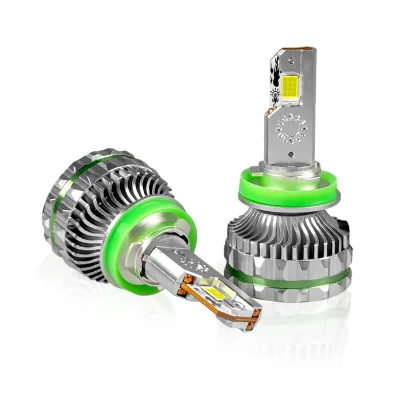
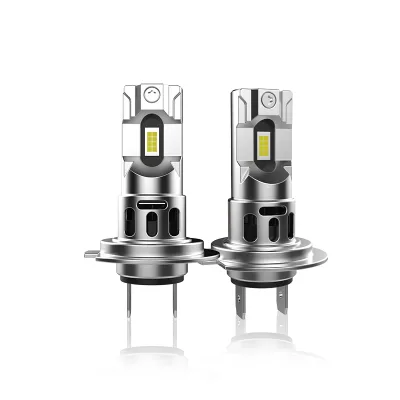
Explore 30 verified listings for Plug and Play Car LED Bulb options featuring H4, H7, and D4S models. Buyers can compare wattage, lumens, and waterproof ratings to find suitable replacements for dipped headlights and high beams.
Key considerations
Products List


Plug and Play Car LED Bulb D4s D4r 90W 10000lm Headlight Automotive LED Bulb
$17.00 - $20.00
MOQ: 10 Sets

Wireless Plug and Play Halogen Replacement Light Kit 9012 Hir2 Car LED Light Bulb
$10.00 - $12.00
MOQ: 100 Sets


12V Auto LED Light H11b LED Headlight Bulb Plug and Play Halogen Replacement
$10.00 - $11.00
MOQ: 50 Sets


1: 1 Size H4 H7 LED Car Headlight Bulbs 90W 9000lm Plug and Play Conversion Kit
$10.00 - $11.50
MOQ: 100 Pieces


Super Bright H11 LED Headlight Car Light Bulb for Car Canbus Plug and Play
$6.70 - $7.00
MOQ: 200 Pieces




Comprehensive Sourcing Guide
Strategic Sourcing Guide for Plug-and-Play LED Headlight Bulbs
The global automotive lighting market has seen a significant shift toward LED technology, driven by the demand for enhanced visibility, energy efficiency, and modern aesthetics. For procurement professionals and B2B buyers, the term "Plug and Play Car LED Bulb" represents a specific category of aftermarket lighting solutions designed to replace traditional halogen units without requiring complex wiring modifications. Sourcing these components requires a disciplined approach to technical verification, compliance assessment, and supply chain reliability. This guide outlines the critical factors for evaluating LED headlight bulbs, drawing on observed market data and standard industry practices to ensure a robust procurement strategy.
Technical Specifications and Performance Metrics
When evaluating plug-and-play LED bulbs, the primary focus must be on the alignment between the bulb's technical specifications and the vehicle's electrical system. The most common operating voltage for automotive lighting is 12V, a standard observed across the majority of available products. However, power consumption varies significantly based on the intended application and brightness requirements. Market observations indicate power ratings ranging from 24W to 60W per pair, with individual bulb wattages typically cited as 35W, 40W, or 50W. Buyers must verify that the selected wattage does not exceed the vehicle's electrical capacity to prevent overheating or fuse blowouts.
Light output is another critical parameter, often measured in lumens. High-performance units in the current market demonstrate lumen outputs ranging from 4,200lm to 16,000lm per pair, depending on the LED quantity and chip efficiency. The specific LED chip technology used is a key determinant of performance. Common chip types observed include the 3570 and 7545 models, as well as specialized chips like the Phi-Zes. The quantity of LEDs per bulb also varies; some models utilize 2 or 4 chips, while high-output variants may contain up to 12 LEDs to achieve maximum brightness.
Thermal management is essential for longevity. The working temperature range for these components typically spans from -40°C to +80°C, ensuring functionality in extreme climates. To maintain this range, many modern bulbs incorporate active cooling systems, such as integrated fans, which are explicitly noted in high-specification models. The physical construction often involves an aluminum light body material, which aids in heat dissipation. Furthermore, the beam angle is a crucial optical specification; a 360-degree beam angle is frequently cited, indicating omnidirectional light distribution, though specific headlight applications may require focused beam patterns to avoid glare for oncoming traffic.
Compliance and Certification Verification
In the automotive aftermarket, regulatory compliance is non-negotiable. Buyers must prioritize products that carry recognized safety certifications. The E-mark certification is a widely observed standard for European markets, indicating that the product meets specific safety and environmental requirements. Additionally, the DOT (Department of Transportation) certification is critical for products intended for the North American market. Some suppliers list compliance with both CE and RoHS standards, which address electromagnetic compatibility and the restriction of hazardous substances, respectively.
It is imperative to verify the certification status for each specific model before placing an order. While some products in the supply chain are listed with E-mark, DOT, CE, and RoHS, others may only possess a subset of these. Procurement teams should not assume that a supplier's entire catalog is fully certified. The presence of a certification mark on a product listing should be treated as an observation that requires validation against the specific batch being purchased. Buyers should request valid certification documents from the supplier to ensure that the goods delivered match the claimed standards.
Cost Drivers and Pricing Dynamics
The pricing of LED headlight bulbs is influenced by several variables, including the complexity of the LED chip, the quality of the heat sink material, and the level of certification. The observed market price range for these products spans from $0.09 to $40 per unit. This wide disparity reflects differences in quality tiers, from basic replacement units to premium models with advanced thermal management and higher lumen outputs.
The Minimum Order Quantity (MOQ) is another significant cost driver. Market data shows an MOQ range from 1 to 1,000 units. For small-scale retailers or testing purposes, suppliers offering low MOQs are essential. However, for large-scale procurement, negotiating a lower unit price through higher volume orders is standard practice. The packaging type also impacts the final cost; products are typically shipped in color boxes, gift boxes, or bulk packing, with more elaborate packaging often correlating with higher-end product lines. Buyers should factor in the cost of packaging when calculating the total landed cost, especially for retail-ready products.
Typical Applications and Compatibility
Plug-and-play LED bulbs are designed for a wide array of vehicle types, but compatibility is not universal. The most common bulb models observed in the market include H4, H7, H11, H8, D4S, and H7L. Each model corresponds to a specific socket and vehicle application. For instance, the H4 model is frequently used for dual-function headlight systems (dipped and high beam), while H7 is often dedicated to dipped headlights. The H11 and H8 models are commonly found in fog light or low-beam applications.
Specific vehicle manufacturers are also associated with certain bulb types. For example, Volkswagen vehicles are noted to utilize specific LED configurations, such as the M3-H8 model. When sourcing, buyers must ensure that the bulb model matches the vehicle's original equipment manufacturer (OEM) specifications. Customization is available for many suppliers, allowing for tailored solutions to fit specific vehicle makes or unique lighting requirements. However, the "plug-and-play" nature implies that no wiring harness modifications should be necessary; if a vehicle requires a decoder or resistor to prevent error codes, the product may not be truly plug-and-play for that specific application.
Supplier Evaluation and Quality Assurance
Selecting a reliable supplier is paramount for maintaining product quality and supply chain continuity. Buyers should evaluate suppliers based on their ability to provide consistent product attributes, such as waterproof ratings and material quality. Waterproofing is a critical feature, with observed ratings ranging from IP65 to IP67. An IP67 rating indicates that the product is dust-tight and can withstand temporary immersion in water, which is superior to an IP65 rating that only protects against water jets.
Quality control measures should be a central part of the supplier evaluation process. Buyers must verify the consistency of the LED chip quality and the durability of the aluminum housing. The color temperature is another quality indicator, with standard values observed at 6000K and 6500K, providing a crisp white light. However, buyers should be cautious of claims regarding color temperature stability over time. The working temperature range of -40°C to +80°C should be maintained consistently across all units.
Suppliers should also demonstrate transparency regarding their production standards. The observation of specific product standards, such as 352530cm for packaging dimensions, suggests a level of standardization in logistics. Buyers should request samples to test the actual performance of the bulbs, including beam pattern accuracy and heat dissipation efficiency. It is essential to treat product attributes as observations rather than absolute guarantees for every unit, as manufacturing variations can occur.
Long-Term Procurement Considerations
Sourcing LED bulbs is not a one-time transaction but a long-term relationship that requires ongoing management. The availability of customization options is a key factor for long-term partnerships, allowing buyers to adapt products to changing market demands or specific vehicle models. The lead time and location of the supplier, typically China, should be factored into inventory planning. While specific lead times are not provided in the current data, buyers should establish clear expectations regarding production and shipping schedules to avoid stockouts.
Sustainability and environmental compliance are increasingly important. Products adhering to RoHS standards ensure that hazardous materials are minimized, aligning with global environmental regulations. The use of aluminum for the light body material also supports recyclability. Buyers should consider the total cost of ownership, including the potential for warranty claims or returns due to premature failure. Establishing a clear quality assurance protocol with the supplier, including regular audits and performance testing, will help mitigate these risks.
Summary of Key Product Attributes
To facilitate quick reference during the sourcing process, the following table summarizes the key technical and compliance attributes observed in the market for plug-and-play LED bulbs. This data serves as a benchmark for buyers to compare potential suppliers and products.
| Attribute Category | Observed Specifications | Notes for Verification |
|---|---|---|
| Voltage | 12V | Standard for most automotive applications. |
| Power | 24W - 60W (Pair) / 35W - 50W (Bulb) | Verify against vehicle electrical capacity. |
| Lumen Output | 4,200lm - 16,000lm | Higher lumens do not always equate to better beam pattern. |
| LED Chip | 3570, 7545, Phi-Zes | Check chip quality and heat dissipation capabilities. |
| Waterproof Rating | IP65, IP67 | IP67 is preferred for extreme weather conditions. |
| Certifications | E-mark, DOT, CE, RoHS | Must match target market regulations. |
| Working Temp | -40°C to +80°C | Critical for performance in extreme climates. |
| Color Temperature | 6000K, 6500K | Standard for white light; verify consistency. |
| Beam Angle | 360 Degree | Ensure focus matches vehicle headlight reflector design. |
| Material | Aluminum (Light Body) | Essential for thermal management. |
| Packaging | Color Box, Gift Box | Affects retail presentation and shipping costs. |
| Origin | China | Verify logistics and lead times. |
By adhering to these guidelines and rigorously verifying the provided specifications, buyers can navigate the complex landscape of LED headlight sourcing effectively. The focus on technical accuracy, regulatory compliance, and supplier reliability ensures that the procured products meet the high standards required for automotive safety and performance.
FAQs
What certifications are available for these LED bulbs?
Many models carry E-mark certification for European safety standards. Some units also include DOT approval for North America, along with CE and RoHS compliance for environmental safety. Always verify specific batch documents before ordering.
Which voltage do these plug and play car led bulbs operate on?
These bulbs operate on a standard 12V automotive electrical system. This voltage is consistent across the observed product range to ensure compatibility with most vehicle lighting circuits without requiring complex wiring modifications.
How waterproof are the LED headlight bulbs?
Waterproof ratings range from IP65 to IP67 depending on the specific model. An IP67 rating ensures protection against dust and temporary water immersion, making them suitable for extreme weather conditions during operation.
Can I customize the packaging for these LED bulbs?
Customization is available for many suppliers to meet specific branding needs. Products typically come in color boxes or gift boxes, but buyers can request tailored packaging solutions to suit retail or wholesale requirements.
What is the minimum order quantity for these bulbs?
The minimum order quantity ranges from 1 to 1000 units per supplier. Low MOQs allow for small-scale testing, while higher volumes often secure better unit pricing for large-scale procurement needs.
Which LED chip types are used in these bulbs?
Common chip types include 3570, 7545, and specialized Phi-Zes models. The quantity of LEDs per bulb varies from 2 to 12 chips, directly influencing the total lumen output and brightness performance.
What is the working temperature range for these bulbs?
The working temperature range spans from -40 degrees to +80 degrees Celsius. This wide range ensures reliable performance in extreme climates, supported by aluminum heat sinks and integrated fans in high-spec models.