Source Polished Petrified Wood Fossil for Home Decor, Office, and Commercial Spaces
Compare 30 listings of Polished Petrified Wood Fossil from global suppliers. Buyers can evaluate crystal images, wooden slices, and stone slabs with varying sizes, weights, and customization options for diverse applications.
Key considerations
Products List
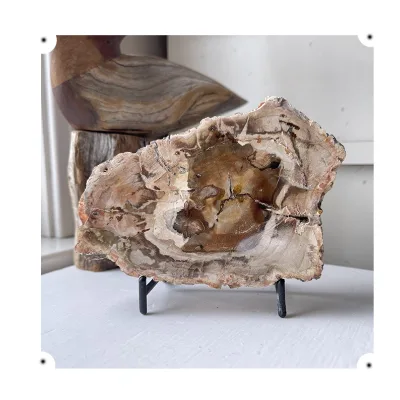
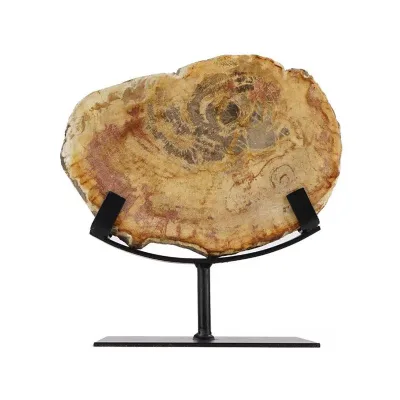


Home Decorative Gemstone Petrified Wood Fossil Wood Kitchen Countertops
$440.00 - $800.00
MOQ: 1 Square Meters


Semi-Precious Stone Brown Fossil Petrified Wood for Interior Wall Decor
$420.00 - $650.00
MOQ: 1 Square Meters

Semi Precious Stone Natural Marble Fossil Wood Stone Reception Desk
$440.00 - $780.00
MOQ: 1 Square Meters
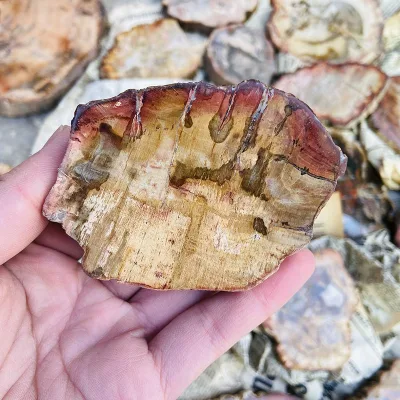
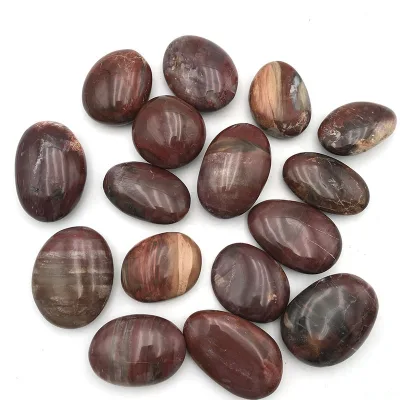
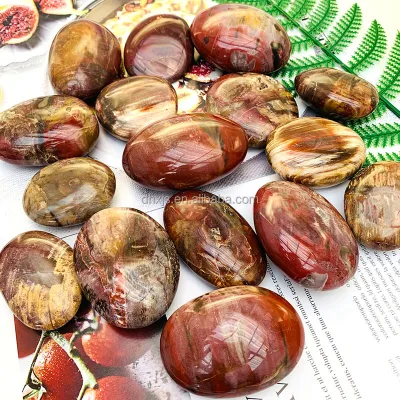
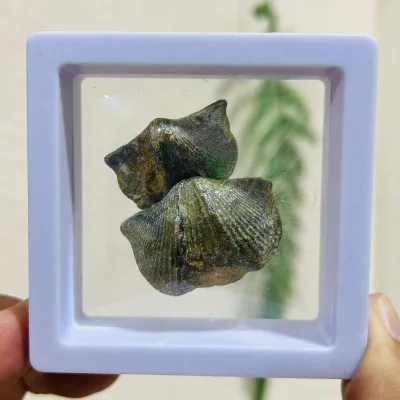


Dinosaur Fossil Molds Museum Dinosaur Skeleton Dinosaur Buried Statue
$300.00 - $8000.00
MOQ: 1 Pieces


Luxury Shiny Beautiful Petrified Fossil Wood Gemstone Slab Backlit for Big Wall Decoration
$450.00 - $800.00
MOQ: 30 Square Meters


Carbonized Poplar Wood Finger Join Board and Poplar Wooden Board Plywood
$499.00 - $559.00
MOQ: 5 Cubic Meter

Comprehensive Sourcing Guide
Strategic Sourcing Guide for Polished Petrified Wood Fossil
Understanding Material Variations and Product Definitions
The term "Polished Petrified Wood Fossil" encompasses a diverse range of products that vary significantly in origin, composition, and intended application. In the current global marketplace, buyers must distinguish between products marketed as "wood fossil," "fossil wooden slice," and "petrified wood" slabs, as these labels often indicate different processing stages and material sources. The supply chain for these items is not monolithic; it includes suppliers from distinct geographical regions such as Jiangsu, China, and Jakarta Raya, Indonesia, each offering unique characteristics.
A critical observation in the current market is the divergence in product attributes. Some listings describe the material as "Crystal Image" or "Crystal" with a "wood fossil" name, suggesting a composite or enhanced product where natural stone is combined with glass or crystal elements. In contrast, other entries explicitly define the material as "Natural Stones" or "5mm Natural Agate with 15mm Glass Base," indicating a layered construction rather than solid petrified wood. Buyers must carefully verify the "Material" field in product specifications. For instance, while some items are described as "Natural Stones" suitable for heavy-duty applications, others are "Wooden fossil slice" items with a "natural colored" finish. The distinction between a solid slab and a composite item is vital for structural integrity and aesthetic expectations.
Furthermore, the "Product Type" varies from "Crystal Image" to "Wooden fossil slice" and "Petrified Wood." This variation affects the sourcing strategy. A buyer seeking a solid, natural stone slab for architectural cladding will have different requirements than a buyer looking for decorative "Fossil wooden slice" items for meditation or interior accents. The "Style" attribute also plays a role, with options ranging from "Love" to "Meditation," which often dictates the shape and finish of the final product. Understanding these semantic nuances prevents the procurement of items that do not meet the functional or aesthetic requirements of the project.
Technical Specifications and Dimensional Standards
When evaluating Polished Petrified Wood Fossil products, technical specifications provide the most reliable data for procurement decisions. Dimensions, thickness, and finishing techniques are non-negotiable factors that influence both the cost and the feasibility of installation. The market offers a wide spectrum of sizes, with observed ranges extending from small decorative slices to large architectural slabs.
For decorative items, such as "Fossil wooden slice" products, the dimensions are often compact. Specific listings indicate sizes such as "L16-19cm / W1.4-1.8cm / H25-28cm" or "7-45cm" in length. These items are typically packaged in single units with a "Single package size" of approximately 25X19X13 cm or 20X15X15 cm. The "Single gross weight" for these smaller units is generally light, ranging from 1.250 kg to 1.45 kg, which simplifies logistics but requires careful handling to prevent breakage during transit.
In contrast, larger architectural applications require adherence to specific standard dimensions. Some suppliers offer "Petrified Wood" slabs with standard sizes of "2440x1220mm" or "3000x1500mm," with custom options available. The thickness for these larger slabs is a critical specification; one observed standard is "20mm," which is suitable for medium load-bearing applications. However, buyers must verify the thickness for every specific order, as composite products may have different structural profiles, such as a "5mm Natural Agate with 15mm Glass Base" configuration.
The finishing technique is equally important. The market features both "Carved" and "Polished" finishes. "Polished" surfaces are essential for items intended for "Hotel, Bathroom, Kitchen, Commercial" use, where a smooth, reflective surface is required. The "Surface Finishing" attribute confirms the "Polished" status for many high-end items. Additionally, the "Carving Type" can be "Engraving," which adds a layer of customization for branding or decorative purposes. Buyers should confirm that the "Technique" matches the desired aesthetic, as a "Carved" item may not be suitable for a high-traffic floor application where a smooth "Polished" finish is mandatory.
Compliance, Certification, and Safety Verification
Navigating the compliance landscape for petrified wood and fossil products requires a rigorous approach to verification, as the market contains a mix of natural stone and composite materials. While some background information may reference broad standards like ISO 27001, this is typically an information security standard and not a direct indicator of material safety or stone quality. Buyers should not assume that a supplier holds specific certifications unless explicitly stated in the product details.
The primary compliance focus should be on the "Production Place" and the "Place of Origin." Products originating from "Guangdong" or "Jiangsu, China" and "Jakarta Raya, Indonesia" may be subject to different export regulations and phytosanitary requirements, especially if the material is treated or processed. For instance, "Seaworthy Wooden Crated with Fumigation" is a specific packaging standard mentioned for certain "Petrified Wood" products. This indicates that the packaging itself, not necessarily the stone, requires fumigation to meet international shipping standards. Buyers must verify if the "prod_packing" details include necessary fumigation certificates to avoid customs delays.
Safety and structural compliance are paramount for commercial applications. The "Load-Bearing" capacity is listed as "Medium" for some items, which is a critical data point for applications like flooring or countertops. However, this attribute should not be taken as a universal guarantee. Buyers must request specific test results or engineering data from the supplier to confirm that the product can withstand the intended load, particularly for "Commercial" and "Hotel" environments.
Furthermore, the "Customization" availability for logos and designs introduces a layer of compliance regarding intellectual property and material safety. If a supplier offers "Accept Custom Logo" services, the buyer must ensure that the inks or adhesives used for the customization are non-toxic and compliant with local regulations, especially for products used in "Bathroom" or "Kitchen" settings where food contact or skin contact might occur.
Cost Drivers and Pricing Dynamics
The pricing of Polished Petrified Wood Fossil products is influenced by a complex array of factors, including material rarity, processing complexity, and logistics. The observed price range in the market is extremely wide, spanning from $0.90 to $8,000 USD. This vast disparity reflects the difference between small, mass-produced decorative slices and large, custom-cut architectural slabs.
The "MOQ" (Minimum Order Quantity) is a significant cost driver. Listings show an MOQ range from "1PCS" to "200" units, with specific items requiring a "2kg" minimum. For buyers seeking small quantities, the unit cost will likely be higher due to the fixed costs of processing and packaging. Conversely, bulk orders may benefit from economies of scale, but the buyer must be prepared to meet the higher volume thresholds. The "Selling Units" are often listed as "Single item," which suggests that the pricing model is flexible but may vary based on the total volume ordered.
Material composition is another key determinant of cost. Products described as "Natural Stones" or "5mm Natural Agate with 15mm Glass Base" may command different price points compared to those labeled simply as "wood fossil" or "Crystal Image." The "Polished" finish adds labor costs, as does the "Carved" or "Engraving" technique. Additionally, the "Size" of the product directly impacts the price; larger slabs with standard dimensions like "2440x1220mm" are more expensive than smaller, cut-to-size pieces.
Logistics and packaging also contribute to the final cost. The "Single gross weight" and "Single package size" determine shipping expenses. Heavier items with larger packaging dimensions will incur higher freight charges. The requirement for "Seaworthy Wooden Crated with Fumigation" adds to the packaging cost but is essential for international shipping. Buyers should factor these logistics costs into their total budget, as they can significantly affect the landed cost of the product.
Typical Applications and Usage Scenarios
Polished Petrified Wood Fossil products are versatile materials used across a variety of sectors, from residential interiors to large-scale commercial projects. The "Usage" field in product specifications explicitly lists "Hotel, Bathroom, Kitchen, Commercial," indicating their suitability for high-traffic and high-end environments.
In commercial settings, the "Medium" load-bearing capacity makes these products ideal for flooring, wall cladding, and reception desks. The "Polished" surface finish provides a luxurious aesthetic that is easy to clean and maintain, which is crucial for "Hotel" and "Bathroom" applications. The "Style" attributes, such as "Meditation" or "Love," suggest that these materials are also used for decorative accents, such as feature walls, tabletops, or sculptural elements.
For residential applications, the "Fossil wooden slice" items are often used as decorative pieces. Their "natural colored" finish and unique patterns make them suitable for "Meditation" spaces or as artistic focal points in living rooms. The "Carved" and "Engraving" techniques allow for personalized designs, making these items popular for custom home decor.
The "Stone Form" attribute, listed as "Cut-to-Size," highlights the adaptability of these materials. Buyers can specify dimensions to fit unique architectural requirements, whether for a small bathroom vanity or a large commercial lobby floor. The "Customization" availability further enhances their utility, allowing for branding or specific design elements to be integrated into the product.
Supplier Evaluation and Quality Control Protocols
Selecting the right supplier for Polished Petrified Wood Fossil products requires a thorough evaluation of their capabilities, reliability, and quality control measures. Buyers should prioritize suppliers who provide clear and detailed product specifications, including "Model Number," "Size," "Material," and "Technique." The presence of specific model numbers like "30SM21031B00120," "SM015," "MNPF01," and "MNGAPW02" indicates a level of organization and standardization in the supplier's operations.
Quality control should focus on verifying the "Surface Finishing" and "Color" consistency. The "Color" attribute often lists a range of options, such as "wood fossil slab,1,2,3,4,5,6,7,8,9,10,11,12,13,14,15" or "Style 1 (arc-shaped),Style 2 (As Pic),4." Buyers must request physical samples or high-resolution images to ensure that the color and finish match their expectations. The "Natural colored" attribute suggests that the material retains its natural appearance, but variations are inevitable in natural stone products.
Packaging is another critical aspect of supplier evaluation. The "Packaging Details" and "Safe Packaging" attributes indicate that the supplier takes measures to protect the product during transit. However, buyers should verify the "Single gross weight" and "Single package size" to ensure that the packaging is robust enough to prevent damage. The "Seaworthy Wooden Crated with Fumigation" option is a strong indicator of a supplier's ability to handle international shipping requirements.
Finally, buyers should assess the supplier's responsiveness to "Customization" requests. The ability to accept "Custom Logo" and provide "Cut-to-Size" options demonstrates flexibility and a customer-centric approach. Suppliers who offer these services are more likely to meet the specific needs of the buyer and deliver high-quality results.
Long-Term Procurement and Supply Chain Considerations
Sourcing Polished Petrified Wood Fossil products is a long-term endeavor that requires careful planning and relationship management. The variability in "Place of Origin" and "Production Place" means that buyers must be prepared for potential supply chain disruptions. Products from "Jiangsu, China" and "Jakarta Raya, Indonesia" may have different lead times and logistical challenges.
Buyers should establish clear communication channels with suppliers to ensure consistent quality and timely delivery. The "MOQ" and "Selling Units" should be aligned with the buyer's inventory needs to avoid overstocking or stockouts. The "Customization" options should be finalized early in the procurement process to avoid delays.
Long-term success also depends on maintaining a relationship with suppliers who can provide consistent "Polished" finishes and "Natural Stones" quality. Regular quality audits and sample checks are essential to ensure that the products continue to meet the buyer's standards. By focusing on these long-term considerations, buyers can build a reliable supply chain for Polished Petrified Wood Fossil products that supports their business goals.
FAQs
What is the minimum order quantity for Polished Petrified Wood Fossil?
The minimum order quantity varies by product, ranging from 1 piece to 2 kilograms. Some listings specify a 2kg minimum, while others allow single item purchases, so buyers must check the specific model number for exact thresholds.
Which materials are used to create Polished Petrified Wood Fossil products?
Products are made from natural stones, crystal, or agate with glass bases. Specifications list materials such as 5mm natural agate with a 15mm glass base or solid crystal, indicating that some items are composite rather than pure petrified wood.
How are Polished Petrified Wood Fossil products packaged for shipping?
Packaging includes safe carton packing or seaworthy wooden crates with fumigation. Specific details show single package sizes around 20x15x15 cm or 25x19x13 cm, with gross weights typically between 1.25 kg and 1.45 kg for individual units.
Can buyers request custom logos on Polished Petrified Wood Fossil items?
Yes, customization is available for logos and designs on many products. Suppliers accept custom logo requests, allowing buyers to add branding to items like the wood fossil slab or wooden slice while maintaining the polished or carved finish.
What are the standard sizes for Polished Petrified Wood Fossil slabs?
Standard slab sizes include 2440x1220mm and 3000x1500mm with custom options available. Smaller decorative slices range from 7 to 45 cm in length, with thicknesses like 20mm for larger architectural applications and varying dimensions for smaller slices.
Where are Polished Petrified Wood Fossil products typically manufactured?
Manufacturing locations include Jiangsu and Guangdong in China, as well as Jakarta Raya in Indonesia. The place of origin affects shipping logistics, with some products requiring specific fumigation standards for international transport from these regions.