Source Portable Commercial Mist Spray Fan for Hotel, Outdoor, Garage
Source the Portable Commercial Mist Spray Fan for diverse cooling needs. Compare 30 models with features like 230W power, 41L capacity, and metal or plastic construction. Options include mechanical control, 3-blade designs, and custom logo services for hotels, households, and commercial spaces.
Updated
Key considerations
Products List
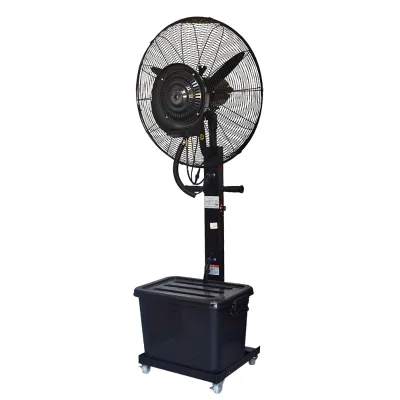
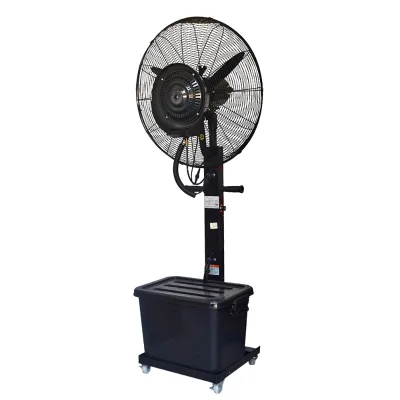
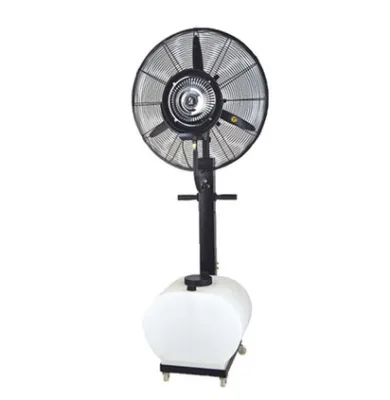


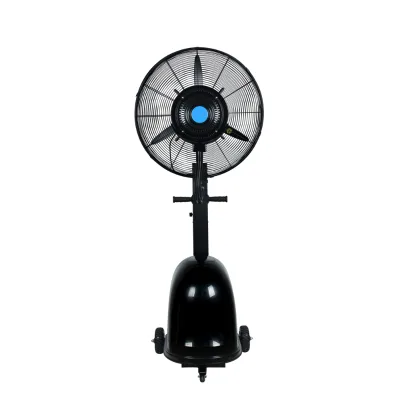


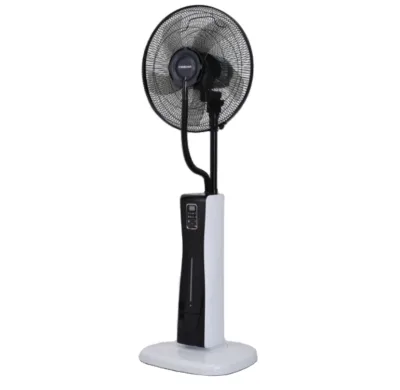
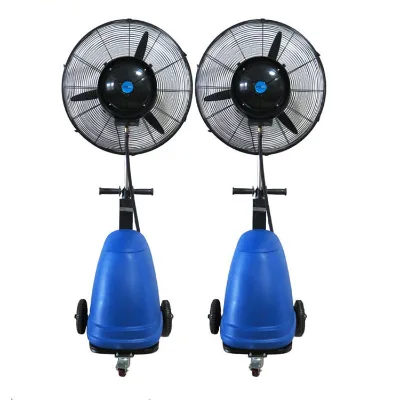
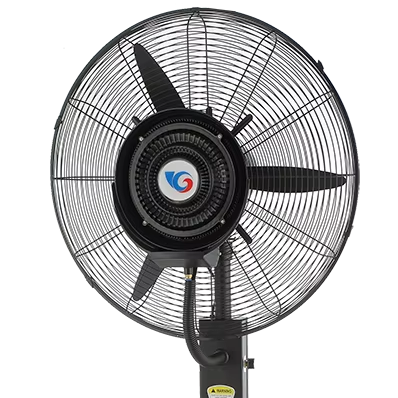
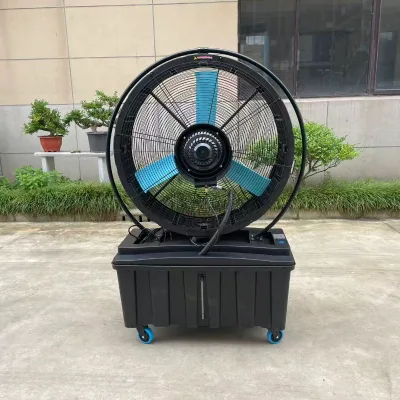


Spraying Cooling Portable Cooling Water 16inch Mist Stand Fan with Remote
$40.00 - $60.00
MOQ: 10 Pieces


Rechargeable Mist Spray Fan Perfect for Warm Weather Activities and on The Go Cooling
$33.80 - $35.50
MOQ: 1000 Pieces

Mist Spray Cooling Fan for Cool Feelingable Outdoor Experiences in The Heat of Summer
$33.80 - $35.50
MOQ: 1000 Pieces


26 Inches Standing Mist Fan Water Spray /Portable Mist Fan/ Pedestal Fan
$70.00 - $88.00
MOQ: 100 Pieces
Comprehensive Sourcing Guide
Portable Commercial Mist Spray Fan Sourcing Guide
Sourcing portable commercial mist spray fans requires a clear understanding of the distinct product categories available in the current market. Buyers must distinguish between high-capacity floor-standing units designed for large outdoor or commercial spaces and compact, ceiling-mounted or lightweight models intended for indoor hotel or household use. The observed listings reveal a wide variance in physical dimensions, with some units measuring up to 1750mm in length and weighing over 16kg, while others are significantly smaller at approximately 3.55kg. This disparity indicates that procurement teams must first define the specific deployment environment to select the appropriate form factor, as a unit suitable for a garage may be entirely inappropriate for a hotel lobby or office setting.
The functional scope of these devices also varies significantly, ranging from simple air cooling fans to complex water mist systems with substantial water tank capacities. Some observed models feature a 41-liter capacity, suggesting they are built for extended operation in high-traffic areas without frequent refilling, whereas other listings describe basic air cooling functions without explicit misting capabilities. Procurement specialists should verify whether the "mist" feature is integral to the core design or an optional add-on, as this distinction impacts plumbing requirements, maintenance schedules, and overall operational complexity. Understanding these functional differences is critical to avoiding mismatches between supplier claims and actual site requirements.
Product Scope and Observed Listing Signals
The current market landscape for portable commercial mist spray fans presents a diverse array of product attributes that buyers must carefully evaluate. Observed listings indicate that products are marketed for applications including hotels, outdoor spaces, garages, commercial venues, and households. This broad applicability suggests that manufacturers produce versatile units, but it also necessitates rigorous verification of specific use-case compatibility. For instance, a unit with a 230W power rating and a 40 dB noise level might be suitable for a quiet hotel lobby but could be underpowered for a large, open-air garage or industrial warehouse. Buyers should not assume that a single model satisfies all potential applications listed in a supplier’s catalog.
Furthermore, the physical specifications observed in listings highlight significant variability in size, weight, and packaging. Dimensions range from compact packages measuring 53x46x40 cm to larger units spanning 165x25x165 cm, with gross weights varying from 3.55 kg to 16.75 kg. These differences directly impact shipping costs, storage requirements, and installation logistics. Procurement teams must account for these physical constraints when planning distribution channels or final site installation. The presence of custom logo options and various color choices, such as black or custom colors, indicates that branding is a common requirement for commercial buyers, adding another layer of complexity to the sourcing process that must be addressed early in the negotiation phase.
Technical Specifications to Verify
When evaluating technical specifications, buyers must prioritize power consumption, airflow efficiency, and motor type to ensure operational reliability. Observed data points to power ratings of 230W, 260W, and 350W, with a voltage range of 220/110V and frequencies of 50/60Hz. These variations require careful matching to local electrical infrastructure to prevent compatibility issues. Additionally, the airflow rate of 135m³/min and wind speed settings of three levels provide a baseline for cooling performance, but buyers should verify if these metrics are measured under standard conditions or idealized laboratory settings. The distinction between AC motors and other types is also crucial, as AC motors typically offer different durability and maintenance profiles compared to DC alternatives.
Noise levels and oscillation features are equally critical for user comfort, particularly in hospitality or office environments. Listings indicate noise levels of 40 dB and above, which may be acceptable for outdoor or garage use but could be disruptive in quiet indoor spaces. Buyers must confirm whether the units are non-oscillating or if oscillation is an optional feature, as this affects the coverage area and uniformity of cooling. The number of blades, typically three, influences both airflow dynamics and noise generation. Procurement teams should request detailed technical datasheets that specify these parameters under load to ensure that the selected model meets the acoustic and performance requirements of the intended deployment site.
Compliance and Safety Documentation
Safety and compliance documentation are paramount when sourcing electrical appliances for commercial use, particularly those involving water mist systems. Buyers must verify that suppliers provide evidence of adherence to relevant electrical safety standards, such as UL 507 for fans, although specific certification status should be confirmed directly with the manufacturer. The presence of a one-year warranty and after-sales services like return and replacement or free spare parts indicates a baseline level of supplier confidence, but these terms should be explicitly detailed in the purchase agreement. Procurement teams should ensure that the warranty covers both motor failures and misting mechanism issues, as these are common points of failure in such devices.
Additionally, buyers must assess the electrical safety features built into the units, including grounding, insulation, and protection against water ingress. Since these devices combine electricity and water, the risk of short circuits or electrical shock is inherent, making robust safety certifications essential. Buyers should request test reports or compliance certificates from accredited laboratories to verify that the products meet local regulatory requirements in the destination country. The absence of remote controls in some observed models suggests a focus on mechanical reliability, but buyers should still verify that the mechanical controls are durable and resistant to wear and tear in high-use commercial environments.
Cost Drivers and Commercial Terms
Cost structures for portable commercial mist spray fans are influenced by material quality, power specifications, and customization requirements. Observed price ranges vary significantly, reflecting differences in build quality, motor type, and additional features like water tank capacity. Buyers should analyze the cost per watt of cooling power and the durability of materials, such as metal versus plastic construction, to determine the true value proposition. The MOQ ranges from 3 to 1200 units, allowing for flexibility in order sizes, but larger orders may offer better unit pricing. Procurement teams should negotiate tiered pricing structures that align with their projected volume needs to optimize total cost of ownership.
Shipping and logistics costs are another major component of the total landed cost, driven by the substantial weight and dimensions of some units. With single gross weights ranging from 3.55 kg to 16.75 kg and package sizes up to 165x25x165 cm, freight charges can significantly impact the final price. Buyers should compare FOB and CIF pricing options and consider the efficiency of packaging, such as corrugated boxes, in minimizing damage during transit. Additionally, customization costs for logos or graphic designs should be factored into the budget, as these services often incur setup fees and minimum order requirements that can affect the overall economics of the procurement.
Supplier Qualification and Quality Control
Supplier qualification is a critical step in ensuring the reliability and consistency of portable commercial mist spray fans. Buyers should verify the supplier’s place of origin, with many listings indicating production in Zhejiang, China, a known hub for such manufacturing. However, geographic origin alone does not guarantee quality, so procurement teams must conduct thorough due diligence on the supplier’s production capabilities, quality management systems, and export experience. Requesting references from previous clients and conducting factory audits, if feasible, can provide valuable insights into the supplier’s operational standards and capacity to meet large orders.
Quality control measures should be established before production begins, including clear specifications for materials, dimensions, and performance metrics. Buyers should define acceptable tolerances for weight, size, and noise levels, and require pre-shipment inspections to verify compliance. The availability of free spare parts and return and replacement services suggests that suppliers are prepared to handle defects, but buyers should ensure that these services are backed by a clear and responsive support process. Establishing a robust quality control protocol helps mitigate the risk of receiving substandard products and ensures that the procurement team can maintain consistent supply chain performance.
Long-Term Procurement Checks
Long-term procurement success depends on establishing ongoing performance monitoring and supplier relationship management. Buyers should track key performance indicators such as defect rates, warranty claim frequency, and after-sales service responsiveness to evaluate supplier reliability over time. Regular reviews of product performance in the field can identify emerging issues, such as motor failures or misting mechanism clogs, allowing for proactive adjustments to specifications or supplier selection. Maintaining open communication with suppliers regarding feedback and market trends can also drive continuous improvement in product design and quality.
Additionally, buyers should periodically reassess the total cost of ownership, including energy consumption, maintenance costs, and replacement part availability. As technology evolves, newer models may offer improved efficiency or features that justify upgrading existing inventory. Procurement teams should stay informed about industry developments and regulatory changes that may impact product compliance or performance standards. By maintaining a strategic approach to supplier management and product evaluation, buyers can ensure that their Portable Commercial Mist Spray Fan procurement remains aligned with business objectives and operational needs over the long term.
FAQs
What is the power consumption of the Larissa spray fan?
The Larissa spray fan operates at 230W, with some models reaching up to 350W. This electric power source ensures efficient cooling for commercial and household use. The device supports 220/110V voltage and 50/60Hz frequency, making it versatile for different regional electrical standards while maintaining stable performance.
Can the fan be customized with a specific logo?
Yes, the product offers logo and graphic design customization services. Buyers can request specific branding to be applied to the black or custom-colored units. This feature is ideal for hotels, offices, and outdoor venues seeking branded cooling solutions that align with their corporate identity or aesthetic requirements.
What is the warranty period for this mist fan?
The warranty period is one year. After-sales service includes return and replacement options, as well as free spare parts availability. This support structure ensures that commercial and household users can maintain their cooling systems effectively, minimizing downtime and ensuring long-term reliability for the metal-built air cooling fans.
How loud is the operation of the floor mist fan?
The noise level is 40 dB and above. This acoustic output is suitable for various environments including hotels, garages, and commercial spaces. The mechanical control type and AC motor contribute to this operational sound profile, providing consistent airflow without excessive disturbance in settings where moderate background noise is acceptable.
What are the available size options for the spray fan?
Available sizes include 1650*610mm, 1750*710mm, and 1750*810mm. These dimensions correspond to models 550, 650, and 750. The single package size varies, with one option measuring 61X25X165 cm. These specifications allow buyers to select the appropriate unit size based on their specific installation space and airflow requirements.
Is remote control functionality available for this product?
No, remote control functionality is not available. The fan uses a mechanical control type for operation. This design focuses on direct user interaction for adjusting settings. The product relies on its physical controls rather than electronic remotes, ensuring straightforward operation for the three wind speed settings and water mist features.