Source Portable Reflective Strip Emergency Mattress for Ambulance Rescue
Compare 30 Portable Reflective Strip Emergency Mattress options from verified suppliers. Buyers can evaluate specifications like weight, load capacity, and certifications to find the right solution for hospital, ambulance, or outdoor rescue applications.
Key considerations
Products List


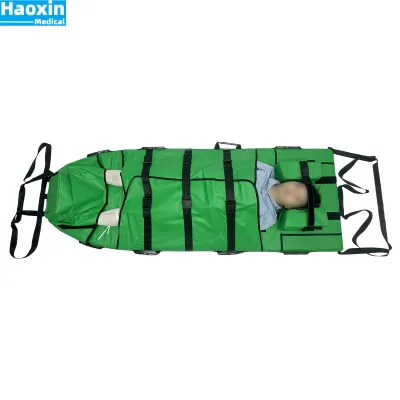
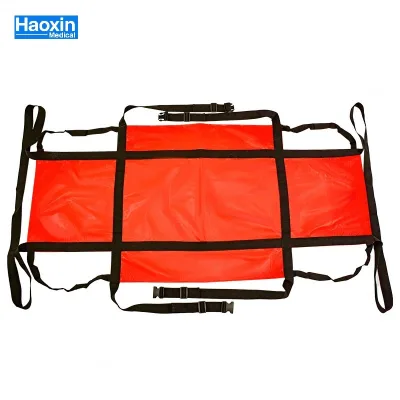


High Quality Alternating Pressure Relief Overlay Medical Tubular Mattress
$47.00 - $53.00
MOQ: 100 Sets


Travel Medical Mattress for Outdoor Camping with Portable Storage Bag Included
$1.00 - $999.00
MOQ: 1 Pieces

Lightweight Medical Mattress for Emergency Use with Compressed Box Packaging
$1.00 - $999.00
MOQ: 1 Pieces

Fire Retardant Medical Mattress Certified by BS7177 for Safety Assurance
$1.00 - $999.00
MOQ: 1 Pieces


Heavy Duty Boarding School Mattress with Fire Retardant En597 Certification
$1.00 - $999.00
MOQ: 1 Pieces

Physical Therapy Strip Mattress with CPR Inflatable Tube Air Mattress for Hospital
$27.00 - $28.00
MOQ: 100 Pieces
Comprehensive Sourcing Guide
Strategic Sourcing Guide for Portable Reflective Strip Emergency Mattresses
Understanding Product Variants and Core Specifications
When sourcing a Portable Reflective Strip Emergency Mattress, buyers must first navigate the significant diversity in product definitions found within the global supply chain. The term "emergency mattress" often encompasses a spectrum of devices ranging from rigid transport stretchers to flexible vacuum bags and foldable rescue mats. In the current market data, specific product attributes reveal distinct categories that serve different operational needs. For instance, one segment of the market features "Stair Stretcher" models constructed from canvas materials, designed for navigating narrow or obstructed pathways. These units typically present a folded configuration with a specific footprint, such as 1977023cm when unfolded, and weigh approximately 8kg. Conversely, another distinct category includes "Vacuum Stretcher" products, often marketed as vacuum bags for mattresses, which utilize a plastic or specialized fabric material to immobilize patients. These units may feature a size of 210*110cm and are designed to be folded, offering a different approach to patient stabilization compared to rigid frames.
The presence of "reflective strips" is a critical safety feature for visibility in low-light environments, yet the specific inclusion of this feature varies by manufacturer and model. Buyers should verify the physical presence of high-visibility materials on the product surface, as this is often a standard requirement for emergency medical services (EMS) and search and rescue operations. The material composition is another primary differentiator. While some stretchers utilize durable canvas for breathability and ease of cleaning, others rely on plastic or composite materials for vacuum functionality. The "Foldaway Stretcher" category, for example, highlights a configuration that prioritizes compact storage, with a net weight as low as 4.2kg and a maximum load-bearing capacity of 250kg. This variation in load capacity and weight is essential for determining the suitability of the equipment for specific rescue scenarios, whether for urban search and rescue or rural ambulance transport.
Compliance and Certification Verification
In the medical and emergency equipment sector, compliance with international standards is not merely a regulatory formality but a prerequisite for operational safety and liability protection. The supplied market data indicates that a significant portion of available products carry the CE certification, which is mandatory for selling medical devices within the European Economic Area. Some listings further elaborate on their compliance status by including FDA and ISO certifications, suggesting a broader market reach and adherence to quality management systems. For instance, certain vacuum stretcher models explicitly list "CE, FDA, ISO" as their certification profile, while others may only display "FDA, ISOCE" or standard CE marks.
Buyers must exercise caution when interpreting these certifications. The presence of a certification label on a product listing does not automatically guarantee that the specific unit being purchased meets the latest version of the standard. It is vital to request the specific certificate documents from the supplier to verify the scope of the certification. The data also references specific standards such as EN 533, ISO 14116, and ISO 11612 in the background context, which relate to protective clothing and equipment. While these are not explicitly linked to every product in the provided dataset, they represent the types of standards that a rigorous buyer should inquire about. For example, ISO 11612 pertains to protective clothing against heat and flame, which might be relevant if the emergency mattress is intended for use in hazardous material incidents or fire rescue scenarios. The "Instrument Classification" of Class I, observed in some listings, indicates that the device is non-invasive and does not require a special electrical safety assessment, which is a crucial detail for procurement teams managing inventory for non-hospital settings.
Cost Drivers and Pricing Dynamics
The pricing structure for portable emergency mattresses is influenced by a complex interplay of material costs, manufacturing complexity, and certification requirements. The observed market data reveals a substantial price range, with listed values spanning from $1 to $1,280 USD. This wide disparity suggests that the "Portable Reflective Strip Emergency Mattress" is not a single commodity but a category with varying tiers of quality and functionality. Lower-priced items in this range may correspond to basic vacuum bags or simple canvas stretchers with minimal features, whereas higher-priced units likely include advanced features such as reinforced frames, specialized reflective materials, or comprehensive certification packages.
The Minimum Order Quantity (MOQ) is another significant cost driver. The data shows an MOQ range from 1 piece to 1,000 units. Buyers seeking to test the market or equip a small team can often source individual units with an MOQ of 1, which is supported by the "Maximum Order Quantity" of 1 piece observed in several listings. However, for large-scale procurement, such as outfitting an entire fleet of ambulances or a national emergency response agency, negotiating an MOQ closer to the 1,000-unit threshold may yield better unit economics. The "Customization" attribute, listed as "Available" or "Support" in various product descriptions, also impacts cost. Custom branding, specific color requirements (such as the observed Green, Orange, or Black options), or tailored dimensions can increase the unit price and potentially extend the lead time. Additionally, the "Packing Size" and "Gross Weight" are logistical cost factors; a product with a packing size of 852874.5cm and a gross weight of 11.15kg will incur different shipping costs compared to a more compact unit.
Typical Applications and Operational Context
The utility of a Portable Reflective Strip Emergency Mattress is defined by its intended application environment. The data explicitly mentions "Hospital" as a primary "Using Ambient," indicating that these devices are suitable for clinical settings where patient transfer and immobilization are routine. However, the "Stair Stretcher" and "Vacuum Stretcher" configurations suggest a broader utility in pre-hospital care and disaster response. A stair stretcher, with its specific design for navigating steps, is indispensable in urban environments where elevators are unavailable or during building evacuations. The "Folded" and "Unfolded" states of these products highlight their portability, a critical factor for first responders who must carry equipment over long distances or through difficult terrain.
The "Load-Bearing" capacity is a decisive factor in application selection. Products with a 150kg capacity are suitable for standard adult patients, while those rated for 250kg provide a safety margin for bariatric patients or scenarios involving multiple casualties. The "Shelf Life" of 1 year, noted for certain vacuum bag products, is a critical operational constraint. It implies that these items may have a limited usable lifespan due to material degradation, particularly if they rely on vacuum seals or specific plastic components. Buyers must factor this into their inventory management strategy to ensure that stock remains within its effective period. The "Configuration" of the product, such as "Mattress" for vacuum bags, further dictates its use case, distinguishing it from rigid transport stretchers.
Supplier Evaluation and Sourcing Strategy
Evaluating suppliers for emergency medical equipment requires a focus on reliability, transparency, and technical capability. The "Place of Origin" for the majority of the observed products is Jiangsu, China, a region known for its manufacturing capabilities in medical devices. While this provides a centralized sourcing hub, buyers should not assume uniform quality across all suppliers in this region. The "After-Sale Service" attribute, specifically "Online Technical Support," is a positive indicator of supplier commitment, but it should be supplemented with inquiries about warranty terms. The "Warranty" period of 1 year is standard in the observed data, but buyers should clarify what this warranty covers, including parts, labor, and shipping costs for repairs.
When assessing a potential supplier, the "Condition" of the product is a fundamental check. The data confirms that "New" condition is the standard, but buyers must verify that the products are not refurbished or returned goods. The "Product Name" and "Model Number" (e.g., DT-VMS002, PX-CF01, PX-VS02) serve as unique identifiers that should be cross-referenced with the supplier's technical documentation. A reliable supplier will provide detailed specifications for each model, including the exact dimensions, weight, and material composition. The "Standard Package" or "Carton Box" packing methods should be evaluated for their ability to protect the product during transit, especially given the fragile nature of some vacuum components.
Quality Control and Long-Term Procurement Considerations
Quality control (QC) is paramount when sourcing equipment that will be used in life-critical situations. Buyers should implement a rigorous QC protocol that includes visual inspections for material defects, such as tears in the canvas or cracks in plastic components. The "Number of Belts" varies across products, with observations of three, four, and six belts. This variation affects the stability and security of the patient during transport. A higher number of belts may offer better immobilization but could also add weight and complexity. QC checks should verify that all belts are securely attached and function correctly.
Long-term procurement considerations involve the sustainability of the supply chain and the availability of spare parts. The "Net Weight" and "Gross Weight" differences (e.g., 8kg net vs. 11.15kg gross) indicate the weight of packaging, which is relevant for inventory planning. The "Wheel Size" of 150mm, observed in some models, is a specific detail that affects maneuverability on different terrains. Buyers should ensure that replacement wheels or other wear-and-tear components are available from the supplier. Furthermore, the "Foldable" attribute, marked as "Yes" for certain products, suggests that the design allows for space-saving storage, which is a long-term benefit for facilities with limited storage space.
To ensure long-term value, buyers should establish a relationship with suppliers that offers consistent quality and responsive support. The "Customization" support mentioned in the data can be leveraged to adapt products to specific organizational needs, such as adding specific reflective patterns or branding. However, customization should be approached with a clear understanding of the impact on lead times and costs. Finally, the "Instrument Classification" and "Certification" status should be reviewed periodically to ensure that the products remain compliant with evolving regulations in the buyer's region. By maintaining a proactive approach to quality control and supplier management, organizations can ensure that their emergency equipment remains reliable and effective when it is needed most.
Comparative Analysis of Key Product Attributes
To facilitate a clearer understanding of the market landscape, the following table summarizes the key attributes observed in the supplied product data. This comparison highlights the diversity in specifications, certifications, and configurations available to buyers.
| Attribute Category | Product Type A (Stair Stretcher) | Product Type B (Vacuum Stretcher) | Product Type C (Foldaway Stretcher) |
|---|---|---|---|
| Material | Canvas | Plastic | Plastic |
| Color | Green | Orange | Black |
| Configuration | Folded | Unfolded | Foldable |
| Dimensions (LWH) | 1977023 cm | 210*110 cm (Size) | 2145515.5 cm |
| Weight (Net) | 8 kg | Not specified | 4.2 kg |
| Load Capacity | 150 kg | Not specified | 250 kg |
| Belts | Three | Six | Four |
| Certification | CE | CE, FDA, ISO | FDA, ISOCE |
| Warranty | 1 Year | Not specified | Not specified |
| Origin | Jiangsu, China | China | China |
This table illustrates that while all products fall under the broad category of emergency mattresses, their specific attributes vary significantly. A buyer must align these attributes with their operational requirements rather than assuming a single standard exists. For instance, if a high load capacity is required, the Foldaway Stretcher with 250kg capacity is the superior choice over the Stair Stretcher with 150kg capacity. Similarly, if vacuum immobilization is the priority, the Vacuum Stretcher is the only viable option. By carefully analyzing these specifications, procurement teams can make informed decisions that enhance the safety and efficiency of their emergency response capabilities.
FAQs
What certifications do portable reflective strip emergency mattresses have?
Many products carry CE certification, while some listings include FDA and ISO marks. Buyers must verify specific certificate documents to confirm the scope of compliance for their region.
Which material types are available for these emergency stretchers?
Available materials include canvas for stair stretchers and plastic for vacuum bags. The choice depends on whether the user needs a rigid frame or a flexible immobilization device.
Can I find units with a 150kg load-bearing capacity?
Yes, specific models like the stair stretcher are rated for a 150kg loading capacity. Other variants may support up to 250kg, so verify the load-bearing spec before purchase.
How does the folding mechanism affect storage dimensions?
Folded units often measure around 85*28*74.5cm, while unfolded sizes can reach 197*70*23cm. Unfolded vacuum bags may be larger, such as 210*110cm, requiring more storage space.
What is the typical warranty period for these medical devices?
The standard warranty period observed is 1 year. This coverage typically includes parts and labor, though specific terms depend on the supplier and product model.
Where are these emergency mattresses typically manufactured?
The majority of observed products originate from Jiangsu, China. This region serves as a centralized hub for manufacturing medical and rescue equipment.
What is the minimum order quantity for single units?
Some listings allow a maximum order quantity of 1 piece, enabling single-unit purchases. However, bulk orders may have different MOQs ranging up to 1000 units.