Source Portable Red Light Therapy Panel for Salon Home Clinic
Explore 30 listings for Portable Red Light Therapy Panel units designed for salon, home, and clinic applications. Buyers can compare models with varying wavelengths, sizes, and irradiance levels to find suitable options for skin rejuvenation, pain relief, and muscle recovery.
Key considerations
Products List




Comprehensive Sourcing Guide
Strategic Sourcing Guide for Portable Red Light Therapy Panels
The global demand for portable red light therapy (RLT) panels has surged as consumers and professionals alike seek non-invasive solutions for wellness, pain management, and aesthetic rejuvenation. For B2B procurement officers, navigating this market requires a disciplined approach that distinguishes between marketing narratives and verifiable technical specifications. This guide synthesizes available product data and industry standards to provide a framework for sourcing reliable, compliant, and effective portable RLT devices. The focus remains on objective analysis of product attributes, ensuring that procurement decisions are grounded in observable facts rather than unverified claims.
Technical Specifications and Wavelength Analysis
When evaluating portable red light therapy panels, the core technical differentiator lies in the wavelength spectrum and the resulting irradiance. The supplied product data indicates a specific range of wavelengths critical for therapeutic efficacy, typically spanning 630nm to 850nm. Specifically, observed models support a 5-wavelength configuration including 630nm, 660nm, 810nm, 830nm, and 850nm. This broad spectrum is essential because different wavelengths penetrate tissue at varying depths; the 630-660nm range generally targets superficial skin layers for rejuvenation, while the 810-850nm range penetrates deeper to address muscle recovery and joint pain.
Irradiance, or power density, is another critical metric. Data from observed listings shows an irradiance value exceeding 187mW/cm² at a distance of 6 inches. This figure represents the intensity of light delivered to the treatment area. Buyers must verify that the irradiance is measured at a standardized distance, as performance drops significantly with increased distance from the panel. The physical dimensions of the device also vary considerably across models. For instance, compact portable units may measure approximately 345x230x95mm with a gross weight of 4.3kg, while larger stationary or semi-portable panels can reach dimensions of 1539x390x95mm and weigh up to 27kg. The choice between these sizes depends on the intended application environment, whether it is a mobile clinic, a home setting, or a large salon.
| Model Variant | Dimensions (mm) | Gross Weight (kg) | Primary Application |
|---|---|---|---|
| Compact Portable | 345 x 230 x 95 | 4.3 | Home, Salon |
| Medium Stationary | 975 x 300 x 95 | 12.2 | Clinic, Beauty Center |
| Large Stationary | 1539 x 390 x 95 | 27.0 | Professional Salon, Clinic |
Compliance and Certification Verification
In the medical and wellness device sector, regulatory compliance is not merely a formality but a prerequisite for market access and liability protection. The supplied product facts explicitly list certifications including FDA, CE, FCC, RoHS, and EMC. These designations indicate that the device has undergone testing for safety, electromagnetic compatibility, and restriction of hazardous substances. The FDA listing suggests the device meets specific U.S. regulatory standards for medical devices, while CE marking confirms compliance with European health, safety, and environmental protection standards. FCC certification is relevant for electronic devices operating in the United States to ensure they do not interfere with other radio frequencies.
However, buyers must exercise caution when interpreting these certifications. The presence of a certification label on a product listing does not automatically guarantee that every unit in a batch is certified or that the certification covers the specific model being purchased. It is imperative to request valid certification documents directly from the supplier and verify the certificate numbers with the respective issuing bodies. While ISO 13485 is a recognized standard for medical device quality management systems, the provided data lists it only as low-confidence background information. Therefore, procurement teams should not assume a supplier holds this certification unless it is explicitly documented in the official quality manual or audit report provided during the due diligence phase.
Cost Drivers and Pricing Dynamics
The price range observed in the market for portable red light therapy panels spans from $12 to $658 USD. This significant variance is driven by several factors, primarily the complexity of the optical system, the number of wavelengths supported, and the build quality. Units at the lower end of the spectrum may be basic handheld devices or smaller panels with fewer diodes, whereas the higher-priced units likely feature advanced cooling systems, higher irradiance outputs, and more robust construction materials like ABS plastic.
The Minimum Order Quantity (MOQ) is another critical cost driver, with observed ranges between 1 and 10 units. This flexibility allows small businesses and startups to enter the market with minimal capital outlay. However, bulk purchasing often unlocks better pricing tiers. Buyers should also consider the "Customization" attribute listed in the product data. Customization options, such as specific branding, modified wavelengths, or tailored packaging, can influence the final unit cost and lead time. Additionally, the warranty period, which varies from 1 year to 3 years based on the model, impacts the total cost of ownership. A longer warranty often correlates with higher initial manufacturing costs but reduces long-term risk for the buyer.
Typical Applications and Use Cases
The versatility of portable red light therapy panels allows them to serve a diverse range of applications, from personal health care to professional clinical settings. The product attributes highlight several key use cases. Functionally, these devices are marketed for slimming and weight loss, anti-aging skin care and rejuvenation, muscle recovery, and the reduction of joint pain. The specific mention of "body pain, injuries, joint pain, arthritis" in the application notes underscores the device's utility in pain management and physical therapy.
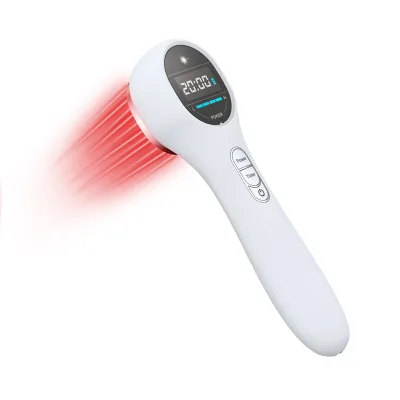
The intended environment is equally important. The data distinguishes between "Home," "Salon," "Beauty Center," and "Clinic" applications. For home users, portability and ease of use are paramount; devices like the handheld models with a 3.7V~4.2V battery voltage are ideal for this segment. In contrast, professional settings such as beauty centers and clinics may require larger, stationary panels that offer higher irradiance and longer continuous operation times. The "Style" attribute distinguishes between "Stationary" and "Hand Held" models, guiding buyers to select the form factor that best fits their operational workflow. Furthermore, the inclusion of features like "Skin Tightening" and "Healthy" benefits aligns with the growing consumer demand for non-surgical aesthetic treatments.
Supplier Evaluation and Operational Capabilities
Selecting a reliable supplier requires a thorough evaluation of their operational capabilities and after-sales support structure. The supplied data indicates that suppliers offer "Online support" as a standard after-sales service. While this is a positive indicator, buyers should probe deeper into the scope of this support. Does it include technical troubleshooting, software updates for smart panels, or replacement part logistics? The "Customization" availability suggests that suppliers are capable of adapting products to specific client needs, which is a valuable trait for B2B partners looking to build a unique brand identity.
The origin of the products is consistently listed as China, with specific mentions of Guangdong as a place of origin. This region is a known hub for electronics manufacturing, offering a mature supply chain for LED components and plastic molding. However, buyers must verify the specific factory's capacity and quality control processes. The "Material" attribute specifies ABS plastic, which is a durable and impact-resistant material suitable for portable devices. Buyers should request samples to verify the material quality and ensure that the finish and build meet their brand standards. Additionally, the "Work Temperature" range of -20°C to 50°C indicates the device's operational resilience, which is crucial for suppliers planning to distribute products in varied climates.
Quality Control and Long-Term Procurement Considerations
Ensuring product quality and longevity is essential for maintaining customer satisfaction and minimizing returns. The "Life Time" attribute for the LED diodes is listed as 100000 hours, a figure that should be verified against independent testing reports. This longevity claim is a key selling point but must be backed by consistent performance data. Quality control protocols should include rigorous testing of the irradiance output, wavelength accuracy, and electrical safety. The "Lens" attribute, specified as a 30-degree convex lens, plays a critical role in light distribution and should be inspected to ensure it meets the design specifications for optimal coverage.
For long-term procurement, the warranty terms are a significant factor. The observed warranty periods range from 1 to 3 years. A 3-year warranty, as seen in some models, suggests a higher confidence in product durability and a supplier willing to absorb potential repair costs. Buyers should also consider the "prod_packing" details, which list "Cardboard Box" as the standard packaging. For international shipping, this packaging must be robust enough to prevent damage during transit, especially for larger, heavier units. Finally, the "Keyword" association with "Red Light Therapy" confirms the product's market positioning, but buyers must ensure that the specific model they source aligns with the intended therapeutic claims to avoid regulatory pitfalls. By adhering to these rigorous evaluation criteria, procurement teams can secure a supply chain that delivers value, compliance, and reliability in the competitive red light therapy market.
FAQs
What certifications do portable red light therapy panels have?
The devices carry FDA, CE, FCC, RoHS, and EMC certifications. These confirm compliance with safety and electromagnetic standards for medical and wellness use in various regions.
How long is the LED life time for these panels?
The LED diodes have a rated life time of 100000 hours. This duration ensures long-term reliability for both home and professional salon applications without frequent replacement.
Which wavelengths are supported by the portable panels?
The panels support five wavelengths including 630, 660, 810, 830, and 850 nanometers. This spectrum targets superficial skin rejuvenation and deeper muscle recovery for pain management.
Can I customize the product specifications for my brand?
Customization is available for specifications and branding. Buyers can request tailored wavelengths or packaging options to align with specific business needs and market positioning.
What is the minimum order quantity for these units?
The minimum order quantity ranges from 1 to 10 units. This flexibility allows small businesses to start with low capital while larger buyers can negotiate bulk pricing.
How much does a Portable Red Light Therapy Panel cost?
Prices observed in the market range from 12 to 658 USD. The variance depends on the model size, irradiance output, and the number of wavelengths included in the unit.
What is the warranty period for these devices?
Warranty periods vary from 1 to 3 years depending on the specific model. A longer warranty often indicates higher manufacturing confidence and reduces long-term ownership risk.