Source Portable Soil Nutrient Analyzer for Labs, Farms, and Fields
Find 30 Portable Soil Nutrient Analyzer units with varying features like digital displays and manual controls. Buyers can compare specifications for nutrient testing, soil structure analysis, and laboratory applications across different models and origins.
Key considerations
Products List


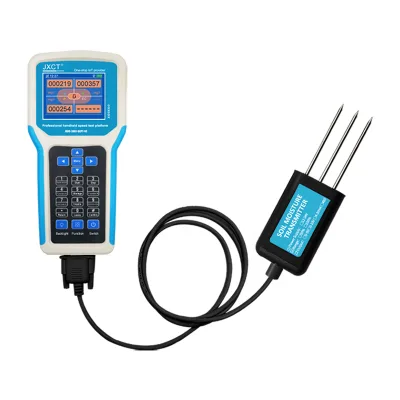
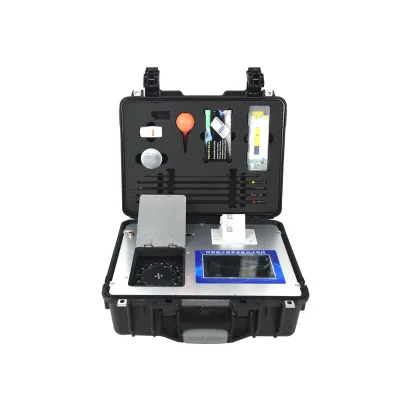
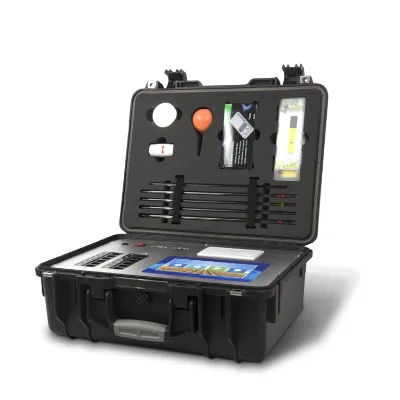
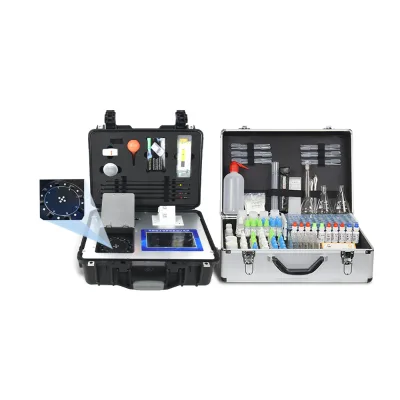
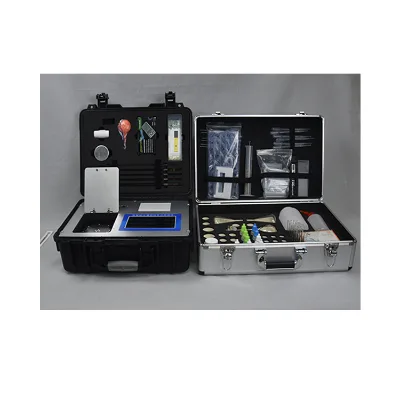
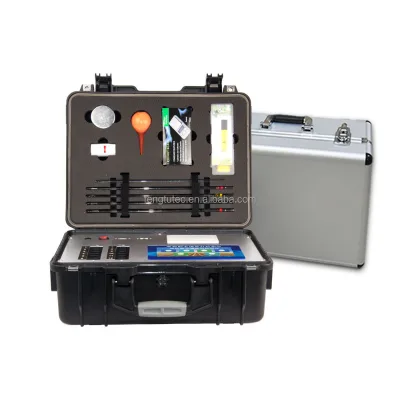
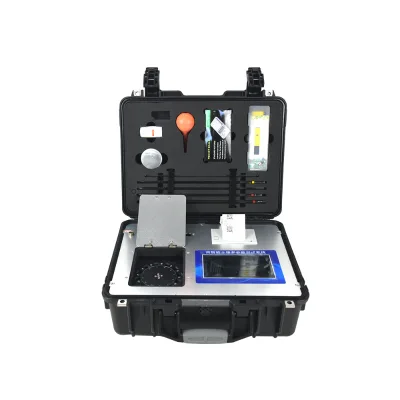
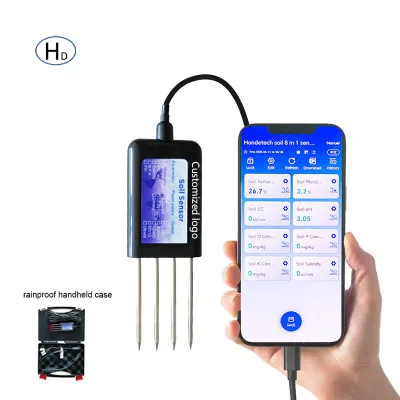
Portable Soil Nutrient Tester Laboratory Agriculture Analyzer Nutrient Soil Testing Equipment
$570.00 - $900.00
MOQ: 1 Pieces

Snt-6A Soil Nutrient Tester Portable Agriculture Analyzer Nutrient Soil Testing Lab Equipment
$575.00 - $650.00
MOQ: 1 Pieces




Comprehensive Sourcing Guide
Strategic Sourcing Guide for Portable Soil Nutrient Analyzers
The global agricultural sector increasingly relies on precision data to optimize crop yields and manage soil health. At the heart of this transformation is the Portable Soil Nutrient Analyzer, a critical tool for agronomists, farmers, and research institutions. Sourcing these devices requires a disciplined approach that balances technical capability with regulatory compliance and total cost of ownership. Buyers must navigate a complex marketplace where product attributes vary significantly between manufacturers. This guide provides a structured framework for evaluating potential suppliers and selecting equipment that meets specific operational needs without relying on unverified marketing claims.
Technical Specifications and Operational Capabilities
When evaluating portable soil nutrient analyzers, the primary focus must be on the device's ability to deliver accurate, repeatable data under field conditions. The core functionality revolves around the measurement of key soil parameters, specifically pH and moisture content. Buyers should verify the operational range of these instruments against their specific soil types. For instance, a device intended for acidic or alkaline soils must cover a pH range that encompasses the expected values, such as the 3-8 pH range observed in certain models. Similarly, moisture measurement capabilities must align with the expected variability in soil hydration, with some units offering a range of 1-8% moisture content.
Accuracy is the most critical technical metric. The reliability of the data determines the validity of subsequent agricultural decisions. Procurement teams should scrutinize the stated accuracy specifications. A standard benchmark for high-quality units includes a pH accuracy of 0.2pH and a moisture accuracy of 1%. Furthermore, the stability of the optical system is paramount for long-term reliability. Buyers should look for specifications regarding light drift, such as an absorbency of light drift of less than 0.003, and repeatability metrics, like an absorbency of light less than 0.005. These figures indicate the instrument's ability to maintain calibration over time and across multiple readings.
The display interface and power source are also defining technical factors. Modern portable units often feature digital displays, with specific models utilizing 2.8-inch LCD screens for enhanced readability in various lighting conditions. Power management is equally vital for field operations. While some industrial-grade testing machines rely on AC220V power sources, portable nutrient testers frequently operate on battery power, such as DC 3.7V, with a charging voltage of 5V. This distinction ensures that the device remains functional in remote locations without access to grid electricity. The control mechanism, whether manual or electronic, also influences the user experience and the speed of data acquisition.
Compliance, Certification, and Quality Standards
In the B2B procurement of scientific instrumentation, compliance with international standards is non-negotiable. Buyers must verify that the supplier can provide documentation proving adherence to recognized quality management systems. The ISO9001 Quality Certificate is a widely accepted standard that indicates the manufacturer has established processes for consistent quality control. Additionally, specific product standards, such as ISO9001 or general ISO certifications, should be explicitly listed in the product specifications.
Beyond quality management, safety and electrical compliance are essential. Depending on the target market, certifications such as CE may be required to ensure the device meets European safety, health, and environmental protection standards. Buyers should request copies of these certificates before finalizing any purchase. It is important to note that while some products may claim certification, the verification process must be rigorous. The presence of a certificate does not automatically guarantee that every unit in a batch meets the standard; therefore, batch testing or third-party verification is often necessary for large-scale deployments.
The origin of the product also plays a role in compliance. Many manufacturers are based in specific industrial hubs, such as Zhejiang or Hunan in China. While these regions are known for manufacturing capabilities, buyers should ensure that the "Place of Origin" aligns with the quality expectations for the specific product line. The production process, often described as "Integration," suggests a streamlined manufacturing approach that can reduce defects. However, the buyer must confirm that this integration includes rigorous quality assurance checkpoints at every stage of production.
Cost Drivers and Pricing Dynamics
Understanding the cost structure of portable soil nutrient analyzers is essential for budgeting and negotiating. The price range for these devices can be substantial, varying from approximately $6.60 to over $2,700 depending on the complexity, brand, and specific features. Several factors drive these costs. First, the accuracy grade and the sophistication of the optical system significantly impact the price. Units with higher precision, such as those with 0.2pH accuracy, generally command a premium over basic models.
Second, the power source and display technology influence the cost. Devices with advanced digital displays, such as 2.8-inch LCDs, and integrated battery systems with specific charging requirements are more expensive than basic analog or manual control units. The inclusion of customization options, such as tailored software or specific packaging, also adds to the overall cost. Buyers should be aware that "Customization: Available" is a common attribute, but the extent of customization and its associated costs must be clarified during the negotiation phase.
Packaging and logistics are additional cost drivers. The product packing, whether in cartons, boxes, or specialized crates, affects shipping costs and the risk of damage during transit. While some suppliers offer standard carton packaging, others may provide reinforced options for international shipping. Buyers should factor these logistics costs into their total cost of ownership calculations. Furthermore, the Minimum Order Quantity (MOQ) can influence the unit price. Ranges observed in the market typically start from 1 unit, allowing for small-scale testing, but bulk orders may offer volume discounts.
Typical Applications and Use Cases
Portable soil nutrient analyzers serve a diverse range of applications across the agricultural and environmental sectors. The primary use case is in precision agriculture, where farmers need to make data-driven decisions regarding fertilizer application. By accurately measuring soil nutrient levels, farmers can optimize input costs and minimize environmental impact. These devices are particularly useful for analyzing soil structure and nutrient content, providing insights that are critical for crop planning.
In addition to commercial farming, these analyzers are widely used in research and educational institutions. Universities and agricultural research centers rely on portable units for field studies, requiring high accuracy and repeatability. The ability to conduct on-site testing eliminates the delays associated with sending samples to a laboratory, allowing for real-time data collection and analysis. This immediacy is crucial for time-sensitive research projects.
The versatility of these devices extends to environmental monitoring and land management. Government agencies and non-profit organizations use soil nutrient analyzers to assess land degradation, monitor pollution levels, and plan restoration projects. The specific model chosen often depends on the required parameters. For example, a model labeled as a "Soil Nutrient Tester" might be optimized for general agricultural use, while a "Soil Structure Analyzer" might focus on physical properties. Buyers should match the device's usage specifications to their specific operational requirements to ensure optimal performance.
Supplier Evaluation and Verification
Selecting the right supplier is as important as selecting the right product. Buyers should conduct a thorough evaluation of potential suppliers based on several key criteria. First, verify the supplier's ability to provide the necessary certifications and documentation. A reputable supplier will have readily available ISO9001 certificates and CE marks, along with detailed product specifications.
Second, assess the supplier's customization capabilities. Many buyers require tailored solutions, such as specific packaging or software configurations. The attribute "Customized: Customized" indicates that the supplier is open to modifications, but the extent and cost of these modifications must be clearly defined. Buyers should also inquire about the production process to ensure that the supplier has the capacity to handle custom orders without compromising quality.
Third, evaluate the supplier's logistical capabilities. Delivery times, such as the observed 1-3 days for certain models, are critical for project timelines. However, buyers should verify if these lead times apply to standard stock items or if custom orders require longer periods. The place of origin, whether Zhejiang or Hunan, can also impact shipping logistics and costs. Finally, check the supplier's track record for quality control and after-sales support. A supplier that offers robust support and warranty services is better positioned to handle any issues that may arise during the product's lifecycle.
Quality Control and Long-Term Procurement Considerations
Ensuring the long-term reliability of portable soil nutrient analyzers requires a proactive quality control strategy. Buyers should implement a rigorous inspection process upon receipt of the goods. This includes verifying the physical condition of the device, checking the packaging for damage, and testing the device's performance against the specified accuracy and stability metrics. The "Mass Scope of Workpiece" and "Max Diameter of Workpiece" specifications, while more relevant to testing machines, highlight the importance of understanding the operational limits of the equipment.
For long-term procurement, buyers should consider the maintenance and calibration requirements of the devices. Regular calibration is essential to maintain accuracy, and suppliers should provide clear guidelines on how to perform these tasks. The availability of spare parts and technical support is also crucial. A supplier that offers a comprehensive support package, including training and maintenance services, adds significant value to the procurement.
Finally, buyers should plan for the scalability of their operations. As agricultural needs evolve, the demand for more advanced or specialized analyzers may increase. Choosing a supplier with a broad product range, such as the TPY Series or SNT-6A models, allows for future upgrades without the need to switch vendors. This continuity ensures that the procurement strategy remains flexible and responsive to changing market conditions. By focusing on these long-term considerations, buyers can build a sustainable supply chain that supports their agricultural and research objectives.
FAQs
What is the accuracy range for pH and moisture measurements?
The device offers a pH accuracy of 0.2pH and a moisture accuracy of 1%. This ensures reliable data for agricultural decisions when measuring soil within the 3-8 pH range and 1-8% moisture content.
Can the portable analyzer operate without AC power?
Yes, the unit operates on a DC 3.7V battery with a 5V charging voltage. This allows field use in remote locations without access to standard AC220V power sources found in industrial settings.
Which certifications do the manufacturers typically provide?
Suppliers provide ISO9001 Quality Certificates and CE marks for safety compliance. These documents verify adherence to international quality management systems and European safety standards for the exported instruments.
How fast can orders be delivered from the factory?
Delivery times are typically 1-3 days for standard stock items. This rapid lead time applies to models like the SNT-6A, though custom orders may require additional processing time from the origin.
What is the minimum order quantity for purchasing units?
The minimum order quantity ranges from 1 to 5 units depending on the specific model. This flexibility allows buyers to test single units or order small batches for immediate field deployment.
Can the product be customized for specific needs?
Customization is available for various product attributes and packaging requirements. Buyers can request tailored solutions, but the extent of modifications and associated costs must be clarified during the negotiation phase.
Where are the main manufacturing locations for these devices?
Manufacturing origins include Zhejiang and Hunan in mainland China. These regions host factories producing TPY Series and SNT models, ensuring access to established industrial supply chains for the equipment.