Source Rdma Roce Network Switch for Enterprise and Industrial Use
Source Rdma Roce Network Switch models from 30 available listings. Compare features like 10/100/1000Mbps transfer rates, PoE options, and modular port structures for enterprise and industrial applications; compare the available evidence and request quotations based on your requirements.
Key considerations
Products List


Original Network Switch C9300-48uxm-a 48-Port Network Advantage Switch
$5200.00 - $6000.00
MOQ: 2 pieces


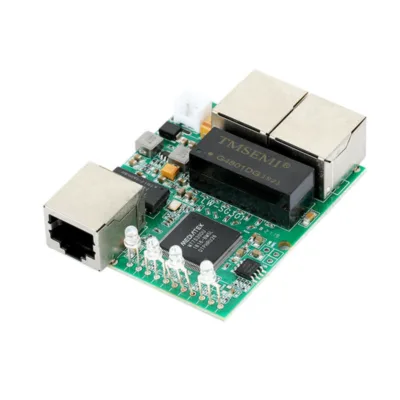


19inch 8-Port 16-Port CAT6 IP Kvm Switch Rack Mount Console Kvm Switch
$200.00 - $500.00
MOQ: 20 Pieces

Comprehensive Sourcing Guide
Rdma Roce Network Switch Sourcing Guide
Procuring RDMA over Converged Ethernet (RoCE) switches requires distinguishing between standard Ethernet hardware and specialized units capable of low-latency, lossless transport. While the observed market includes general-purpose switches with 10/100/1000Mbps rates and modular port structures, true RoCE support demands specific hardware features like priority flow control and hardware-based offloading. Buyers must verify that the listed "Line-Rate Router" performance and "Crossbar System" architecture are explicitly designed to handle the high-throughput, low-jitter requirements of RDMA workloads rather than generic enterprise traffic.
The available product data highlights a wide variance in port configurations, ranging from 8-port Gigabit models to 24-port industrial switches with fiber options. However, many listed items specify "Without Firewall" or standard "Store-and-Forward" switching, which may not suffice for the deterministic latency needed in high-performance computing clusters. Sourcing teams should prioritize models explicitly confirming RoCE v2 compatibility and verify if the "Full-Duplex & Half-Duplex" modes listed are sufficient for the specific network topology, ensuring the selected switch supports the necessary Quality of Service (QoS) mechanisms for data center or industrial applications.
Product Scope and Observed Listing Signals
The current market listings reveal a diverse inventory of Ethernet switches, including specific models like the TS2400G-2S and TS1008F, which cater to both enterprise and Soho environments. These units often feature "Modular" or "Rack Type" architectures with varying port densities, such as 24 RJ45 ports or fiber interfaces. While some products advertise "Industrial Ethernet" capabilities and optional Power over Ethernet (PoE) functions, buyers must carefully filter these general descriptions to identify hardware that specifically supports the advanced memory access protocols required for RDMA operations.
Observations indicate that many listed switches operate at 10/100Mbps or 10/100/1000Mbps transfer rates, with some supporting up to 1000Mbps transmission speeds. The presence of "802.3af/at" PoE standards and "CE/EMC" certifications suggests a focus on power delivery and electromagnetic compatibility, which are critical for industrial deployments. However, the absence of explicit RoCE mentions in many product titles necessitates a rigorous review of technical datasheets to confirm that the "Crossbar System" architecture and "Line-Rate" performance claims translate to the low-latency packet processing required for remote direct memory access applications.
Technical Specifications to Verify
Buyers must rigorously verify that the switch architecture supports the specific offloading capabilities required for RDMA, as standard "Store-and-Forward" mechanisms may introduce unacceptable latency. While the observed data confirms "Crossbar System" architectures and "Line-Rate Router" performance, these terms alone do not guarantee RoCE functionality. Procurement teams should demand explicit confirmation of hardware-based priority flow control (PFC) and congestion management features, ensuring the "Full-Duplex" communication mode is fully utilized to prevent packet loss during high-bandwidth data transfers.
The port structure and transmission rates observed, such as "2GE+4GE FX Fiber Switch" or "24 10/100/1000Mbps RJ45 Ports," must be evaluated against the network's bandwidth and latency requirements. It is essential to confirm that the "Auto Negotiation" capabilities on these ports align with the speed and duplex settings of the connected endpoints. Additionally, verifying the "Network Site" classification as an "Intermediate Node Router" is crucial, as this indicates the switch's role in the broader network topology and its ability to handle the specific routing and switching demands of an RDMA-enabled environment.
Compliance and Safety Documentation
Regulatory compliance is a critical factor when sourcing network infrastructure, particularly for deployments in regulated industries or international markets. The observed listings frequently cite "CE/EMC," "CE/LVD," and "FCC Certification" standards, which are essential for ensuring electromagnetic compatibility and electrical safety. Buyers should verify that these certifications apply specifically to the model being purchased and that the documentation covers the intended operating environment, whether it is a standard enterprise data center or a harsh industrial setting requiring "Industrial Ethernet" compliance.
Safety and environmental standards also extend to the physical construction and packaging of the equipment. The observed "Unit Package Size" and "Carton" packing details provide insight into logistics but do not replace the need for formal safety data sheets. Procurement teams must ensure that the "43.6mm (H) x 428mm (W) x 685.8mm (D)" dimensions and other physical specifications align with the rack space and cooling requirements of the facility. Furthermore, confirming the "1 Year" warranty and "Nib" (New in Box) condition helps mitigate risks associated with refurbished or non-compliant hardware entering the production environment.
Cost Drivers and Commercial Terms
The cost of RDMA-capable switches is heavily influenced by the complexity of the internal architecture and the specific performance features required. While the observed price range spans from $0.1 to $9999, the lower end likely represents basic Ethernet switches, whereas the higher end may include specialized units with advanced offloading capabilities. Buyers should anticipate that models with "Modular" port structures, "Crossbar System" architectures, and explicit RoCE support will command a premium over standard "Store-and-Forward" switches, reflecting the engineering effort required to achieve low-latency performance.
Commercial terms such as Minimum Order Quantity (MOQ) and lead times vary significantly across the observed inventory, with MOQs ranging from 1 to 2000 units. The "Customization: Available" attribute suggests that buyers may negotiate specific configurations, which can impact both the unit price and the delivery schedule. It is vital to clarify whether the listed prices include shipping, customs duties, and installation support, especially given the diverse origins of the products, such as those from "Dongguan Guangdong China" or other unspecified locations. Clear agreements on payment terms and warranty coverage are essential to manage financial risk.
Supplier Qualification and Quality Control
Selecting a qualified supplier is paramount when sourcing specialized networking hardware, as the reliability of the switch directly impacts the stability of the entire RDMA network. Buyers should prioritize suppliers who can provide detailed technical documentation and demonstrate a track record of supplying "Enterprise" or "Industrial" grade equipment. The presence of "1 Year" warranties and "Nib" conditions in the listings is a positive indicator, but it should be accompanied by evidence of rigorous quality control processes, including factory acceptance testing and adherence to the stated "802.3af/at" PoE standards.
Quality control extends to the physical integrity and packaging of the products. The observed "Protecting Boxes" and specific "Unit Package Size" details suggest attention to logistics, but buyers must verify that the packaging is sufficient to prevent damage during transit. It is advisable to request sample units for testing before committing to large orders, especially given the wide range of observed models and specifications. Ensuring that the supplier can consistently deliver products that meet the "Line-Rate Router" performance claims and "Crossbar System" architectural requirements is essential for maintaining network integrity.
Long-Term Procurement Checks
Sourcing RDMA switches requires a long-term strategy that accounts for future scalability and technology evolution. Buyers should evaluate the "Customization: Available" options to ensure the selected hardware can be adapted as network demands grow or change. The "Modular" port structures observed in some models offer flexibility for future upgrades, allowing organizations to expand port density or change interface types without replacing the entire chassis. This modularity is a key consideration for maintaining the longevity and relevance of the network infrastructure investment.
Regular audits of supplier performance and product compliance are necessary to mitigate long-term risks. Buyers should establish a schedule for reviewing the "CE/EMC" and "FCC Certification" status of the products, ensuring they remain valid and up-to-date with changing regulations. Additionally, monitoring the availability of spare parts and the supplier's ability to provide technical support is crucial for minimizing downtime. By maintaining a proactive approach to supplier qualification and product verification, organizations can ensure their RDMA networks remain robust, compliant, and capable of meeting evolving performance requirements.
FAQs
What transfer rates do these Ethernet switches support?
These switches support transfer rates of 10/100/1000Mbps or 10/100Mbps depending on the specific model. Some units feature line-rate router performance with crossbar system architecture for efficient data handling in enterprise networks.
Which PoE standards are compatible with these switches?
The switches comply with 802.3af and 802.3at PoE standards, delivering up to 30W output. Power is provided over pairs 1/2 and 3/6, supporting transmission distances of up to 100 meters for connected devices.
Can I find switches with modular port structures?
Yes, certain models feature a modular port structure designed for flexible network expansion. Other options include non-modular designs suitable for SOHO applications, offering various port configurations like 2GE plus 4GE FX fiber interfaces.
What certifications do these network switches hold?
These products hold CE/EMC, CE/LVD, and FCC certifications ensuring compliance with international safety and electromagnetic standards. They are manufactured in Dongguan, Guangdong, China, and are suitable for enterprise and industrial Ethernet applications.
How are these switches packaged for shipping?
Packaging varies by model, with options including cartons, unit packages, or protecting boxes. Specific dimensions range from 238mm to 532mm in length, with quantities per carton varying between 5 and 10 pieces depending on the unit size.
Are these switches suitable for industrial environments?
Yes, specific models are designated as industrial switches designed for harsh conditions. They support industrial Ethernet protocols and often include features like store-and-forward performance to ensure reliable data transmission in demanding network sites.
What warranty is provided for these network devices?
A standard one-year warranty is provided for these network devices upon purchase. The products are typically sold in new condition and include detailed packing specifications to ensure safe delivery to enterprise or industrial clients.