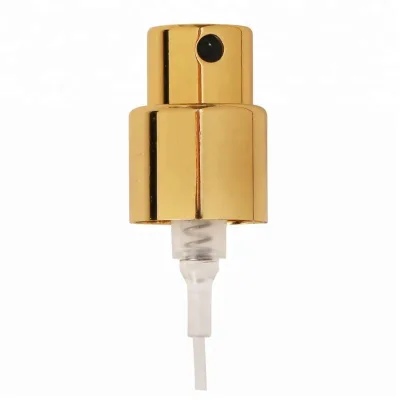
Source Recyclable Foam Perfume Pump for Cosmetics, Perfume, Medicine
Compare 30 listings for Recyclable Foam Perfume Pump options suitable for cosmetics, perfume, and medicine applications. Evaluate specifications like dosage, size, and material to find the right sprayer for your needs.
Key considerations
Products List


High Quality 18mm Continuous Sprayer Pump for Perfume Cosmetic Packing
$0.06 - $0.07
MOQ: 10000 Pieces


30ml 60ml 100ml 150ml Custom Capacity Round Shape Perfume Bottle with Foam Pump
$0.05 - $0.20
MOQ: 5000 Pieces


Eco-Friendly Perfume Pump for Conscious Consumers with Leak-Proof Design
$0.05 - $0.20
MOQ: 50000 Sets


Sleek Perfume Spray Crimp Pump Great for Personal and Professional Use
$0.05 - $0.15
MOQ: 50000 Pieces




Comprehensive Sourcing Guide
Strategic Sourcing Guide for Recyclable Foam Perfume Pumps
Understanding Technical Specifications and Material Composition
When sourcing recyclable foam perfume pumps, buyers must first establish a clear understanding of the technical specifications that define product functionality and compatibility. The core material for these components is typically Polypropylene (PP), a thermoplastic polymer chosen for its chemical resistance and durability. In the current market, PP is frequently cited as the primary material for pumps designed to meet recyclability goals, distinguishing them from mixed-material alternatives that complicate recycling streams. The structural integrity of the pump relies heavily on the precision of the plastic molding process, which ensures that the pump head, actuator, and dip tube function seamlessly together.
A critical technical parameter is the pump size and caliber compatibility. Sourcing guides indicate that these pumps are engineered for specific bottle necks, with common calibers including 18mm, 15mm, and 13mm. The actuator dimensions vary significantly to match these calibers; for instance, specific models are designed with actuator sizes such as 139.6 mm or 19.310 mm. The standard thread specifications are equally vital, with common standards including 24/410, 18/410, and 20/405. Buyers must verify that the pump's thread standard matches the bottle's neck finish to prevent leakage or improper dispensing. The dosage capabilities are another key specification, with observed ranges including 0.12ml, 0.2ml, and 0.4ml per actuation. These variations allow for precise application of fragrances, cosmetics, or medicinal products.
The closure type is another essential technical attribute. Most recyclable foam pumps utilize a spray pump mechanism, often paired with closures that can be smooth, ribbed, aluminum, or UV-treated. The foam mechanism itself is designed to deliver a fine, even mist, which is crucial for the user experience in perfume and cosmetic applications. The packaging dimensions for these units also vary, with carton sizes ranging from 504030 cm to 403126 cm, typically holding 1000 pieces per carton. Understanding these physical dimensions is necessary for logistics planning and warehouse storage optimization.
Compliance, Certification, and Environmental Standards
In the realm of sustainable packaging, compliance and certification are paramount. Buyers should prioritize suppliers who can demonstrate adherence to recognized international standards. The presence of ISO certification is a high-confidence indicator of a supplier's commitment to quality management systems. Specifically, ISO standards provide a framework for consistent manufacturing processes, which is essential for maintaining the quality of recyclable components. Additionally, CE certification may be present, indicating conformity with health, safety, and environmental protection standards for products sold within the European Economic Area.
The "recyclable" attribute is a defining feature of the product category, but it requires careful verification. While the material is listed as PP, which is generally recyclable, the overall recyclability of the pump depends on the separation of components. Buyers must ensure that the foam mechanism and the plastic body can be effectively separated or that the entire assembly meets local recycling facility requirements. The product standard often references specific thread and size combinations, such as 24/410 or 18/410, which are industry-accepted norms. However, buyers should not assume that all listed products meet every standard without verification.
It is crucial to distinguish between general claims and verified certifications. While ISO 9001 is a widely recognized standard for quality management, specific claims regarding this standard should be treated as background information unless explicitly confirmed by the supplier. The focus should remain on the tangible evidence of compliance, such as the ISO and CE marks found on product documentation. Environmental claims regarding recyclability should be backed by the supplier's ability to provide data on the material composition and the end-of-life processing capabilities of the components.
Cost Drivers and Pricing Dynamics
The pricing of recyclable foam perfume pumps is influenced by several dynamic factors, including material costs, production volume, and customization requirements. The observed price range for these products in the current market spans from 0 to 1.35 USD per unit. This wide range suggests that the final price is highly dependent on the specific configuration of the pump, such as the caliber, dosage, and actuator design. Smaller calibers and specialized dosages may command different price points compared to standard configurations.
Minimum Order Quantity (MOQ) is a significant cost driver. The observed MOQ range varies from 100 to 100,000 units, with specific listings indicating MOQs of 10,000 or 5,000 sets. Higher order volumes typically result in a lower unit cost due to economies of scale in manufacturing and logistics. Buyers must balance their inventory needs with the financial constraints of the MOQ to optimize cash flow. Customization is a key factor that can influence pricing. When customization is available, such as specific branding, unique actuator shapes, or tailored dosage settings, the unit price may increase due to the additional tooling and setup costs involved.
Payment terms also play a role in the overall cost structure. Standard terms often include a T/T Advance 30% deposit, which requires upfront capital. The lead time, which can range from 25 to 30 days after receiving the deposit, impacts the working capital cycle. Buyers should factor in the time value of money and the potential need for buffer stock when calculating the total cost of ownership. Additionally, the origin of the product, such as Ningbo, Jiangsu, Anhui, or Zhejiang in China, can influence shipping costs and import duties, further affecting the final landed cost.
Typical Applications and Usage Scenarios
Recyclable foam perfume pumps are versatile components designed for a wide array of applications across multiple industries. The primary usage scenarios include cosmetics, perfumes, medicine, and chemical products. The foam mechanism is particularly well-suited for these applications as it provides a gentle, even distribution of the product, enhancing the user experience. For perfumes, the pump delivers a fine mist that allows for precise application without waste. In the cosmetics sector, these pumps are used for lotions, serums, and toners, where the foam texture can improve the absorption and feel of the product on the skin.
The specific dosage capabilities, such as 0.12ml, 0.2ml, and 0.4ml, make these pumps ideal for high-value products where controlled dispensing is critical. In the pharmaceutical and chemical sectors, the chemical resistance of the PP material ensures that the pump remains stable when in contact with various active ingredients. The 18mm, 15mm, and 13mm calibers allow for compatibility with a broad range of bottle sizes, from small travel-sized containers to larger retail packages. The product name "Mist Sprayer 601" and similar model identifiers indicate specialized designs for specific market segments, such as the 1.2cc usage variant.
The versatility of these pumps extends to their packaging and distribution. The standard packing of 1000 pieces per carton facilitates efficient handling and shipping. The origin locations, including Ningbo and Jiangsu, suggest a robust manufacturing ecosystem capable of meeting diverse global demands. Buyers should consider the specific requirements of their target market when selecting a pump model, ensuring that the caliber, dosage, and closure type align with their product formulation and branding strategy.
Supplier Evaluation and Selection Criteria
Selecting the right supplier is a critical step in the procurement process. Buyers should evaluate potential suppliers based on their production capabilities, quality control measures, and responsiveness to customization needs. The availability of customization is a key indicator of a supplier's flexibility and ability to meet unique client requirements. Suppliers that offer ODM/OEM services are particularly valuable, as they can assist in designing and manufacturing pumps that align with specific brand identities.
Lead time and delivery reliability are also essential factors. The observed production time of 25-30 days after receiving the deposit provides a benchmark for planning, but buyers should verify if this timeline can be adjusted based on specific needs. The sample time, typically ranging from 4 to 6 days, allows buyers to evaluate the product quality before committing to a larger order. The FOB port, such as Lianyungang, is another logistical consideration that affects shipping costs and delivery schedules.
Quality control is paramount, especially for products that come into direct contact with consumables. Buyers should inquire about the supplier's quality assurance processes, including in-line inspections and final product testing. The presence of certifications like ISO and CE is a positive sign, but buyers should request documentation to verify these claims. Additionally, the supplier's location, whether in Ningbo, Jiangsu, Anhui, or Zhejiang, can impact communication and logistics efficiency. A supplier with a strong track record in the specific niche of recyclable foam pumps is more likely to deliver consistent quality and meet sustainability goals.
Quality Control and Long-Term Procurement Considerations
Ensuring consistent quality in recyclable foam perfume pumps requires a robust quality control framework. Buyers should implement a multi-stage inspection process that includes pre-production sample approval, in-process quality checks, and final random sampling. The specific dimensions, such as the pump size of 139.6 mm or 19.310 mm, must be verified against the agreed-upon specifications to ensure compatibility with the bottles. The closure type, whether smooth, ribbed, aluminum, or UV, should be checked for durability and aesthetic appeal.
Long-term procurement considerations involve building a sustainable supply chain that can adapt to changing market demands and regulatory requirements. The recyclable nature of the PP material is a significant advantage, but buyers must ensure that the supply chain supports the entire lifecycle of the product. This includes verifying that the suppliers have the capacity to scale production as demand grows and that they can maintain consistent quality over time. The ability to adjust lead times and handle larger order volumes is crucial for managing inventory levels and responding to market fluctuations.
Buyers should also consider the environmental impact of their procurement decisions. While the material is recyclable, the overall sustainability of the product depends on the supplier's practices regarding waste reduction, energy efficiency, and responsible sourcing. Establishing a long-term partnership with a supplier who shares these values can lead to continuous improvement and innovation in product design. Regular communication and collaboration with the supplier can help identify opportunities for cost reduction, quality enhancement, and process optimization.
Conclusion and Strategic Recommendations
Sourcing recyclable foam perfume pumps requires a comprehensive understanding of technical specifications, compliance requirements, cost drivers, and supplier capabilities. By focusing on the key attributes such as PP material, specific calibers, and recyclability, buyers can make informed decisions that align with their product goals and sustainability objectives. The observed price range and MOQ variations highlight the importance of volume planning and customization in the procurement process.
Buyers should prioritize suppliers with verified certifications and a proven track record in quality control. The ability to customize the pump design and dosage is a significant advantage, allowing for tailored solutions that meet specific market needs. Long-term success in this category depends on building strong relationships with suppliers who can deliver consistent quality and adapt to changing market conditions. By following these strategic recommendations, buyers can effectively navigate the complexities of sourcing recyclable foam perfume pumps and secure a competitive advantage in the global market.
FAQs
What certifications do recyclable foam perfume pumps have?
These pumps hold ISO and CE certifications to ensure quality and safety standards. The ISO certification indicates adherence to quality management systems, while CE marks confirm compliance with European health and safety requirements for the product.
Which materials are used for recyclable foam perfume pumps?
The primary material used is Polypropylene (PP), which is chosen for its chemical resistance and durability. This plastic material supports the recyclable attribute of the pump while ensuring structural integrity for cosmetics and perfumes.
How much is the minimum order quantity for these pumps?
The minimum order quantity ranges from 100 to 100,000 units depending on the specific supplier and model. Some listings specify an MOQ of 10,000 pieces or 5,000 sets, requiring buyers to verify exact thresholds before ordering.
Can these pumps be customized for specific bottle calibers?
Yes, customization is available to match various bottle calibers such as 18mm, 15mm, and 13mm. Suppliers can adjust the pump size and thread standard to fit specific requirements like 24/410 or 18/410 finishes.
What is the typical lead time for production?
Production typically takes 25 to 30 days after receiving the deposit. Sample time is shorter, usually ranging from 4 to 6 days, allowing buyers to evaluate quality before committing to a full production run.
Which dosage options are available for these pumps?
Available dosage options include 0.12ml, 0.2ml, and 0.4ml per actuation. These precise dosages allow for controlled application of high-value products like perfumes, medicines, and chemical formulations.
Where are these pumps manufactured and shipped from?
Products originate from locations including Ningbo, Jiangsu, Anhui, and Zhejiang in China. The FOB port for shipping is often Lianyungang, facilitating logistics for international buyers seeking these recyclable components.