Source Recycled PP Flower Gift Box for Balcony Garden, Arts and Crafts, and Gifts
Compare 30 listings for Recycled PP Flower Gift Box options featuring WPC and cardboard materials. Buyers can evaluate customization, sizes, and certifications like CE and ISO for balcony gardens, jewelry, and cosmetic packaging needs.
Key considerations
Products List


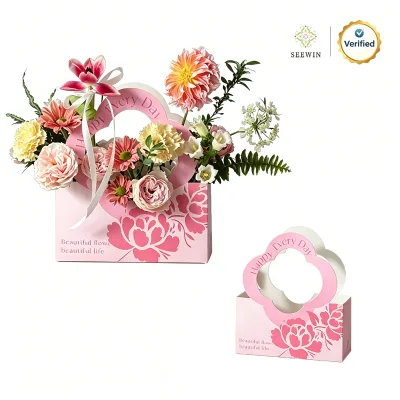


Square Flower Box Gift Box Flower Paper Box Different Color Festive Box Gift
$0.46 - $0.56
MOQ: 500 Pieces


Comprehensive Sourcing Guide
Strategic Sourcing Guide for Recycled PP Flower Gift Boxes
Understanding Material Composition and Product Attributes
When sourcing a Recycled PP Flower Gift Box, buyers must first navigate the complex landscape of material definitions and product attributes found in current market listings. While the core keyword specifies "recycled PP" (polypropylene), the supplied product data reveals a diverse range of materials currently available in the broader flower and gift packaging sector, including WPC (Wood Plastic Composite), various grades of cardboard, and paper-based solutions. This discrepancy highlights a critical first step in the procurement process: verifying the exact material composition of the specific SKU before placing an order. The observed product data indicates that "WPC" is a common material for flower boxes, particularly those designed for balcony gardens, while other listings feature "1000g Cardboard+White Card Paper" or generic "Paper" materials.
The physical attributes of these boxes vary significantly depending on the intended application. The data shows products available in "Square" and "Round" shapes, with sizes ranging from "Medium" to "Middle" and fully "Customized" dimensions. Weight specifications also differ, with some units listed at over 1.5 kg and others at 300g, suggesting a wide variance in structural integrity and material density. For a buyer specifically seeking a recycled PP solution, it is essential to confirm that the supplier's "Recyclable" attribute aligns with the specific polymer type (PP) rather than a paper or WPC alternative. The production method is noted as "Semi-Manual Semi-Mechanical" in some listings, which can impact consistency and lead times. Buyers should request material safety data sheets (MSDS) or specific polymer certification to ensure the "recycled" claim is accurate and that the PP content meets the desired environmental standards.
Compliance, Certification, and Regulatory Standards
Navigating the compliance landscape for flower gift boxes requires a rigorous verification of the standards listed in supplier catalogs. The provided data indicates a mix of certifications, including CE, SGS, FSC, ISO, HACCP, and internal quality control measures. For a product intended for the flower and gift market, FSC (Forest Stewardship Council) certification is particularly relevant if the product involves paper or wood-based components, though its applicability to pure PP plastic is limited. The presence of CE and ISO standards suggests that the manufacturer adheres to specific safety and management system protocols, which is a positive indicator for international trade.
However, buyers must be cautious not to assume that every product in a search result carries these certifications. The data shows that some items list "inner quality control" as their only standard, while others explicitly mention HACCP, which is typically associated with food safety. If the flower gift box is intended for food-related gifting or contains food items, HACCP and ISO compliance become non-negotiable. For general floral use, the "Recyclable" attribute is a key selling point, but it must be backed by verifiable recycling protocols. Buyers should verify if the "Recyclable" claim refers to the material itself or the entire packaging assembly, including inks and adhesives. The "Design Trends" section in the data mentions "Anti-Fake Label," which implies a need for secure packaging solutions to prevent counterfeiting, a feature that may require specific printing standards or holographic elements.
Cost Drivers and Pricing Structures
The pricing structure for recycled PP flower gift boxes is influenced by several dynamic factors, including material costs, customization levels, and order volume. The observed price range in the market spans from $0.04 to $25.00 USD, a wide variance that reflects differences in material quality, box size, and complexity of design. The lower end of the spectrum likely corresponds to simple, standardized paper or cardboard boxes, while the higher end may include custom-molded PP boxes with advanced surface treatments.
Minimum Order Quantity (MOQ) is a significant cost driver. The data shows an MOQ range of 100 to 5,000 units, with specific listings requiring 1,000 pieces per design. For buyers seeking recycled PP boxes, the MOQ may be higher due to the specialized nature of the material and the need for dedicated production runs. The "Small Orders: Accepted" attribute in some listings suggests flexibility, but buyers should verify if this applies to recycled PP specifically or only to standard paper products. Additionally, the "Semi-Manual Semi-Mechanical" production method can lead to higher labor costs per unit compared to fully automated lines, potentially affecting the final price. Surface handling techniques, such as "Offset Printing," "Matte Lamination," and "Gold Hot Stamping," add significant value but also increase the unit cost. Buyers must balance the desire for premium finishes with the budget constraints imposed by these value-added processes.
Typical Applications and Usage Scenarios
The versatility of flower gift boxes allows them to serve a multitude of applications beyond simple floral arrangements. The supplied data highlights usage in "Arts and Crafts," "Jewelry," "Food," "Gifts," "Cosmetics," and "Household" items. For a recycled PP box, the durability and water resistance of polypropylene make it particularly suitable for "Balcony Garden" applications where exposure to moisture is a concern. The "Flower Box" type is explicitly mentioned, confirming its primary use case.
However, the "Round Cylinder Fancy Gift Boxs" and "Facial Tissue" types listed in the data suggest that the market also includes decorative and functional packaging. Buyers should consider the specific environment where the box will be used. If the box is intended for "Food" or "Cosmetic" applications, the material must be food-safe and non-toxic, requiring verification of the "Recyclable" claim against relevant food contact regulations. The "Application Scene" of "Balcony Garden" implies an outdoor or semi-outdoor setting, where UV resistance and structural strength are critical. The "Weight" of the box, ranging from 300g to over 1.5 kg, also dictates its suitability for different flower arrangements; heavier boxes are better for large, heavy bouquets, while lighter boxes are ideal for delicate arrangements.
Supplier Evaluation and Production Capabilities
Evaluating suppliers for recycled PP flower gift boxes requires a deep dive into their production capabilities and logistical strengths. The data indicates that suppliers are located in "China," with specific mentions of "Zhejiang, China," a major manufacturing hub. The "Production Method" of "Semi-Manual Semi-Mechanical" suggests a blend of craftsmanship and automation, which can be beneficial for custom orders but may limit mass production speed. Buyers should assess whether the supplier has the capacity to scale production if demand increases.
The "Delivery" time of "48hrs Delivery Once Be Paid" is an exceptional claim that requires careful verification. While attractive, such a short lead time may only apply to stock items or specific design configurations, rather than custom recycled PP boxes which typically require material sourcing and molding time. The "Shipment" options of "Sea/ Air/ Courier" provide flexibility, but buyers must calculate the total landed cost, including freight and customs duties. The "prod_packing" method, whether "Pallet," "Standard Export Carton," or "Other," is crucial for ensuring the boxes arrive in good condition. For fragile or heavy boxes, palletized shipping is often necessary. Additionally, the "Service" of "OEM" indicates that suppliers are willing to customize products, but buyers should confirm the extent of customization, including logo printing, color matching (CMYK/Pantone), and structural modifications.
Quality Control and Long-Term Procurement Considerations
Maintaining quality in recycled PP flower gift boxes requires a robust quality control (QC) framework. The data mentions "inner quality control" and "ISO" standards, but buyers should implement their own QC protocols to ensure consistency. Key areas to monitor include the integrity of the recycled material, the accuracy of dimensions, and the durability of surface treatments like "Matte Lamination" and "Gold Hot Stamping." The "Printing" capabilities, such as "One Color Printing" or "Two-Sided" printing, must be verified for color consistency and registration accuracy.
Long-term procurement considerations involve building a sustainable supply chain. The "Recyclable" attribute is a significant selling point, but buyers should ensure that the supplier has a transparent recycling process and can provide documentation of the recycled content percentage. The "MOQ" of 1,000 pieces per design may pose a challenge for small businesses, so negotiating flexible MOQs or joining buying groups could be beneficial. The "Customization" availability allows for brand differentiation, but buyers should plan for the lead times associated with custom molds and designs. Finally, the "Design Trends" towards "Anti-Fake Label" suggest that security features may become a standard requirement, and suppliers should be prepared to integrate these features into future orders. By focusing on these technical, compliance, and logistical aspects, buyers can secure a reliable supply of high-quality recycled PP flower gift boxes that meet their specific needs and market demands.
FAQs
What materials are used for flower gift boxes?
Flower gift boxes are commonly made from WPC, cardboard, or paper. Specific listings show WPC for balcony gardens and 1000g cardboard for fancy gift boxes, so verify the exact material composition before ordering.
Which certifications do these boxes typically have?
Many products list CE, SGS, FSC, ISO, and HACCP standards. Some items only mention inner quality control, so confirm specific certifications like FSC or HACCP if food safety or forestry standards are required.
Can I order small quantities of these boxes?
Small orders are accepted for some items, but standard MOQs often range from 1000 to 5000 pieces. Check if the specific supplier accepts lower volumes or requires a minimum of 1000 pieces per design.
How long is the delivery time for custom orders?
Some suppliers offer 48-hour delivery once paid, while others have longer lead times. Production methods vary from semi-manual to semi-mechanical, which can impact the actual time required for custom manufacturing.
What shapes are available for flower gift boxes?
Boxes are available in square and round shapes, with sizes ranging from medium to customized dimensions. Weight varies significantly, with some units over 1.5 kg and others around 300g depending on the design.
Are these boxes suitable for food or cosmetics?
Yes, many listings specify usage for food, cosmetics, jewelry, and gifts. Ensure the material is food-safe and check for HACCP or ISO standards if the box will contain edible or sensitive items.
Where are these flower gift boxes manufactured?
Products originate from China, with specific mentions of Zhejiang as a manufacturing hub. Buyers should verify the exact location and shipping options like sea, air, or courier for their specific order.