Source Recycled PET Food Blister Box for Food, Toy, and Hardware
Find 30 options for Recycled PET Food Blister Box packaging. Compare transparent and white plastic designs in PET and PVC materials. View dimensions, customization services, and OEM/ODM capabilities for food, toy, and hardware applications; compare the available evidence and request quotations based on your requirements.
Key considerations
Products List


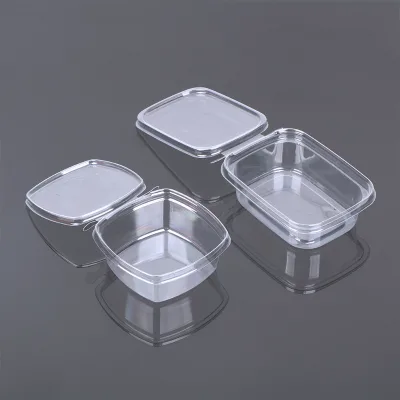


Pet Food Grade Recyclable Heart Shaped Fruit Box Fresh Clear Plastic Box
$0.04 - $0.09
MOQ: 50000 Pieces


Plastic Pet Blister Fruit Packaging Box
$0.04 - $0.36
MOQ: 50000 Pieces
JIANGSU JINCAI POLYMER MATERIALS SCIENCE AND TECHNOLOGY CO., LTD.

Pet Plastic Box for Food and Bakery Packaging Container
$0.04 - $0.36
MOQ: 50000 Pieces
JIANGSU JINCAI POLYMER MATERIALS SCIENCE AND TECHNOLOGY CO., LTD.
Comprehensive Sourcing Guide
Recycled PET Food Blister Box Sourcing Guide
Procuring recycled PET food blister boxes requires a clear understanding of the specific material constraints and regulatory boundaries for food contact applications. While the market offers versatile plastic packaging solutions, buyers must distinguish between general-purpose plastic containers and those explicitly certified for food safety. The observed product data indicates a strong presence of PET and PVC materials, yet the specific designation of "recycled" content must be verified against the supplier's actual production capabilities rather than assumed from general plastic listings.
Buyers should prioritize suppliers who explicitly confirm food-grade compliance for their PET products, as not all plastic blister packaging meets the stringent requirements for direct food contact. The observed listings show a mix of applications ranging from electronics to food, necessitating a rigorous filtering process to isolate vendors capable of producing safe, food-grade recycled PET solutions. This distinction is critical because the same manufacturing facility may produce non-food items alongside food packaging, and the quality control protocols for each stream can differ significantly.
Product Scope and Observed Listing Signals
The observed product range includes various plastic blister boxes with dimensions such as 170mm by 100mm and 240mm by 130mm, catering to diverse storage needs for fruits, eggs, and cosmetics. These listings highlight features like transparency and recyclability, which are essential for modern sustainable packaging strategies. However, the presence of PVC and other plastic types in the same catalog suggests that buyers must carefully inspect material specifications to ensure the final product is strictly PET and suitable for food applications, avoiding unintended material substitutions.
Customization is a dominant signal in the current market, with suppliers offering tailored dimensions, printed logos, and specific color options to meet brand requirements. The data confirms that production cycles typically take around 15 days, with proofing times of one week, allowing for agile adjustments to packaging designs. Buyers should leverage these customization options to create unique branding opportunities while ensuring that the structural integrity of the box remains intact for its intended use in food preservation and transport.
Technical Specifications to Verify
Dimensional accuracy is paramount when sourcing blister boxes for food products, as the observed listings show a wide variance in length, width, and height specifications. Buyers must verify that the selected box dimensions, such as the 150mm length or 80mm height options, align precisely with the physical dimensions of the food items to prevent damage during transit. The thickness range of 0.12mm to 2.0mm observed in the market indicates that structural rigidity can be customized, but the specific thickness required for food safety and protection must be confirmed before finalizing the order.
Material composition and printing capabilities are equally critical technical factors that require detailed verification. While the data mentions printed logos and two-sided printing options, the ink formulations used must be food-safe and compliant with relevant regulations. Additionally, the distinction between PET and PVC materials must be clearly defined in the technical datasheet, as PVC is generally less preferred for food applications compared to PET due to environmental and safety concerns. Ensuring the correct material type is specified prevents potential contamination risks.
Compliance and Safety Documentation
Food contact packaging demands rigorous adherence to safety standards, and buyers must request specific documentation proving that the recycled PET material meets international food safety regulations. The observed listings mention certifications such as ISO14001 and ISO9001, which indicate a commitment to quality and environmental management, but these do not automatically guarantee food-grade compliance. Procurement teams should explicitly ask for migration test results and food safety certificates specific to the region where the product will be sold to ensure full regulatory alignment.
The origin of the raw materials used in the recycled PET production is another vital compliance aspect that requires transparent disclosure. Buyers should verify that the recycled content is sourced from post-consumer waste streams that have been properly cleaned and processed to remove contaminants. Without clear documentation on the recycling process and the safety of the input materials, there is a risk that the final packaging could introduce harmful substances into the food supply chain, undermining the sustainability goals of the procurement.
Cost Drivers and Commercial Terms
The cost of recycled PET food blister boxes is influenced by several factors, including the complexity of the customization, the volume of the order, and the specific material thickness required. The observed MOQ range of 100 to 100,000 units suggests that economies of scale play a significant role in pricing, with larger orders typically yielding lower unit costs. Buyers should negotiate based on their projected volume to optimize costs while ensuring that the supplier can maintain the necessary quality standards for food-grade production.
Delivery timelines and shipping methods are also key commercial terms that impact the overall cost and supply chain efficiency. The data indicates a standard production cycle of 15 days, with delivery times varying according to quantity and shipping method, whether by sea, air, or express. Buyers must factor in these lead times when planning their inventory to avoid stockouts, and they should clarify who bears the cost of shipping and any potential delays caused by customs or logistics issues.
Supplier Qualification and Quality Control
Selecting a qualified supplier involves verifying their production capabilities and their ability to maintain consistent quality across large batches. The observed listings indicate that suppliers in Dongguan offer OEM and ODM services, which implies a level of flexibility and technical expertise. However, buyers should conduct on-site audits or request detailed quality control reports to ensure that the supplier's processes for handling recycled materials and producing food-grade packaging are robust and reliable.
Quality control protocols must be strictly enforced to prevent defects such as uneven thickness, poor sealing, or contamination. The data mentions standard carton packaging with PE protective layers, which helps in maintaining product integrity during transit, but this is not a substitute for in-process quality checks. Buyers should establish clear acceptance criteria and require pre-shipment inspections to ensure that every batch meets the specified dimensions, material properties, and safety standards before it leaves the factory.
Long-Term Procurement Checks
Establishing a long-term partnership with a supplier requires regular performance reviews and continuous monitoring of product quality and compliance. Buyers should implement a system for tracking defect rates and supplier responsiveness to ensure that the supply chain remains stable and efficient over time. Regular audits of the supplier's facilities and their adherence to environmental and safety standards are essential to maintain the integrity of the recycled PET packaging program.
Sustainability goals should be a central focus of long-term procurement strategies, with buyers regularly assessing the supplier's progress in increasing the percentage of recycled content in their products. As regulations and consumer expectations evolve, the ability of the supplier to adapt and innovate will be crucial. Buyers should maintain open communication channels to discuss future improvements and ensure that the packaging solutions continue to meet the evolving needs of the food industry.
FAQs
Can recycled PET blister boxes be used for food packaging?
Yes, recycled PET blister boxes are suitable for food packaging applications. The product attributes indicate usage for food items, ensuring safety and compliance. These transparent containers provide a clear view of the contents while maintaining structural integrity. They are designed to meet specific industry standards for food contact materials, offering a reliable solution for packaging fresh produce or dry goods effectively.
What customization options are available for PET blister packaging?
Customization is available for PET blister packaging, including printed logos and specific dimensions. Buyers can request custom specifications such as length, width, and height to fit their products. The production cycle is approximately 15 days, with proofing taking one week. This flexibility allows brands to tailor packaging to their unique design trends and individualization needs while maintaining quality.
What are the standard dimensions for these plastic blister boxes?
Standard dimensions vary by model, with common sizes including 170mm length, 100mm width, and 40mm height. Other models may feature 240mm length and 130mm width. Thickness ranges from 0.12mm to 2.0mm depending on the material type. These specifications ensure the boxes fit various product categories, from electronics to toys, providing secure and protective packaging solutions for diverse inventory requirements.
Which certifications do the manufacturers hold for plastic packaging?
Manufacturers typically hold ISO14001, ISO9001, and SGS certifications for their plastic packaging processes. These credentials verify adherence to quality management and environmental standards. The production facilities in Dongguan ensure consistent output quality. Buyers can rely on these certifications to confirm that the recycled PET and PVC materials meet international safety and sustainability benchmarks for global supply chain compliance.
How long is the production lead time for custom orders?
The production cycle is generally 15 days for standard custom orders. Proofing time requires one week before full-scale manufacturing begins. Delivery time depends on the order quantity and chosen shipment method, whether by sea, air, or express. This timeline allows for efficient planning and ensures that customized blister packaging meets specific project deadlines without compromising on quality or material integrity.
What materials are used for these recyclable blister packs?
These blister packs are made from various plastic types, including PET, PVC, PP, and PS. The material choice depends on the specific product requirements and customization needs. PET is highlighted for its transparency and recyclability, making it ideal for food and cosmetic packaging. The thickness can be adjusted between 0.12mm and 2.0mm to provide the necessary durability and protection for the enclosed items.