Source Reusable Self-Locking Cable Marker Zip for industrial use
Find and compare 30 listings for Reusable Self-Locking Cable Marker Zip options. Evaluate tensile strength, operating temperature, and certification details to select the right wire bundling solution for your specific project requirements.
Key considerations
Products List






Comprehensive Sourcing Guide
Reusable Self-Locking Cable Marker Zip Sourcing Guide
The reusable self-locking cable marker zip represents a specialized category of fastening hardware designed for environments requiring frequent reconfiguration of wire bundles. Unlike standard single-use ties, these products integrate a locking mechanism that allows for adjustment without cutting, facilitating maintenance and future modifications. The observed market data indicates a strong prevalence of nylon-based construction, specifically utilizing materials rated for flame retardancy, which is critical for applications in industrial control panels, data centers, and automotive wiring harnesses where fire safety is a primary concern.
Procurement decisions for this category must balance the need for high tensile strength with the mechanical complexity of the reusable locking head. The available listings highlight a wide range of tensile capacities, from 8 to 175 kilograms, suggesting that buyers must carefully match the load requirements of their specific cable bundles to the product's rated strength. Furthermore, the operating temperature ranges observed, typically spanning from -30°C to 85°C or -40°C to +85°C, dictate the suitability of these ties for outdoor installations or high-heat industrial zones, requiring verification against the specific environmental conditions of the end-use application.
Product Scope and Observed Listing Signals
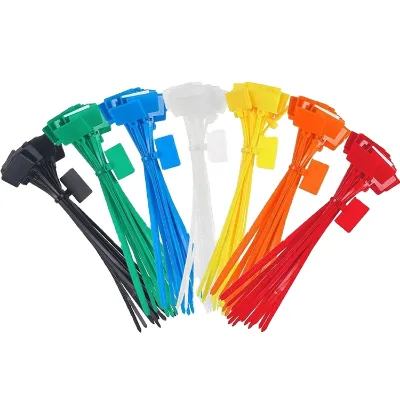
The product scope for reusable self-locking cable ties is defined by a diverse array of physical dimensions and color options to support complex identification systems. Listings confirm the availability of standard sizes such as 3x150mm and 2x80mm, alongside custom sizing capabilities that allow for unique bundle diameters. The color spectrum extends beyond the standard black to include white, red, yellow, blue, green, and orange, enabling color-coded management strategies for different voltage levels or circuit types. This variety in size and color is essential for maintaining clear visual organization in dense wiring environments where quick identification is necessary for troubleshooting.
Commercial signals in the market indicate a flexible approach to packaging and minimum order quantities, which significantly impacts initial procurement costs. The observed minimum order quantities range widely from a single bag to 6,200 units, with some suppliers offering free samples to facilitate quality assessment before bulk commitment. Packaging details vary from simple polyethylene bags to more robust export cartons with stickers, and some listings specify a standard pack count of 1,000 pieces per bag. Buyers should note that while some suppliers support OEM branding, the core product attributes like the self-locking mechanism and nylon material remain consistent across the majority of listings.
Technical Specifications to Verify
When evaluating the technical integrity of reusable self-locking cable ties, the material composition and flame retardant grade are the primary verification points. The supplied data consistently identifies nylon as the base material, with specific flame retardant ratings of 94V-2 and 94V observed in the listings. It is critical for buyers to confirm that the specific batch or model number they select meets the required UL 94 standard for their application, as the difference between V-2 and V-0 ratings can be significant in terms of fire safety compliance. The tensile strength specifications, which vary from 8kg to 175kg, must be cross-referenced with the weight and diameter of the cables being secured to prevent mechanical failure under load.
The mechanical durability of the locking mechanism and the environmental resilience of the product are equally vital technical parameters to validate. The operating temperature ranges provided in the listings, such as -20°C to 85°C or -40°C to +85°C, serve as a baseline for thermal stability, but buyers should verify the specific performance limits of the locking head to ensure it does not become brittle in cold environments or soften in high-heat scenarios. Additionally, the physical dimensions, including width and length, must be verified against the standard sizes like 3x150mm or 2.5x150mm to ensure a proper fit for the intended cable bundle. The presence of a self-locking feature, often described as a "Cable Gland" or "Self-Locking" type, requires inspection to ensure the ratchet mechanism engages securely and does not slip under vibration.
Compliance and Safety Documentation
Compliance documentation for reusable self-locking cable ties typically centers on international safety and environmental standards, with CE, ISO, and RoHS certifications appearing frequently in the product listings. These certifications indicate that the manufacturer adheres to specific European safety directives and environmental restrictions regarding hazardous substances, which is often a prerequisite for exporting to regulated markets. Buyers must request valid certification documents for the specific product model, as the presence of these marks on a listing does not guarantee that every batch produced meets the current regulatory requirements. The inclusion of CCC certification in some listings further suggests compliance with Chinese national standards, which may be relevant for domestic procurement or specific regional requirements.
Safety documentation should also address the specific fire rating claims made by the supplier, particularly the 94V-2 or 94V ratings observed in the data. While the listings mention these grades, buyers should verify that the testing was conducted according to recognized standards such as UL 62275 or IEC 62275, which are relevant to cable management systems. It is important to distinguish between general product certifications and specific material test reports, as the latter provide the empirical evidence needed to validate the flame retardant properties of the nylon used. Without these specific test reports, the safety claims remain unverified, posing a potential risk in applications where fire safety is a critical design constraint.
Cost Drivers and Commercial Terms
The cost structure for reusable self-locking cable ties is heavily influenced by the complexity of the locking mechanism and the volume of the order. The observed price range of 0 to 10.02 USD suggests a wide variance based on unit specifications, with higher tensile strength and custom sizes likely commanding a premium. The minimum order quantity (MOQ) acts as a significant cost driver, as orders below the supplier's threshold may incur higher per-unit costs or require the purchase of a full bag, which can range from 100 to 1,000 pieces depending on the packaging configuration. Buyers should calculate the total landed cost, including shipping and potential duties, rather than focusing solely on the unit price, especially when dealing with small MOQs that might not be cost-effective for large-scale projects.
Commercial terms regarding customization and supply chain flexibility are key factors in the negotiation process. Many suppliers in the observed data support OEM and ODM services, allowing for branding and specific design modifications, which can add value but may also increase the lead time and initial setup costs. The supply ability, cited as 100,000 bags per month in some listings, indicates a robust production capacity, but buyers should confirm the actual lead time for custom orders versus standard stock items. Additionally, the availability of free samples is a valuable commercial term that allows for quality verification without financial risk, and buyers should leverage this to test the mechanical performance of the reusable locking mechanism before committing to a large purchase.
Supplier Qualification and Quality Control
Supplier qualification for reusable self-locking cable ties requires a thorough assessment of their manufacturing capabilities and quality control processes. The data indicates that suppliers are located in key manufacturing hubs such as Guangdong and Zhejiang, China, which are known for their plastic molding and fastener production expertise. Buyers should verify the supplier's production capacity and their ability to maintain consistent quality across large batches, as the mechanical reliability of the self-locking feature is critical. Requesting a factory audit or a detailed quality assurance plan is essential to ensure that the supplier has the necessary equipment and processes to produce ties with consistent tensile strength and flame retardant properties.
Quality control measures should focus on the consistency of the locking mechanism and the material integrity of the nylon used. Given the wide range of tensile strengths observed, from 8kg to 175kg, it is imperative to implement incoming quality control checks that verify the load-bearing capacity of the received goods. Buyers should also inspect the packaging details, such as the use of PE bags or export cartons, to ensure that the products are protected during transit and that the quantity matches the order specifications. The presence of a specific HS Code, such as 3926909090, helps in classifying the product for customs purposes, but buyers must ensure that the supplier's documentation accurately reflects the product's material and function to avoid regulatory issues.
Long-Term Procurement Checks
Long-term procurement of reusable self-locking cable ties requires a strategy focused on supply chain stability and continuous quality monitoring. The observed supply ability of 100,000 bags per month suggests that suppliers can handle significant volume, but buyers should establish a formal agreement that guarantees consistent pricing and delivery schedules over time. Regular audits of the supplier's production line and quality control records are necessary to ensure that the product specifications, such as the operating temperature range and flame retardant grade, remain consistent with the initial samples and certifications. This proactive approach helps mitigate the risk of supply disruptions and ensures that the procurement team can rely on the product for critical infrastructure projects.
Performance tracking and feedback loops are essential components of a long-term procurement strategy for these fasteners. Buyers should maintain a record of field performance, noting any instances of locking mechanism failure, material degradation, or color fading under specific environmental conditions. This data can be used to refine future specifications and to hold suppliers accountable for maintaining the required quality standards. Additionally, staying informed about updates to relevant standards, such as changes in fire safety regulations or environmental compliance requirements, ensures that the procurement strategy remains aligned with current industry expectations. By integrating these checks into the procurement lifecycle, organizations can ensure the reliability and safety of their cable management systems over the long term.
FAQs
What certifications do these nylon cable ties have?
These self-locking cable ties hold CE, ISO, and RoHS certifications. Some listings also include CCC certification. These marks indicate compliance with international safety and environmental standards for wire bundling applications. Buyers can verify specific documents from suppliers to ensure regulatory adherence for their target markets.
What is the operating temperature range for these ties?
The operating temperature typically ranges from -30°C to 85°C or -40°C to +85°C depending on the specific model. This wide range ensures reliable performance in various environmental conditions. The nylon material maintains its tensile strength and self-locking integrity across these temperatures for secure wire management.
Can I get free samples before placing a bulk order?
Yes, free samples are available for these nylon cable ties. This allows buyers to test the tensile strength, color options, and locking mechanism before committing to large quantities. Suppliers typically provide samples to demonstrate product quality and customization capabilities for specific wire bundling requirements.
What sizes and models are available for these cable ties?
Available models include Szs-3, Szs-4, Szs-5, Szs-8, Szs-9, Szs-10, and Szs-12. Sizes range from standard lengths to custom options like 3x250mm or 4-8 inch variants. Tensile strength varies from 8 to 175 kgs, allowing selection based on the weight and bundle size of the wires.
What packaging options are provided for these cable ties?
Packaging includes PE bags, plastic bags with stickers, and export cartons or trays. Standard packs often contain 1000 pieces or 100 pieces per bag. This flexible packaging supports both small-scale testing and large industrial shipments, ensuring protection during transit and easy inventory management for buyers.
Do you support OEM and ODM customization?
OEM and ODM services are supported for these self-locking cable ties. Buyers can request custom sizes, colors like black, white, red, or yellow, and specific branding. This flexibility allows companies to tailor the cable ties to their specific product lines and branding requirements for professional wire management solutions.