Source Rice Huller and Mill Machine For Rice Paddy, Polishing, Flour
Compare 30 Rice Huller and Mill Machine options from verified suppliers. These units support rice paddy hulling, polishing, and flour production with customizable power sources and capacities ranging from 400 to 700 kg per hour; compare the available evidence and request quotations based on your requirements.
Key considerations
Products List


2021 Rice Mill Machine High Husking Rate Rice Paddy Husker Paddy Huller
$5000.00 - $20000.00
MOQ: 1 Pieces


Automatic small paddy huller millet mill rice hulling machine for grain peeling
$600.00 - $1000.00
MOQ: 1 Sets


Industrial Vietnam Rice Mill Rice Huller Rice Milling Machines for Sale
$3000.00 - $3142.00
MOQ: 1 Pieces



Comprehensive Sourcing Guide
Rice Huller and Mill Machine Sourcing Guide
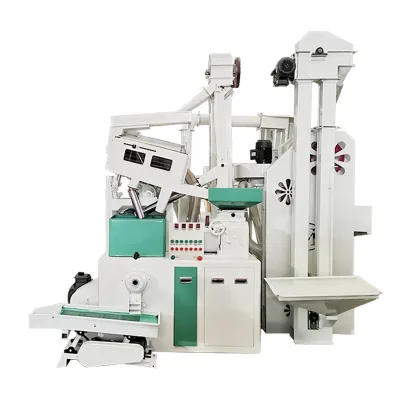
Procuring a Rice Huller and Mill Machine requires careful evaluation of processing capacity and power configuration to match your operational scale. The market offers models with capacities ranging from 400-600kg/H up to 600-700kg/H, allowing buyers to select equipment that aligns with their daily throughput needs. Understanding the distinction between machines with and without integrated husk crushers is critical, as this significantly impacts total power consumption and energy efficiency. Buyers must assess whether their facility can support the higher electrical load associated with comprehensive hulling and polishing systems.
Voltage and frequency compatibility are essential technical considerations that vary by region. Available units support voltages from 220V to 600V, with specific models operating at 380V, and frequencies of 50Hz or 60Hz. Customization options allow for tailored electrical specifications to ensure seamless integration into existing factory infrastructure. Additionally, power sources may include electric or diesel options, providing flexibility for locations with unstable grid power. Verifying these electrical parameters before purchase prevents costly retrofitting and ensures immediate operational readiness upon installation.
Product Scope and Observed Listing Signals
The observed product listings indicate a diverse range of rice milling equipment, with prices spanning from $50 to $22,000 USD. This wide variance reflects differences in automation levels, capacity, and included features such as husk crushing capabilities. Minimum order quantities (MOQ) are generally low, ranging from 1 to 10 units, which facilitates trial purchases for small-scale operations or pilot projects. Buyers should note that while some models are listed as new, others may represent refurbished or specialized industrial variants, necessitating clear communication with suppliers regarding equipment condition.
Packaging and shipping methods are standardized to protect machinery during transit, with options including plywood cases and container sea shipping. The origin of these machines is predominantly Hebei, China, a hub for agricultural machinery manufacturing. Listings highlight high-quality construction and advanced factory equipment, such as American plasma cutters and laser cutters, which contribute to precision manufacturing. Buyers should verify the specific model numbers, such as SB-30, 6LN-15-A, or YBGM, to ensure they are evaluating the correct technical specifications and performance metrics for their intended application.
Technical Specifications to Verify
Key technical attributes include the machine type, which is classified as a rice mill designed for horizontal appearance and rice flour application. The press materials are specified as rice, indicating the primary feedstock for these units. Weight varies significantly, with some models weighing 1680kg and others up to 1.5 tons, affecting foundation requirements and handling logistics. Power ratings differ based on configuration, with some units requiring 5.5kw, 18.5kw, 28kw, or up to 26.25kw when equipped with a husk crusher. Buyers must confirm the exact power draw to ensure their electrical infrastructure can support the load without interruption.
Dimensions and physical footprint are critical for facility planning, with standard sizes listed as 320026002900mm or 300026002900mm. These measurements help determine the space required for installation, maintenance access, and material flow. The capacity of 600-700kg/H suggests high-efficiency performance suitable for medium to large-scale milling operations. Buyers should verify if the capacity is dependent on the specific machine model or if it represents a maximum theoretical output under ideal conditions. Accurate specification verification prevents bottlenecks in the production line and ensures the equipment meets daily processing targets.
Compliance and Safety Documentation
Compliance with international standards is a priority for global buyers, with listings citing ISO9001, TUV, SGS, and SONCAP certifications. These standards indicate adherence to quality management systems and safety protocols, which are essential for importing machinery into regulated markets. Buyers should request valid certification documents to verify that the manufacturer maintains these standards consistently. The presence of ISO certification suggests a structured approach to production quality, reducing the risk of defects and ensuring reliable performance over the machine's lifespan.
Safety features and operational guidelines must be thoroughly reviewed before deployment. While specific safety mechanisms are not detailed in the provided facts, buyers should ensure that all moving parts are adequately guarded and that emergency stop functions are accessible. Documentation should include clear instructions for voltage selection and frequency adjustment to prevent electrical hazards. Additionally, verifying that the machine meets local agricultural machinery standards in the destination country is crucial for legal operation and insurance coverage. Proper documentation ensures that the equipment can be installed and operated without regulatory penalties.
Cost Drivers and Commercial Terms
Several factors influence the final cost of a Rice Huller and Mill Machine, including power source, capacity, and customization options. Electric models with higher wattage and integrated husk crushers typically command higher prices due to increased material and engineering costs. Customization of voltage and frequency adds to the base price but is necessary for compatibility with local power grids. Buyers should also consider the cost of shipping, which varies based on packaging type and destination, as well as any import duties or taxes applicable in their region.
Commercial terms such as warranty and after-sales service significantly impact the total cost of ownership. A one-year warranty period is commonly offered, providing protection against manufacturing defects. Buyers should evaluate the cost of extended warranty options and the availability of spare parts. Service offerings include 24-hour online support and field installation services, which can reduce downtime and labor costs. Understanding the full scope of these commercial terms helps buyers budget accurately and avoid unexpected expenses during the initial operational phase.
Supplier Qualification and Quality Control
Supplier qualification involves assessing the manufacturer's production capacity and workforce size. Listings indicate that factories employ more than 100 workers, suggesting a substantial operational scale capable of meeting demand. The use of advanced equipment like laser cutters and plasma cutters implies a focus on precision and quality control. Buyers should verify the supplier's track record in exporting to regions such as Australia, Africa, Southeast Asia, and North America, as this experience indicates familiarity with international logistics and customer service requirements.
Quality control processes should be transparent and rigorous. Buyers should request evidence of quality assurance practices, such as pre-shipment inspections and testing protocols. The claim of "high quality" and "top level" performance should be substantiated by customer references or independent reviews. Additionally, verifying the supplier's ability to provide engineers for overseas service is crucial for long-term maintenance and troubleshooting. Establishing a clear communication channel with the supplier ensures that any technical issues can be resolved promptly, minimizing production disruptions.
Long-Term Procurement Checks
Long-term procurement success depends on reliable after-sales support and maintenance availability. Suppliers offering engineers for overseas service provide a significant advantage, ensuring that complex repairs can be handled without shipping parts back and forth. Buyers should confirm the availability of spare parts and the expected lead times for delivery. A robust support network reduces downtime and extends the operational life of the machinery, protecting the initial investment. Regular maintenance schedules should be established in collaboration with the supplier to prevent premature wear and tear.
Continuous evaluation of supplier performance is essential for building a resilient supply chain. Buyers should monitor the supplier's responsiveness to inquiries and their ability to resolve issues efficiently. Feedback from other customers in similar regions can provide insights into the reliability of the equipment and the quality of service. Additionally, staying informed about technological advancements in rice milling can help buyers upgrade their equipment strategically. Maintaining a strong relationship with the supplier facilitates better pricing and priority service during peak demand periods.
FAQs
What is the capacity of the rice mill machine?
The machine capacity ranges from 400 to 600 kilograms per hour depending on the specific model configuration. Some variants offer a higher capacity of 600 to 700 kilograms per hour for increased production needs. This ensures efficient processing for various rice paddy hulling and polishing requirements.
Can the voltage be customized for different regions?
Yes, the voltage can be customized to meet specific regional requirements ranging from 220 to 600 volts. The standard frequency options include 50Hz or 60Hz to ensure compatibility with local power grids. This flexibility allows the equipment to operate effectively in diverse international markets.
What certifications does the rice mill machine hold?
The product holds multiple international certifications including ISO9001, TUV, SGS, and SONCAP standards. These certifications verify that the machinery meets strict quality and safety requirements for agricultural equipment. Such credentials ensure reliability and compliance for export to regions like Australia and North America.
How is the machine packed for shipping?
The machine is packed in a sturdy plywood case to ensure safe transport during international shipping. Some models utilize standard packing methods while others are shipped in containers by sea. This robust packaging protects the heavy machinery weighing up to 1.5 tons from damage during transit.
What after-sales service is provided for the machine?
The supplier provides 24-hour online service and field installation support for all purchased units. Engineers are available to service the machinery overseas to ensure continuous operation. This comprehensive service package guarantees long-term support for the rice milling equipment in any location.
What is the power consumption of the rice mill?
Power consumption varies based on the configuration, with the unit using 26.25kw when equipped with a husk crusher. Without the husk crusher, the power requirement drops to 19.25kw for standard operation. Specific models may also list power ratings of 5.5kw or 28kw depending on the machine type.
Where is the factory located and how many workers are there?
The factory is located in Hebei, China, specifically at Heping East Road in Shijiazhuang City. The facility employs more than 100 workers to ensure high production capacity and quality control. Advanced equipment like American plasma cutters and laser cutters are used in this large-scale operation.