Source Rice Mill Plant for Rice Flour, Wheat, and All Applications
Compare 30 Rice Mill Plant options featuring capacities from 10 to 2400 tons per day. These units process paddy rice into white rice with extraction rates up to 75% and broken rice levels as low as 2-3%.
Key considerations
Products List


$5600.00 - $12000.00
MOQ: 1

$5300.00 - $11000.00
MOQ: 1


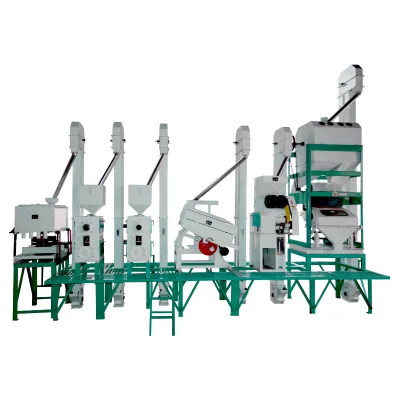


Comprehensive Sourcing Guide
Strategic Sourcing Guide for Rice Mill Plant Procurement
Understanding Technical Specifications and Capacity Ranges
When initiating a procurement strategy for a Rice Mill Plant, the first critical step involves defining the technical specifications that align with your operational goals. The market offers a diverse array of machinery, ranging from small-scale units to large industrial complexes. Based on current market observations, capacity specifications vary significantly, with some units designed for processing 10 to 20 tons per day, while others support massive throughput ranging from 40 tons to 2,400 tons per 24-hour cycle. It is essential to distinguish between these tiers, as the engineering requirements for a 50-ton-per-day facility differ vastly from a 2,000-ton-per-day plant.
The physical configuration of the mill is another key technical variable. Buyers should verify whether the equipment is designed in a horizontal layout, which is a common configuration for efficient material flow. The voltage requirements are also a fundamental specification; many industrial units operate on a standard 380V supply, which must be compatible with your local power infrastructure. Furthermore, the type of machinery is often categorized by its specific function, such as a dedicated Rice Mill or a Flour Mill capable of processing rice flour, wheat, and other grains. The model numbers associated with these machines, such as the YBRM series or CTNM series, often indicate specific production lines or technological generations. For instance, models like YBRM10, YBRM15/20/30/50, and CTNM20B represent distinct capacity or functional profiles that buyers must match to their raw material volume.
Compliance, Certification, and Safety Standards
Ensuring that a Rice Mill Plant meets international and local safety standards is non-negotiable for long-term operational viability. The supply chain for industrial milling equipment often includes various certifications that validate the quality and safety of the machinery. Buyers should look for evidence of ISO certification, with specific references to standards such as ISO2008 or general ISO compliance appearing in product documentation. Additionally, some suppliers may provide documentation related to SGS and CE standards, which are critical for verifying that the equipment meets European safety and environmental requirements.
It is important to note that certification status is not universal across all listed products. While some units explicitly state compliance with ISO and CE standards, others may not list these certifications in their initial specifications. Therefore, procurement teams must verify the specific certification status of the exact model they intend to purchase rather than assuming it applies to the entire product category. The absence of a listed certification in a product description should trigger a direct inquiry to the supplier to confirm if the unit can be certified upon request or if it adheres to alternative regional standards.
Cost Drivers and Pricing Structures
The financial landscape of sourcing a Rice Mill Plant is influenced by several dynamic factors, primarily driven by capacity and customization levels. The observed price range in the market is exceptionally broad, spanning from approximately $66 to $3,000,000. This wide disparity reflects the difference between small, single-unit mills and fully automated, high-capacity processing lines. The primary cost driver is the production capacity; a unit capable of processing 500 tons per day will naturally command a higher price than a 5-ton-per-day unit.
Another significant factor influencing cost is the level of customization. The market features both customized and non-customized options. Customized units, which may include tailored dimensions, specific voltage configurations, or unique automation features, typically incur higher costs due to the engineering and manufacturing effort required. Conversely, standard models with fixed specifications, such as those with a standard 1.5x2.25x2.45 meter footprint or a standard blue and white color scheme, may offer a more cost-effective solution. Buyers must also consider the Minimum Order Quantity (MOQ), which ranges from 1 to 10 units depending on the supplier and the specific model. Understanding these variables allows for a more accurate budgeting process and prevents unexpected financial overruns during the procurement phase.
Typical Applications and Output Quality
The intended application of the Rice Mill Plant dictates the required technical features and expected output quality. These facilities are primarily designed to process raw paddy rice into final products such as white rice or rice flour. The efficiency of the milling process is often measured by the milled rice rate and the extraction rate. Market data indicates that some units achieve a milled rice rate of up to 75%, while others may report an extraction rate of 70%. These metrics are critical for determining the economic viability of the plant, as they directly impact the yield from the raw material.
The quality of the final product is also a key consideration. Buyers should verify the broken rice percentage, which is a measure of the integrity of the grains after processing. A broken rice rate of 2-3% is observed in certain high-performance models, indicating a superior milling process that preserves grain quality. The application scope varies as well; while some mills are dedicated solely to rice, others are versatile enough to handle wheat and produce rice flour, offering flexibility for facilities that process multiple grain types. The final product specification, whether it is white rice or flour, must align with the specific market demands of the buyer's target customers.
Supplier Evaluation and Operational Support
Evaluating a supplier requires a holistic approach that goes beyond the initial product listing. Buyers should prioritize suppliers who offer robust after-sales support, such as video support, which can be invaluable for troubleshooting and operational guidance without the need for immediate physical travel. The condition of the equipment is another critical factor; most suppliers list their units as "New," but buyers must verify the manufacturing date and the warranty terms. A standard warranty period of 1 year is common, but this should be clearly defined in the contract.
The origin of the equipment is also a significant indicator of supply chain reliability. The majority of the observed rice mill plants originate from China, with specific mentions of regions like Hebei, China (Mainland). While this provides a large pool of potential suppliers, buyers must conduct due diligence to ensure the supplier has a proven track record of exporting and supporting international clients. The packaging method, whether it is a wooden case, plywood case, or shipping container, also reflects the supplier's attention to detail in protecting the equipment during transit. A supplier that uses robust packaging like wooden cases or containers by sea shipping demonstrates a commitment to minimizing damage risks during the long shipping process.
Quality Control and Long-Term Procurement Considerations
Implementing a rigorous quality control (QC) protocol is essential before finalizing any purchase. Buyers should verify the power consumption of the units, as some models are designed with low consumption features to reduce long-term operational costs. The power rating is often linked to the capacity of the machine, with specifications stating "up to The Capacity," which requires clarification to ensure the power supply matches the machine's needs. Additionally, the weight and size of the equipment, often listed as "According to The Capacity," must be verified to ensure compatibility with the buyer's facility layout and floor load limits.
Long-term procurement considerations extend beyond the initial purchase price. Buyers should evaluate the availability of spare parts and the potential for future expansion. The standard production capacity, ranging from 5 tons per day to 500 tons per day, suggests that suppliers may offer modular solutions or scalable lines. The lead time and shipping logistics, including the use of wooden packing or shipping containers, must be factored into the project timeline. Finally, the customization options, such as the ability to tailor the press series (e.g., Second or Fourth series) or the specific model number, allow buyers to future-proof their investment. By carefully analyzing these factors, buyers can secure a Rice Mill Plant that not only meets immediate production needs but also supports sustainable growth and operational efficiency for years to come.
| Feature Category | Observation Range / Standard | Verification Requirement |
|---|---|---|
| Capacity | 10-20 TPD to 40-2400 TPD | Confirm specific daily tonnage needs vs. model specs. |
| Voltage | 380V | Ensure compatibility with local power grid. |
| Certification | ISO, ISO2008, SGS, CE | Request valid certificates for the specific unit. |
| Packaging | Wooden Case, Plywood, Container | Verify packaging type for shipping safety. |
| Warranty | 1 Year | Confirm warranty terms and coverage scope. |
| Output Quality | Milled Rate 75%, Broken Rice 2-3% | Request test data or sample output verification. |
| Origin | China (Mainland), Hebei | Verify supplier location and export history. |
| Customization | Available / Non-Customized | Define exact customization needs before ordering. |
FAQs
What is the typical capacity range for rice mill plants?
Capacity ranges from 10 to 20 tons per day up to 2,400 tons per 24 hours. Specific models like YBRM or CTNM series support varying throughput levels to match operational needs.
Which certifications are available for rice mill machinery?
Many units carry ISO, ISO2008, SGS, or CE certifications. Buyers must verify specific certificate status for the exact model as not all listed products explicitly display these standards.
How is the voltage requirement specified for these mills?
Industrial units typically operate on a standard 380V supply. This voltage requirement must be compatible with your local power infrastructure before installation.
What is the observed price range for rice mill plants?
Prices span from approximately $66 to $3,000,000 depending on capacity and customization. Higher capacity lines and custom configurations naturally command higher costs than standard models.
Can rice mill plants be customized for specific needs?
Customization is available for some units, while others are non-customized. Buyers should define exact requirements for dimensions or automation features before ordering to ensure compatibility.
What is the standard warranty period for this equipment?
A standard warranty period of 1 year is common for new units. Buyers should confirm specific warranty terms and coverage scope in the contract before finalizing the purchase.
Where are these rice mill plants typically manufactured?
The majority of equipment originates from China, specifically regions like Hebei. Buyers should verify supplier location and export history to ensure supply chain reliability.