Source Rice Washing Basin for Kitchens, Farms, and Factories
Explore 30 listings for the Rice Washing Basin, featuring options in stainless steel with varying capacities and designs. Buyers can compare specifications like voltage, packing, and stone removal rates to find suitable equipment for home kitchens, agricultural processing, or industrial mills.
Key considerations
Products List













Comprehensive Sourcing Guide
Strategic Sourcing Guide for Rice Washing Basins and Industrial Rice Processing Equipment
The global demand for efficient rice processing has driven a significant evolution in the equipment market, ranging from compact household units to large-scale industrial machinery. For procurement professionals and business buyers, the term "Rice Washing Basin" often serves as a starting point for research, yet the actual supply chain encompasses a diverse array of products. These range from simple stainless steel kitchen tools designed for family use to complex, automated systems capable of processing hundreds of tons of grain daily. Understanding the distinction between these categories is the first critical step in developing a successful sourcing strategy. This guide provides a comprehensive framework for evaluating suppliers, verifying technical specifications, and ensuring that the selected equipment aligns with specific operational requirements, all while adhering to strict evidence-based procurement principles.
Distinguishing Product Categories and Functional Applications
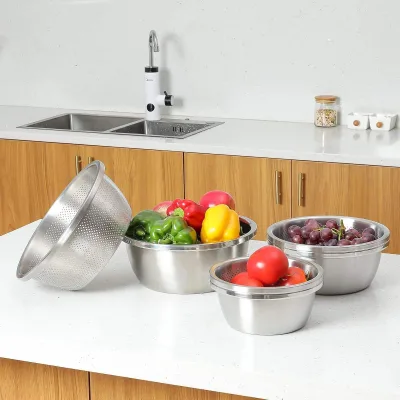
The market for rice washing equipment is not monolithic; it is segmented by application scale and design intent. Buyers must first determine whether their need lies in the domestic sector or the industrial processing sector. On the domestic side, products are often marketed as "Stainless steel rice washing basins" or "Fruits Drainer Baskets." These items are characterized by their compact dimensions, such as a single package size of approximately 30x25x15 cm, and are designed for "Home Kitchen" or "Family Commonly Used Tools." The material composition for these units is typically stainless steel, with specific grades like 201 or 304 available, offering options in silver or gold finishes. The appearance of these basins can vary, with some designed as vertical units and others as horizontal containers, though the vertical configuration is frequently observed in colander and strainer styles.
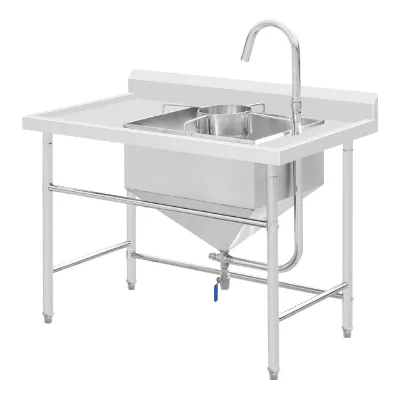
In contrast, the industrial segment focuses on high-capacity machinery. These units are often classified as "Rice Mill" components or specialized "Rice Washer" systems. The technical specifications for these machines differ drastically from their household counterparts. For instance, industrial models may feature a capacity ranging from 500kg/H up to 500 tons per day, depending on the specific configuration. The working parameters for these systems include a required working water pressure between 0.23 and 0.28MPa, and they are engineered to achieve a stone removal rate exceeding 95%. The physical footprint of industrial units is substantial, with standard dimensions often cited around 1100x1000x820mm, and they are constructed from heavy-duty stainless steel 304 to withstand continuous operation.
Technical Specifications and Performance Verification
When evaluating potential suppliers, buyers must scrutinize the technical data provided to ensure it matches their operational needs. For industrial rice washing systems, the power consumption is a key metric; observed models in the market operate at 1.5kw, which is a critical factor for energy budgeting. The structural integrity of these machines is often defined by their weight, with some heavy-duty units weighing up to 88KG. The discharge mechanism is equally important; specifications indicate that the stone discharge pipe diameter should be greater than 11mm to ensure effective removal of impurities without clogging.
For the smaller, basin-style products, the focus shifts to material grade and dimensions. The "metal type" is consistently listed as Stainless Steel, but the specific alloy (201 vs. 304) dictates corrosion resistance and longevity. While some listings mention a single gross weight of 0.500 kg for the smaller basins, industrial units are significantly heavier. Buyers should verify the "prod_model" numbers, such as YBRM, YXM-500, or HT-YXM500, as these identifiers often correlate with specific capacity tiers and feature sets. It is essential to note that while some products are described as "Eco-Friendly" or "Sustainable," these are marketing attributes that require verification against actual energy efficiency data or material sourcing policies.
Compliance, Certification, and Material Standards
Compliance is a non-negotiable aspect of B2B procurement, particularly when dealing with food processing equipment. While the supplied data does not explicitly confirm specific certification statuses for every listed product, buyers should be aware that international standards like ISO 9001 are often referenced in the broader industry context. However, relying on background knowledge alone is insufficient; the buyer must request current, valid certification documents from the supplier. The material standards are equally critical. For industrial machines, the use of "Stainless Steel 304" is a common specification for food-grade contact surfaces, ensuring resistance to rust and chemical degradation.
Buyers must also verify the "prod_standard" and "prod_packing" details. Industrial units often require "Standard Export Packing" or "Fumigation-Free Wooden Case" to meet international shipping regulations, particularly for imports into regions with strict phytosanitary requirements. The origin of the products is another compliance factor; the data indicates origins in Guangdong and Henan, China, which are major manufacturing hubs. However, the specific "place of origin" should be confirmed on a per-shipment basis to ensure transparency. When evaluating "Customized" features, such as "Customized Logo Acceptable," buyers should ensure that any branding modifications do not compromise the structural integrity or food safety compliance of the unit.
Cost Drivers and Pricing Dynamics
The pricing landscape for rice washing equipment is highly variable, reflecting the vast difference between a simple kitchen basin and a fully automated industrial mill. The observed listed price range in the market spans from 0.15 USD to 12,000 USD. This wide spectrum is driven by several factors, including the complexity of the machinery, the grade of stainless steel used, the automation level, and the included features such as stone removal capabilities. For the industrial sector, the cost is heavily influenced by the capacity, with units capable of processing 500 tons per day commanding a significantly higher price point than those rated at 5 tons per day.
The Minimum Order Quantity (MOQ) is another significant cost driver. The observed MOQ range is between 1 and 10,000 units. For industrial machinery, the MOQ is often as low as 1 Set, allowing for single-unit procurement for pilot projects or small-scale operations. Conversely, for smaller items like basins, the MOQ may be set at 50pcs or higher. Buyers should also consider the "Selling Units," which can be listed as "Single item" for retail-style purchases or bulk packages for industrial deployment. The "Customization" availability, such as custom logos or specific dimensions, can also impact the final cost, often adding a premium to the base unit price.
Supplier Evaluation and Operational Capabilities
Selecting the right supplier requires a rigorous evaluation of their operational capabilities and reliability. The data indicates that suppliers are located in China, specifically in provinces like Guangdong and Henan. When evaluating these suppliers, buyers should look for evidence of their ability to handle "Container by Sea Shipping" for larger units, as this is the standard method for transporting heavy machinery. The "Condition" of the products is listed as "New," which is a baseline expectation, but buyers should verify the warranty terms and after-sales support policies.
A critical aspect of supplier evaluation is the verification of their production capacity and lead times. While specific lead times are not provided in the data, the ability to produce units with a capacity of up to 500 tons per day suggests a robust manufacturing infrastructure. Buyers should assess whether the supplier can meet the "Customized" requirements, such as specific "prod_model" configurations or unique "Stone Removal Rate" targets. The "Advantage" of the equipment, often described as "Multi-Use and High Performance," should be validated through case studies or client references. Furthermore, the "Feature" of being "Stocked" or "Sustainable" should be cross-referenced with the supplier's inventory management systems to ensure timely delivery.
Quality Control and Long-Term Procurement Strategy
Quality control is paramount in the food processing industry to prevent contamination and ensure consistent performance. For rice washing basins and mills, the "Stone Removal Rate" is a key performance indicator that must be verified. A rate of >95% is a common benchmark, but buyers should request test results or third-party verification to confirm this metric for specific models. The "Working Water Pressure" of 0.23-0.28MPa is another critical parameter that must be maintained for optimal operation; deviations can lead to inefficient washing or equipment damage.
Long-term procurement considerations involve planning for maintenance, spare parts availability, and scalability. The "Type" of the equipment, whether it is a "Rice Mill" or a "Colander & Strainer," dictates the maintenance schedule. Industrial units with a "Power" of 1.5kw require regular electrical checks, while the mechanical components, such as the "Stone Discharge Pipe," need periodic inspection for wear and tear. Buyers should also consider the "Application" of the equipment; units designed for "Beans, Wheat" may have different wear patterns compared to those dedicated solely to rice. Finally, the "prod_packing" method, such as "Fumigation-Free Wooden Case," plays a role in the longevity of the equipment during transit and storage, ensuring that the machinery arrives in pristine condition and is ready for immediate deployment.
Conclusion
Sourcing rice washing basins and associated processing equipment requires a nuanced understanding of the diverse product landscape. From the compact, stainless steel basins used in home kitchens to the high-capacity, automated rice mills found in industrial facilities, each category presents unique challenges and opportunities. By carefully analyzing technical specifications, verifying material standards, and evaluating supplier capabilities, buyers can make informed decisions that align with their operational goals. The wide range of prices and MOQs reflects the flexibility of the market, allowing buyers to scale their procurement strategies based on their specific needs. Ultimately, success in this sector depends on a disciplined approach to verification, ensuring that every piece of equipment meets the rigorous demands of modern food processing.
FAQs
Can I get a customized logo on the Rice Washing Basin?
Yes, customized logos are acceptable for these stainless steel basins. This option allows buyers to brand the product for their specific needs while maintaining the standard food-grade material quality and dimensions.
What is the minimum order quantity for the Rice Washing Basin?
The minimum order quantity is 50 pieces for the standard stainless steel models. Some industrial rice washer units may have a lower MOQ of just one set, depending on the specific model and configuration selected.
Which material is used to construct the Rice Washing Basin?
The basins are constructed from stainless steel, with grades including 201 and 304 available. This material ensures durability and corrosion resistance, making the units suitable for both home kitchen use and industrial food processing applications.
How much does a Rice Washing Basin cost in the current market?
Listed prices range from 0.15 to 12,000 USD depending on the product type. Simple kitchen basins are priced at the lower end, while large industrial rice mills with high daily capacity command the higher price points.
What is the production capacity of the industrial rice washing machine?
Industrial units can process between 5 tons and 500 tons of rice per day. Specific models like the YXM-500 offer capacities up to 500kg per hour with a stone removal rate exceeding 95 percent.
Where are the rice washing basins and machines manufactured?
These products originate from China, specifically from provinces like Guangdong and Henan. Buyers should verify the exact place of origin for each shipment to ensure transparency regarding the manufacturing location.
How are the rice washing machines packaged for shipping?
Packaging options include container by sea shipping, standard export packing, or fumigation-free wooden cases. The specific method depends on the product size and whether it is a small basin or a heavy industrial unit.