Source Saso Certified Cosmetic Tube for Cosmetics, Medicine, Food
Find 30 Saso Certified Cosmetic Tube options from verified suppliers in China and Taiwan. Compare specifications, materials like plastic and aluminum, and customization features for cosmetics, medicine, and food packaging needs.
Key considerations
Products List


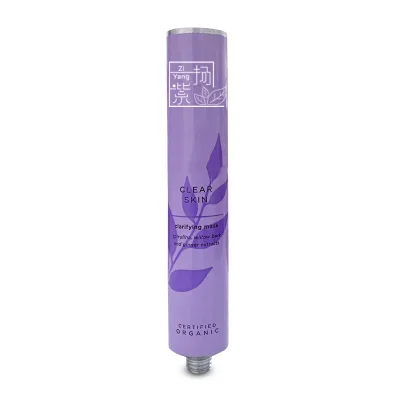


Square Tubes Packaging Tubes Cosmetic Packaging Beauty Skin Care Packaging
$0.10 - $0.20
MOQ: 5000 Pieces
Comprehensive Sourcing Guide
Strategic Sourcing Guide for Saso Certified Cosmetic Tubes
Understanding the Product Category and Material Composition
The global market for cosmetic packaging is dominated by flexible tube solutions, with the cosmetic tube serving as a primary vessel for creams, gels, lotions, and pastes. When sourcing a product explicitly described as "Saso Certified Cosmetic Tube," buyers must first recognize that this designation refers to a specific regulatory compliance framework rather than a unique physical shape. The product category encompasses a wide array of designs, ranging from standard cylindrical forms to specialized shapes for mascaras or specific dispensing needs.
A critical observation in the current supply landscape is the diversity of material composition available. While plastic remains the dominant material due to its cost-effectiveness and versatility, the market also offers aluminum and laminated composite options. The presence of both "Plastic" and "Aluminium" in the observed product attributes indicates that buyers should not assume a single material type. Plastic tubes are often preferred for their lightweight nature and ability to be molded into complex shapes, whereas aluminum tubes provide superior barrier properties against light and oxygen, which is essential for sensitive formulations. Some listings also suggest a hybrid approach where the tube body is plastic but the cap or collar may be aluminum, or where the product is marketed as a "Mascara Tube" with specific aluminum features.
The physical specifications of these tubes vary significantly to accommodate different product volumes. Observed data points to size ranges such as D13.5-40mm for diameter, with capacity standards explicitly listed as 4ml, 6ml, 8ml, 16mm (likely referring to diameter or a specific standard code), 30ml, and larger formats. The "8ml" and "30ml" standards suggest that manufacturers produce tubes to specific volume capacities rather than just generic dimensions. Buyers must verify the exact internal volume and wall thickness required for their specific formulation, as the viscosity of the product inside will dictate the structural integrity needed from the tube.
Navigating Certification and Regulatory Compliance
For buyers targeting markets in the Middle East, particularly Saudi Arabia, the "Saso" certification is a non-negotiable requirement. The Saudi Standards, Metrology and Quality Organization (SASO) mandates that products entering the Kingdom must meet specific safety and quality standards. In the context of cosmetic tubes, this certification ensures that the packaging materials do not leach harmful substances into the cosmetic product and that the manufacturing process adheres to strict hygiene protocols.
The supply data indicates a robust ecosystem of certifications surrounding these products. Beyond Saso, the observed attributes list ISO9001, GMPC (Good Manufacturing Practice for Cosmetics), and ISO22716. ISO9001 certifies the manufacturer's quality management system, ensuring consistent production processes. GMPC and ISO22716 are specific to the cosmetics industry, verifying that the facility maintains a clean environment free from contamination, which is vital for products intended for skin application. The presence of "Saso" alongside these other certifications suggests that the suppliers are capable of meeting multiple international regulatory hurdles simultaneously.
Buyers must verify the validity of these certificates. The term "Saso certified" in a product listing should be cross-referenced with the actual certificate documentation provided by the supplier. It is important to understand that certification is often product-specific or batch-specific. A supplier may hold a general ISO9001 certificate, but the specific cosmetic tube model being ordered must be tested and approved under the Saso framework. The "Certificate" attribute listing "ISO9001 / GMPC / ISO22716 / Saso" implies a comprehensive compliance suite, but the buyer's due diligence must confirm that the specific model number, such as "PEM-036" or "AMY-124," is covered under the active Saso registration.
Technical Specifications and Customization Capabilities
The technical landscape of cosmetic tube sourcing is defined by a high degree of customization. The "Customization: Available" attribute confirms that buyers are not limited to off-the-shelf inventory. Manufacturers typically offer a range of customization options including private logo support, specific color matching, and unique surface treatments. The observed "Private Logo: Support" feature is critical for brands looking to establish a distinct market identity. This can be achieved through various printing techniques, with "Offset Printing" and "Hot Stamping" being the two primary methods noted in the product data.
Offset printing is generally preferred for high-volume orders requiring detailed, multi-color graphics, while hot stamping is often used for metallic finishes or premium branding effects. The "Surface Treatment" attribute explicitly lists these two processes, indicating that the supplier can accommodate different aesthetic requirements. Furthermore, the "Color: Multi colors" and "Color: Color" attributes suggest that the tubes can be produced in a wide spectrum of hues, allowing for brand differentiation.
The physical form of the tube is also a key specification. The "Folded: Unfolded" attribute indicates that the tubes are supplied in a flat, collapsed state to save on shipping volume and storage space. This is a standard industry practice for flexible tubes, which are expanded and filled by the end-user or the brand's filling line. The "Product Name" is consistently listed as "Cosmetic Tube," but specific model numbers like "STT-014," "STT-007," and "AMY-469" suggest a vast catalog of pre-engineered designs. Buyers should treat these model numbers as reference points for specific dimensions and features rather than rigid constraints, as the "customed" standard attribute implies that modifications to these base models are possible.
Cost Drivers and Pricing Dynamics
The pricing structure for cosmetic tubes is influenced by several variable factors, including material type, order volume, and customization complexity. The observed price range of $0.04 to $1.00 USD per unit reflects the wide disparity between basic plastic tubes and more complex aluminum or multi-layered composite tubes. The lower end of the spectrum likely corresponds to simple, high-volume plastic tubes with minimal printing, while the higher end may include aluminum tubes, complex shapes, or those with advanced surface treatments like hot stamping.
Order volume is a primary driver of unit cost. The "MOQ" (Minimum Order Quantity) range observed spans from 1 to 100,000 units. This flexibility allows small businesses to test the market with small orders, while large enterprises can leverage economies of scale for massive production runs. The "Small Orders: Accepted" attribute confirms that suppliers are willing to accommodate lower volume requests, though the unit price will naturally be higher due to the fixed costs of setup and machine calibration.
Additional cost factors include the "Sampling Time" of 5-7 days, which implies that prototype development is a distinct phase in the procurement process. While sampling allows for quality verification, it adds a time and potentially financial cost before mass production begins. The "Delivery Time" of 15 days suggests a relatively quick turnaround for standard orders, but this may vary based on the complexity of the customization and the current production load. Buyers should also consider the "prod_packing" options, such as "Carton" or "Paper Box/Bag," as these affect the overall shipping weight and volume, thereby influencing logistics costs.
Supplier Evaluation and Geographic Considerations
When evaluating potential suppliers for Saso-certified cosmetic tubes, geographic origin plays a significant role in logistics and regulatory alignment. The data indicates that products originate from multiple locations, including "Jiangsu, China," "Yangzhou China," and "Taiwan." Jiangsu and Yangzhou are major manufacturing hubs in China known for their plastic and packaging industries, offering a mature supply chain and competitive pricing. Taiwan is also recognized for high-quality manufacturing and precision engineering, which may be advantageous for buyers seeking premium finishes or complex tube designs.
The "Brand Name: Jia Win" is observed in the data, but buyers should not limit their search to a single brand. Instead, they should evaluate suppliers based on their ability to provide the full suite of certifications (ISO, GMPC, ISO22716, Saso) and their track record in handling the specific customization requirements. The "Guarantee Period: 3years" is an interesting attribute that suggests a commitment to product durability and quality assurance, though this may refer to the packaging integrity rather than the tube itself.
Suppliers should be vetted for their ability to handle the "Usage" requirements, which include "Cosmetics, Medicine, Food, Toothpaste, Chemical." This versatility indicates that the manufacturing facilities are equipped to handle various product types, ensuring that the tubes are compatible with a wide range of formulations. The "Feature: disposable" and "Feature: recyclable" attributes highlight environmental considerations. Buyers should verify if the "recyclable" claim applies to the specific material used (e.g., specific plastic grades or aluminum) and if the supplier has a documented recycling program or uses recycled materials in their production.
Quality Control and Long-Term Procurement Strategy
Ensuring the quality of cosmetic tubes requires a rigorous quality control (QC) process. Given the "Feature: recyclable" and "Feature: disposable" attributes, the structural integrity of the tube is paramount. The tubes must withstand the pressure of filling, the stress of transportation, and the conditions of storage without leaking or deforming. The "prod_standard" of "cosmetic tube" and specific capacity standards like "8ml" or "30ml" serve as benchmarks for QC checks.
Buyers should implement a multi-stage QC strategy. First, verify the raw materials to ensure they meet the "Plastic" or "Aluminium" specifications and are free from contaminants. Second, inspect the printing quality to ensure that the "Offset Printing" or "Hot Stamping" is crisp, aligned, and adheres to the "Private Logo" requirements. Third, conduct leak tests and pressure tests on a sample batch to confirm the tube's ability to hold the intended product without failure. The "Sampling Time" of 5-7 days allows for this initial verification before full-scale production.
For long-term procurement, establishing a reliable supply chain is essential. The "Delivery Time" of 15 days is a key metric for inventory planning. Buyers should aim to maintain a buffer stock to mitigate potential delays, especially when dealing with international shipping from China or Taiwan. The "prod_packing" of "Carton" or "Paper Box/Bag" should be optimized to prevent damage during transit. Additionally, the "Small Orders: Accepted" feature allows for a flexible procurement strategy where buyers can start with smaller batches to test market response before committing to large-scale orders, reducing the risk of overstocking or obsolescence.
Conclusion and Procurement Best Practices
Sourcing Saso-certified cosmetic tubes requires a balanced approach that combines technical verification, regulatory compliance, and strategic supplier selection. The market offers a diverse range of options, from basic plastic tubes to complex aluminum designs, with varying levels of customization and certification. Buyers must prioritize the verification of Saso, ISO, and GMPC certifications to ensure market access and product safety.
The observed data suggests a flexible and responsive supply chain capable of handling both small and large orders. By leveraging the "Customization" and "Private Logo" features, brands can create unique packaging that stands out in a competitive market. However, the success of the procurement process depends on thorough due diligence, including material verification, quality control testing, and clear communication of specifications.
Ultimately, the goal is to secure a supply of high-quality, compliant cosmetic tubes that meet the specific needs of the brand and its customers. By adhering to the technical standards and regulatory requirements outlined in this guide, buyers can navigate the complexities of the global packaging market and establish a robust, reliable supply chain for their cosmetic products. The combination of diverse material options, extensive customization capabilities, and strong certification frameworks makes the cosmetic tube market a viable and dynamic sector for B2B procurement.
FAQs
What certifications are required for Saso Certified Cosmetic Tube?
Saso certified cosmetic tubes must hold ISO9001, GMPC, ISO22716, and Saso certifications. These documents verify that the manufacturing facility meets strict hygiene and quality standards for cosmetic packaging entering the Saudi market.
Which materials are used for Saso Certified Cosmetic Tube production?
Saso certified cosmetic tubes are manufactured using plastic or aluminum materials. Plastic offers lightweight versatility, while aluminum provides superior barrier properties against light and oxygen for sensitive formulations.
Can I get private logo support on Saso Certified Cosmetic Tube?
Yes, private logo support is available for Saso Certified Cosmetic Tube orders. Manufacturers offer customization through offset printing or hot stamping to apply brand graphics on multi-color tube surfaces.
How long is the sampling time for Saso Certified Cosmetic Tube?
The sampling time for Saso Certified Cosmetic Tube is typically 5 to 7 days. This period allows for prototype development and quality verification before proceeding to mass production runs.
What is the delivery time for Saso Certified Cosmetic Tube orders?
The standard delivery time for Saso Certified Cosmetic Tube orders is 15 days. This timeline applies to standard production runs, though complex customization may affect the final schedule.
Which MOQ options are available for Saso Certified Cosmetic Tube?
Minimum order quantities for Saso Certified Cosmetic Tube range from 1 to 100,000 units. Small orders are accepted, allowing buyers to test the market before committing to large volume purchases.
Where are Saso Certified Cosmetic Tube products manufactured?
Saso Certified Cosmetic Tube products originate from locations in Jiangsu, Yangzhou, and Taiwan. These regions are known manufacturing hubs offering competitive pricing and mature supply chains for packaging solutions.