Source Short Waiter Apron with Extra Long Straps for kitchens, salons, and events
Explore 30 listings for a Short Waiter Apron with Extra Long Straps designed for kitchens, salons, and daily work. Buyers can compare features like material, pocket count, and customization options to find the right fit for their business needs.
Key considerations
Products List
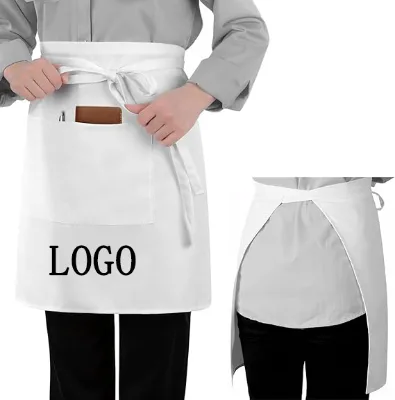
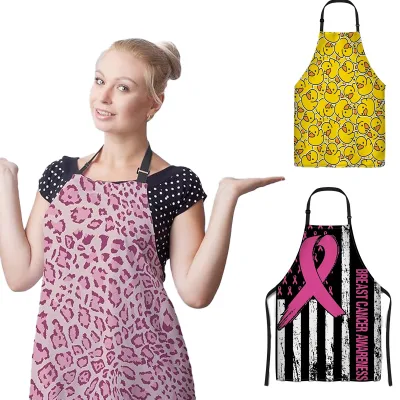
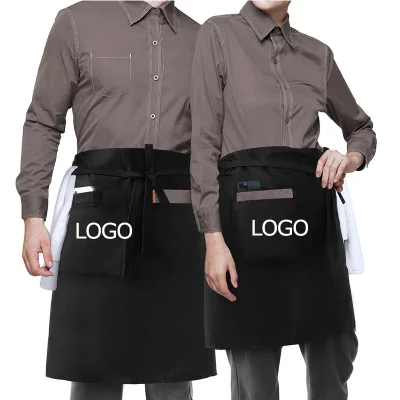
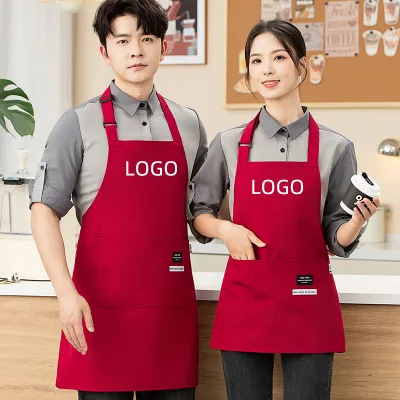
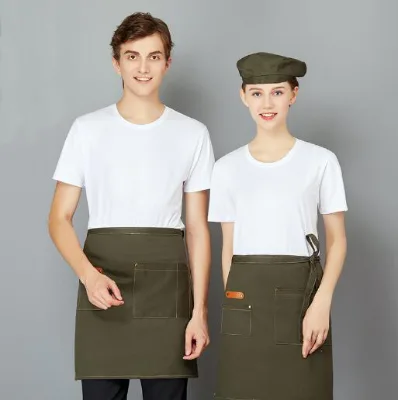
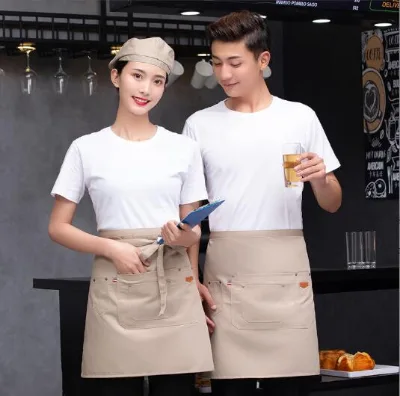


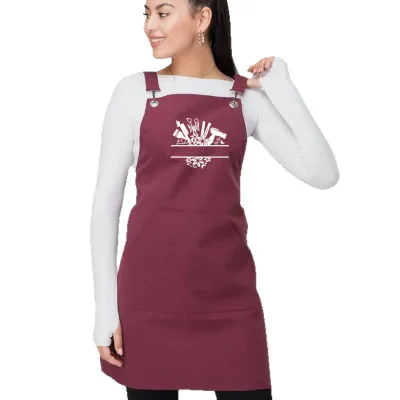
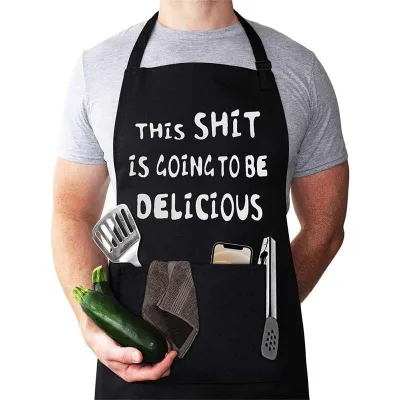
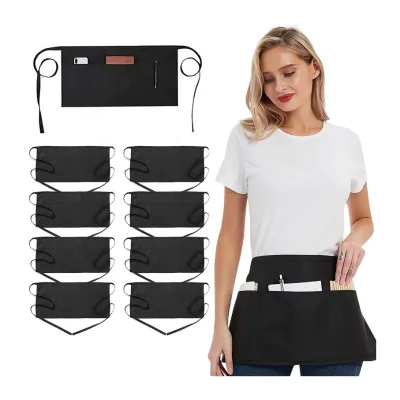
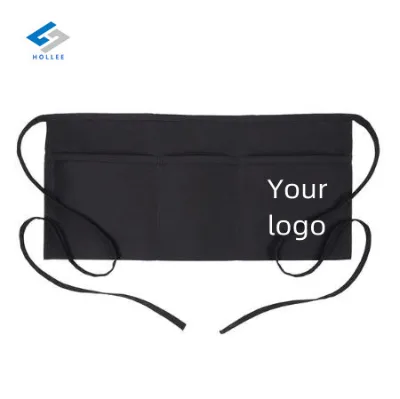
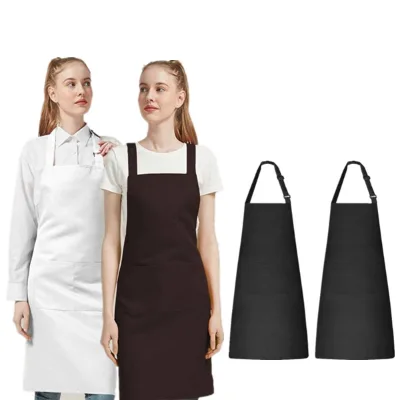


Comprehensive Sourcing Guide
Strategic Sourcing Guide for Short Waiter Aprons with Extra Long Straps
Understanding Product Specifications and Variations
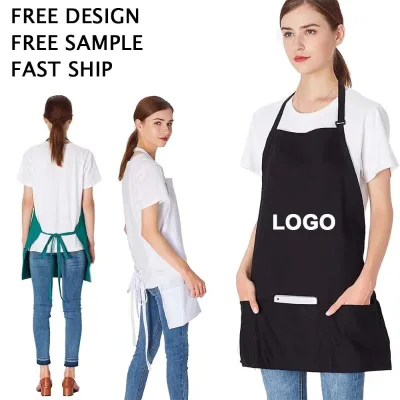
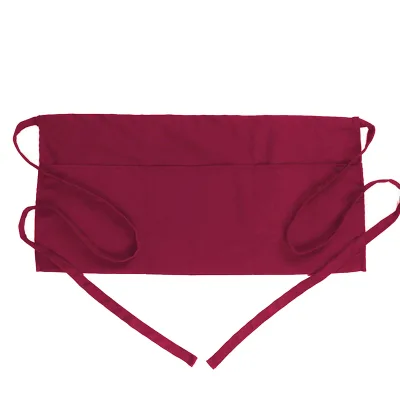
When sourcing a Short Waiter Apron with Extra Long Straps, buyers must first navigate the diverse landscape of product attributes available in the global market. The core requirement of "extra long straps" is often a functional necessity for waiters who need to tie aprons securely over uniforms or for taller staff members, yet it is frequently paired with a "short" body length to ensure mobility in tight kitchen or dining spaces. The supplied data reveals a spectrum of classifications, ranging from "Bib" style to "Pocket" configurations, indicating that the term "short" can refer to the torso coverage while the straps remain adjustable.
Technical specifications vary significantly across listings. For instance, one observed product category lists a single package size of 25x20x1 cm with a gross weight of 0.2 kg, suggesting a lightweight, compact design suitable for frequent handling. In contrast, another category specifies a single package size of 80x60x5 cm and a gross weight of 0.5 kg, implying a more substantial build or different packaging method. The physical dimensions of the apron itself also fluctuate; observed sizes include 26.3x26.3 inches, 85x65 cm, and 77x68 cm. Buyers must verify that the "extra long" strap dimension is explicitly defined in the supplier's technical drawing, as "adjustable" is a common keyword that does not guarantee a specific maximum length.
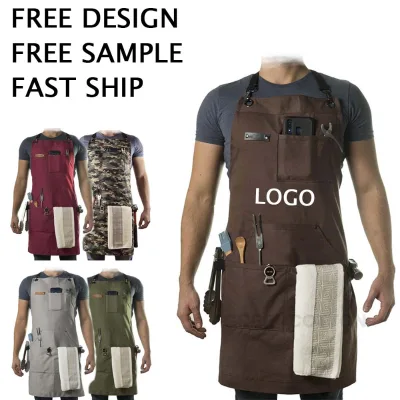
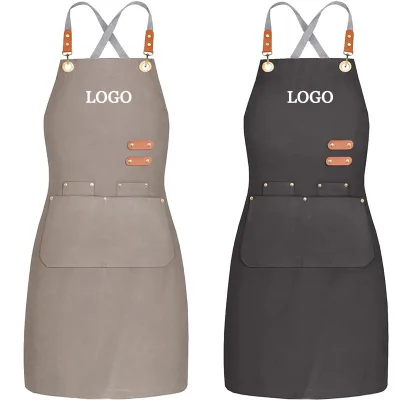
Material composition is another critical technical variable. The market offers options in "Polyester Fiber," "Canvas," and "Non-Woven" fabrics. Polyester is often cited for its durability and ease of cleaning, while canvas is frequently associated with a "fashionable make" and higher perceived quality. The weaving method also differs, with some products listed as "Woven" and others as "Non-Woven." These distinctions directly impact the apron's ability to withstand the rigors of a busy service environment, including exposure to liquids, heat, and abrasion.
Compliance, Certification, and Safety Standards
In the B2B procurement of food service and salon equipment, compliance and safety standards are paramount, even when specific certification data is not explicitly visible in initial product listings. While the supplied facts do not list specific ISO certifications or food safety approvals, buyers must treat the "High Quality" and "Durable" attributes as observations rather than guaranteed compliance. The origin of the product, such as "Zhejiang, China" or "Guangdong, China," indicates the manufacturing region but does not inherently confirm adherence to international safety standards.
Buyers should verify that the materials used, particularly for aprons intended for kitchen or salon use, meet local regulatory requirements for food contact and chemical safety. For example, if the apron is marketed for "Kitchen/hair salon/nail salon /beauty salon" usage, it must be free from harmful dyes or finishes that could transfer to food or skin. The "Recyclable" feature noted in some listings is an environmental claim that requires verification against recognized recycling standards or material composition declarations.
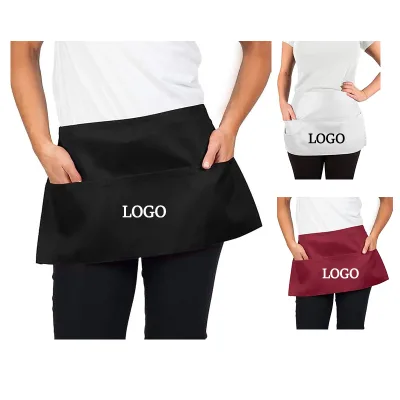
Furthermore, the "Customized Logo" and "Customized Package" options introduce compliance complexities. Any printing or branding applied to the apron must use inks and adhesives that are non-toxic and safe for the intended environment. Buyers should request Material Safety Data Sheets (MSDS) or declarations of conformity from suppliers to ensure that the "Black, Green, White, Brown, Purple, Blue, Grey, Red, Camouflage" color options do not involve prohibited substances. Without explicit certification data in the source material, the procurement strategy must include a mandatory pre-shipment audit or third-party laboratory testing to validate these safety claims before large-scale orders are placed.
Cost Drivers and Pricing Dynamics
The cost structure of short waiter aprons with extra long straps is influenced by several interconnected factors, primarily material selection, customization levels, and order volume. The observed price range in the market spans from 0.01 to 15 USD, a wide variance that reflects differences in quality, branding, and production complexity. This range suggests that a buyer could source a basic non-woven item at the lower end or a high-quality canvas bib apron with custom branding at the higher end.
Minimum Order Quantity (MOQ) is a significant driver of unit cost. The data indicates an MOQ range of 2 to 1000 pieces, with specific listings showing MOQs of 300 pieces, 100 pieces, and 50 pieces. Generally, higher order volumes allow for better economies of scale, reducing the per-unit cost. However, suppliers with lower MOQs, such as 50 or 100 pieces, may charge a premium to cover setup costs for smaller batches. Buyers must balance the need for inventory flexibility against the desire for lower unit prices.
Customization is another major cost component. The availability of "Customized Package," "Customized Logo," and specific color options like "Camouflage" or "Picture" colors often incurs additional fees. The "Single gross weight" varies from 0.2 kg to 0.5 kg, which affects shipping costs. Heavier items, such as those with a 0.5 kg gross weight, will incur higher freight charges, especially if shipping internationally. Additionally, the "Selling Units" are typically listed as "Single item," meaning buyers should clarify if bulk pricing applies or if the listed price is strictly per piece.
Typical Applications and Functional Requirements
The versatility of short waiter aprons with extra long straps makes them suitable for a wide array of professional environments. The supplied data explicitly lists usage scenarios including "Kitchen," "hair salon," "nail salon," and "beauty salon." In a kitchen setting, the apron serves as a barrier against spills and splashes, requiring a material that is easy to clean and resistant to stains. The "Cleaning Supplies" classification further supports this application, highlighting the need for durability and washability.
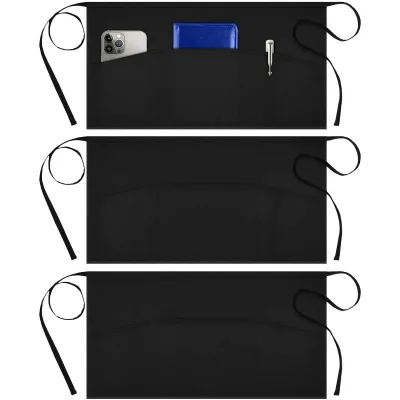
For hair and beauty salons, the aesthetic and functional aspects are equally important. The "Fashionable Make" and "Adjustable Washable Apron" attributes suggest that these products are designed to look professional while maintaining hygiene. The "Sleeveless Apron" classification is particularly relevant here, as it allows for greater freedom of movement for stylists and nail technicians. The presence of "1-4" or "5-14" pockets is a critical functional feature for these professionals, who need to carry tools, brushes, or small bottles while working.
The "Occasion" tags of "Work suit," "Daily," and "Christmas" indicate that these aprons are not limited to commercial use. They can be utilized for daily workwear or as themed attire for holiday events. The "Mulit-purpose" function reinforces this adaptability, suggesting that the product can transition between different roles. However, buyers must ensure that the "extra long straps" are specifically designed for the intended application; for instance, a salon apron might require different strap lengths than a heavy-duty kitchen apron to accommodate different uniform layers.
Supplier Evaluation and Selection Criteria
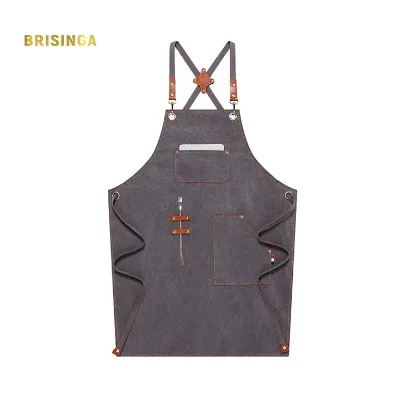
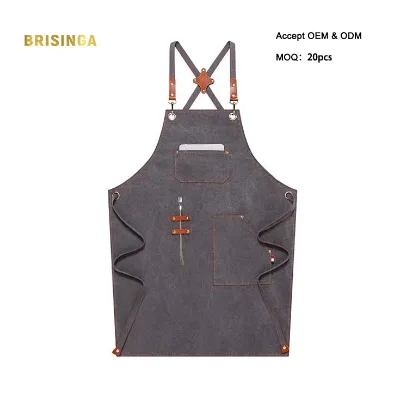
Selecting the right supplier requires a rigorous evaluation process that goes beyond the basic product listing. The data shows multiple brands, including "greencotton," "GREEN COTTON," and "Brisinga," indicating a competitive market with various players. Buyers should not assume that a brand name implies a specific level of quality or reliability without further verification. The "place of origin" is listed as "Zhejiang, China" or "Guangdong, China," both of which are major manufacturing hubs, but the specific factory capabilities must be assessed individually.
Key evaluation criteria should include the supplier's ability to meet the "Sample" availability requirement. The data notes that samples are "Availbale" (available), which is a positive indicator of a supplier's willingness to engage in the pre-production phase. Buyers should request physical samples to test the "Weaving method," "Material," and strap length firsthand. The "Quality: High Quality" attribute is subjective and must be validated through sample inspection.
Furthermore, the supplier's flexibility regarding "Customized Package" and "Customized Logo" is a strong indicator of their service level. A supplier that offers these options is likely more experienced in handling B2B customization requests. Buyers should also inquire about the "Selling Units" and "Single package size" to ensure that the packaging is suitable for their logistics chain. The "Model number," such as "lzy0818" or "Ch0818," serves as a unique identifier that should be used to track specific product iterations and ensure consistency in future orders.
Quality Control and Long-Term Procurement Considerations
Implementing a robust quality control (QC) protocol is essential for maintaining the integrity of the supply chain. Given the variations in "Single gross weight" and "Single package size," buyers must establish clear acceptance criteria for dimensions and weight. For example, if a specific order requires a gross weight of 0.2 kg, any deviation beyond a defined tolerance (e.g., ±5%) should be flagged for review. The "Non-Woven" versus "Woven" distinction also requires visual and tactile inspection to ensure the material matches the agreed-upon specification.
Long-term procurement considerations involve building a relationship with suppliers who can maintain consistency over time. The "Recyclable" and "Durable" features are value propositions that should be monitored for consistency. If a supplier claims a product is "Durable," this should be tested over multiple wash cycles or usage periods. Buyers should also consider the "MOQ" flexibility; a supplier that can accommodate orders ranging from 50 to 1000 pieces offers greater strategic flexibility for scaling operations up or down based on demand.
Finally, the "Keyword" of "Adjustable Washable Apron" implies a need for long-term maintenance. Buyers should verify the washability claims by testing the apron's resistance to shrinking, fading, or fabric degradation after repeated washing. The "Color" options, including "Black, Green, White, Brown, Purple, Blue, Grey, Red, Camouflage," should be checked for colorfastness to ensure they do not bleed onto other fabrics during cleaning. By focusing on these technical and operational details, buyers can secure a reliable supply of short waiter aprons with extra long straps that meet their specific operational needs.
Comparative Analysis of Product Attributes
To facilitate decision-making, the following table summarizes the key variations observed in the market data, highlighting the trade-offs buyers must consider when selecting a supplier.
| Attribute Category | Option A (Lightweight/Standard) | Option B (Heavyweight/Canvas) | Option C (Specialized/Custom) |
|---|---|---|---|
| Material | Polyester Fiber | Canvas | Non-Woven / Mixed |
| Gross Weight | 0.2 kg | 0.5 kg | Variable |
| Package Size | 25x20x1 cm | 80x60x5 cm | 25x20x3 cm |
| MOQ | 300 Pcs | 100 Pcs | 50 pcs |
| Strap Type | Adjustable | Adjustable | Adjustable |
| Pockets | 1-4 | 5-14 | 5-14 |
| Origin | Zhejiang, China | Guangdong, China | Guangdong, China |
| Key Feature | Recyclable | Durable | Custom Logo/Packing |
| Usage | Kitchen/Salon | Kitchen/Salon | Kitchen/Salon |
This comparison illustrates that there is no single "best" option; rather, the choice depends on the buyer's specific priorities regarding cost, volume, and material performance. By carefully analyzing these attributes against the core keyword requirements, buyers can make informed decisions that align with their procurement strategy.
FAQs
What materials are available for short waiter aprons with extra long straps?
Available materials include Polyester Fiber, Canvas, and Non-Woven fabrics. Polyester offers durability and ease of cleaning, while Canvas provides a fashionable look. Non-Woven options are also present, each suitable for different usage environments like kitchens or salons.
Which customization options exist for logos and packaging on these aprons?
Suppliers accept customized logos and customized packaging for these aprons. Buyers can request specific branding and unique packaging solutions. This flexibility allows businesses to align the product with their specific brand identity and logistical needs.
How do minimum order quantities vary for Short Waiter Apron with Extra Long Straps?
Minimum order quantities range from 50 to 300 pieces depending on the supplier. Some listings specify an MOQ of 50 pieces, while others require 100 or 300 pieces. Buyers should verify the specific MOQ with the manufacturer before placing an order.
Can I find these aprons in multiple colors like black or camouflage?
Yes, these aprons are available in colors such as Black, Green, White, Brown, Purple, Blue, Grey, Red, and Camouflage. The specific color options depend on the supplier and the product model. Buyers should check the available color palette before finalizing their selection.
What are the typical package dimensions and weights for these aprons?
Single package sizes vary from 25x20x1 cm to 80x60x5 cm with gross weights between 0.2 kg and 0.5 kg. These dimensions reflect different packaging methods and material densities. Buyers must confirm the exact package specs to calculate shipping costs accurately.
Where are the manufacturers of these aprons located in China?
Manufacturers are located in Zhejiang and Guangdong provinces in China. These regions are major hubs for textile and garment production. The specific origin affects lead times and logistics, so buyers should verify the exact location of their chosen supplier.
Which usage scenarios are suitable for these adjustable washable aprons?
These aprons are suitable for kitchens, hair salons, nail salons, and beauty salons. They are also used for daily work and special occasions like Christmas. The multi-purpose design allows them to function effectively in various professional and personal settings.