Source Skin Whitening Glutathione Capsules for beauty, cosmetology, and whitening
Find 30 listings for Skin Whitening Glutathione Capsules with varying dosages and certifications. Buyers can compare softgel options from Beijing and Guangzhou suppliers offering customization and GMP standards.
Key considerations
Products List
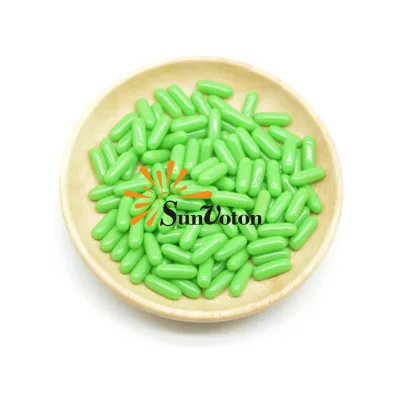


Whitening Glutathione Capsules for Radiant Skin and Anti-Aging Benefits
$0.02 - $0.10
MOQ: 300000 Pieces


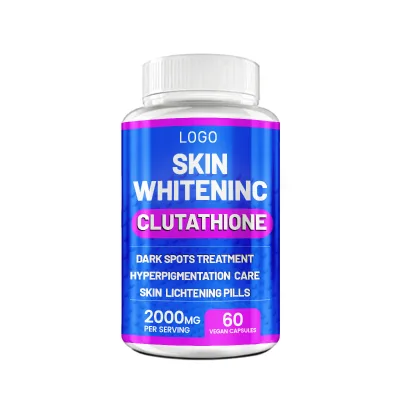
OEM/ODM Glutathione Whitening Collagen Capsule Anti-Aging Skin Health Supplements
$3.20 - $3.80
MOQ: 500 Pieces



Comprehensive Sourcing Guide
Strategic Sourcing Guide for Skin Whitening Glutathione Capsules
Understanding Product Specifications and Formulation Variability
When sourcing Skin Whitening Glutathione Capsules, buyers must first navigate the diverse technical specifications available in the market. The core active ingredient is consistently identified as L-glutathione, a tripeptide antioxidant known for its role in skin lightening and cellular protection. However, the formulation details vary significantly across different product listings. The primary dosage form observed is the softgel capsule, though hard capsules are also present in the supply chain. The standard assay strength for the active ingredient is frequently listed at 500mg per unit, but buyers should verify if this represents the total capsule weight or the specific concentration of L-glutathione within the matrix.
Packaging configurations are equally variable and critical for logistics planning. Common specifications include 60 capsules per bottle, with outer packaging ranging from individual cartons to drums for bulk industrial orders. Some suppliers offer flexible packaging models, such as 30 capsules per bottle or 30 to 100 tablets per bottle, depending on the target market's retail preferences. The physical form of the product is often described as "Original" flavor, though the inclusion of vitamins and organic components suggests potential flavoring agents or co-factors. Buyers must distinguish between products labeled strictly as "whitening packing bottle" and those explicitly defined as "L-Glutathione Capsules," as the former may refer to the container rather than the supplement itself.
The following table summarizes the observed specification ranges for this product category:
| Specification Attribute | Observed Range / Common Values |
|---|---|
| Active Ingredient | L-glutathione |
| Dosage Form | Softgel Capsule, Capsule |
| Assay Strength | 500mg (standard), 250mg-1500mg (customizable) |
| Bottle Capacity | 30 caps, 60 caps, 100 caps |
| Outer Packaging | Carton, Box, Drum |
| Shelf-Life | 24 months (2 Years) |
| Storage Requirements | Cool and dry, Moisture Proof |
Compliance and Certification Verification
In the health supplement sector, particularly for products targeting cosmetic benefits like skin whitening, certification is a primary indicator of manufacturing reliability. The supply chain for glutathione capsules often includes facilities holding multiple overlapping certifications. Commonly observed certifications include GMP (Good Manufacturing Practice), ISO standards, HACCP (Hazard Analysis and Critical Control Points), and QS (Quality Safety). Some listings also reference international standards such as KOSHER, JAS (Japanese Agricultural Standard), OCIA, and NOP (National Organic Program).
Buyers must treat these certifications as observations of specific supplier capabilities rather than universal attributes of all glutathione products. A supplier claiming GMP and ISO certification indicates adherence to quality management systems, but the specific ISO standard (e.g., ISO 9001) should be verified. The presence of HACCP suggests a robust food safety management system, which is crucial for ingestible supplements. Additionally, organic certifications like JAS or NOP are relevant if the product claims to be organic, a feature noted in some product descriptions alongside low-fat and sugar-free attributes.
It is imperative to note that certification status is not uniform across all listings. Some products are associated with GMP and ISO only, while others carry a broader suite including KOSHER and NOP. Buyers should request valid certificates for the specific manufacturing facility producing their order, rather than accepting generic claims. The origin of the product, frequently cited as Beijing, Guangzhou, or generally China, does not automatically confer certification; the facility itself must be audited and certified.
Cost Drivers and Pricing Dynamics
The pricing structure for Skin Whitening Glutathione Capsules is influenced by a complex interplay of factors, including dosage strength, packaging complexity, and certification levels. The observed price range in the market spans from 0 to 210 USD, a wide variance that reflects differences in product quality, brand positioning, and order volume. This range likely encompasses both low-cost generic formulations and premium, certified organic products with specialized packaging.
A significant cost driver is the Minimum Order Quantity (MOQ). The market data indicates an MOQ range from 1 unit to 300,000 units. High-volume buyers can leverage economies of scale to reduce the unit cost, while small buyers may face higher per-unit prices due to the fixed costs of production setup and quality control. Customization is a major factor in pricing; products with "Customized" models or specific packaging requests often command a premium over standard SKUs. The ability to print logos, whether "With Logo Printing" or "Without Logo Printing," also impacts the final cost, as branding requires additional production steps.
Furthermore, the material composition and feature set affect pricing. Products marketed as "Low-Fat," "Sugar-Free," "Decaffeinated," or "Organic" involve more stringent sourcing and processing protocols, which increase the base cost. The inclusion of additional vitamins or the specific assay strength (e.g., 1500mg vs. 250mg) also alters the material cost. Buyers should expect that products with comprehensive certification suites (e.g., GMP, ISO, HACCP, KOSHER) will generally be priced higher than those with minimal certification.
Typical Applications and Target Demographics
The primary application of Skin Whitening Glutathione Capsules is cosmetic and dermatological support, specifically targeting skin tone improvement and antioxidant protection. The product is categorized under "Beauty Products" and "Cosmetology," indicating its use in personal care routines rather than therapeutic medical treatment. The "whitening pack" function suggests a dual-purpose marketing approach, where the supplement supports internal skin health while potentially being part of a broader beauty regimen.
Target demographics are clearly defined in the product attributes. The "Age Group" is specified as "Adults," and the "Gender" is listed as both "Unisex" and "Female." This indicates that while the product is generally suitable for adult men and women, marketing efforts may skew towards female consumers. Crucially, there are specific exclusions for certain populations. The "Not Applicable People" category explicitly lists "Pregnant Women, Children, and Newborns." This restriction is a critical safety parameter that buyers must communicate to end-users to ensure compliance with health regulations and consumer safety standards.
The product is classified as a "Food" or "Other Healthcare Supplement," which dictates the regulatory pathway for import and sale in various jurisdictions. The "Original" flavor and "Sugar-Free" features make it suitable for consumers with dietary restrictions, such as those managing glucose intake or seeking low-calorie options. The "Decaffeinated" attribute further broadens its appeal to those avoiding stimulants.
Supplier Evaluation and Origin Analysis
Evaluating suppliers for glutathione capsules requires a focus on geographic origin and manufacturing capabilities. The supply chain is heavily concentrated in China, with specific mentions of Beijing and Guangzhou as points of origin. These regions are known for their robust pharmaceutical and food supplement manufacturing infrastructure. However, the mere mention of a city does not guarantee quality; buyers must verify the specific factory's capacity and history.
Supplier evaluation should prioritize the ability to offer customization. The market shows a strong trend toward "OEM" (Original Equipment Manufacturer) and "Customized" models, allowing buyers to tailor the product to their brand. Features like "Logo Printing" availability and flexible packaging options (e.g., bottles in cartons, drums) are key indicators of a supplier's flexibility. A capable supplier should be able to adjust the "prod_model" and "prod_standard" to meet specific client needs, such as varying the capsule count per bottle or adjusting the assay strength between 250mg and 1500mg.
Buyers should also assess the supplier's storage and handling protocols. The "Storage Method" is consistently noted as "cool and dry" with a "Moisture Proof" requirement. This indicates that the product is sensitive to humidity and temperature fluctuations. A supplier with inadequate storage facilities risks product degradation, which would compromise the efficacy of the glutathione. The "Shelf-Life" of 24 months is a standard benchmark, but buyers should verify if the supplier can guarantee this duration under their specific storage conditions.
Quality Control and Long-Term Procurement Considerations
Quality control is paramount for ingestible supplements, especially those with cosmetic claims. The "Feature" list includes "Low-Fat," "Sugar-Free," and "Vitamins," which requires rigorous testing to ensure these claims are accurate and that no contaminants are present. The "Assay" of 500mg must be verified through third-party testing to ensure the actual content matches the label. Buyers should insist on batch-specific test reports that confirm the L-glutathione concentration and the absence of heavy metals or microbial contamination.
Long-term procurement considerations involve the stability of the supply chain and the consistency of the product. The "Standard" of 60 capsules per bottle is common, but buyers planning for long-term contracts should negotiate fixed standards to avoid supply disruptions. The "Customization" feature offers flexibility, but it also introduces complexity; changes in packaging or formulation can impact lead times and regulatory compliance.
Buyers must also consider the "Selling Units," which are often listed as "Single item" for retail but require bulk handling for wholesale. The transition from single-item sales to bulk packaging (e.g., "Bottles in Carton" or "Carton/Drum") requires careful logistics planning. Additionally, the "Storage Note" of "Moisture Proof" implies that the supply chain must maintain humidity control from the factory to the final destination. Failure to do so can reduce the shelf-life below the advertised 24 months.
Finally, buyers should be aware of the "Not Applicable People" restrictions. Marketing and distribution strategies must clearly communicate that the product is not for pregnant women, children, or newborns. This is not just a safety issue but a legal one in many markets. Ensuring that the supplier's documentation and the buyer's marketing materials align with these restrictions is essential for long-term brand protection and regulatory compliance. By focusing on these technical, compliance, and logistical factors, buyers can secure a reliable supply of high-quality Skin Whitening Glutathione Capsules.
FAQs
What is the standard assay strength for these capsules?
The standard assay strength is 500mg per capsule, though custom ranges from 250mg to 1500mg are available. Buyers should verify if the listed weight represents the total capsule or just the active ingredient concentration.
Which certifications do manufacturers typically hold?
Common certifications include GMP, ISO, HACCP, and QS, with some suppliers also holding KOSHER, JAS, or NOP. Buyers must request valid certificates for the specific facility rather than accepting generic claims.
Can buyers request custom packaging and logo printing?
Yes, customization is available for packaging models and logo printing options. Suppliers offer flexible configurations like 30 or 60 capsules per bottle with outer cartons or drums for bulk orders.
What is the typical shelf life and storage requirement?
The product has a shelf life of 24 months when stored in cool, dry, and moisture-proof conditions. Improper storage can degrade the L-glutathione efficacy before the expiration date.
Who is the target demographic for this supplement?
The product is intended for adults and is suitable for both unisex and female consumers. It is explicitly not applicable for pregnant women, children, or newborns due to safety restrictions.
How does the minimum order quantity affect pricing?
MOQs range from 1 to 300,000 units, significantly impacting the unit cost through economies of scale. High-volume buyers can reduce costs, while small orders may incur higher per-unit prices.
What are the main ingredients and flavor profiles?
The primary ingredient is L-glutathione, often combined with vitamins in original flavor profiles. Some variants are sugar-free, low-fat, and decaffeinated to meet specific dietary needs.