Source Squeeze Honey Bottle for Food, Household, and Retail
Compare 30 Squeeze Honey Bottle options from Zhejiang suppliers with capacities ranging from 150ml to 500ml. Buyers can evaluate PET and glass materials, screw cap sealing types, and customization services like screen printing for food and household products.
Key considerations
Products List


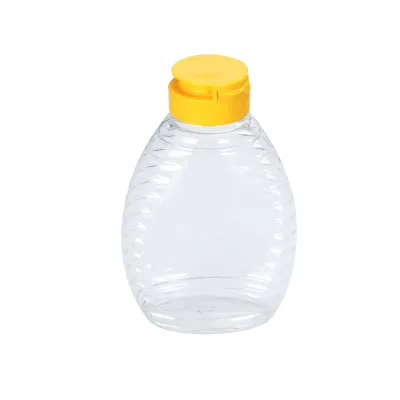

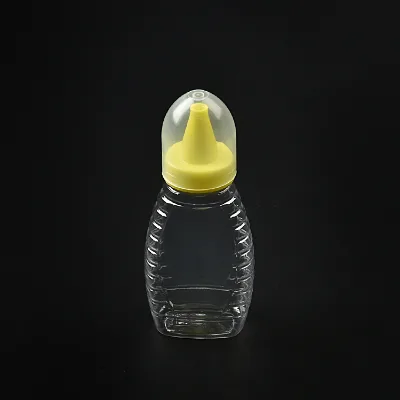


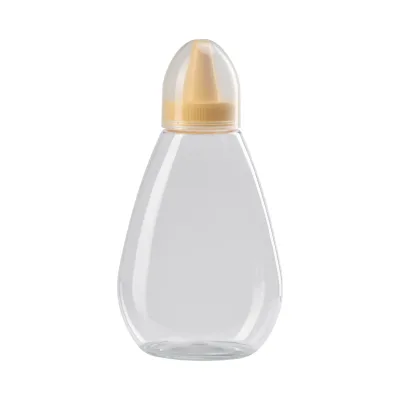
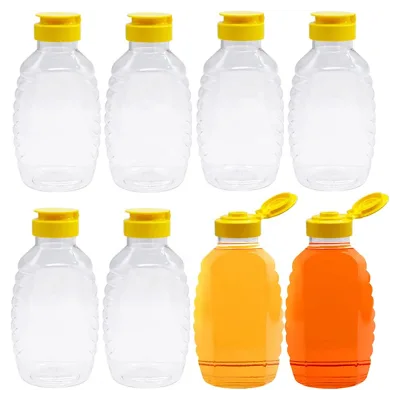


Comprehensive Sourcing Guide
Strategic Sourcing Guide for Squeeze Honey Bottles
Understanding Product Specifications and Material Composition
When sourcing squeeze honey bottles, the primary objective is to identify containers that balance structural integrity with the specific rheological properties of honey. The supplied product data indicates a diverse range of materials, including Glass, Plastic, PET, Acrylic, and Silicone. For honey applications, the material selection is critical because honey is viscous and hygroscopic. The data explicitly lists "PET(bottle)/PP(cap)" as a common material combination, suggesting a focus on polyethylene terephthalate for the body and polypropylene for the cap. This combination is favored for its chemical resistance and clarity.
The physical form of the bottle is another key specification. The observed data points to "Round Bottle" and "Round, cylinder" shapes as the dominant designs. These geometries are standard for squeeze applications as they allow for uniform pressure distribution when the user squeezes the container. The data also highlights specific model numbers such as BX-0156D, BX-0155D, BX-2001, YG-B06, and YG-B18, which serve as unique identifiers for different capacity and shape configurations. Buyers must verify that the selected model number corresponds to the required volume, as the data lists standards ranging from 150ml to 500g, with specific mentions of 360ml, 415ml, and 430ml capacities.
The surface handling and customization options are equally vital. The product attributes indicate that "Screen Printing" and "stickers (Label)" are available services. This allows for branding directly on the container or the application of adhesive labels. The color options observed include "Transparent," "Clear1," "Clear2," and "Clear3," which are essential for showcasing the product's natural color. Additionally, the cap color is noted as customizable, providing flexibility in brand identity. The "Squeeze" feature is explicitly listed as a product attribute, confirming that the design intent is for manual dispensing rather than pouring.
Compliance, Certification, and Safety Standards
For food-grade packaging, particularly for viscous products like honey, compliance with safety standards is non-negotiable. The supplied facts confirm that "FDA" certification is available for certain products in this category. This indicates that the manufacturers have access to facilities that meet United States Food and Drug Administration standards for food contact materials. Furthermore, the data explicitly mentions "BPA free" as a certification attribute. This is a crucial safety feature, as Bisphenol A (BPA) is a chemical often found in plastics that can leach into food products, posing health risks.
Buyers must verify that the "BPA free" claim is backed by current testing documentation, as the data lists this as an attribute but does not provide specific test report numbers. The material list includes "Silicone" and "Acrylic" alongside PET and Glass. While these materials are generally safe, their specific food-grade status must be confirmed against the destination market's regulations. For instance, if the product is destined for the European Union, compliance with EU Framework Regulation (EC) No 1935/2004 would be required, though this specific standard is not listed in the provided facts.
The "Industrial Use" attribute is listed as "Household Products," which aligns with the typical end-use of honey bottles. However, for commercial honey production, the packaging must also meet industrial hygiene standards. The data mentions "OEM Logo: Do Label and Print Available," which implies that the customization process must not compromise the food safety of the container. Buyers should ensure that the inks and adhesives used for screen printing or labeling are food-safe and do not contain heavy metals or toxic solvents that could migrate into the honey.
Cost Drivers and Pricing Dynamics
The pricing for squeeze honey bottles varies significantly based on the complexity of the design, material quality, and order volume. The observed price range in the supplied data spans from $0.08 to $32,000. This wide disparity suggests that the lower end of the spectrum likely represents simple, high-volume PET bottles, while the upper end may include complex, custom-molded acrylic or glass units, or perhaps bulk orders of specialized equipment. It is important to note that the $32,000 figure likely represents a total order value for a large shipment rather than a unit price, as unit prices for plastic bottles rarely exceed a few dollars.
The Minimum Order Quantity (MOQ) is a significant cost driver. The data shows an MOQ range of 1 to 50,000 units. This flexibility allows buyers to start with small test orders, as evidenced by the "2pcs" MOQ mentioned for specific items. However, the "Small Orders: Accepted" attribute suggests that while low MOQs are possible, the unit cost will be higher due to setup fees and production inefficiencies. As the order volume increases, the unit cost typically decreases, but the total capital outlay increases.
Material costs also play a major role. PET and PP are generally more cost-effective than glass or acrylic. The data lists "Glass" and "Plastic" as materials, but the specific mention of "PET(bottle)/PP(cap)" suggests a cost-optimized solution for the squeeze market. Glass bottles, while offering a premium feel, are heavier and more fragile, increasing shipping costs and the risk of breakage. The "5-layer carton" packing mentioned in the data indicates a robust packaging strategy, which adds to the overall cost but reduces damage rates during transit.
Typical Applications and Usage Scenarios
The primary application for these bottles is clearly defined by the "Food" usage attribute and the specific product name "500g honey bottle." These containers are designed to hold viscous, sticky liquids that require controlled dispensing. The "Squeeze" feature is essential for honey, as it allows the consumer to extract the product without the need for a spoon or knife, improving the user experience. The "Round, cylinder" shape is ideal for this application as it fits comfortably in the hand and allows for even squeezing.
Beyond honey, the "Industrial Use: Household Products" attribute suggests that these bottles are suitable for other viscous household items such as syrups, salad dressings, or liquid soaps. The "Transparent" and "Clear" color options allow consumers to see the product level and quality, which is a key marketing factor for food items. The "Screen Printing" and "stickers" options enable brands to differentiate their products on the shelf.
The data also lists "415ml" and "360ml" as specific standards, which correspond to common serving sizes for honey. The "250ml, 500ml" volume options provide flexibility for different market segments, from single-serving packets to family-sized containers. The "International Standard Carton" packing ensures that the bottles are protected during global shipping, making them suitable for export to various markets.
Supplier Evaluation and Origin Verification
When evaluating suppliers for squeeze honey bottles, the origin of the product is a critical factor. The data consistently lists "China" and "Zhejiang" as the place of origin. Zhejiang is a major manufacturing hub in China, known for its extensive plastic and glass processing industries. The specific mention of "Zhejiang, China (Mainland)" reinforces the concentration of suppliers in this region. Buyers should verify that the supplier is based in this region to ensure they are dealing with a manufacturer rather than a middleman, which can affect pricing and communication.
The "Customization: Available" attribute indicates that suppliers are willing to adapt their products to buyer specifications. This includes model numbers like BX-0156D and YG-B06, which may be standard models that can be modified. Buyers should assess the supplier's ability to handle "OEM service," which includes screen printing and sticker application. The "Brand Name: Other" and "Model Number: Other" attributes suggest that many suppliers offer white-label services, allowing buyers to brand the products as their own.
Supplier reliability can be gauged by their response to small orders. The "Small Orders: Accepted" and "MOQ: 2pcs" attributes indicate a willingness to work with buyers who are testing the market. However, buyers should also check the supplier's capacity to handle large orders, given the "MOQ range: 1-50000." A supplier that can accommodate both small and large orders is likely to have a flexible production line and robust supply chain management.
Quality Control and Packaging Standards
Quality control is paramount when sourcing food-grade packaging. The data mentions "International Standard Carton" and "5-layer carton" as packing methods. These indicate a commitment to protecting the product during transit. The "Single gross weight: 0.5 kg" and "Single package size: 10X10X10 cm" provide specific metrics for logistics planning. Buyers should verify that the packaging meets the requirements for stacking and shipping, especially for international shipments where containers are stacked multiple layers high.
The "Surface Handling: Screen Printing" attribute suggests that the printing process is a key quality consideration. Buyers should request samples to check for ink adhesion, color consistency, and resistance to smudging. The "Color of cap: could be customized" attribute implies that the cap color must match the branding, and the fit between the cap and the bottle must be secure to prevent leaks. The "Screw Cap" sealing type is standard for honey bottles, ensuring an airtight seal that prevents moisture absorption and contamination.
Buyers should also verify the "BPA free" certification through third-party testing reports. While the data lists this as a certification, it is essential to ensure that the specific batch of bottles being ordered meets this standard. The "FDA" certification is another critical check, as it ensures the materials are safe for food contact. Buyers should request certificates of analysis (CoA) and test reports from the supplier to confirm compliance with these standards.
Long-Term Procurement Considerations
Sourcing squeeze honey bottles is not just a one-time transaction but a long-term partnership that requires careful planning. The "Customization: Available" attribute suggests that buyers can work with suppliers to develop unique products over time. This flexibility is valuable for brands that want to evolve their packaging design as market trends change. The "OEM Logo: Do Label and Print Available" service allows for continuous branding updates without the need for new mold costs.
The "Place of Origin: China" and "Zhejiang" location indicate a stable supply chain, but buyers should also consider geopolitical factors and shipping logistics. The "International Standard Carton" packing helps mitigate some risks, but buyers should ensure that the supplier has experience with international shipping and can handle customs documentation. The "Lead time" is not explicitly listed in the data, but buyers should negotiate clear timelines for production and delivery, especially for large orders.
The "Small Orders: Accepted" attribute is beneficial for initial market testing, but buyers should plan for volume growth. As demand increases, the supplier's ability to scale production will be critical. The "MOQ range: 1-50000" suggests that the supplier can handle significant volume increases, but buyers should confirm the supplier's production capacity and lead times for large orders.
In conclusion, sourcing squeeze honey bottles requires a thorough understanding of material specifications, compliance standards, and supplier capabilities. By leveraging the data provided, buyers can make informed decisions that balance cost, quality, and functionality. The focus should be on selecting suppliers who offer flexible customization, robust quality control, and reliable logistics support to ensure a successful procurement process.
FAQs
What materials are used for squeeze honey bottles?
Common materials include PET, glass, plastic, acrylic, and silicone. Specific models often use PET for the bottle body and PP for the cap to ensure chemical resistance and clarity for food applications.
Which certifications are available for these food containers?
Products may carry FDA certification and BPA free status to ensure safety for food contact. Buyers should verify these attributes against specific batch documentation to confirm compliance with food safety standards.
Can I customize the logo and printing on the bottle?
Yes, OEM services including screen printing and sticker labels are available for customization. The cap color and bottle transparency can also be adjusted to match specific branding requirements.
What is the minimum order quantity for these bottles?
Minimum order quantities range from 2 pieces up to 50,000 units depending on the supplier. Small orders are accepted, though unit costs may be higher for lower volume purchases.
Where are these squeeze bottles manufactured?
The products originate from Zhejiang, China, a major manufacturing hub for plastic and glass processing. This location supports a robust supply chain for both small and large scale production runs.
What packaging options are provided for shipping?
Bottles are typically packed in 5-layer cartons or international standard cartons on pallets. This robust packaging protects the items during transit and reduces the risk of breakage or damage.