Source Squeeze Plastic Sauce Bottle for Oiler, Soy Sauce, Vinegar
Find 30 options for the Squeeze Plastic Sauce Bottle suitable for oiler, soy sauce, and vinegar applications. Buyers can compare features like seal capability, capacity, and closure types across multiple suppliers in Guangdong.
Key considerations
Products List


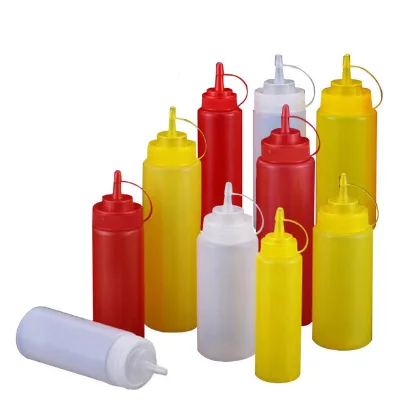
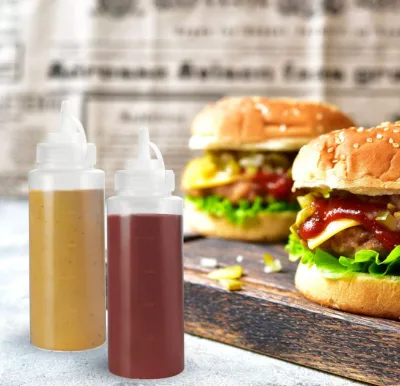


600ml PE Plastic Condiment Bottle Squeeze Bottle for Sauce Salad Ketchup
$0.20 - $0.50
MOQ: 10000 Pieces


Comprehensive Sourcing Guide
Strategic Sourcing Guide for Squeeze Plastic Sauce Bottles
Understanding Product Specifications and Variability
When initiating a procurement strategy for squeeze plastic sauce bottles, the first critical step is defining the precise technical specifications required for your supply chain. The market for these containers is not monolithic; rather, it presents a wide spectrum of configurations tailored to different viscosity levels and dispensing needs. Based on current market data, the core material for these products is consistently identified as plastic, offering a balance of durability and flexibility essential for squeeze functionality.
Buyers must navigate a complex array of model numbers and standard sizes. Observed specifications include model identifiers such as "PB," "1040-1044," and "GQ-SE3046," each potentially representing distinct mold designs or capacity ranges. The capacity standards vary significantly, with listings indicating sizes ranging from 120ml up to 700ml, alongside specific volume markers like 24oz, 32oz, and 500-1000ml. This variability necessitates a clear definition of your target volume before engaging with suppliers. For instance, a product labeled with a standard of "24OZ" may differ structurally from one listed as "Full size" or "32oz," affecting both the packaging density and the logistics of your order.
The physical geometry of the bottle is another decisive factor. The observed product shapes include "Narrow Neck Bottle," "Round," and specific dimensions such as "6.9X6.9X25cm" or "8x8x26.5cm." The shape directly influences the user experience; narrow neck designs are often preferred for precise control of thick condiments like soy sauce or vinegar, while round or wide-mouth designs, such as those noted with a "Wide Mouth" feature, may be better suited for sauces requiring rapid dispensing or easy cleaning. Furthermore, the closure type is a vital specification. The market data highlights "Press Cap" as a common closure mechanism, which must be compatible with the bottle's neck diameter to ensure a leak-proof seal.
Material Composition and Functional Design
The functional integrity of a squeeze bottle relies heavily on the material properties and the design of the dispensing mechanism. While the general category is defined as "Plastic," the specific polymer type (e.g., PET, PE, PP) is not explicitly detailed in the provided data but remains a critical verification point for buyers. The material must possess sufficient elasticity to return to its original shape after squeezing while maintaining resistance to the chemical composition of the food product it holds.
Functional design features observed in the market include "Multifunctional" capabilities and "Eco-Friendly" attributes. These claims require rigorous validation. An "Eco-Friendly" designation should be backed by specific material certifications or recyclability data, rather than serving as a generic marketing term. Similarly, the "Seal" feature is listed as a primary attribute, indicating that the primary function of the bottle is to prevent leakage during transport and storage. The "Food" use classification confirms that the material must be food-grade, though the specific regulatory compliance for food contact materials varies by destination market.
The design style also plays a role in brand alignment. Options such as "American Style" or "Original" suggest different aesthetic approaches to the bottle's silhouette and labeling area. Additionally, the "Folded" attribute is noted as "Unfolded," which may refer to the state of the packaging or a specific collapsible feature, though this requires clarification with the supplier to ensure it matches the intended usage scenario. The "Product Name" often includes descriptors like "Condiment Squeeze Bottle" or "Squeeze Sauce Bottle," which helps in categorizing the item but does not guarantee specific performance characteristics without further technical documentation.
Compliance, Certification, and Safety Standards
In the food packaging sector, compliance is not optional; it is a prerequisite for market entry. While the supplied facts mention "Standard" values like "24OZ" or "Full size," these refer to capacity or physical dimensions rather than regulatory safety standards. Buyers must independently verify that the plastic material meets the food safety regulations of their target markets, such as FDA compliance for the United States or EU Framework Regulation (EC) No 1935/2004 for Europe.
The "OEM: Approve" attribute indicates that suppliers are willing to customize the product, which often involves printing logos or specific branding. When customizing, the inks and adhesives used for "Printing Logo" must also be food-safe and non-toxic. The "Feature: Eco-Friendly" claim, if true, should be supported by third-party testing results regarding the material's biodegradability or recycled content percentage. Without such documentation, this attribute should be treated as a marketing observation rather than a verified compliance status.
Buyers should also verify the "Standard" of the production process. While specific industry standards like ISO 9001 are not listed in the provided data, they are common benchmarks for manufacturing quality. The "Location" of origin, frequently cited as "Guangdong," "Jiangmen," or generally "China," suggests a concentration of manufacturing hubs. However, the origin location alone does not guarantee quality; it is the supplier's internal quality control systems and adherence to international standards that matter.
Cost Drivers and Pricing Dynamics
The pricing structure for squeeze plastic sauce bottles is influenced by several variable factors, including material costs, order volume, and customization requirements. The observed price range in the market spans from $0.01 to $10 USD, a wide disparity that reflects differences in capacity, material quality, and order quantity. A unit price at the lower end of this spectrum likely corresponds to high-volume orders of basic, unbranded models, while prices at the higher end may reflect specialized designs, smaller MOQs, or premium materials.
The Minimum Order Quantity (MOQ) is a significant cost driver. The data shows an MOQ range from 1 to 20,000 units. A low MOQ of 1 unit might be available for sampling purposes, often at a premium per-unit cost, whereas an MOQ of 1200PCS or higher is typical for production runs. Suppliers often structure their pricing to incentivize larger orders, offering tiered discounts as the volume increases. The "Sets: 1-3PCS" observation suggests that some suppliers may sell in small bundles, which could impact the effective unit cost if the buyer requires a large total quantity.
Additional cost factors include the "prod_packing" method, which is listed as "Carton" or "Customized." Customized packaging, such as branded boxes or specific carton configurations, will add to the overall cost. The "Delivery" lead time of 35 days and "Sample Time" of 7 days also influence the total cost of ownership. Longer lead times may require higher inventory buffers, increasing holding costs, while expedited sampling can accelerate the time-to-market but may incur rush fees.
Typical Applications and Usage Scenarios
The versatility of squeeze plastic sauce bottles makes them suitable for a diverse range of applications. The "Usage" attributes explicitly mention "Oiler," "Soy Sauce," "Vinegar Bottle," and "Cooking Oil," indicating their primary role in food service and retail. The "Application: Cooking Oil" and "Usage: Hotel Kitchen" suggest that these bottles are designed to withstand the rigors of commercial kitchens, where frequent handling and high-volume dispensing are common.
The "Occasion: Kitchen" designation reinforces their utility in both professional and domestic settings. The "Dessert Tools Type: Squeeze Bottles" observation points to another niche application: culinary arts, where precision is key for decorating cakes or plating desserts. In this context, the "Shape: Round" or "Narrow Neck Bottle" designs are particularly valuable for controlling the flow of viscous liquids like glazes or creams.
The "Food Container Feature: Wide Mouth" is a specific attribute that may be relevant for applications requiring easy filling or cleaning, such as bulk condiment dispensing. Conversely, the "Seal" feature is critical for preventing spills during transport, making these bottles ideal for retail distribution. The "Product: Squeeze Sauce Bottle" and "Product Name: Condiment Squeeze Bottle" confirm that the primary market is the condiment sector, which includes a wide variety of sauces, dressings, and oils.
Supplier Evaluation and Quality Control
Evaluating suppliers for squeeze plastic sauce bottles requires a multi-faceted approach that goes beyond price comparison. The "Location" data points to a concentration of manufacturers in Guangdong and Jiangmen, China. While this region is a known hub for plastic manufacturing, buyers must verify the specific capabilities of each supplier. The "OEM: Approve" status is a positive indicator of flexibility, but it should be accompanied by a review of the supplier's design and engineering capabilities.
Quality control is paramount. The "Feature: Seal" and "Feature: Eco-Friendly" claims must be validated through physical testing. Buyers should request samples to test the "Seal" integrity under various conditions, including temperature fluctuations and vibration, to ensure no leakage occurs. The "Sample Time: 7days" allows for a reasonable window to evaluate these samples before committing to a larger order.
The "prod_packing: Carton or Customized" option suggests that packaging quality is a variable. Buyers should inspect the carton strength and the internal protection of the bottles to prevent damage during transit. The "Qty/CTN: 120PCS" provides a specific packing density that can be used to calculate shipping costs and storage requirements.
Long-Term Procurement Considerations
Sourcing squeeze plastic sauce bottles is not a one-time transaction but a long-term relationship that requires strategic planning. The "Delivery: 35 Days" lead time indicates a need for robust supply chain planning. Buyers should factor in this lead time when forecasting inventory needs to avoid stockouts, especially during peak seasons. The "MOQ" flexibility, ranging from 1 to 20,000, offers opportunities for phased ordering, allowing buyers to test the market with smaller quantities before scaling up.
Sustainability is an emerging long-term consideration. The "Feature: Eco-Friendly" attribute, if verified, can be a significant differentiator in markets with increasing environmental regulations. Buyers should inquire about the supplier's commitment to sustainable practices, such as the use of recycled materials or energy-efficient manufacturing processes.
Finally, the "Customization: Available" attribute opens avenues for brand differentiation. Over time, buyers may wish to evolve their packaging to include unique shapes, colors, or logos. The "Color: White," "Color: Color," and "Color: Clear/ Red/Yellow" options provide a starting point for this evolution. Ensuring that the supplier has the capacity to handle these customizations consistently is essential for maintaining brand consistency and quality over the long term.
FAQs
What materials are used for squeeze plastic sauce bottles?
The bottles are consistently made from plastic, offering durability and flexibility. This material allows for the squeeze functionality required for dispensing condiments like soy sauce and vinegar effectively.
Which closure types are available for these bottles?
A press cap is the common closure type observed for these products. This mechanism ensures a secure seal to prevent leakage during transport and storage of various food items.
Can I customize the logo on these squeeze bottles?
Yes, customization is available and includes printing logos on the product. Suppliers approve OEM requests, allowing buyers to add branding while ensuring the inks used remain food-safe.
What is the typical lead time for delivery?
The standard delivery lead time is 35 days for production orders. Buyers should plan their inventory accordingly, as this duration covers manufacturing and preparation for shipment from the origin.
Which capacities are available for these plastic bottles?
Capacities range widely from 120ml up to 700ml, with specific options like 24oz and 32oz. Some listings also indicate a capacity range of 500 to 1000ml for larger containers.
Where are these bottles manufactured?
The products originate from manufacturing hubs in Guangdong and Jiangmen, China. This region is a known center for plastic packaging production, offering a concentration of relevant suppliers.
What is the minimum order quantity for production?
The minimum order quantity varies, with some listings requiring 1200 pieces. Other options exist ranging from 1 unit for sampling up to 20,000 units for large production runs.