Source Strawberry Kiwi Powder Drink for Beverages, Snacks, and Supplements
Find 30 listings for Strawberry Kiwi Powder Drink from verified Chinese manufacturers. Buyers can compare specifications, certifications, and pricing to select the right supplier for food and beverage applications.
Key considerations
Products List


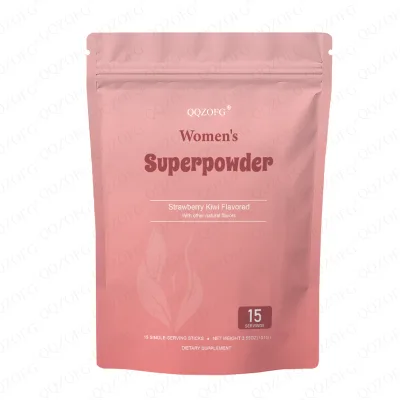
cGMP Factory Supply Gold Kiwi Kiwi Flavored Powder Drink Kiwi Juice Powder Vitamin C
$8.00 - $10.00
MOQ: 1 kilogram




Comprehensive Sourcing Guide
Strategic Sourcing Guide for Strawberry Kiwi Powder Drink Ingredients
Understanding Product Specifications and Variability
When sourcing ingredients for a Strawberry Kiwi Powder Drink, buyers must first navigate the inherent variability in product specifications found in the global market. The core keyword "Strawberry Kiwi Powder Drink" often refers to a beverage mix powder rather than a single, uniform raw material. Observed product data indicates that the state of the product is consistently a powder, yet the specific formulation can vary significantly between suppliers. Some listings describe the content as a "Beverage Mix Powder" with a flavor profile encompassing Mango, Guava, Strawberry, Grape, Orange, Vanilla, and Blueberry, suggesting that "strawberry kiwi" may be a specific variant within a broader fruit blend. Other entries identify the product specifically as "Kiwi Fruit Powder" with a Latin name of Actinidia Lindl, derived from the fruit part.
The physical and chemical specifications are critical for formulation stability. Buyers should verify the active substance content, which in observed listings ranges from 0% to 30%. This wide range implies that some products are concentrated extracts while others are diluted blends. The solubility is a key technical parameter; high-quality options are reported as 100% water soluble, which is essential for clear or uniformly mixed beverage applications. The extraction type is noted as "Solvent Extraction" in some contexts, which requires careful verification of residual solvent limits if the end product is intended for sensitive markets. Furthermore, the grade is frequently listed as "Food Grade," but buyers must confirm if the specific batch meets the rigorous standards required for their target demographic, as some listings also mention "Synthetic Flavor" as a type, which is distinct from natural fruit powder.
Packaging specifications also vary, with observed formats including 25kg bags, drums, cartons, buckets, and vacuum-packed alu-bags. The standard packaging size is often cited as 25x25x10cm for single packages, with a single gross weight of 1.500kg for smaller samples or specific units, while bulk shipments typically utilize 25kg drums or bags. Understanding these physical constraints is vital for logistics planning and storage facility requirements.
Compliance and Certification Verification
Compliance with international food safety standards is non-negotiable when sourcing ingredients for beverages intended for human consumption. The market data reveals a diverse landscape of certifications that suppliers may hold. Commonly observed certifications include HACCP, FDA, ISO, HALAL, BRC, and RoHS. Additionally, some suppliers list specific certificates such as ISO9001, Halal, and Kosher. It is important to note that not every listed product satisfies every certification; a buyer must verify that the specific batch or supplier holds the certifications relevant to their target market. For instance, if the target market is the United States, FDA compliance is essential, whereas export to Muslim-majority regions requires valid HALAL certification.
The origin of the product is another critical compliance factor. Most observed listings indicate the product origin as China, with specific mentions of Chaozhou and Shaanxi provinces. While China is a major hub for fruit powder production, buyers should verify the specific facility's audit history and regulatory standing. The "Standard Specifications" often cited include "100% Pure" or "Food Grade," but these terms require backing by third-party test reports. For example, the assay method for verifying purity and composition often involves UV, HPLC, GPC, or HPLC-MS techniques. Buyers should request recent assay reports utilizing these methods to confirm that the product meets the claimed purity levels, such as the 99% standard observed in some listings, or the 10:1 specification ratio mentioned for certain extracts.
Cost Drivers and Pricing Structures
The pricing for Strawberry Kiwi Powder Drink ingredients is influenced by several dynamic factors, with observed price ranges in the market spanning from $0.10 to $88.00 USD. This significant variance is not indicative of a single product but rather reflects differences in concentration, purity, certification levels, and packaging formats. The minimum order quantity (MOQ) also plays a substantial role in the final unit cost, with observed ranges from 1 unit up to 1000 units. Lower MOQs, such as 1 unit, are typically associated with sample orders or small-batch testing, which carry a higher per-unit cost. Conversely, bulk orders of 25kg drums or bags usually benefit from economies of scale, bringing the price closer to the lower end of the observed spectrum.
The content of active substances is a primary cost driver. Products with a higher concentration of active ingredients (closer to the 30% upper limit of the observed range) will generally command a higher price than those with lower concentrations. Similarly, the distinction between "Natural" and "Synthetic Flavor" affects pricing; natural fruit powders derived from Actinidia Lindl (Kiwi) and strawberries typically cost more than synthetic flavor blends. The shelf life is another factor; products with a 24-month or 2-year shelf life may be priced higher due to advanced preservation technologies or higher quality control standards compared to those with a 12-month shelf life.
Typical Applications and Formulation Potential
The versatility of strawberry kiwi powder makes it suitable for a wide array of applications beyond simple beverage mixing. While the primary use case is as a "Beverage Mix Powder," the data indicates broader applications in the health care and pharmaceutical sectors. The product is listed as applicable for "Medicine, Health Care Products, Food," and specific application forms include tablets, pastes, suppositories, lotions, injections, and capsules. This suggests that high-purity variants of the powder can be utilized in nutraceutical formulations, such as dietary supplements or functional foods.
For beverage manufacturers, the "100% Water Soluble" attribute is a significant advantage, allowing for easy integration into cold or hot drinks without the need for complex emulsification or filtration processes. The flavor profile, which can include a mix of Mango, Guava, Strawberry, Grape, Orange, Vanilla, and Blueberry, offers formulators the flexibility to create complex, multi-fruit blends. However, if the goal is a specific strawberry kiwi profile, buyers must ensure the supplier provides a formulation that accurately reflects this flavor, as some listings suggest a generic fruit mix. The "Natural" attribute is particularly valuable for clean-label products, appealing to consumers seeking ingredients free from artificial additives.
Supplier Evaluation and Origin Considerations
Evaluating suppliers requires a deep dive into their operational capabilities and geographic location. The observed data points to suppliers located in China, specifically in regions like Chaozhou and Shaanxi. Shaanxi is known for its agricultural output, which may be relevant for fruit-based powders, while Chaozhou is a significant industrial hub. Buyers should verify the specific origin of the raw materials, as the cultivation method is listed as "Artificial Planting" in some contexts, which may differ from organic or wild-harvested sources.
When assessing a supplier, buyers should look for evidence of their production capacity and quality control infrastructure. The availability of samples is a critical first step; most suppliers offer samples ranging from 10-20g, allowing for preliminary testing. The delivery lead time is typically observed between 7 to 30 days, which buyers must factor into their production schedules. It is also essential to verify the customization capabilities, as "Customization" is listed as available. This allows buyers to request specific flavor profiles, packaging sizes, or certification documentation tailored to their brand requirements.
Quality Control and Testing Protocols
Maintaining product quality is paramount, and buyers must implement rigorous quality control measures. The standard assay methods mentioned, including UV, HPLC, GPC, and HPLC-MS, provide the technical basis for verifying the identity and purity of the powder. Buyers should insist on receiving a Certificate of Analysis (CoA) for every batch, which should detail the results of these assays. The "Assay Method" section in supplier data highlights the importance of using advanced chromatography techniques to detect impurities or adulterants.
Storage and handling are also critical components of quality control. The recommended storage method is "Normal," but the shelf life varies between 12 months and 24 months depending on the product variant. Buyers must ensure that their storage facilities maintain conditions that align with the supplier's recommendations to prevent degradation. The packaging integrity, whether in drums, bags, or vacuum-packed alu-bags, must be verified upon receipt to ensure no moisture or contamination has occurred during transit. For products with a "100% Pure" standard, buyers should specifically test for the absence of fillers or anti-caking agents that might not be listed on the primary label.
Long-Term Procurement and Supply Chain Stability
Establishing a long-term procurement strategy for Strawberry Kiwi Powder Drink ingredients involves more than just securing a single transaction. Buyers should consider the stability of the supply chain, particularly given the reliance on agricultural inputs. The "Cultivation Method" being "Artificial Planting" suggests a controlled environment, which can mitigate some risks associated with weather variability, but buyers should still assess the supplier's backup plans for raw material shortages.
The lead time of 7-30 days indicates a relatively flexible supply chain, but buyers should plan for potential delays, especially during peak seasons or global logistics disruptions. The availability of "Customized" packaging and specifications allows for scalability, enabling buyers to adjust order volumes and formats as market demand fluctuates. Furthermore, the presence of multiple certifications (HACCP, FDA, ISO, etc.) suggests that the market has a mature compliance infrastructure, but buyers must ensure that these certifications are current and applicable to their specific product lines.
In conclusion, sourcing Strawberry Kiwi Powder Drink ingredients requires a meticulous approach that balances technical specifications, regulatory compliance, and cost efficiency. By leveraging the observed data on certifications, origins, and testing methods, buyers can make informed decisions that ensure the quality and safety of their final beverage products. The wide range of available options, from synthetic flavors to 100% pure natural powders, offers significant flexibility for formulators, provided that rigorous verification and quality control protocols are maintained throughout the procurement process.
FAQs
What certifications are available for Strawberry Kiwi Powder Drink ingredients?
Common certifications include HACCP, FDA, ISO, HALAL, BRC, and RoHS. Buyers must verify that the specific batch holds the certifications relevant to their target market, as not every listed product satisfies every certification.
How long is the shelf life of the beverage mix powder?
Shelf life varies between 12 months and 24 months depending on the product variant. Products with longer shelf lives may use advanced preservation technologies compared to those with a standard 12-month duration.
Can I customize the packaging and specifications for this powder?
Customization is available for packaging and specifications. Suppliers offer options like 25kg bags, drums, or vacuum-packed alu-bags, allowing buyers to request specific formats tailored to their brand requirements.
What is the solubility of the kiwi fruit powder in water?
High-quality options are reported as 100% water soluble. This attribute is essential for clear or uniformly mixed beverage applications without the need for complex emulsification or filtration processes.
Where are the suppliers of this fruit powder located?
Most observed listings indicate the product origin as China, specifically in regions like Chaozhou and Shaanxi. Buyers should verify the specific facility's audit history and regulatory standing in these locations.
What is the typical lead time for delivery of these ingredients?
The typical delivery lead time is observed between 7 to 30 days. Buyers must factor this into their production schedules and plan for potential delays during peak seasons or logistics disruptions.
How is the active substance content defined in the product listings?
The content of active substances ranges from 0% to 30% in observed listings. This wide range implies that some products are concentrated extracts while others are diluted blends requiring verification.