Source Training Rugby Ball for Sport, Competition, and Entertainment
Compare 30 Training Rugby Ball options from Jiangsu and Hubei, China. Buyers can review sizes 3 to 5, materials like PU and leather, and customization features for sports centers and entertainment.
Key considerations
Products List


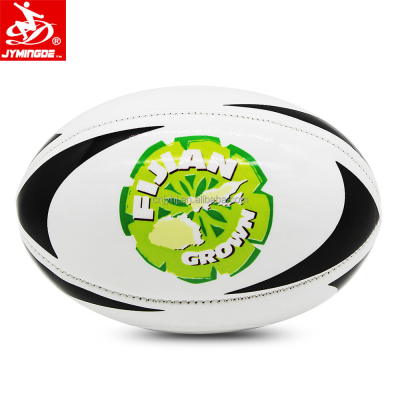
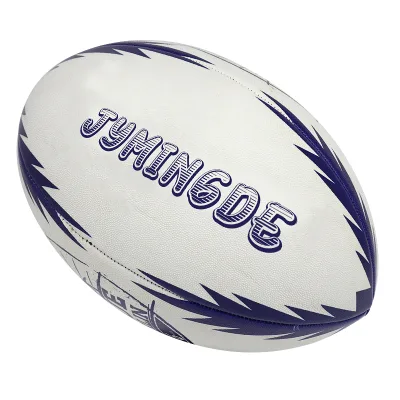

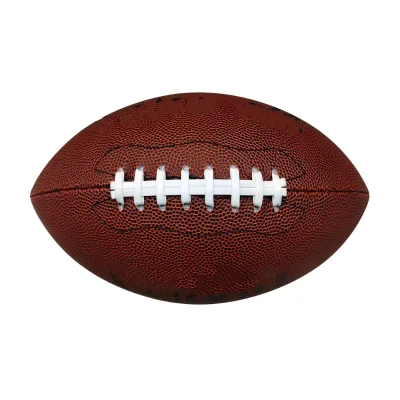




Comprehensive Sourcing Guide
Strategic Sourcing Guide for Training Rugby Balls
Understanding Product Specifications and Variability
When sourcing training rugby balls, buyers must first navigate the diverse technical specifications available in the current market. The core product category encompasses items designed for various stages of player development, ranging from adult competition training to youth recreational use. Based on available market data, the weight of these balls typically falls within the 270 to 290-gram range, a standard specification that ensures appropriate handling for adult players while maintaining safety for younger demographics. However, procurement teams must recognize that "training" is a broad descriptor that often masks significant variance in product construction.
The market offers multiple size options to accommodate different age groups and skill levels. Specific listings indicate the availability of Size 5, Size 4, and Size 3, with many suppliers explicitly stating acceptance of custom sizing requests. This flexibility is crucial for organizations purchasing equipment for mixed-age training camps or youth academies. Furthermore, the material composition is a primary differentiator. Buyers will encounter options utilizing Polyurethane (PU), Polyvinyl Chloride (PVC), genuine Leather, Thermoplastic Polyurethane (TPU), and Rubber. Each material offers distinct performance characteristics; for instance, PU and Leather are often preferred for their touch and durability in wet conditions, while Rubber and PVC may be selected for cost-effective, high-volume training scenarios.
Color availability is another significant specification variable. While traditional brown leather remains an option, modern training balls frequently appear in high-visibility colors such as blue, black, pink, red, orange, yellow, green, white, and gray. This variety allows teams to differentiate training equipment or select colors that enhance visibility during specific lighting conditions. The product models identified in the market, such as TLM-RB-015, TLM-RB-018, TLM-RB-006, TLM-RB-004, TLM-RB-013, and TLM-RB-016, suggest a wide array of designs, though the specific performance metrics of each model require direct verification with the manufacturer.
Compliance, Standards, and Certification Verification
In the realm of B2B procurement for sports equipment, compliance and certification are often the most misunderstood aspects of the sourcing process. Unlike consumer goods that may carry mandatory safety labels, sports balls often operate under a framework of voluntary standards and manufacturer-specific quality declarations. Buyers must exercise extreme caution when interpreting the term "Standard" or "Customized" found in product listings. These terms can refer to the manufacturing standard or the customization level, rather than an independent third-party certification like ISO or specific rugby governing body approvals.
When evaluating a supplier, it is essential to distinguish between a product that meets a generic "Standard" and one that adheres to specific international rugby regulations. The provided data indicates that some products are labeled with "Standard" while others are marked as "Customized." This distinction implies that the "Standard" products may conform to general industry expectations for shape and weight, but they do not automatically guarantee compliance with the World Rugby (formerly IRB) official match ball specifications unless explicitly stated. For training purposes, strict adherence to official match ball standards may not be necessary, but consistency in size and weight is vital for skill transfer.
Buyers should not assume that a product listing implies a specific certification status. The absence of a listed certification in a product description does not necessarily indicate non-compliance, but it does require the buyer to request documentation. Key verification steps include asking for material safety data sheets (MSDS) to ensure the PU, PVC, or Rubber materials are free from harmful substances like phthalates or heavy metals, which is a common requirement for children's sports equipment. Additionally, for products originating from regions like Jiangsu or Hubei in China, buyers should verify if the factory holds relevant quality management system certifications, such as ISO 9001, to ensure consistent production quality.
Cost Drivers and Pricing Dynamics
The pricing structure for training rugby balls is influenced by a complex interplay of material costs, customization levels, and order volume. The observed market price range spans from $0.19 to $14.00 USD, a variance that reflects the difference between basic rubber training balls and premium leather or TPU models designed for high-intensity use. The lower end of this spectrum typically corresponds to rubber or PVC balls with minimal branding and standard packaging, often targeted at mass-market distribution or large-scale institutional purchases where cost is the primary driver. Conversely, the higher price points are associated with leather or TPU construction, custom branding, and specialized packaging requirements.
Order volume is a critical factor in determining the final unit cost. The market exhibits a significant range in Minimum Order Quantities (MOQ), from as low as 1 piece to as high as 3,000 pieces. This flexibility allows small clubs or individual trainers to sample products without a massive financial commitment, while larger organizations can leverage bulk purchasing power. However, buyers must be aware that suppliers often have tiered pricing structures where the unit cost decreases as the order quantity increases. For instance, an order of 500 pieces might trigger a specific price point, whereas an order of 3,000 pieces could unlock a significantly lower rate.
Customization is another major cost driver. While many suppliers offer "Customized" options, including custom logos, colors, and packaging, these services invariably add to the base cost and may increase the MOQ. The data indicates that some suppliers accept sample orders, which is a low-risk way to test the market, but buyers should anticipate that sample unit costs will be higher than bulk production costs. Additionally, packaging requirements, such as moving from standard packing to custom-branded bags or boxes, will impact the final landed cost. Buyers should request a detailed breakdown of costs to understand how much of the price is attributed to the raw material versus the value-added services like branding and packaging.
Typical Applications and Usage Scenarios
Training rugby balls serve a wide array of applications, extending far beyond simple practice drills. The product attributes highlight usage in entertainment, gift-giving, racing, and formal sports centers. This diversity suggests that buyers should align their procurement strategy with the specific environment in which the balls will be used. For professional sports centers and competitive training facilities, the focus should be on durability and performance consistency. Balls used in these environments often require materials like PU or Leather to withstand high-impact training and provide a consistent bounce and grip.
In contrast, balls intended for entertainment or gift purposes may prioritize aesthetic appeal and color variety over rigorous performance metrics. The availability of mini rugby balls and options in bright colors like pink, orange, and yellow supports this segment. These products are often used for youth engagement programs, promotional events, or recreational leagues where the primary goal is participation rather than elite performance. The "Racing" application mentioned in some listings suggests potential use in relay events or speed drills, where the ball's weight and aerodynamics play a crucial role.
Age group is a defining factor in application. The market explicitly categorizes products for both adults and children. For youth training, the availability of Size 3 and Size 4 balls is essential to ensure proper development and safety. The weight range of 270-290g is generally suitable for adults, but younger players may require lighter options, which may be found in the "Mini Rugby Ball" category. Buyers sourcing for schools or community centers must ensure that the selected models match the age and physical capabilities of the participants. Furthermore, the "Fitness" function indicates that these balls are also used for general physical training, such as core strengthening or agility drills, where the ball's durability and grip are paramount.
Supplier Evaluation and Origin Considerations
Evaluating suppliers for training rugby balls requires a focus on origin, production capacity, and reliability. The majority of the available product data points to China as the primary place of origin, with specific mentions of Jiangsu and Hubei provinces. These regions are known for their robust manufacturing ecosystems for sports goods, offering a balance of cost efficiency and production capability. However, buyers should not rely solely on the country of origin as a proxy for quality. Instead, they must investigate the specific factory's capabilities, including their experience with the specific materials (PU, Leather, TPU) and their ability to handle custom orders.
When assessing a supplier, the ability to provide samples is a key indicator of reliability. The market data confirms that sample orders are accepted, which is a positive sign for buyers looking to verify product quality before committing to large volumes. A reputable supplier should be willing to provide samples that accurately represent the bulk production quality. Additionally, buyers should verify the supplier's flexibility regarding packaging. While some suppliers offer standard packing, others accommodate "Customer Requirements," which is vital for brands looking to maintain a consistent image.
The product model numbers, such as CP2279 and the TLM series, suggest a structured inventory system. Buyers should use these identifiers to track specific product lines and ensure consistency across orders. It is also important to note that some listings mention a "Brand Name" like "huilong," indicating that some suppliers may offer private label or white-label services. Buyers interested in building their own brand should inquire about the supplier's experience with branding and their ability to manage the intellectual property associated with custom designs.
Quality Control and Long-Term Procurement Strategy
Implementing a robust quality control (QC) strategy is essential for mitigating risks in the procurement of training rugby balls. Given the variability in materials and construction, buyers must establish clear acceptance criteria before production begins. Key QC checkpoints should include weight verification to ensure balls fall within the 270-290g range (or the specified custom range), material integrity checks for tears or delamination, and color consistency. For leather and PU balls, the stitching quality and water resistance are critical, as training often takes place in varied weather conditions.
Long-term procurement considerations extend beyond the initial purchase. Buyers should evaluate the supplier's ability to maintain consistent quality over multiple production runs. This involves establishing a relationship with the supplier that includes regular communication and periodic quality audits. The "Standard" and "Customized" labels in the product data suggest that suppliers may have different production lines for standard and custom goods; buyers should ensure that the same quality standards apply to both. Additionally, the lead time and production capacity should be factored into the procurement plan, especially for large orders where timing is critical for season preparation.
Buyers should also consider the lifecycle of the product. Training balls are subject to wear and tear, and a high-quality ball should maintain its shape and grip over an extended period. Suppliers that offer durable materials like TPU or high-grade Rubber may provide better long-term value, even if the initial unit cost is higher. Finally, buyers should maintain a flexible supply chain strategy. Given the wide range of MOQs and the availability of sample orders, it is advisable to start with smaller orders to test the market and supplier reliability before scaling up to larger volumes. This approach minimizes risk and allows for adjustments based on actual performance feedback from the end-users.
Comparative Analysis of Product Options
To facilitate decision-making, buyers can compare the key attributes of available training rugby balls. The following table summarizes the primary differences observed in the market data, highlighting the trade-offs between material, size, and customization.
| Attribute | Option A: Standard Training | Option B: Custom/Branded | Option C: Youth/Mini |
|---|---|---|---|
| Material | Rubber, PVC, or Standard PU | Leather, TPU, or Premium PU | Rubber or Soft PVC |
| Size | Size 5 (Standard) | Customizable (Size 3, 4, 5) | Size 3 or Mini |
| Weight | 270-290g | 270-290g (or Custom) | Lighter (Specific to Age) |
| Color | Brown, Blue, Black | Custom Color Request | Pink, Orange, Yellow, etc. |
| MOQ | 500 Pieces (Typical) | 500+ Pieces (Varies) | 1-3000 Pieces (Flexible) |
| Packaging | Standard Packing | Custom Customer Requirements | Standard or Gift Packaging |
| Usage | General Training, Sports Center | Brand Promotion, Elite Training | Youth, Entertainment, Gift |
This comparison illustrates that while standard options offer cost efficiency and consistency, custom and youth-specific options provide greater flexibility for specific market needs. Buyers must weigh these factors against their budget and operational requirements to select the most appropriate product line. By carefully analyzing these attributes, procurement teams can ensure they acquire training rugby balls that meet the specific demands of their athletes and organizations.
FAQs
What materials are used for training rugby balls?
Training rugby balls are constructed from PU, PVC, Leather, TPU, or Rubber. These materials offer varying levels of durability and touch, with PU and leather preferred for wet conditions while rubber suits cost-effective bulk training.
Which sizes are available for different age groups?
Suppliers offer Size 5, Size 4, and Size 3, with custom sizing options available. This range accommodates both adults and children, ensuring appropriate handling for youth academies and professional training camps.
Can I order samples before placing a bulk order?
Yes, sample orders are accepted for most Training Rugby Ball listings. This allows buyers to verify product quality and specifications before committing to larger volumes, though sample unit costs may be higher than bulk rates.
What is the typical weight range for these balls?
The standard weight for training rugby balls typically falls between 270 and 290 grams. This specification ensures appropriate handling for adult players while maintaining safety standards for younger demographics using smaller sizes.
How flexible is the customization for logos and colors?
Customization is available for logos, colors, and packaging according to customer requirements. Buyers can select from various colors like blue, black, pink, and red, or request specific branding for their organization.
Where are these products typically manufactured?
Most training rugby balls originate from China, specifically from provinces like Jiangsu and Hubei. These regions host robust manufacturing ecosystems capable of producing diverse sports equipment with varying levels of customization.
What is the minimum order quantity for bulk purchases?
Minimum order quantities range from 1 piece for samples up to 3000 pieces for large bulk orders. Some specific listings may require a minimum of 500 pieces, depending on the supplier and customization level.