Source TV Tuner MP5 Player for Advertising, Surveillance, and Mobile Phone
Find 30 TV Tuner MP5 Player units with features like Android 12, 10-point touch, and LED backlighting. Buyers can compare specifications including screen sizes from 5.5 to 22 inches, connectivity options, and certifications such as CCC, CE, and FCC for diverse applications.
Key considerations
Products List










Comprehensive Sourcing Guide
TV Tuner MP5 Player Sourcing Guide
Sourcing a TV Tuner MP5 Player for resale or integration projects requires balancing multimedia playback features, television reception, and in-vehicle connectivity in a single head unit. The product category spans compact personal players and full dashboard units, so defining your target application before contacting suppliers is essential. Listings in this category show configurations ranging from small 5.5-inch screens to 21.5-inch touch displays, which means the same keyword can return very different products with very different price points.
This guide walks B2B buyers through the decisions that matter most: scoping the product category correctly, verifying technical claims against actual listings, collecting credible compliance documentation, understanding what drives unit cost, qualifying suppliers, and planning for repeat orders. Use it as a checklist during supplier conversations and sample evaluations. Every recommendation is framed around what should be confirmed in writing before a purchase order is signed, because advertised attributes in this category vary widely between listings even when product titles look similar.
Product Scope and Observed Listing Signals
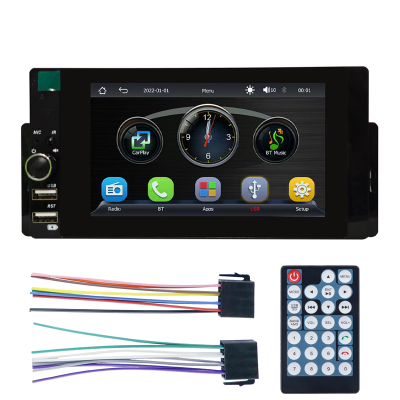
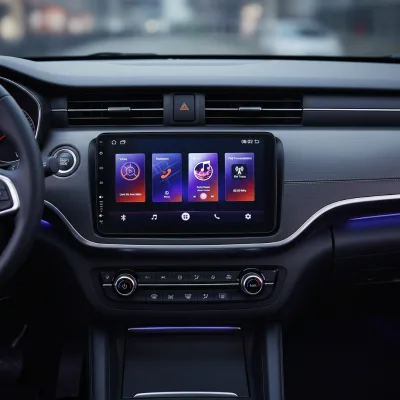
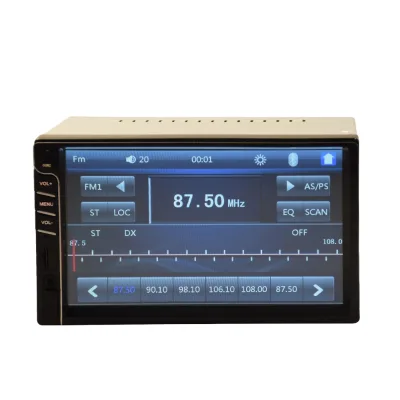
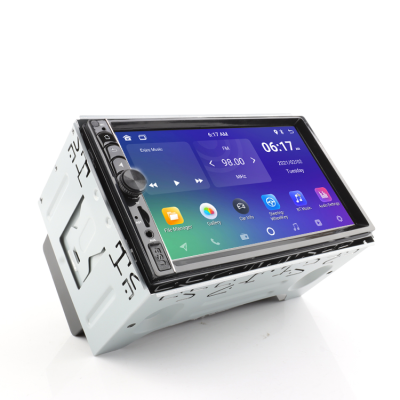
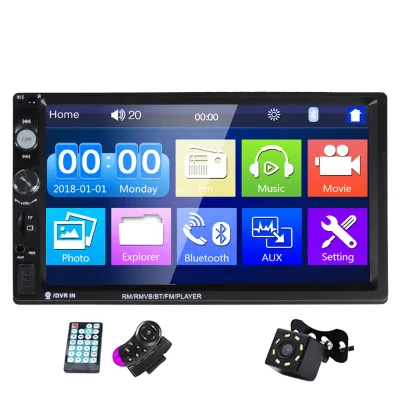
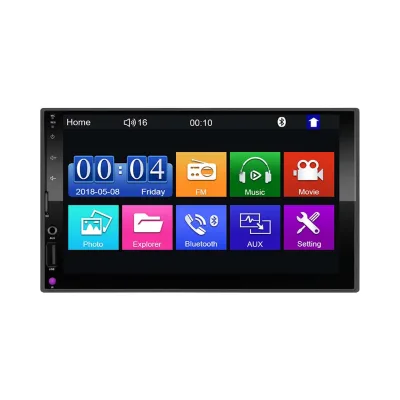
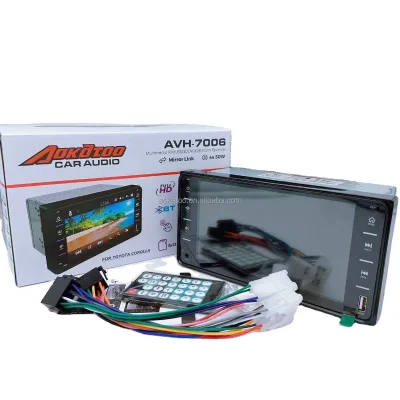
The keyword covers several distinct product types. At one end are compact portable players, such as models in the Mplayer series with dimensions around 120 x 37 x 24 mm, a net weight of roughly 0.1 kg, DC 5V power, and a 20 Hz to 20 kHz frequency response. At the other end are full-featured car dashboard units with 5.5-inch IPS displays, Android operating systems, built-in GPS, radio tuners, TV functionality, and touch screens. Larger standalone displays in the 20-22 inch class with TFT panels, LED backlighting, and remote controls also appear under this keyword.
Observed listing signals help buyers segment offers quickly. Some units advertise combinations of built-in GPS, CD player, MP3/MP4 playback, radio tuner, TV, touch screen, 4G SIM, and mirror link, while others emphasize software features such as CarPlay, Android Auto, split screen, file manager, OBD2, TPMS, and steering wheel control. Connectivity listings include 3G/4G SIM cards, built-in WiFi with IEEE802.11b/G/N support, and WEP/WPA/WPA2 security protocols. Car fitment is frequently listed as universal or model-specific, with placement typically on the dashboard. Treat these attributes as observations to confirm per listing, not guarantees.
Technical Specifications to Verify
Display and processing specifications deserve the closest scrutiny because they define the user experience and are easy to overstate. Verify screen size (listings observed range from 5.5 inches to 21.5 inches), resolution (one listing cites 1024 x 600, another 1920 with a 2 ms response time), refresh rate (60 Hz appears in listings), brightness (250-300 cd/m²), display type (IPS or TFT), aspect ratio, and whether the panel is touch-enabled with multi-touch support (one listing states 10 points). For smart units, confirm the operating system version (Android 12 appears in a listing), CPU (MTK 8183 is cited), RAM (4G), and ROM (64G, or no TF card in another configuration).
Connectivity and feature claims must also be verified against your use case. Confirm TV tuner standards supported in your destination market, since broadcast systems differ by region and a unit tuned for one market may not receive signals in another. For vehicle units, verify which listed functions—CarPlay, Android Auto, GPS, mirror link, OBD2, TPMS, hands-free, Hi-Res audio—are actually enabled in the firmware shipped to you, not merely present in the marketing description. Ask for a demo video or live sample test of each critical feature.
Compliance and Safety Documentation
Certification requirements depend on your destination market, and listings in this category reference CCC, CE, and FCC marks. Do not accept certification logos on a product page as proof; request copies of the actual certificates, confirm the certificate holder matches the exporting entity or is properly licensed, and check that the certified model numbers correspond to the units you are ordering. A certificate covering a different variant of the product family offers no protection for your shipment.
Beyond radio and electronics certifications, ask what additional testing the supplier can document for the specific functions you are buying: wireless modules operating under 802.11b/G/N, SIM-based 3G/4G connectivity, and TV reception hardware may each carry separate regulatory requirements in your market. Request test reports rather than self-declarations where possible, and verify that product labeling, user manuals, and packaging markings meet destination-market language and safety requirements. Build documentation collection into the pre-shipment stage of every order so it becomes routine rather than a last-minute scramble before customs clearance.
Cost Drivers and Commercial Terms
Observed listing prices in this category range from roughly USD 8.5 to USD 460, and MOQs from 1 to 1000 units, reflecting the enormous spread between compact accessories and full smart head units. The main cost drivers are screen size and type, processor and memory configuration, camera and connectivity modules (SIM, WiFi, GPS), and software licensing for features like CarPlay or Android Auto. Customization is listed as available, which typically affects both unit price and minimum order requirements—confirm how customization changes quoted pricing.
Negotiate the full commercial package, not just unit price. Clarify what the quoted price includes: packaging (one listing specifies gift box, export carton, and pallet; another cites a 107 x 50 x 30 cm packing dimension), accessories, firmware configuration, and after-sales support. Confirm warranty terms in writing—one listing states a 1-year warranty—and agree on how defective units are handled, whether by replacement, repair, or credit. Agree on Incoterms, payment schedule, and whether sample costs are credited against bulk orders. Get all of these points into the proforma invoice before payment.
Supplier Qualification and Quality Control
Qualify suppliers by examining evidence, not claims. Review how long the company has exported this product category, request references from buyers in your market if available, and assess communication quality and responsiveness during the quotation stage—these behaviors predict post-order service. Verify that the supplier actually manufactures or has direct control over the products rather than merely listing them, especially for customized units where firmware and hardware changes are involved. Product origin information in listings (for example, Guangdong, China) can help you triangulate manufacturing regions.
Quality control should be contractually defined before production. Specify an inspection point—ideally pre-shipment—with an agreed sampling plan, and define which functions are tested on which sample size: power-on, screen performance, tuner reception, touch response, connectivity, and packaging condition. For smart units, verify the correct firmware version and preloaded configuration on sampled units. Define acceptable defect rates in writing and the remedy if they are exceeded. Keep golden samples signed by both parties so that any dispute about appearance, packaging, or performance has a physical reference.
Long-Term Procurement Checks
Plan repeat purchases as structured relationships rather than one-off transactions. Maintain a specification sheet for each model you buy, including firmware version, accessory list, packaging specification, and certification documents, so future orders are compared against a fixed baseline. Track field failure patterns by model and batch, and share this data with your supplier—suppliers who respond to failure data with corrective action are worth retaining, while those who do not should be replaced before issues compound.
Monitor specification drift between orders, which is common in this category: component substitutions, OS version changes, and accessory downgrades can occur without notice unless your purchase order locks the specification. Re-verify certifications annually or when hardware changes are disclosed, because a redesigned wireless module may require new approvals. Periodically re-test samples from each new production run against your golden sample. Finally, review pricing and terms annually against alternative sources, but weigh the switching cost of re-qualifying a new supplier for firmware-dependent products against modest unit-price savings.
FAQs
What resolution and screen size does the 21.5-inch model offer?
The 21.5-inch model provides an optimum resolution of 1920x1080 pixels. It features a TFT display with LED backlighting and a 60Hz refresh rate. This configuration ensures clear visuals for graphic design, surveillance, and advertising applications. The widescreen aspect ratio enhances viewing comfort for both indoor and outdoor digital signage uses.
Can this device run Android 12 with specific memory configurations?
Yes, the system operates on Android 12 with 4GB of RAM and 64GB of ROM. It utilizes an Mtk 8183 CPU for efficient performance. This setup supports multitasking and smooth application loading. The device is suitable for interactive displays, car infotainment, and smart advertising solutions requiring robust operating system capabilities.
Which certifications are available for these TV Tuner MP5 Player units?
The units hold CCC, CE, and FCC certifications. These approvals ensure compliance with safety and electromagnetic standards in various regions. Buyers can rely on these documented credentials for import clearance and market entry. The certifications apply to the standard production models, facilitating smoother distribution across international markets.
What are the minimum order quantities for customization requests?
The minimum order quantity ranges from 1 to 1000 units depending on the specific model and customization level. Customization is available for bulk orders. Buyers should contact suppliers directly to confirm exact MOQs for tailored features. This flexibility supports both small-scale trials and large-scale commercial deployments effectively.
How does the touch display feature enhance user interaction?
The touch display supports 10-point multi-touch interaction for intuitive control. It allows users to navigate menus, adjust settings, and interact with content directly on the screen. This feature is ideal for kiosks, car dashboards, and interactive advertising boards. The responsive touch capability improves usability without requiring external peripherals.
What wireless connectivity options are included in the device?
The device includes built-in WiFi supporting IEEE802.11b/G/N standards. It also offers 3G/4G SIM card connectivity for mobile internet access. Security protocols like WEP, WPA, and WPA2 are supported. These options ensure reliable network integration for streaming, remote management, and real-time data updates in various environments.