Source Water Filter Ultra Filtration for hotels, homes, and commercial use
Find 30 verified suppliers offering Water Filter Ultra Filtration systems with customizable capacities and precision levels. Compare models like MT-DPC-EF301 and NW-UF-BX21 for applications in hotels, households, and commercial settings; compare the available evidence and request quotations based on your requirements.
Updated
Key considerations
Products List

$50.00 - $1000.00
MOQ: 100 units










Comprehensive Sourcing Guide
Water Filter Ultra Filtration Sourcing Guide
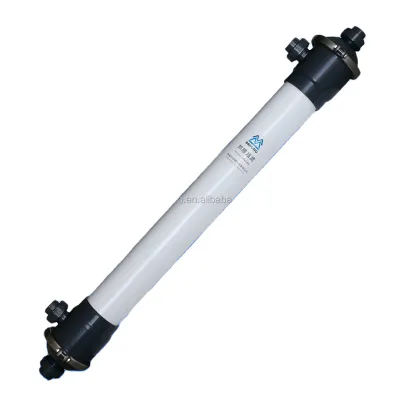
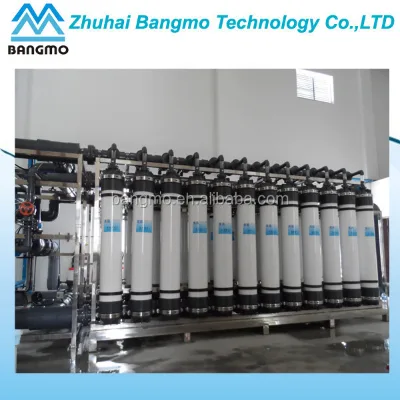
Ultrafiltration has become a core technology category for buyers sourcing residential, commercial, and light-industrial water treatment equipment. Unlike reverse osmosis, UF membranes operate at lower pressures and typically retain beneficial minerals while removing bacteria and suspended solids, which makes the technology attractive for point-of-use drinking water systems and central whole-house filters. The listings observed in this category range from compact under-sink and countertop units to cabinet-style purifiers and multi-stage central systems, so the first buyer decision is to define the intended installation context before comparing suppliers.
This guide is written for procurement teams evaluating Water Filter Ultra Filtration products from Chinese manufacturing hubs, with observed listings originating in Shandong, Ningbo, and Guangdong. Because observed MOQs span from single-item purchases to 500-unit orders and listed prices range from a few cents for components to over ten thousand dollars for complete systems, the commercial structure of a deal varies enormously across the category. Each section below identifies the specifications, documents, and quality controls a buyer should confirm in writing before committing to a purchase order.
Product Scope and Observed Listing Signals
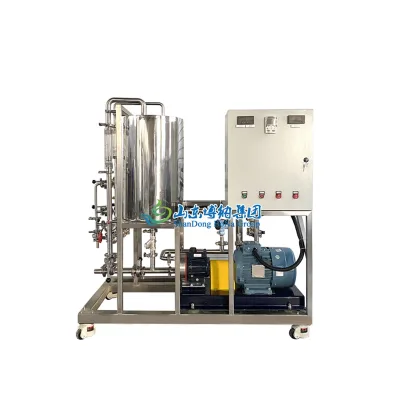
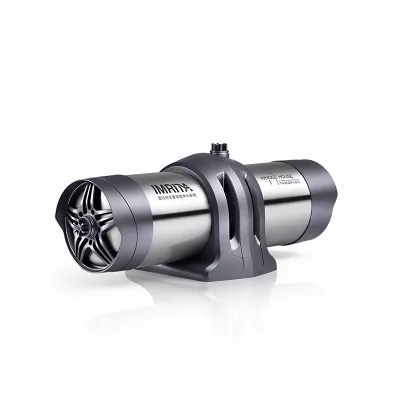
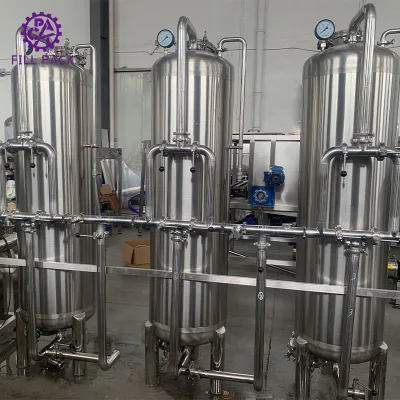
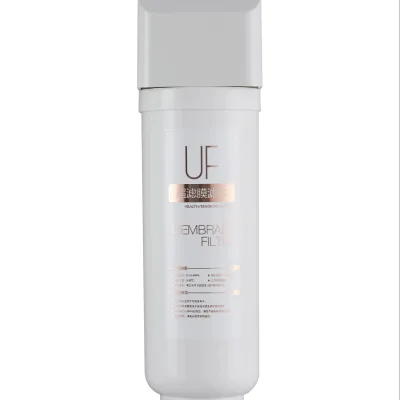
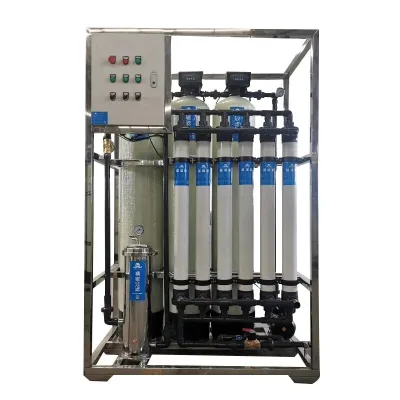
The observed listings fall into several identifiable product groups. At the compact end are standalone UF units such as models designated NW-UF-BX21 and NW-UF-305, which are packed in color boxes or cartons and positioned for household use. Cabinet-style purifiers with 0.01-micron filtration precision, self-cleaning pipe design, and "straight drink" water purification efficacy appear as a distinct family. At the system level, listings such as MT-DPC-EF301 describe three-stage UF configurations with pump and PLC core components, and a central water filter purifier (LH3-8AD) targets hotel, commercial, and household applications with G 1" inlet/outlet connections.
Several listing signals help buyers segment suppliers quickly. Precision is described in some listings as "MF, UF, UF, RO," suggesting suppliers who configure membranes per process rather than selling fixed products. Accessories are also present in the category, including gooseneck faucets (D-01, D-02, D-04 designations) and tankless configurations, with one listing specifying 2.5 kg unit weight. Buyers should treat these attributes as observations of individual listings, not guarantees across a supplier's catalog, and request a full product list to understand which configurations are standard versus custom.
Technical Specifications to Verify
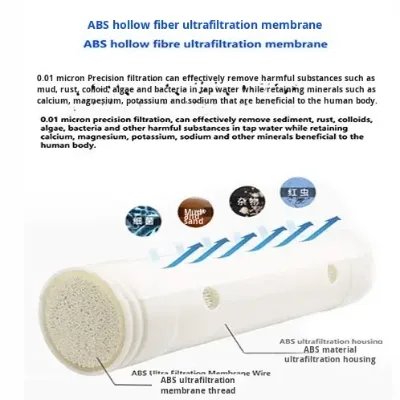
Filtration precision is the headline specification and the one most consistently quantified: observed listings state 0.01 micron (0.01μm) UF precision, with bacteria removal exceeding Log4 reduction. Buyers should ask each supplier to confirm the membrane material (for example, hollow fiber UF is common in this class), the effective filtration area, and whether the stated precision applies to the membrane itself or the complete assembled system. Filtration rate, working pressure, and processing capacity are listed as "according to requirement" or "customized" in several observed listings, so these must be specified by the buyer in a technical data sheet rather than assumed from product photos.
System architecture deserves equal scrutiny. The three-stage UF standard seen in one listing, the pump-and-PLC core components on another, and the self-cleaning pipe design feature on cabinet models all affect installation requirements and maintenance intervals. Buyers should confirm inlet and outlet sizes (G 1" appears in an observed listing), whether a storage tank is included or excluded, power requirements, and operating language of any controller interface (English operating language is observed on one unit). Requesting dimensioned drawings—the LH3-8AD lists 545x169x137mm—prevents costly site-fit errors in hotel and commercial installations.
Compliance and Safety Documentation
Certification claims in the observed listings are inconsistent, which is itself an important signal. Some products list CE alone, others state "CE, ROHS" as the product standard, and several system-level listings omit certification entirely. Buyers selling into regulated markets must not infer compliance from category averages: request copies of the actual certificate documents, verify the certificate holder's name matches the supplying entity, and check the scope of each certificate covers the specific model number being quoted rather than a related variant.
Beyond certificates, buyers should collect supporting test documentation. One observed listing states a machinery test report is provided, and buyers should extend this expectation to membrane performance data such as bacteria removal rates and filtration precision verification. Material safety documentation for water-contact components deserves particular attention for drinking water applications, since UF systems deliver "straight drink" water. Private-mold products, flagged as available in the observed listings, introduce additional documentation needs: the buyer should confirm who owns the mold, which safety files transfer with it, and whether any regulatory registration for the customized design exists or must be commissioned separately.
Cost Drivers and Commercial Terms
The observed price range—from roughly $0.1 to $13,700—reflects how differently products in this category are configured and sold. The low end covers spare components such as replacement filter cartridges, while the high end corresponds to complete engineered systems with pumps, PLCs, and customized processing capacity. Buyers should benchmark unit economics within a product type, not across the whole category, and itemize what each quotation includes: membrane elements, housings, faucets, fittings, and packaging all appear as separately specified items in the observed listings.
Commercial terms show wide variance that buyers can use as negotiation leverage. MOQs observed in the category run from 1 to 500 units, so single-item sampling and pilot orders are feasible for many listings before committing to volume. Customization is explicitly available across the observed products, which typically affects tooling cost, unit price, and lead time and should be quoted separately from standard configurations. Buyers should also clarify packaging (color box, carton, or six pieces per carton, as observed), warranty duration—one listing offers one year, another three years—and after-warranty service, with video technical support and free spare parts appearing as stated offerings.
Supplier Qualification and Quality Control
Supplier qualification should start with the fundamentals visible in listing data: physical location, stated origin (observed: Shandong, Ningbo, and Guangdong, China), brand identity (BONA and IMRITA appear as listed brands), and whether the supplier offers private-mold manufacturing, which indicates in-house design capability. Buyers should then verify production capacity for the specific product family—cabinet purifiers, central filters, and engineered multi-stage systems are usually manufactured on different lines—and confirm the machinery test report process referenced in observed listings is standard practice rather than a per-order exception.
Quality control planning should anchor to the verification items established earlier in this guide. A practical inspection protocol includes: incoming membrane lot verification against stated 0.01-micron precision, assembled-unit leak testing at working pressure, bacteria removal verification against the stated >Log4 benchmark, and packaging checks against the agreed carton configuration. For engineered systems with pump and PLC components, functional testing of controls and safety interlocks should be witnessed or evidenced. Buyers should agree on AQL sampling levels, inspection checkpoints (pre-production, during production, pre-shipment), and the disposition of rejected units in writing before the first production order.
Long-Term Procurement Checks
Sustainability of supply matters as much as the initial qualification, especially for consumable-adjacent products. Buyers should map which components—membrane elements, cartridges, faucets, seals—are designed for periodic replacement and confirm the supplier commits to long-term availability and stable pricing for these parts. Warranty terms observed in the category (one year on system products, three years on the central filter) should be compared against the buyer's own market warranty obligations, and the stated after-sales support model—free spare parts, return and replacement, video technical support—should be stress-tested with scenario questions before scaling orders.
Product continuity and change control complete the long-term picture. Where customization is available, buyers should document agreed specifications—filtration area, processing capacity, operating pressure, packaging style—in a frozen technical file and require advance notice of any material or design changes, since membrane and housing substitutions can silently alter performance. Buyers should also plan periodic requalification: re-request certification validity confirmations, order retained samples for annual comparative testing, and review whether newer models (the category shows evolving model designations) justify migration. A supplier who communicates proactively on component changes and supports video-based technical service is materially easier to scale with than one qualified on price alone.
FAQs
What certifications do the Water Filter Ultra Filtration units have?
The units hold CE certification and some models also meet ROHS standards. These certifications ensure compliance with safety and environmental regulations for international markets. Buyers can verify specific model details like the MT-DPC-EF301 or NW-UF-BX21 series for exact compliance status before ordering.
Can I request customization for the Water Filter Ultra Filtration system?
Yes, customization is available for filtration area, rate, and processing capacity according to specific requirements. Buyers can specify unique needs for commercial or household applications. The system allows tailored solutions while maintaining core components like pumps and PLCs for reliable operation across different industrial settings.
Which filtration precision levels are offered for the Water Filter Ultra Filtration?
The system offers precision levels including MF, UF, and RO depending on the specific model configuration. Some units achieve a filtration precision of 0.01 micron to remove bacteria effectively. Buyers should check the specific model number to confirm the exact precision stage required for their water purification needs.
How long is the warranty period for the Water Filter Ultra Filtration equipment?
Warranty periods vary by model, with options including one year or three years of coverage. After warranty service, video technical support is provided to assist with maintenance. Buyers should confirm the specific warranty terms associated with their selected model number before finalizing the purchase agreement.
What is the minimum order quantity for the Water Filter Ultra Filtration units?
The minimum order quantity ranges from one to five hundred units depending on the supplier and product type. Single item selling units are available for smaller orders. Buyers should verify the specific MOQ for their chosen model to ensure it aligns with their procurement volume requirements.
Where are the Water Filter Ultra Filtration products manufactured?
Products originate from various locations in China, including Shandong, Ningbo, and Guangdong provinces. Specific models like the BONA series or IMRITA brand have distinct origins. Buyers can select suppliers based on these regional manufacturing hubs to optimize logistics and sourcing strategies.
What packing options are available for the Water Filter Ultra Filtration systems?
Packing options include standard cartons, color boxes, or carton boxes depending on the model. Some units are packed with six pieces per carton for efficient shipping. Buyers should specify their preferred packaging type to ensure safe transport and compliance with their distribution requirements.